Skip to content
Aluminum (Al) alloys continue to drive functionality through innovation across industries. However, the properties and benefits aren’t equal throughout the vast family of Al alloys.
And 5052 and 6061 remain two highly trusted options. Each one comes with a unique set of strengths for real-time applications. Even your project may need a specific choice from the two alloys.
This article breaks down the key differences between 5052 and 6061 aluminum. You can weigh several specifications to reach an informed choice for your aluminum-based needs.
5052 Aluminum: An Overview
It’s a powerhouse where corrosion resistance, formability, and durability come first. The 5xxx series alloy makes it suitable for many sectors to address moisture, saltwater, or chemical exposure.
Composition of 5052 Aluminum
- Aluminum (Al): 95.7%.
- Magnesium (Mg): 2.2% – 2.8%.
- Chromium (Cr): 0.15% – 0.35%.
- Iron (Fe): ≤ 0.4%.
- Silicon (Si): ≤ 0.25%.
- Copper (Cu): ≤ 0.1%.
- Manganese (Mn): ≤ 0.1%.
- Zinc (Zn): ≤ 0.1%.
5052 is a non-heat-treatable wrought aluminum alloy, strengthened through cold working. High Mg content induces standout resistance, while Cr prevents stress corrosion cracking.
5052 Aluminum Properties
- Tensile Strength: 210 – 260 MPa depending on temper (H32 or H34).
- Yield Strength: 130 – 200 MPa.
- Density: 2.68 g/cm³ — slightly lighter than 6061.
- Corrosion Resistance: Outstanding in marine and chemical environments.
- Formability: Excellent for bending, rolling, and deep drawing.
- Weldability: Very good, especially for TIG and MIG.
- Fatigue Resistance: Moderate for non-critical load-bearing applications.
- Thermal Conductivity: 138 W/m·K — useful in heat exchangers and cooling systems.
Real-Time Applications
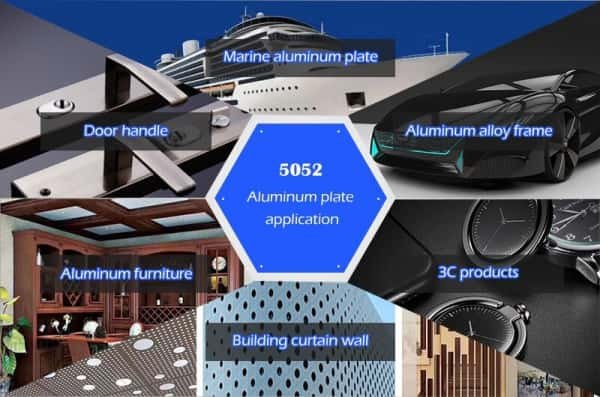
- Marine Industry: Boat hulls, fuel tanks, deck structures, and gangways. It’s favored by manufacturers like Yamaha Marine and Boston Whaler for its saltwater resilience.
- Transportation: Truck trailers, fuel tanks, and cargo containers. The logistics sector heavily relies on 5052 for its light and resistant truck bodies that withstand monsoon conditions.
- Industrial + Chemical: Pressure vessels, storage tanks, and piping systems. Chemical processing plants use 5052 across Southeast Asia and the Middle East.
- Architecture/Construction: Roofing panels, siding, and decorative facades. Coastal projects in places like Dubai and Singapore use 5052 where humidity and salt exposure are high.
- Consumer Packaging: Beverage cans and food containers. Global brands like Coca-Cola and Nestlé use 5052 for its formability and food-safe corrosion resistance.
6061 Aluminum: An Overview
It’s one of the most versatile aluminum alloys available. Excellent mechanical properties, corrosion resistance, and weldability turn the material into a preferred choice for various industries.
Composition of 6061 Aluminum
- Aluminum (Al): 97.9%.
- Magnesium (Mg): 0.8% – 1.2%.
- Silicon (Si): 0.4% – 0.8%.
- Iron (Fe): ≤ 0.7%.
- Copper (Cu): 0.15% – 0.4%.
- Chromium (Cr): 0.04% – 0.35%.
- Zinc (Zn): ≤ 0.25%.
- Titanium (Ti): ≤ 0.15%.
Magnesium and silicon form magnesium silicide (Mg₂Si) within the alloy. It enables precipitation hardening that boosts strength through heat treatment.
6061 T6 Aluminum Properties
- Strength: Tensile strength = 290 MPa; yield strength = 240 MPa.
- Density: Approximately 2.70 g/cm³ — ideal for lightweight designs.
- Corrosion Resistance: Excellent in atmospheric conditions and moderate in marine conditions.
- Machinability: High in T6 temper, ideal for CNC machining and precision parts.
- Weldability: Very good, especially with TIG and MIG welding techniques.
- Thermal Conductivity: 167 W/m·K — useful in heat sinks and thermal management systems.
- Elastic Modulus: 68.9 GPa, that’s suitable for load-bearing applications.
Real-Time Applications
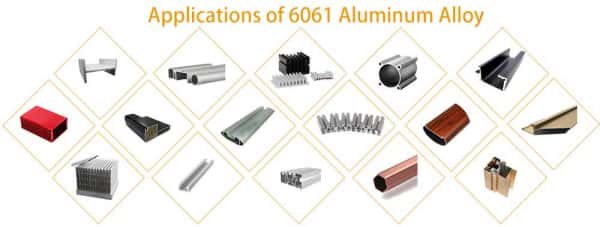
- Automotive: Chassis components, wheels, and engine blocks. Tesla’s Model S and Model X have 6061 in structural frames for strength and weight reduction.
- Aerospace: Aircraft fittings, fuselage components, and wing structures. Boeing and Airbus feature 6061 in non-critical parts due to its weldability and corrosion resistance.
- Construction/Infrastructure: Bridges, towers, pipelines, and architectural panels. The Millennium Bridge in London has 6061 for lightweight decking and structural supports.
- Electronics + Consumer Goods: Laptop casings, camera bodies, and mobile devices. Apple’s MacBook Pro chassis is crafted from 6061-T6 for its sleek finish and durability.
- Sports: Bicycle frames, scuba tanks, and sports equipment. Giant and Trek use aluminum 6061 in mid-range bikes for its balance of strength and affordability.
6061 vs 5052 Aluminum Alloys: Key Differences
● Alloy Composition
5052, is a non-heat-treatable alloy from the 5xxx series. It comes with a higher magnesium content and small additions of chromium, among others.
6061 is a heat-treatable alloy from the 6xxx series. It consists of magnesium and silicon with trace amounts of copper, chromium, and iron.
● Strength/Hardness
6061-T6 is noticeably stronger than 5052-H32. It marks a 290 MPa tensile strength with a 240 MPa yield strength. Such strength is ideal for structural applications related to precision engineering.
5052-H32, while not as strong, still provides respectable performance with a 210 MPa tensile strength and a 130 MPa yield strength. It’s more suitable for applications requiring flexibility and resistance.
● Corrosion Resistance
5052 is the clear winner in corrosion resistance. High Mg makes it exceptionally resistant to saltwater, chemicals, and humidity. It’s widely used in the marine, coastal, and chemical sectors in Southeast Asia.
6061 delivers sufficient corrosion resistance in dry environments. However, it’s susceptible to galvanic corrosion when welded or exposed to marine conditions without protective coatings or anodizing.
● Conductivity (Thermal + Electric)
Both alloys feature decent thermal and electrical conductivity. 6061 has a slight edge in thermal performance. Its thermal conductivity is suitable for electronics and automotive applications.
5052 has a slightly lower thermal conductivity, which is still effective for heat exchangers and cooling systems. Electrically, both alloys are comparable, though neither is used for high conductivity.
● Machinability (How Easy to Work with)
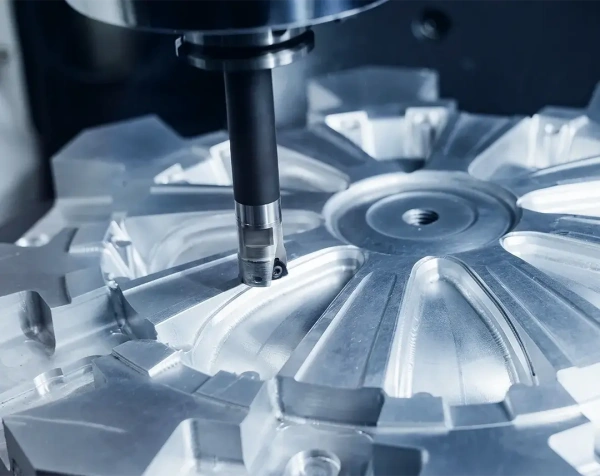
6061 excels in machinability, especially in the T6 temper. It’s heavily used in CNC machining, milling, and drilling operations. The predictable behavior and clean finish make it a favorite for precision parts.
5052, while workable, is softer and more prone to deformation during machining. The alloy seems more suitable for forming, bending, and rolling that can serve the packaging and transportation sectors.
● Weldability
Both alloys are weldable with some caveats. 5052 enables excellent weldability with minimal cracking risks or resistance loss. It has uses across welded marine structures, fuel tanks, and pressure vessels.
6061 is also weldable, but welding can reduce its strength without post-weld heat treatment. The alloy requires additional processing in aerospace and automotive parts to restore the mechanical properties.
● Cost Considerations
5052 is less expensive than 6061 due to simpler processing and a non-heat-treatable nature. Large-scale projects involving corrosion resistance and formability can benefit from 5052’s superior value.
6061, while more expensive, delivers higher strength and machinability. It makes the alloy cost-effective in the long run for precision applications where the performance outweighs the material cost.
5052 vs 6061 Aluminum Alloy: Summary Comparison
| Feature/Aspect | 5052 Aluminum | 6061 Aluminum |
| Primary Alloying Elements | Magnesium (2.2% – 2.8%) + Chromium (0.15% – 0.35%) | Magnesium (0.8% – 1.2%) + Silicon (0.4% – 0.8%) |
| Density | 2.68 g/cm³ | 2.70 g/cm³ |
| Alloy Type | Non-heat-treatable (strain-hardened) | Heat-treatable (precipitation-hardened) |
| Tensile Strength | 210 – 260 MPa (30,458 – 37,710 psi) for H32/H34 tempers | 290 MPa (42,060 psi) for T6 temper |
| Yield Strength | 130 – 200 MPa (18,855 – 29,000 psi) | 240 MPa (34800 psi) |
| Fatigue Resistance | Moderate for non-critical load-bearing applications | Good for structural and dynamic stress environments |
| Corrosion Resistance | Excellent | Sufficient |
| Formability | Outstanding (high flexibility) | Moderate (good flexibility) |
| Machinability | Sufficient (soft + prone to deformation) | Excellent (well-suited for CNC and precision) |
| Weldability | Excellent (minimal strength loss and cracking risk) | Good (strength may reduce post-welding) |
| Thermal Conductivity | 138 W/m·K | 167 W/m·K |
| Electrical Conductivity | Moderate | Slightly better |
| Cost | Lower (more economical for large-scale applications) | Higher (justified by strength and machinability) |
| Common Uses | Marine vessels, fuel tanks, roofing, signage, food containers | Aerospace parts, automotive frames, electronics, and structural components |
How to Choose between 6061 and 5052?
Choose 6061 Aluminum for –
- High strength and rigidity for load-bearing applications.
- Precision machining in aerospace, automotive, or electronics.
- Welded parts for heat treatment to restore strength.
- Applications across dry or controlled environments.
- The budget allows a higher material cost for performance.
Choose 5052 Aluminum for –
- Critical corrosion resistance in harsh environments.
- Excellent formability for curved, rolled, or deep-drawn shapes.
- Welding without post-treatment in fuel tanks or pressure vessels.
- Optimizing cost-efficiency in large-scale production.
- Applications don’t demand high structural strength.
Conclusion
Selecting from 5052 and 6061 aluminum depends on your project specifications. More specifically, your intended application scenario ultimately decides the final material. Only the right alloy can empower a design to perform, endure, and inspire.
Top-Notch Aluminum Services for Your Projects at HRC
Confirm your absolute choice of aluminum alloy for any projects with HRC. We have been leading the CNC machining industry for 17 years with innovation. Contact us to reach our industry experts for CNC machining consultation.