 Skip to content
Custom Laser Cutting Services
HRCCNC provides CNC laser cutting services for precision sheet metal fabrication, custom metal part production, and industrial manufacturing applications that require accurate cuts, clean edge quality, and repeatable dimensional control. Our laser cutting capabilities process stainless steel, aluminum, carbon steel, brass, copper, acrylic, and other fabrication materials for prototypes, low-volume production, and large-scale manufacturing projects.
- Produces high-precision laser cut parts with controlled kerf width and consistent fabrication accuracy for industrial applications.
- Supports stainless steel, aluminum, carbon steel, copper, brass, and acrylic materials for custom fabrication requirements.
- Uses advanced CNC-controlled fiber, CO2, and crystal laser cutting systems for accurate cutting performance and efficient production workflow.
- Maintains clean edges, reduced material waste, and stable cutting consistency across complex geometries and detailed part profiles.
- Supports custom sheet metal fabrication for automotive, aerospace, medical, electronics, robotics, and industrial equipment manufacturing.
- Provides rapid quotations, engineering-focused production support, and scalable manufacturing solutions for prototype and production orders.
Upload your CAD files or technical drawings to request a custom laser cutting quote from HRCCNC.
Our Certifications
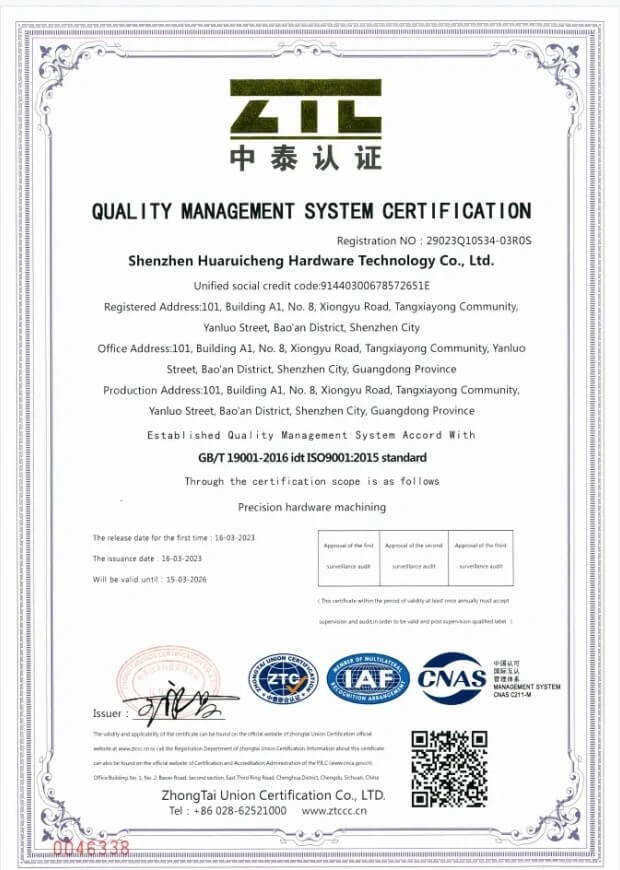
ISO 9001:2015
This certification demonstrates that our company follows internationally recognized quality management standards. It ensures consistent product quality, process optimization, and a strong focus on customer satisfaction.
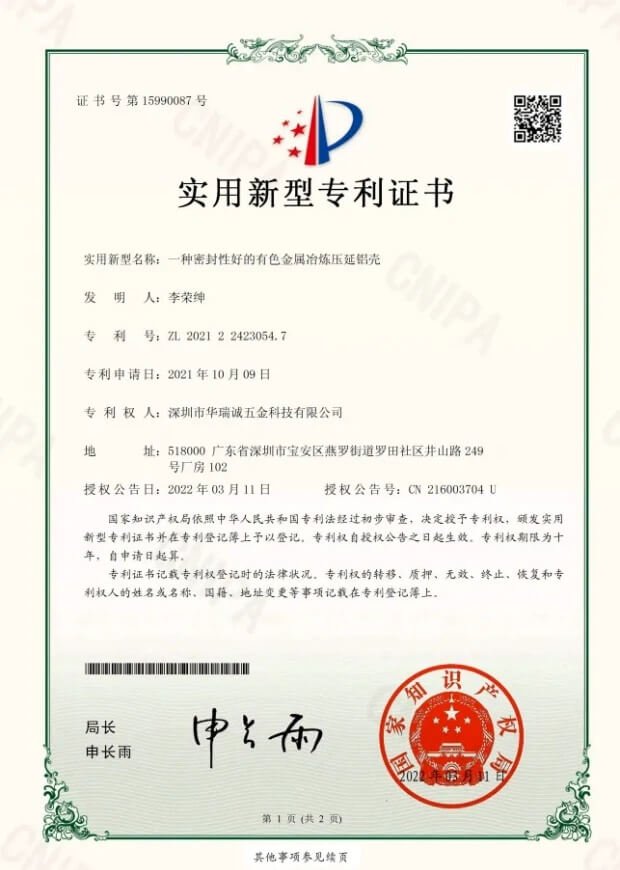
Patent Certificates
Our patents represent innovation and originality in manufacturing processes and product development. They highlight our ability to deliver unique solutions and maintain a competitive edge in the industry.
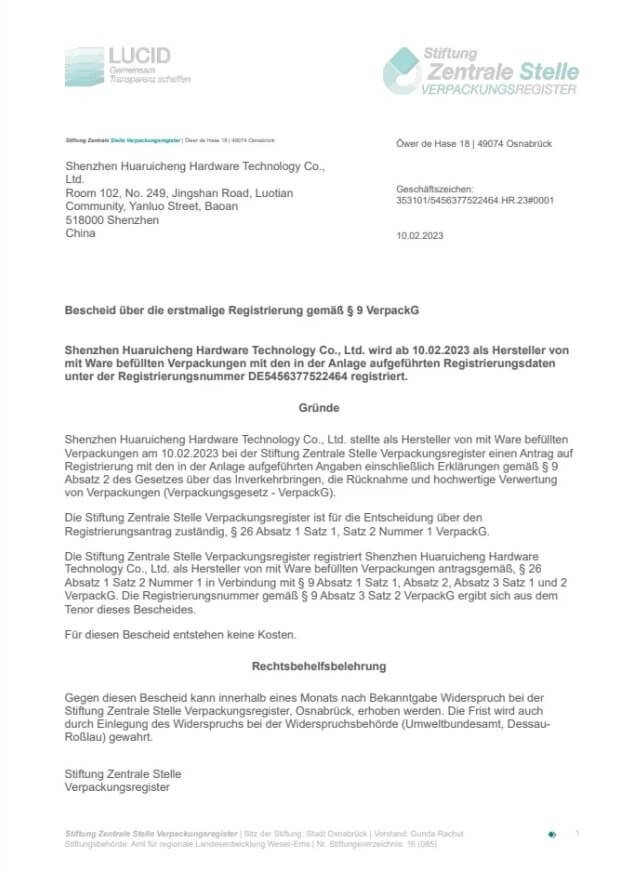
EPR-Certificate
As a compliant producer of goods-containing packaging, we can ensure our product packaging fully meets the regulatory requirements for the German market, this is our EPR-Certificate. Please contact us right now.
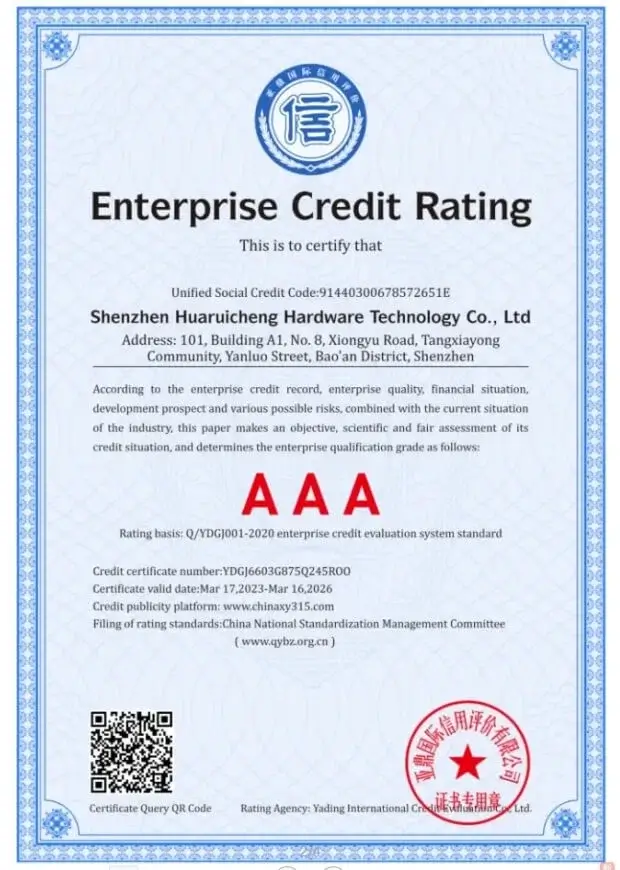
Enterprise Credit Rating Certificate
This certificate reflects our financial stability, business credibility, and trustworthy reputation in the industry. It reassures clients and partners that we are a reliable and long-term business partner.

Software Copyright Certificates
These certificates confirm ownership and protection of our self-developed software systems. They validate our technical expertise and guarantee the originality, security, and reliability of the digital tools we use in manufacturing.
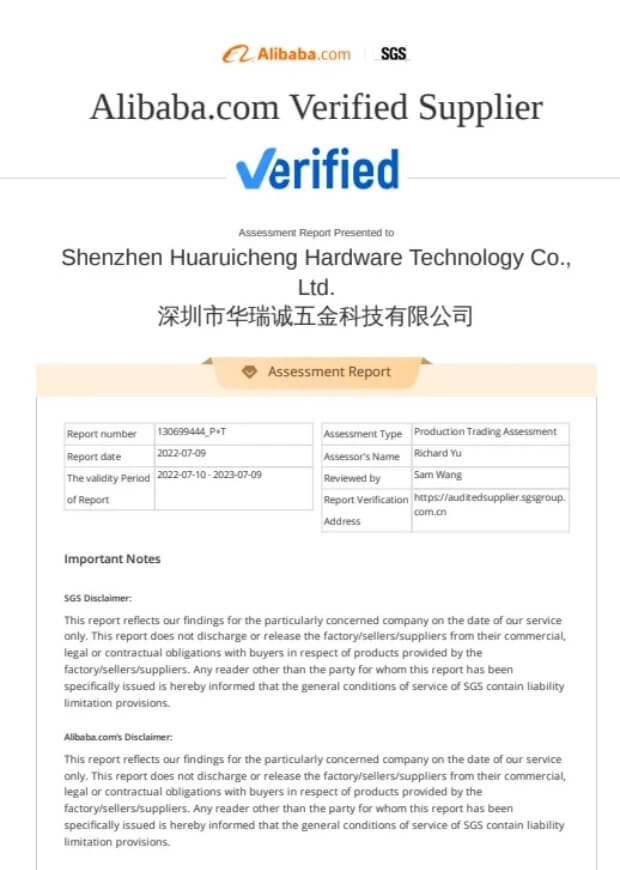
SGS and HRCCNC company certificate
This certificate verifies our company as an Alibaba.com SGS Verified Supplier, ensuring compliance and reliability for our cooperation, SGS and HRCCNC company certificate,please contact us right now.
What is Laser Cutting?
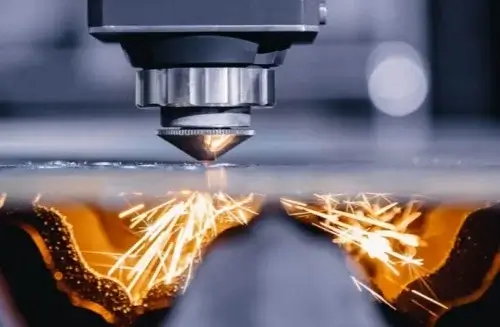
Laser cutting is a CNC-controlled manufacturing process that uses a focused laser beam to cut, profile, and separate materials with high precision. In sheet metal fabrication, manufacturers use laser cutting to produce custom metal parts, brackets, panels, and complex shapes with clean edges and consistent dimensional accuracy. It supports complex geometries, tight tolerances, and detailed cut features that are difficult to achieve with traditional metal cutting methods. Fiber laser cutting systems also improve cutting efficiency for stainless steel and aluminum sheet metal parts while reducing material waste and post-processing requirements.
What Types Of Materials Can HRCCNC Laser Cut?
HRCCNC provides CNC laser cutting services for stainless steel, aluminum, carbon steel, brass, copper, and acrylic materials used in sheet metal fabrication and precision manufacturing. Our laser cutting systems process materials such as 304 and 316 stainless steel, 5052 and 6061 aluminum, galvanized steel, brass alloys, copper alloys, and cast or clear acrylic. CNC-controlled laser cutting enables clean cuts, complex shapes, and accurate sheet-metal part production for industrial applications.

HRCCNC provides stainless steel laser cutting services for precision sheet metal fabrication, industrial equipment, and custom metal parts. Stainless steel offers corrosion resistance, clean edge quality, and high durability, which makes it suitable for aerospace, medical, food processing, and automotive applications. Our CNC-controlled fiber laser cutting systems process multiple stainless steel grades with accurate cuts and repeatable dimensional control.
- 304 Stainless Steel
- 316 Stainless Steel
- 301 Stainless Steel
- 430 Stainless Steel
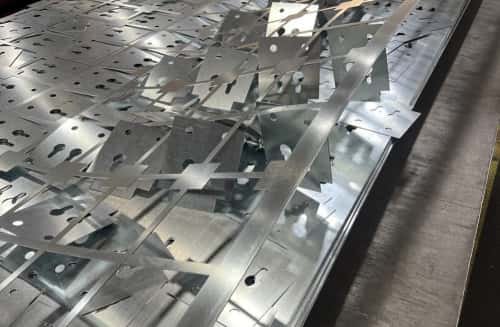
Aluminum is widely used in precision sheet metal fabrication because of its lightweight structure, corrosion resistance, and machinability. CNC laser cutting produces accurate aluminum parts with clean edges and consistent cut quality for aerospace components, automotive panels, electronics enclosures, and marine applications. HRCCNC processes multiple aluminum grades for both prototypes and large-scale production runs.
- 5052 Aluminum
- 6061 Aluminum
- 6063 Aluminum
- 7075 Aluminum
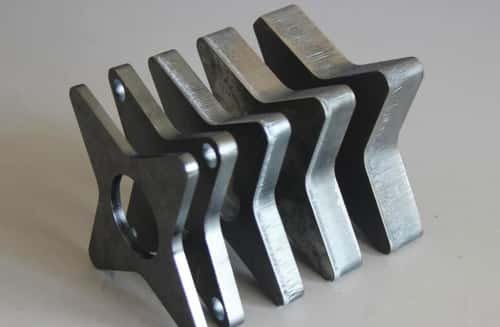
From heavy equipment parts to general sheet metal fabrication, carbon steel enables durable, cost-effective manufacturing across many industries. Laser cutting delivers smooth profiles, controlled kerf width, and repeatable precision for flat sheets and custom metal parts. Different carbon steel types also support a range of surface finishes, forming operations, and welding applications.
- Mild Steel
- Low Carbon Steel
- Hot Rolled Steel
- Cold Rolled Steel
- Galvanized Steel
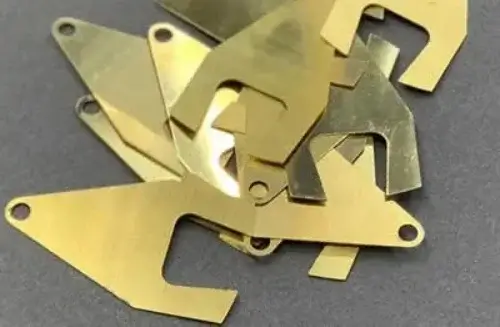
Electrical components, decorative panels, and conductive metal parts often require materials with high thermal and electrical conductivity. Laser cutting enables detailed cut patterns and precise fabrication for brass and copper applications in industrial equipment, electronics, and custom metal products. Controlled cutting parameters also help maintain cut quality on reflective metal surfaces.
- Brass Alloys
- Copper Alloys

Acrylic laser cutting is commonly used for display panels, signage, covers, branding elements, and custom fabricated products. Focused laser beams produce polished edges, fine details, and clean profiles across different acrylic materials, making the process suitable for both functional and decorative applications.
- Cast acrylic
- Extruded acrylic
- Clear acrylic
- Colored acrylic
- Mirror acrylic
- Translucent acrylic
What Types Of Laser Cutting Machines Does HRCCNC Use?
HRCCNC uses CO2, fiber, and crystal laser cutting machines to support a range of material types, sheet thicknesses, and fabrication requirements. CO2 laser cutters are commonly used for acrylic, wood, fabric, and other non-metallic materials that require smooth, clean cuts. Fiber laser cutters process stainless steel, aluminum, brass, copper, and carbon steel with high precision, fast cutting speeds, and efficient metal fabrication performance. For specialized precision-cutting applications, crystal laser cutters enable detailed processing of thin materials and complex cut geometries.
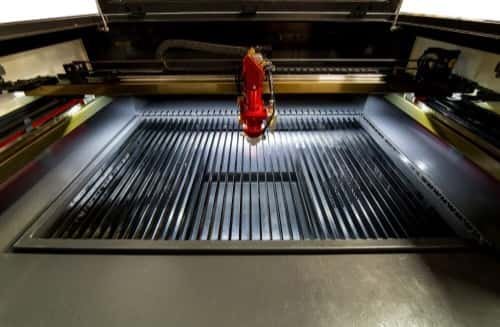
CO2 Laser Cutters
CO2 laser cutters are commonly used for acrylic, wood, fabric, plastic, and other thin non-metallic materials that require smooth edges and clean cuts. These CNC-controlled laser cutting machines support detailed patterns, custom shapes, and precise profiles for signage, display products, protective covers, and decorative fabrication applications.

Fiber Laser Cutters
High-volume sheet metal fabrication often relies on fiber laser cutting because it can process reflective and conductive metals with high cutting efficiency and stable accuracy. We use fiber laser systems to cut stainless steel, aluminum, copper, and other metal materials for fabricated parts that require smooth profiles, detailed features, and consistent production quality.
Crystal Laser Cutters
For applications that require fine detail and controlled precision, crystal laser cutters support accurate cutting across thin sheets and selected thick material configurations. These laser cutting systems are commonly used for precision fabrication projects that involve complex geometries, detailed cut features, and high-accuracy industrial components.
What Are The General Tolerances For Laser Cutting?
The general tolerances for laser cutting range from ±0.1 mm to ±0.3 mm, depending on the material type, sheet thickness, cutting parameters, and part geometry. Thin materials usually achieve smoother edges and tighter dimensional accuracy, while thicker materials may produce larger kerf widths and wider heat-affected zones during fabrication.
| Parameter | General Laser Cutting Tolerance |
| General Dimensional Tolerance | Typical tolerances range from ±0.1 mm to ±0.3 mm depending on material type, thickness, and part geometry. |
| Minimum Feature Size | The recommended minimum feature size is approximately 0.5-1.0 mm, or at least equal to the material thickness. |
| Recommended Hole Size | Minimum hole diameter should generally match or exceed the material thickness. |
| Kerf Width (Slit Size) | Typical kerf width ranges from 0.1 mm to 0.3 mm based on material and sheet thickness. |
| Edge Condition | Thin materials usually produce smooth edges with minimal burrs, while thicker materials may show slight taper, heat tint, or striations. |
| Thickness Tolerance | Material thickness tolerances follow standard mill tolerances supplied by the material manufacturer. |
| Thickness Impact On Accuracy | Increased material thickness may reduce dimensional accuracy and create larger heat-affected zones. |
| Flatness Or Warping Expectations | Minor thermal distortion or sheet warping may occur on thin sheets, large flat parts, or complex geometries. |
How Does Laser Cutting Work?
Laser cutting works by directing a highly focused laser beam onto the material surface to melt, burn, or vaporize a controlled cutting path. CNC-controlled laser cutting systems use programmed CAD data to guide the beam with high precision across stainless steel, aluminum, carbon steel, acrylic, and other fabrication materials. Assist gases such as nitrogen or oxygen remove molten material during cutting, helping produce smooth edges, narrow kerf widths, and accurate sheet metal parts.
What Are The Steps In The HRCCNC Laser Cutting Process?
The steps in the HRCCNC laser cutting process include design preparation, machine setup, CNC-controlled cutting, and post-processing inspection. Each stage helps maintain cutting precision, material efficiency, and consistent fabrication quality across custom laser cut parts and production-ready sheet metal components.
Design And Preparation
Every project begins with CAD drawings that define cut profiles, dimensions, holes, and part geometries. Material nesting layouts are also prepared to improve sheet utilization and reduce waste during laser cutting operations.
Machine Setup And Configuration
Operators load the CNC cutting program, select the material type, and configure cutting parameters such as laser power, cutting speed, focus position, and assist gas settings. Reflective materials such as aluminum and copper may require specialized setup adjustments for stable cutting performance.
Execution And Cutting
The CNC laser cutting machine follows the programmed cutting path with high positional accuracy and repeatable precision. Focused laser energy cuts through the material while assist gases remove molten debris and support clean edge quality.
Post-Processing And Finishing
After cutting, fabricated parts are cleaned, inspected, and prepared for secondary finishing processes when required. Depending on project specifications, parts may undergo deburring, polishing, anodizing, powder coating, or additional fabrication treatments before final delivery.
Why Choose HRCCNC for Laser Cutting Service
HRCCNC delivers precision CNC laser cutting solutions for custom sheet metal fabrication, industrial manufacturing, and production-scale metal processing. Our advanced laser cutting systems, engineering-focused production workflow, and quality-controlled fabrication capabilities support accurate part manufacturing, fast lead times, and reliable cutting consistency across multiple material types and industry applications.
Ultra-High Precision With Tight Tolerances
Clean Cuts With Minimal Material Waste
18 Years Of Manufacturing Experience
Advanced CNC Laser Cutting Machines
Free DFM Feedback And Engineering Support
Fast Quotes And Rapid Turnaround
Competitive Pricing For Custom Laser Cut Parts
Support For Multiple Metal Materials
What Our Laser Cutting Service Clients Say About Us?
Which Industries Does HRCCNC Serve With Laser Cutting?
HRCCNC provides CNC laser cutting services for industries that require accurate sheet metal fabrication, precision cutting, and repeatable production quality. Our laser cutting capabilities support custom metal parts, structural components, machine parts, brackets, panels, and detailed fabricated products used across automotive, aerospace, medical, electronics, and industrial manufacturing applications.
Automotive
Aerospace
Medical Devices
Consumer Electronics
Robotics & Machinery
What Are The Key Parameters Affecting Laser Cutting Quality?
The key parameters of laser cutting quality include laser power, cutting speed, focus position, assist gas settings, material type, and material thickness. These factors affect edge quality, cutting precision, kerf width, heat-affected zones, and overall fabrication accuracy. Proper machine setup and controlled cutting conditions help produce smooth edges, accurate dimensions, and consistent sheet metal part quality.
When laser power is too low, the beam may not fully penetrate the material. Excessive power can increase heat buildup and affect edge quality.
Cutting Speed
If cutting speed is too fast, incomplete cuts and rough edges may occur. Slower speeds can create excess heat and wider heat-affected zones.
Focus Position
An incorrect focus position can reduce cutting precision and produce uneven edge profiles. Proper focus improves kerf consistency and clean cutting performance.
Assist Gas Type And Pressure
Improper gas pressure may leave slag, oxidation, or burrs on cut edges. Correct assist gas settings improve edge smoothness and material removal.
Material Type
Reflective and conductive metals respond differently to laser energy during cutting. Material composition directly affects cutting speed, edge condition, and beam absorption.
Material Thickness
As material thickness increases, cutting speed usually decreases. Thick sheets may also produce wider kerf widths and larger heat-affected zones.
Nozzle Size And Alignment
Misaligned nozzles can disrupt gas flow and reduce cutting stability. Proper nozzle setup helps maintain accurate and repeatable cut quality.
Laser Beam Quality
An unstable beam can produce inconsistent cuts and rough edges. High beam quality supports fine detail and precision-cutting applications.
Heat-Affected Zone (HAZ)
Excess heat near the cut area may alter material properties and surface conditions. Controlled cutting parameters help reduce thermal distortion.
Cutting Path Complexity
Complex cut paths with sharp corners or intricate features often require slower processing speeds. Detailed geometries can affect cutting consistency and dimensional accuracy.
What Are The Advantages Of Laser Cutting?
The advantages of laser cutting include high cutting precision, fast production speeds, clean edge quality, low material waste, and consistent CNC-controlled fabrication results. Laser cutting systems process complex geometries in metals and non-metals with precise cutting paths and repeatable dimensional control. These capabilities make laser cutting suitable for prototypes, custom-fabricated parts, and large-scale manufacturing applications.
- High precision and accuracy for complex designs
- Faster production speeds compared to traditional cutting
- Minimal material waste and clean edges
- Versatility in cutting metals and non-metals
- Automation through CNC systems for consistent results
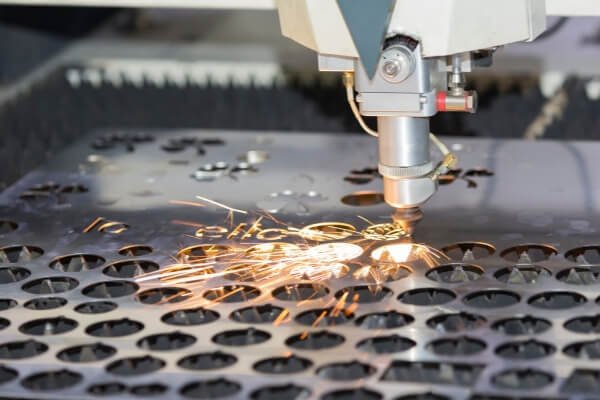
What Are The Limitations Of Laser Cutting?
The limitations of laser cutting include higher equipment costs, reduced efficiency on very thick materials, processing challenges with reflective metals, and ongoing machine maintenance requirements. Thick metal sheets often require slower cutting speeds, while materials such as copper and brass may require specialized fiber laser systems to ensure stable cutting performance. Regular calibration and maintenance also help maintain cutting precision, edge quality, and consistent production results.
- Higher initial equipment investment
- Limited efficiency for very thick materials
- Reflective metals may require specialized lasers
- Regular maintenance is needed for consistent performance
How Much Does a Laser Cutting Cost?
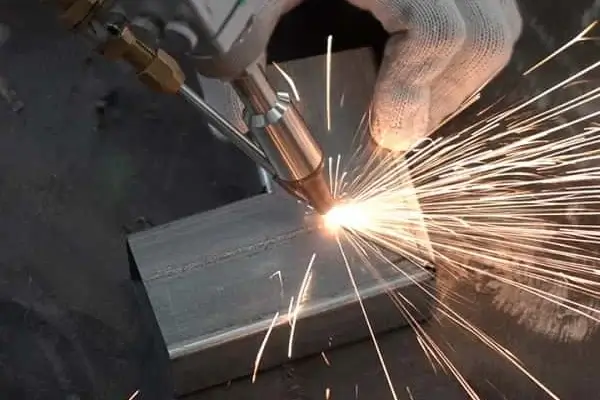
The cost of laser cutting services ranges from $50 to $150 per hour for machine time, or around $1.00 to $3.00 per minute depending on the material, thickness, and cutting complexity. Small custom laser-cut parts or one-off projects may cost as little as $2 to $10 based on part size and order quantity. Material type, sheet thickness, design complexity, finishing requirements, and precision specifications all affect the final laser cutting price. HRCCNC provides custom laser cutting quotes based on your CAD files and production requirements.
Frequently Asked Questions
How Long Does Laser Cutting Take?
Standard orders take 1 to 3 business days, with expedited next-day turnaround available for in-stock materials. Your exact timeline is determined by four primary factors including material availability, as in-stock sheets bypass sourcing delays; design complexity, where intricate geometries with frequent internal cutouts require more laser pierces and slower head positioning; material thickness, which dictates the laser’s travel speed since thicker plates demand longer pierce times and slower cut feeds; and order volume or post-processing, where large production runs or secondary finishes like deburring and bending add to the final schedule.
What Tolerances Can HRCCNC Achieve With Laser Cutting?
HRCCNC can achieve tolerances of ±0.1 mm to ±0.3 mm for standard laser-cutting production runs. Final part accuracy depends on the material type and thickness, as thinner sheets allow for narrower laser beams and tighter tolerances compared to thick plates. Additionally, intricate geometries with tight corners or highly conductive alloys require advanced nesting and precise thermal management to eliminate any minor localized heat distortion.
What Cannot Be Cut With A Laser Cutter?
Laser cutters cannot cut hazardous polymers, highly reflective metals, or thermal-shock-sensitive materials because they release toxic gases, pose fire risks, damage optics, or shatter under heat. Specifically, PVC and vinyl are banned due to the emission of corrosive chlorine gas, while ABS and polycarbonate pose extreme fire hazards. Furthermore, thick copper and brass can reflect the laser beam, damaging the system, and glass will immediately fracture from localized thermal stress.
What File Formats Does HRCCNC Accept For Laser Cutting Quotes?
HRCCNC accepts standard vector and 3D file formats, including DXF, DWG, and STEP (.stp), because they allow our engineering team to extract exact geometries, program the laser paths without translation errors, and generate rapid, accurate quotes. To ensure a seamless quoting process, please export your files at a 1:1 scale with fully closed geometries and convert all text annotations to curves to prevent missing font data.
What Is The Difference Between Plasma Cutting And Laser Cutting?
Laser cutting utilizes a highly concentrated light beam to deliver maximum precision, perfectly square cuts, and a narrow kerf on intricate geometries under 20mm with virtually no burrs. Whereas plasma cutting uses an electrically conductive gas arc engineered for heavy-duty fabrication to rapidly and cost-effectively rough-cut thick industrial steel plates up to 50mm+, resulting in a wider cut width, a slight edge bevel, and a rougher finish that requires secondary deburring.