 Skip to content

High-Precision CNC Grinding Services: Custom Parts & Components
Achieve ultra-fine surface finishes and tight dimensional control with advanced CNC grinding services. At HRCCNC, we deliver high-precision grinding solutions using CNC-controlled abrasive processes to refine external and internal surfaces across hardened metals and engineered components. Our quality-managed workflow supports both prototype development and high-volume production, enabling consistent results, global delivery, and inspection-backed reliability.
- Removes material with high-speed grinding wheels to achieve tight tolerances and precise surface geometry.
- Produces superior surface finishes for shafts, bearings, and sealing components.
- Maintains dimensional accuracy for complex cylindrical and flat components through CNC-controlled grinding processes.
- Supports multiple grinding methods, including cylindrical, surface, and centerless grinding, to meet diverse part requirements.
- Preserves structural integrity by minimizing thermal distortion during precision grinding operations.
Our Certifications
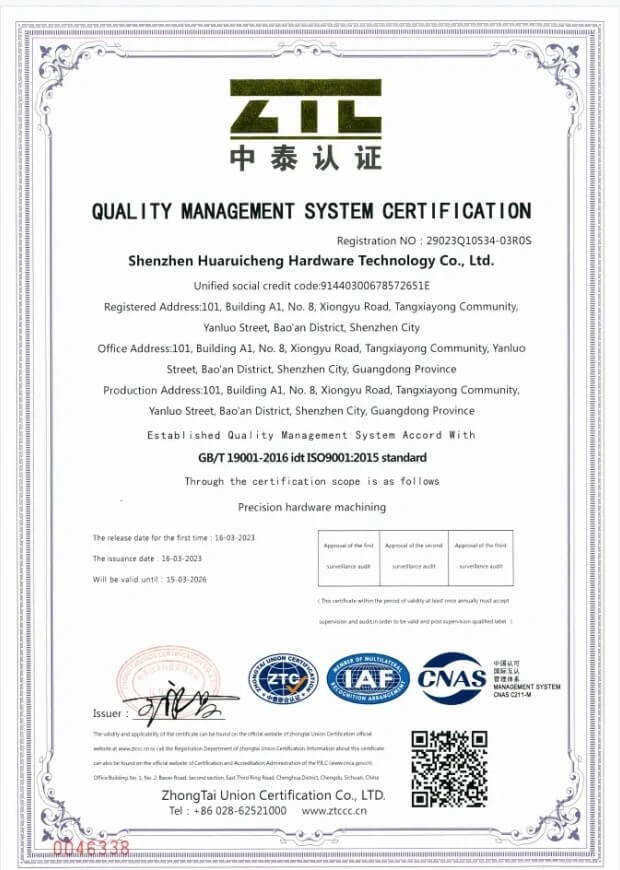
ISO 9001:2015
This certification demonstrates that our company follows internationally recognized quality management standards. It ensures consistent product quality, process optimization, and a strong focus on customer satisfaction.
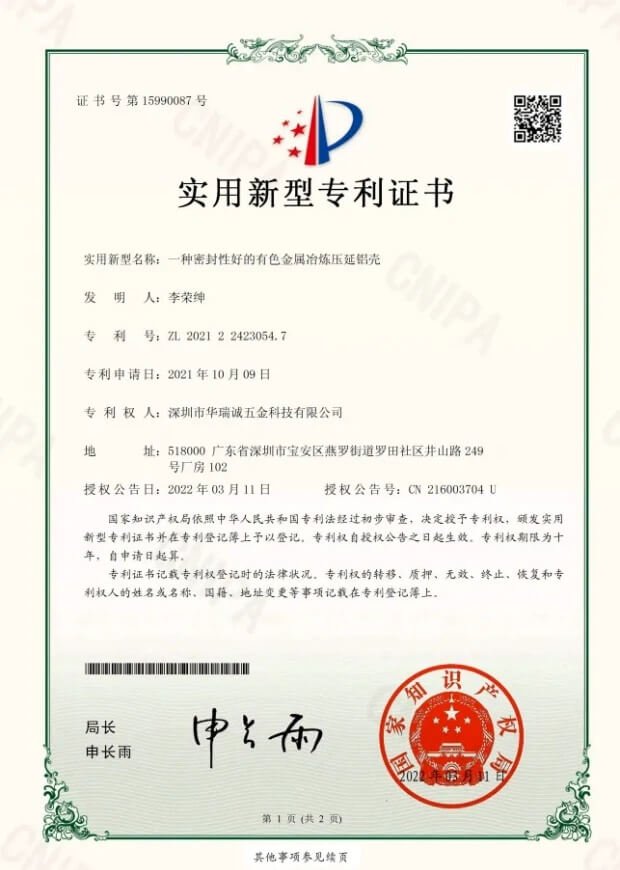
Patent Certificates
Our patents represent innovation and originality in manufacturing processes and product development. They highlight our ability to deliver unique solutions and maintain a competitive edge in the industry.
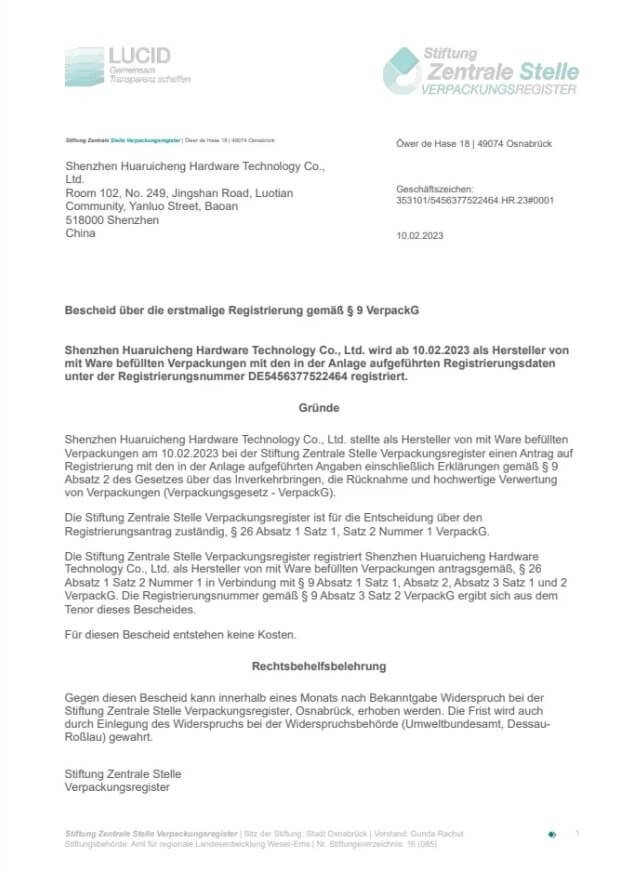
EPR-Certificate
As a compliant producer of goods-containing packaging, we can ensure our product packaging fully meets the regulatory requirements for the German market, this is our EPR-Certificate. Please contact us right now.
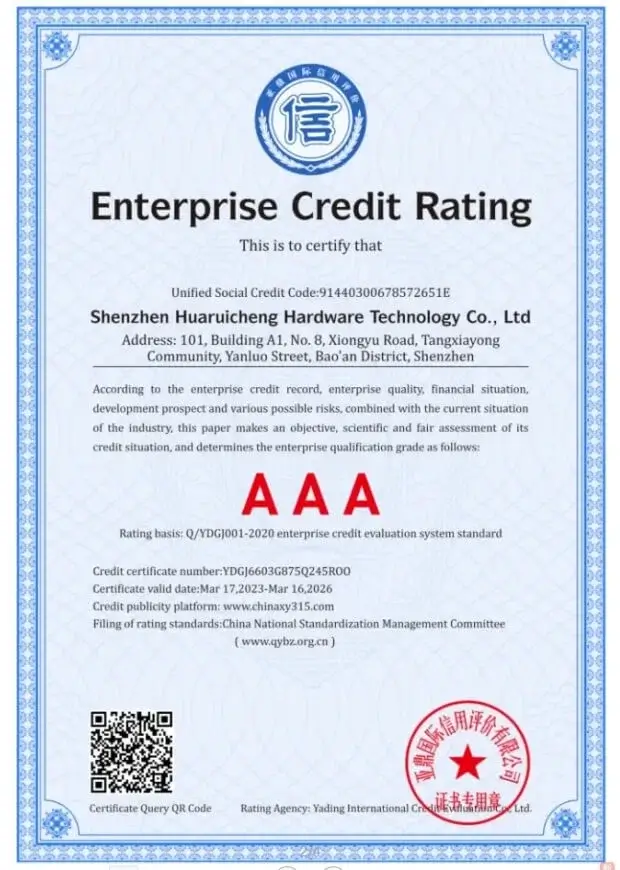
Enterprise Credit Rating Certificate
This certificate reflects our financial stability, business credibility, and trustworthy reputation in the industry. It reassures clients and partners that we are a reliable and long-term business partner.

Software Copyright Certificates
These certificates confirm ownership and protection of our self-developed software systems. They validate our technical expertise and guarantee the originality, security, and reliability of the digital tools we use in manufacturing.

SGS and HRCCNC company certificate
This certificate verifies our company as an Alibaba.com SGS Verified Supplier, ensuring compliance and reliability for our cooperation, SGS and HRCCNC company certificate, please contact us right now.
What is CNC Grinding?
CNC grinding is a precision surface-finishing process that uses a rotating abrasive wheel to remove material from a workpiece under computer control. This process refines dimensional accuracy, improves surface finish, and achieves tight tolerances by removing microscopic layers of material. The grinding wheel contacts the workpiece and performs controlled abrasion, in which each abrasive grain acts as a cutting edge to shape, smooth, or finish the surface according to programmed parameters and machine configuration.
In high-precision manufacturing, CNC grinding plays a critical role in finishing operations. It improves surface integrity, enhances the fit between mating components, and ensures consistent geometry for reliable functional performance. This process is used on materials such as hardened steel, stainless steel, alloy steel, and carbide, where conventional machining cannot achieve the required surface finish or tolerance. It is widely used for shaft finishing, bearing surfaces, tool sharpening, and precision component manufacturing across the aerospace, automotive, and medical industries.
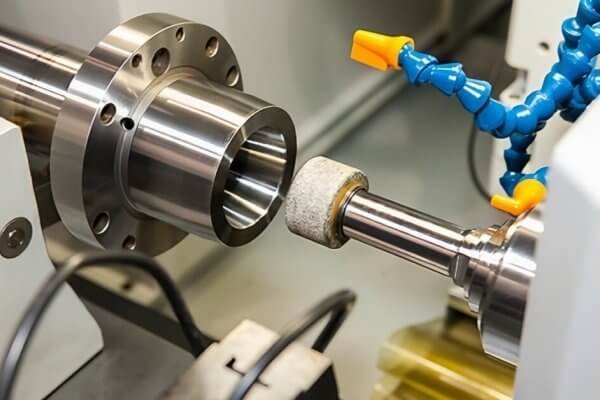
Hardened metals and precision-critical materials are commonly processed using CNC grinding. The process is ideal for materials such as hardened steel, stainless steel, alloy steel, and carbide, where tight tolerances and fine surface finishes are required. Both ferrous and non-ferrous metals, along with selected engineering materials, can be machined effectively using the right grinding parameters to maintain accuracy and surface integrity.
Available Materials for CNC Grinding
| Material | Common Grades / Series | Characteristics | Typical Applications |
|---|---|---|---|
| Aluminum | 1xxx, 2xxx, 3xxx, 5xxx, 6xxx, 7xxx | Lightweight, corrosion-resistant, good machinability | Aerospace parts, automotive housings, electronics |
| Brass | C260, C360 | High machinability, corrosion resistant, conductive | Fittings, valves, connectors |
| Stainless Steel | 304, 316, 410, 416, 440 | Corrosion-resistant, high-strength, heat-resistant | Medical tools, food equipment, and marine parts |
| Titanium | Grade 2, Grade 5, Grade 23 | High strength-to-weight, corrosion resistant | Aerospace parts, implants, chemical components |
| Engineering Plastics | Nylon, POM, PTFE, PEEK | Lightweight, low-friction, electrically insulating | Bearings, seals, insulation components |
| Tool Steel | A2, D2, O1, M2, H13 | High hardness, wear-resistant, heat-stable | Cutting tools, molds, dies |
| Carbon Steel | 1018, 1045, 1144, 1215 | Strong, cost-effective, good machinability | Shafts, gears, structural parts |
What Are the Types of CNC Grinding Processes?
CNC grinding offers multiple precision techniques suited for different component shapes and tolerance requirements:
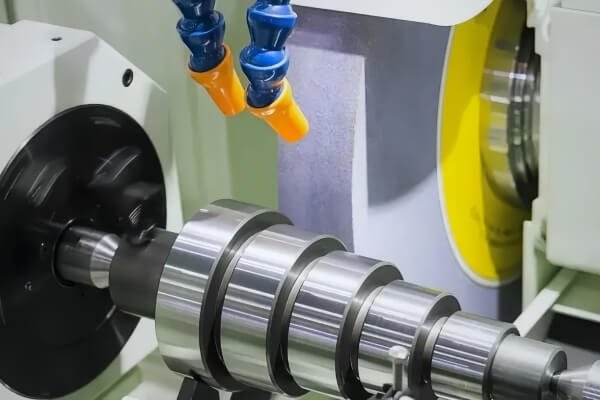
OD Grinding
OD grinding is applied to the outer surfaces of cylindrical components such as shafts, axles, and rollers. It ensures precise diameters, roundness, and concentricity. CNC OD grinding supports both small and long parts, making it suitable for automotive transmission shafts, hydraulic rods, and aerospace components that require tight tolerances and smooth finishes.
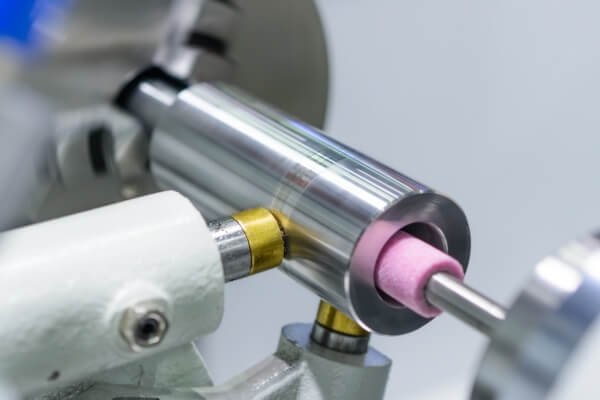
ID Grinding
ID grinding focuses on the internal bores of parts, ensuring accurate diameters, roundness, and surface finishes inside hollow components. It is commonly used for bearings, sleeves, bushings, and precision hydraulic cylinders. CNC ID grinding achieves micron-level tolerances, supporting smooth operation and long service life.

Surface Grinding
Surface grinding produces flat and smooth surfaces with controlled parallelism. It is widely used for precision plates, molds, dies, and machine components. CNC-controlled surface grinding handles both large workpieces and thin parts while maintaining uniform surface finish and dimensional stability.
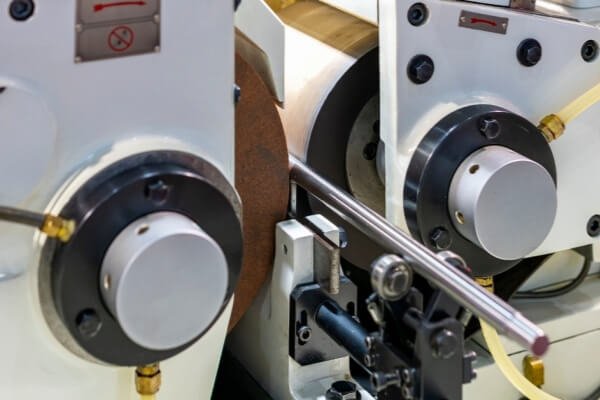
Centerless Grinding
Centerless grinding removes material without using a fixed center or chuck. The part is supported between a regulating wheel and a grinding wheel, enabling continuous and high-speed processing. This method is effective for producing large volumes of cylindrical parts such as pins, rods, and fasteners with consistent roundness and surface quality.
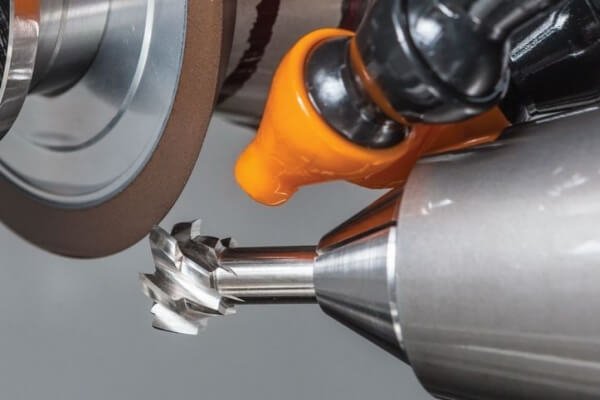
Tool Grinding
Tool grinding restores and sharpens cutting tools such as drills, end mills, and reamers. CNC tool grinding maintains precise angles, contours, and cutting edges to improve tool performance and extend tool life. It is widely used in manufacturing environments that require high-performance cutting tools.
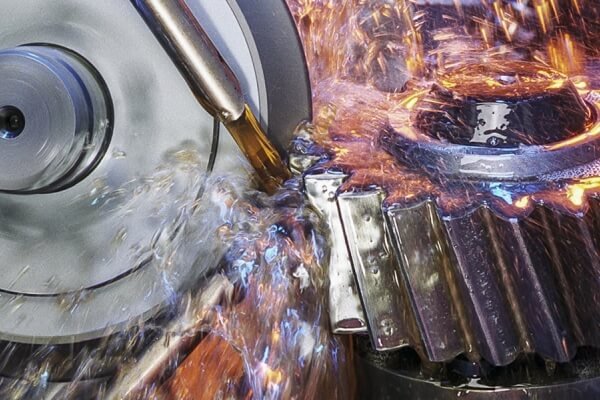
Form Grinding
Form grinding produces custom shapes, contours, and complex profiles using specialized grinding wheels. It is used for components such as gear teeth, camshaft lobes, and turbine blades. This method ensures high accuracy in both geometry and surface finish for intricate parts.
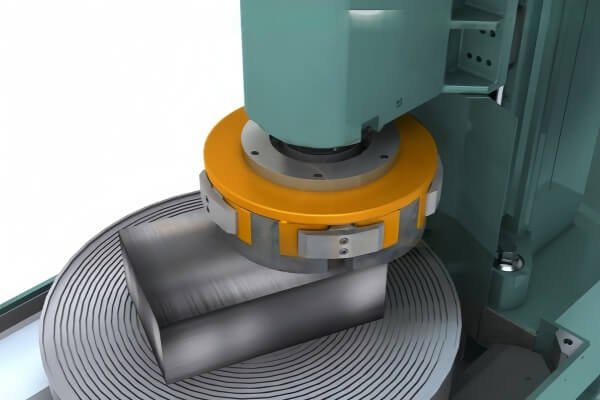
Rotary Grinding
Rotary grinding, also called rotary surface grinding, is used to machine circular or rotationally symmetrical parts. It delivers uniform thickness, flatness, and surface finish. Common applications include bearing races, rings, and discs that require dimensional consistency.

ID honing
ID honing improves bore accuracy and surface finish beyond what standard grinding can achieve. It uses abrasive stones to create crosshatched patterns inside bores, improving lubrication retention and wear resistance. It is used for engine cylinders, fuel injectors, and hydraulic sleeves where internal precision is critical.
What are The Benefits of CNC Grinding?
CNC grinding achieves tight tolerances, fine surface finishes, and consistent dimensional accuracy while supporting repeatable production and efficient material removal.
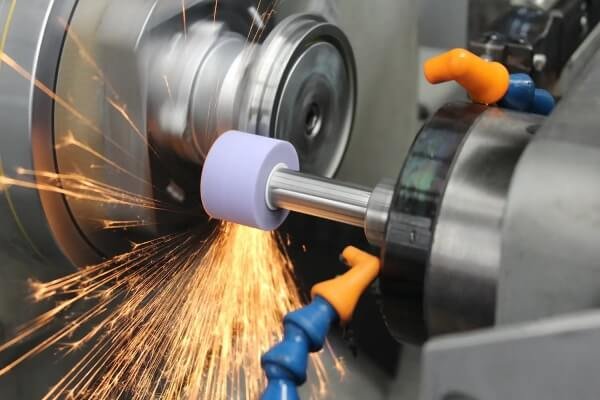
High-Precision Accuracy
Grinding systems achieve tolerances up to ±0.001 mm through precise control of wheel movement and feed rate. This level of accuracy supports critical aerospace and medical components where dimensional stability is essential. Reliable geometry improves assembly fit and reduces variation in high-performance parts.
Complex Geometry Handling
Intricate profiles, internal cavities, and non-standard shapes are produced with controlled grinding paths. Multi-axis capability enables accurate shaping of both internal and external features. This supports components that require detailed geometry while maintaining strict tolerance requirements.
Superior Surface Finish
Fine abrasive action enables mirror-like finishes or controlled roughness levels based on Ra specifications. Smooth surfaces improve sealing performance and reduce friction between contact parts. This level of surface quality supports wear resistance and long-term functional reliability.
High Efficiency & Automation
CNC automation reduces manual labor by executing programmed grinding cycles with consistent accuracy. High-speed processing improves production efficiency while maintaining control over material removal. Automated systems ensure stable output across continuous operations.
Versatility in Materials
A wide range of materials, including hardened steel, stainless steel, carbide, and alloys, can be processed with controlled parameters. Grinding adapts to material hardness and structure to maintain surface integrity. This flexibility supports diverse industrial applications with varying material requirements.
Enhanced Productivity
High-speed grinding operations increase throughput while maintaining precision. Reduced manual intervention and optimized cycle times improve overall production efficiency. Consistent machining performance supports both small batches and large-scale manufacturing.
Reduced Thermal Distortion
Controlled grinding conditions limit heat generation during material removal. Stable temperature conditions prevent deformation and preserve the structure of heat-treated components. This ensures dimensional accuracy and material performance under demanding conditions.
Consistent Quality
Programmed CNC operations ensure repeatability across hundreds or thousands of parts. Identical machining parameters maintain uniform tolerances and surface finishes. This consistency supports quality standards required for critical and high-volume production.
What Post-Processing & Surface Finishing Services Do We Offer?
Cleaning & Residue Removal
Removes grinding oils, dust, and residual particles from machined components. Clean surfaces prevent contamination and prepare parts for coating, inspection, or assembly. Proper cleaning ensures consistent surface condition and improves downstream processing reliability.
Deburring with Edge Finishing
Eliminates sharp edges and burrs formed during machining and grinding. Smooth edge transitions improve handling safety and assembly fit. Controlled edge finishing reduces wear and prevents premature failure in functional components.
Surface Polishing and Finishing
Refines surface roughness to improve contact performance and visual quality. Polishing creates smooth surfaces that reduce friction and enhance wear resistance. This operation supports precision parts used in sealing, sliding, and contact applications.
Post-Grinding Heat Treatment
Adjusts material microstructure to improve hardness, strength, and wear resistance. Controlled heat treatment stabilizes components after grinding. This ensures reliable performance under mechanical stress and demanding operating conditions.
Dimensional and Tolerance Inspection
Verifies part dimensions and tolerance compliance using precision measurement systems. Inspection confirms geometry, surface finish, and critical features. This step ensures consistency, traceability, and adherence to engineering specifications.
Corrosion Protection and Coatings
Applies protective layers to prevent oxidation and environmental damage. Coatings improve durability and extend service life in harsh conditions. Surface treatments also enhance appearance and resistance to wear.
Anodizing & Plating
Forms protective and functional surface layers through electrochemical processes. Anodizing improves corrosion resistance and surface hardness for aluminum components. Plating applies metallic coatings, such as nickel or chrome, to enhance durability, conductivity, and finish quality.
CNC Grinding vs. Conventional Grinding
CNC grinding delivers controlled precision and repeatable results, while conventional grinding relies on manual operation and yields variable accuracy. The choice depends on whether your requirements prioritize tight tolerances and consistency or basic surface finishing with lower setup complexity.
| Parameter | CNC Grinding | Conventional Grinding |
| Control System | Computer-controlled, automated | Manual or semi-automatic |
| Precision & Tolerance | Up to ±0.005 mm | Higher variation |
| Surface Finish | Fine finish | Inconsistent finish |
| Repeatability | High batch consistency | Varies per part |
| Complex Geometry | Handles complex shapes | Limited capability |
| Production Efficiency | High-speed automated cycles | Slower manual process |
| Material Capability | Suitable for hardened materials | Limited for hard materials |
| Operator Dependency | Low | High |
| Consistency | Uniform output | Variable quality |
| Cost Efficiency | Lower long-term cost | Higher labor cost |
Industries We Serve
Our CNC grinding services support precision finishing and dimensional control across automotive, aerospace, robotics, and other industries. Each sector requires specific tolerance levels, surface finishes, and material handling conditions. We apply controlled grinding processes to meet these requirements, delivering consistent accuracy and surface integrity.
Automotive Industry
Aerospace and Defense
Medical Devices
Consumer Electronics
Robotics and Automation
Industrial Equipment
Telecommunications
Energy Sector
Consumer Goods
Why Choose HRCCNC for CNC Grinding?
Choose HRCCNC for CNC grinding services, where precision, surface finish quality, and dimensional accuracy define every operation. Our ISO 9001:2015-certified processes ensure strict tolerance control and consistent results across all components. We specialize in high-precision grinding for complex parts, offering competitive pricing for both prototypes and high-volume production. With integrated machining and finishing capabilities, we maintain a seamless workflow from raw material to final inspection, ensuring fast turnaround and reliable delivery. Our focus on process control, advanced CNC equipment, and dedicated project support ensures consistent quality from start to finish.
Strict Quality Control and ISO 9001:2015 Certification
Competitive Pricing for Complex Custom Parts
One-Stop Integrated Manufacturing Services
Fast Quotes and Rapid Turnaround
Fully Custom CNC Parts Tailored to Your Design
Advanced CNC Machining Capability
What Our CNC Grinding Clients Say About Us?
How Long Does CNC Grinding Typically Take?
Individual CNC grinding cycle times range from approximately 1.5 to 4 minutes per part, while full production timelines for larger projects generally range from 7 to 15 days. The overall duration depends on key factors such as part complexity, material hardness, required tolerances, and surface finish specifications. Simple components with standard requirements can often be completed within a few hours, making them well-suited for prototype or low-volume production.
More complex parts that require tighter tolerances and superior surface quality involve additional grinding passes, precise setup, and in-process inspection, which increases production time while ensuring accuracy and consistency. For larger-batch production, efficiency improves as setup time is distributed across multiple parts, and optimized grinding parameters help maintain high throughput without compromising precision, repeatability, or surface finish.
Looking for high-quality precision CNC Grinding?
Submit your design to receive precision CNC grinding with verified tolerances and consistent surface quality.
Related Resources and Guides
Since 2008, HRCCNC has been a trusted CNC machining and metal manufacturing company delivering precision-engineered custom parts to global customers. Our team of skilled engineers and technicians provides one-stop integrated services, including CNC machining, die casting, and sheet metal fabrication, supporting projects from product design to finished product delivery across North America, Europe, and Asia.
From a small CNC workshop to a global manufacturing partner, HRCCNC has expanded through continuous capability upgrades and international quality certification, including ISO 9001:2015. Our factory is ISO 9001:2015 certified and has been audited by SGS, ensuring strict quality control, traceability, and compliance with international manufacturing standards.
Company Introduction Video
FAQs About Surface Finishing for CNC Parts
What is grind machining, and where is it applied?
Grind machining is a precision process that removes material using an abrasive grinding wheel to achieve tight tolerances and fine surface finishes. It is applied to components such as shafts, bearings, and sealing surfaces in industries like aerospace, automotive, and medical manufacturing, where accuracy and surface quality are critical.
How do grinders work in CNC grinding processes?
CNC grinders use rotating abrasive wheels to remove material from a workpiece under programmed control. The machine regulates wheel speed, feed rate, and positioning to maintain dimensional accuracy and surface finish. Each abrasive grain acts as a cutting edge, enabling controlled micro-level material removal.
How does a CNC grinder differ from traditional grinders?
A CNC grinder operates through computer-controlled programs that ensure consistent movement and repeatable results. Traditional grinders rely on manual control, which introduces variation in accuracy and surface finish. CNC systems improve precision, efficiency, and batch consistency.
What is a CNC grinding machine, and how does it work?
A CNC grinding machine uses programmed instructions to control the grinding wheel’s movement and the workpiece’s positioning. The system removes material in controlled passes to refine geometry and surface finish. This allows high-precision machining of hardened materials and complex components.
Which industries benefit most from CNC grinding services?
Industries such as aerospace, automotive, medical devices, and industrial equipment rely on CNC grinding for precision components. These sectors require tight tolerances, smooth surface finishes, and consistent quality for parts such as shafts, gears, and precision tools.
What types of CNC grinding equipment are commonly used?
Common equipment includes cylindrical grinders, surface grinders, centerless grinders, and tool grinding machines. Each machine type is designed to handle specific geometries such as external diameters, flat surfaces, or internal bores.
What materials can be processed with CNC grinding services?
CNC grinding processes materials such as hardened steel, stainless steel, tool steel, carbide, and alloys. The process adapts grinding parameters to maintain surface integrity and dimensional accuracy across different material properties.
How do I choose the right CNC grinder manufacturers for my project?
A suitable CNC manufacturer should demonstrate precision capability, tolerance control, material expertise, and reliable lead times. Certifications such as ISO 9001:2015, inspection systems, and experience with complex components indicate consistent production quality and dependable service.