...

Custom Welding Services

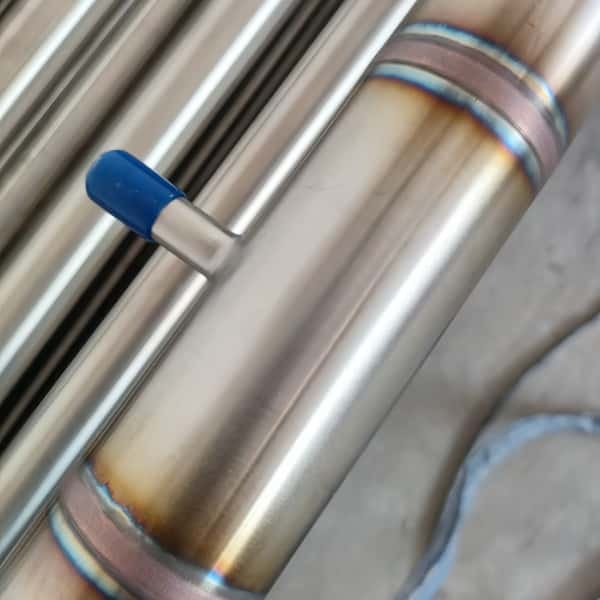
HRCCNC provides professional MIG, TIG, arc, spot, resistance, and high-energy beam welding for custom metal components, delivering precision, structural integrity, and long-term durability across industrial manufacturing applications. Our welding services support welded assemblies, structural frames, process equipment, aerospace components, automotive parts, and precision-engineered fabrication projects requiring consistent weld quality and dimensional accuracy.

Upload your CAD files or welding drawings to request a welding quote and start your welding project with HRCCNC.

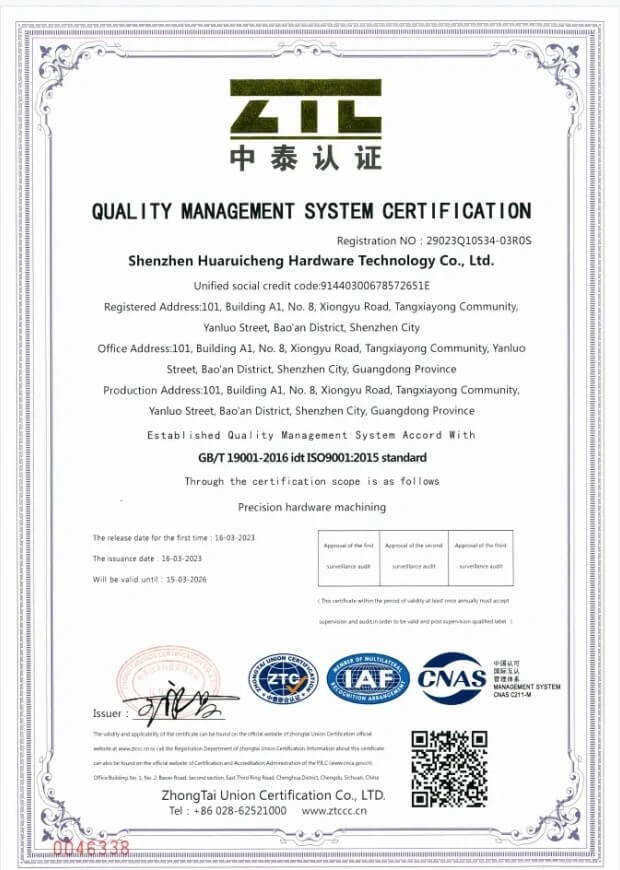
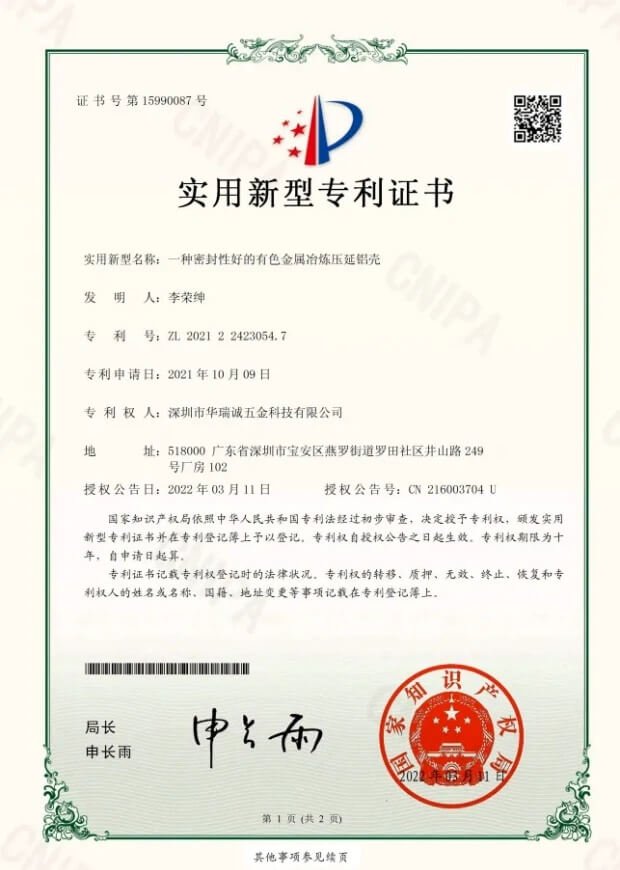
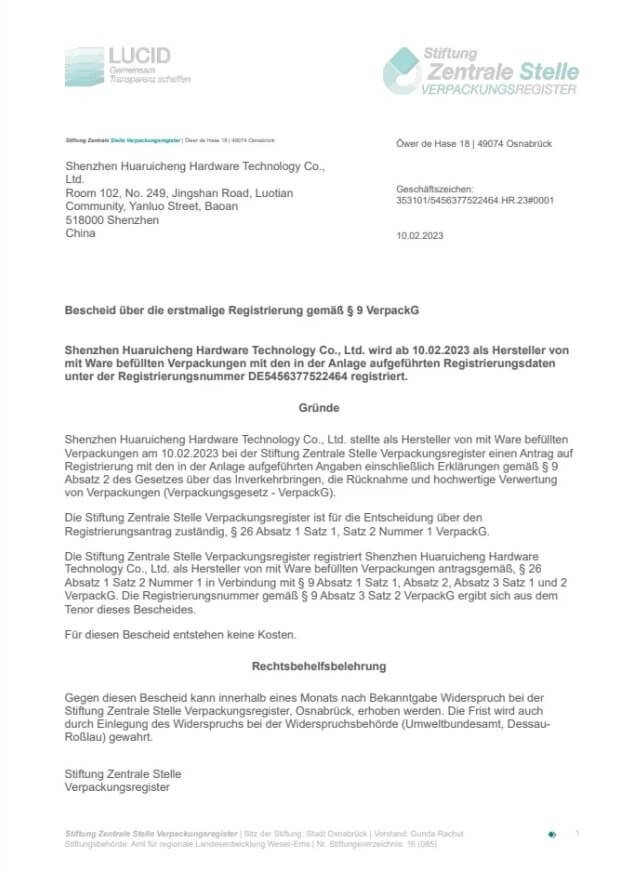
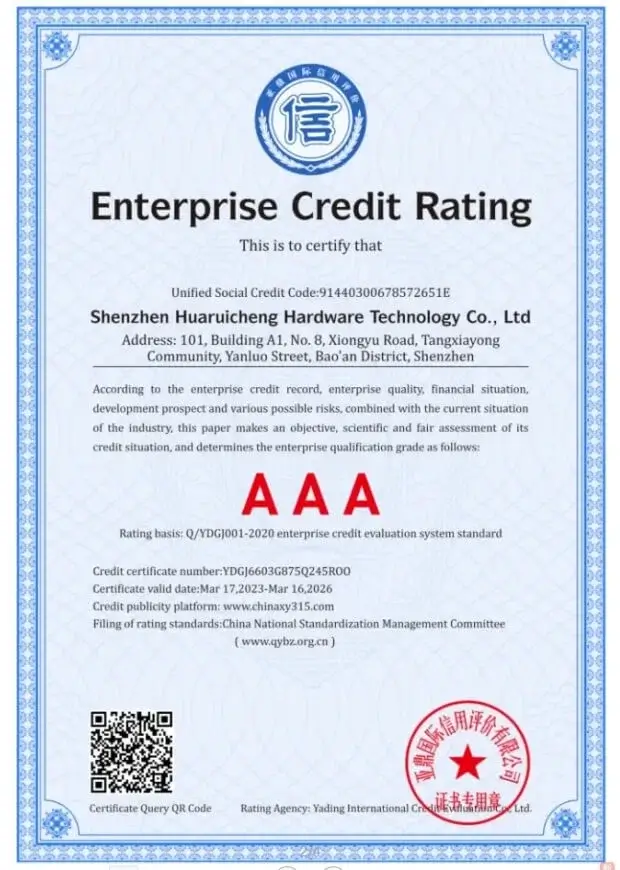
Our Certifications

What is Welding?

Welding is a metal-joining process that uses heat, pressure, or both to create a permanent metallurgical bond between materials. This process creates a continuous joint structure by melting or deforming the joint area under controlled manufacturing conditions. Welding generally involves a heat source, shielding/protection method (gas or flux), and in many cases, filler material. Heat sources such as electric arcs, resistance current, or laser energy generate the thermal input required for fusion, while shielding gases or flux materials protect the molten weld pool from contamination. Filler materials supplement the joint and help ensure proper weld compatibility between connected metal components.

In industrial manufacturing, welding plays a critical role in producing durable welded metal assemblies, structural frames, pressure vessels, and precision-engineered parts. HRCCNC provides custom welding services for carbon steel, stainless steel, aluminum, titanium, copper, and nickel alloy components using TIG, MIG, resistance, and laser welding processes. Welding processes improve structural integrity, load-bearing capacity, and dimensional stability across aerospace, automotive, construction, and industrial metal fabrication applications.

welding

What Metal Joining Processes Does HRCCNC Offer?

HRCCNC offers professional welding and brazing/soldering services, including fusion welding, solid-state welding, brazing, and soldering processes for custom metal projects in aerospace, automotive, construction, and industrial fabrication. Our welding services support carbon steel, stainless steel, aluminum, titanium, copper, and nickel alloy components with process selection based on material type, joint configuration, and production requirements.

  • Fusion Welding: The joint area is heated to a molten state, forming a weld pool that solidifies during cooling to create a permanent metallurgical bond.
  • Solid-State Welding: Pressure (with or without heat) is applied to induce plastic deformation and solid-state bonding between metal surfaces.
  • Soldering: A filler metal with a lower melting point than the base metal melts and fills the joint gap without melting the parent material.
  • Brazing: A filler metal with a melting point above 450°C flows into the joint without melting the parent materials, creating strong, sealed metal connections.
ClassificationWelding MethodDescriptionApplication
Fusion WeldingArc WeldingUses an electric arc as the heat source (e.g., MIG/MAG welding, TIG welding with argon shielding, submerged arc welding). Steel structures, automotive manufacturing, aerospace components
Gas WeldingUses oxy-fuel flame combustion to melt the base metal and filler material, forming a metallurgical bond.
High Energy Beam WeldingIncludes laser welding and electron beam welding; uses highly focused energy for deep penetration and precision welding.
Solid-State Welding ProcessesResistance WeldingCombines heat from electric current and pressure (includes spot welding, seam welding, and butt welding). Spot welding for car bodies, butt welding for pipelines, and turbine blade joining in aerospace applications.
Friction WeldingGenerates heat through mechanical friction (includes friction stir welding and inertia welding).
Ultrasonic WeldingUses high-frequency vibrations to join materials, mainly plastics and thin metals.
SolderingSoldering (Soft Soldering) Uses filler metals below 450°C, commonly tin-based solders for electrical and low-temperature joining applications. Electronic circuits, wiring assemblies, and electrical components
Brazing Brazing (Hard Soldering) Uses filler metals above 450°C, including silver-based and copper-based alloys, without melting the parent metals. Air-conditioner piping, cutting tools, and heat exchangers

What Welding Processes Does HRCCNC Use?

At HRCCNC, we use arc welding, high-energy beam welding, and resistance welding to manufacture custom metal components for industrial fabrication, welded assemblies, aerospace parts, pressure vessels, and precision commercial welding applications.

Arc Welding

Arc welding uses an electric arc to melt and join metals for industrial fabrication, welded assemblies, and structural components requiring strong metallurgical bonding and long-term durability. HRCCNC applies MIG, TIG, and submerged arc welding for mild steel, stainless steel, and aluminum fabrication projects, with process selection based on material thickness, penetration depth, weld appearance, production speed, and fabrication complexity. 

MIG Welding

MIG Welding

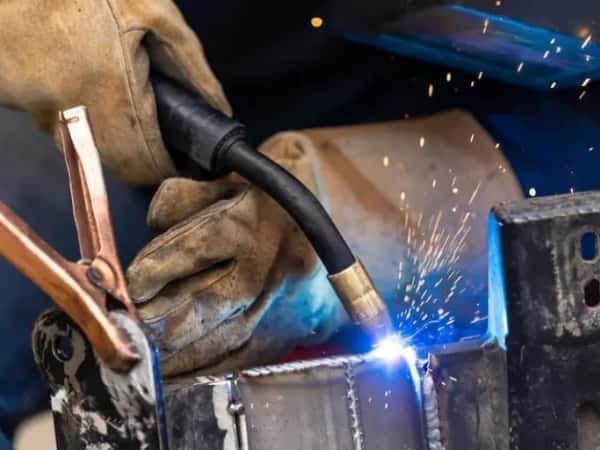
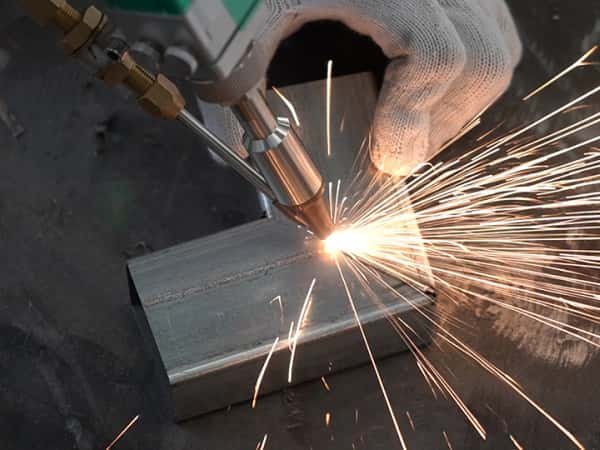
HRCCNC uses MIG welding with a consumable wire electrode and argon, CO2, or mixed shielding gases to manufacture stainless steel, mild steel, and aluminum components at high production speeds and with consistent weld quality.
TIG Welding

TIG Welding

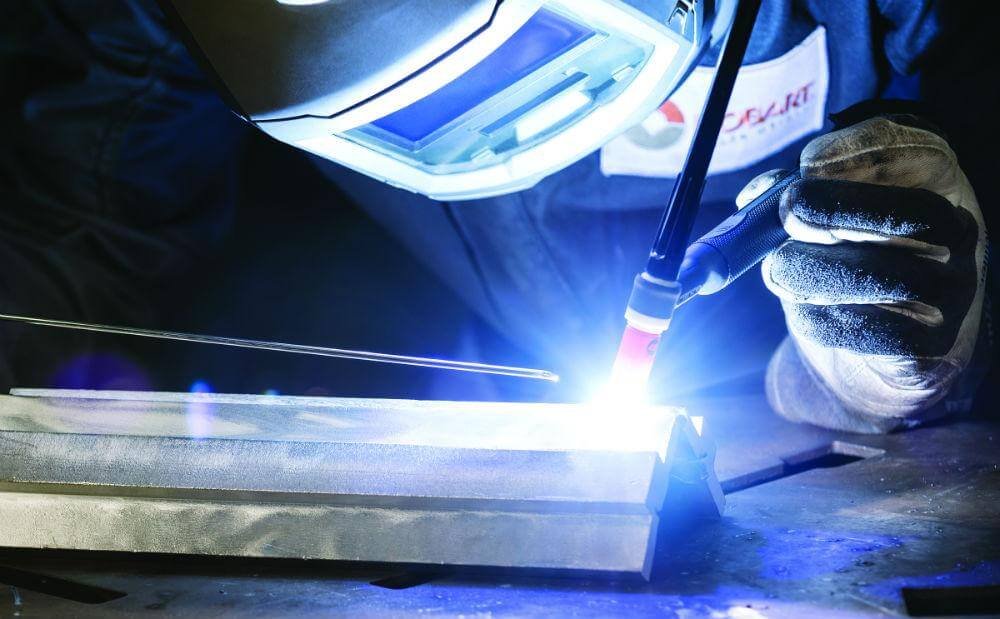
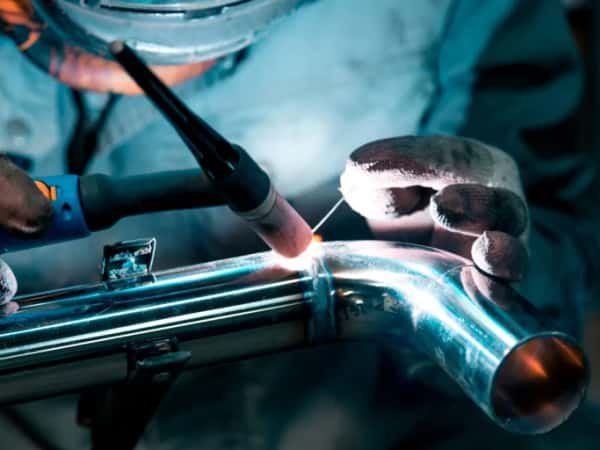
For precision fabrication projects, HRCCNC uses TIG welding on aluminum, titanium, copper, and stainless steel parts, employing a non-consumable tungsten electrode with or without filler material to achieve smooth weld finishes.
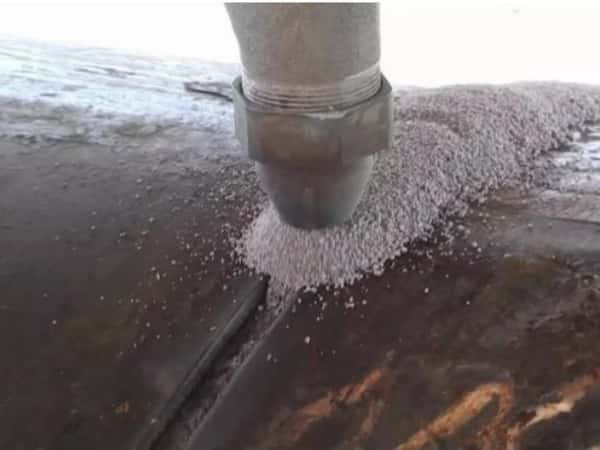
Submerged Arc Welding

Submerged Arc Welding

Submerged arc welding supports heavy section fabrication through deep weld penetration, high deposition efficiency, and flux-protected arc stability for structural components, pressure vessels, and thick-steel assemblies.
Comparison MIG Welding TIG Welding Submerged Arc Welding
Electrode Type Consumable wire electrode (serves as filler material) Non-consumable tungsten electrode (requires separate filler wire) Consumable wire electrode under granular flux
Shielding Gas Inert gas or gas mixture (e.g., argon, CO₂) Argon or inert gas mixtures Granular flux blanket
Efficiency High (fast welding speed) Lower than MIG welding Very high (high deposition rate)
Operational Difficulty Relatively easy Relatively complex Moderate
Weld Appearance Less refined surface finish compared to TIG Smooth, aesthetic finish Uniform weld with deep penetration
Suitable Materials Mild steel, stainless steel, aluminum alloys, etc. Aluminum, titanium, copper, and precision components Thick steel plates, structural steel, and pressure vessels

High-Energy Beam Welding

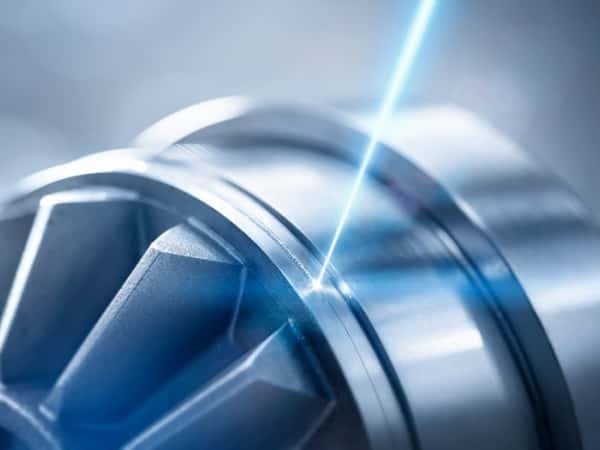
High-energy beam welding uses concentrated energy beams to join metals with deep penetration, precise control, and minimal thermal distortion, making it suitable for precision manufacturing applications. HRCCNC uses electron beam welding and laser beam welding for aerospace, electronics, medical, and industrial components that require narrow heat-affected zones, controlled weld geometry, repeatable weld consistency, and high-precision fabrication across complex metal welding projects. 

Electron Beam Welding

Electron beam welding uses a high-velocity electron beam in a vacuum environment to produce deep-penetration, high-purity welds for aerospace, nuclear, and precision machinery components with minimal contamination, precise control, and consistent weld quality. 

  • Concentrated energy achieves deep penetration.

  • Vacuum environment improves weld purity and quality.

  • Non-contact process with no electrode wear or slag

  • Precise control suitable for micro-components and high-precision parts

  • Fast and efficient, suitable for precision and repeatable manufacturing applications.

Electron Beam Welding
Laser Beam Welding

Laser Beam Welding

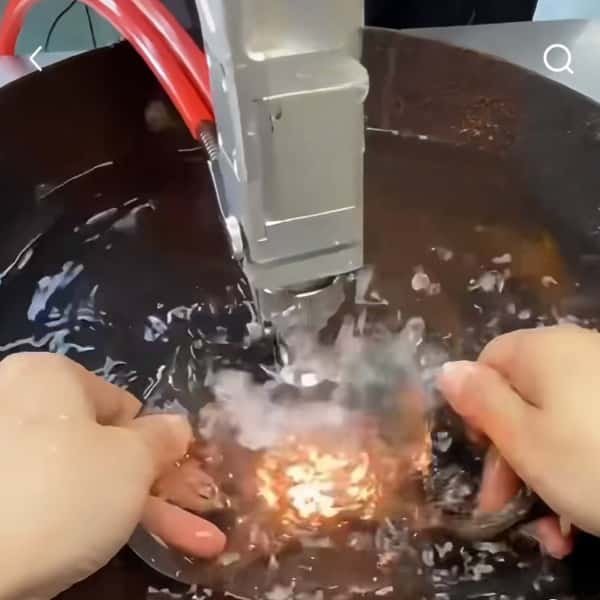
Laser beam welding converts focused light energy into heat to create deep-penetration, low-distortion welds for automotive, electronics, and medical components with precise control, minimal contamination, and repeatable production consistency. 

  • Concentrated energy with deep penetration
  • Non-contact process with minimal contamination
  • Precise control and high welding consistency
  • Low heat input with significantly reduced thermal distortion
Feature Electron Beam Welding (EBW) Laser Beam Welding (LBW)
Energy Source Uses a high-velocity electron beam Uses a focused optical laser beam
Welding Environment Requires a vacuum environment Operates in air or inert gas
Penetration Depth Capable of extremely deep penetration in thick-section materials under specialized conditions Moderate to deep penetration (typically suitable for thin to medium-thickness sections depending on laser power and material type).
Heat Affected Zone (HAZ) Extremely narrow with minimal heat spread Narrow with low thermal distortion
Welding Speed High-speed precision welding Very high-speed automated welding
Equipment Cost High due to vacuum chamber systems High due to laser equipment systems
Part Size Limitation Limited by the vacuum chamber dimensions Less restricted for larger components
Automation Suitability Suitable for precision manufacturing Excellent for automated production
Typical Applications Aerospace, nuclear, precision machinery Automotive, electronics, medical devices

Resistance Welding

Resistance welding uses electric current and applied pressure to join metal surfaces without filler material, making it suitable for high-speed industrial fabrication and production assemblies. HRCCNC uses spot welding, seam welding, and butt welding for sheet metal fabrication, automotive components, pipes, and welded assemblies that require fast cycle times, strong metallurgical bonding, and consistent weld quality throughout production operations. 

Spot Welding

Spot Welding

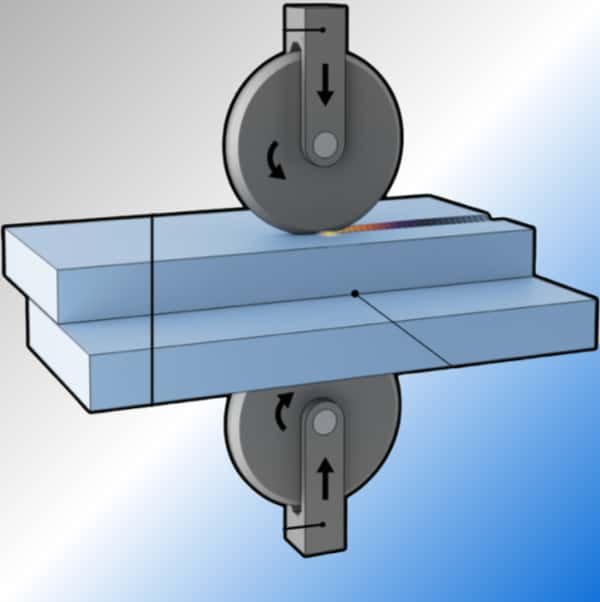
Spot welding forms overlapping joints by clamping workpieces between two electrodes and applying resistance heat to create nugget welds. HRCCNC uses spot welding for automotive body panels, sheet metal assemblies, and production fabrication requiring consistent weld quality.
Seam Welding

Seam Welding

Seam welding uses rolling electrodes to apply continuous pressure and electrical current, forming continuous weld seams instead of separate weld points. HRCCNC applies seam welding to fuel tanks, pipes, and sealed metal containers requiring leak-resistant welded joints.
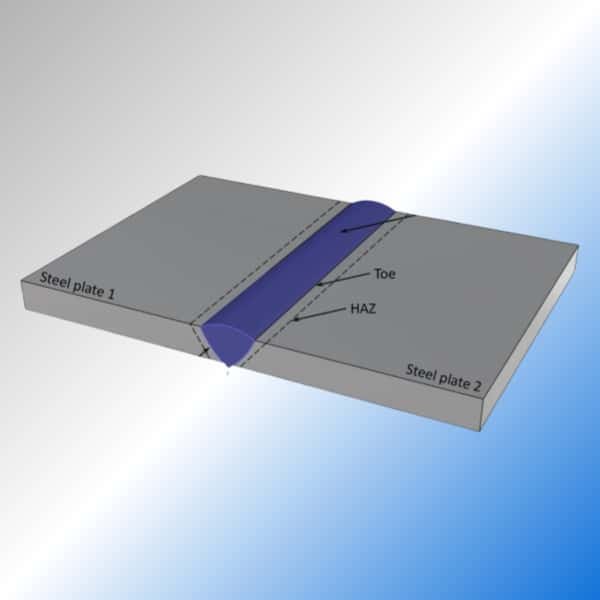
Butt Welding

Butt Welding

Butt welding joins two workpieces end-to-end by applying resistance heat and axial pressure until their surfaces fuse. HRCCNC uses butt welding for pipe joining, rod fabrication, bar stock, and structural metal connections that require high weld integrity.

What Are the Common Types of Welding Joint Configurations?

Welding joint configurations determine how metal components connect, directly affecting load distribution, weld penetration, sealing performance, and long-term structural durability. HRCCNC uses butt, T, corner, edge, cruciform, and lap joints in industrial fabrication, sealed industrial assemblies, welded assemblies, and sheet-metal projects that require balanced stress distribution, high load-bearing capacity, and reliable mechanical performance. 

Butt Joint

Butt Joint

A butt joint connects the ends or edges of two metal parts in the same plane, typically with an included angle close to 180°. HRCCNC uses butt joints for pipe welding, structural fabrication, and pressure-vessel components that require full penetration and high load-bearing capacity.
T Joint

T Joint

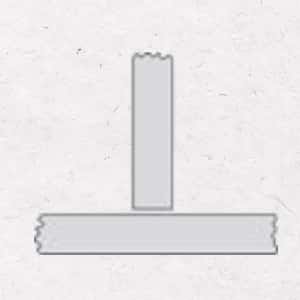
A T joint forms when one metal component joins another at approximately 90°, creating a “T” configuration commonly used in welded frames, support brackets, and structural assemblies requiring balanced stress distribution and strong fillet weld performance.
Corner Joint

Corner Joint

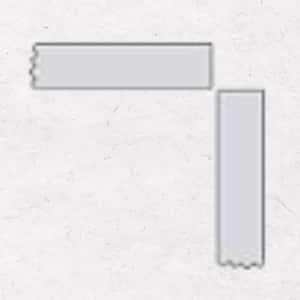
Corner joints connect metal parts at a 90° angle to form open or closed corners, commonly used in tanks, enclosures, frames, and sheet metal fabrication, and require dimensional stability and accurate edge alignment.
Edge Joint

Edge Joint

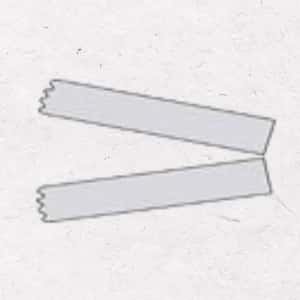
An edge joint positions parallel metal edges side by side, at angles between 0° and 30°, for lightweight fabrication structures, flanged parts, and sheet metal assemblies requiring controlled weld placement and edge reinforcement.

Cruciform Joint

Cruciform Joint

Cruciform joints connect two flat plates or bars welded to a third flat plate at right angles along the same axis and are commonly used in heavy fabrication, support structures, and industrial assemblies that require multidirectional load support.

Lap Joint

Lap Joint

Lap joints connect overlapping metal parts, forming an angle between 0° and 5° within the weld region. They are commonly used in automotive panels and sheet metal fabrication and require an increased bonding area.
What Materials Are Used in Welding?

Welding uses base metals, filler materials, and shielding materials selected according to the welding process and material requirements. Filler wires must match the base metal for compatibility, while shielding gases and fluxes protect the weld zone from oxidation, contamination, and fusion defects during welding. 

Filler Materials 

  • Filler wires should match the base metal for metallurgical compatibility

  • Aluminum and copper require special alloy wires

  • TIG welding typically uses non-consumable electrodes and separate filler rods

Shielding Materials

  • MIG/TIG uses argon, helium, or mixed gases as shielding
  • Submerged Arc Welding uses flux to prevent oxidation
  • Brazing and gas welding use flux to remove oxides and improve wetting
    •  
work shop

What Materials Does HRCCNC Weld?

HRCCNC welds a broad range of metals, including low carbon steel, aluminum alloys, stainless steel, titanium, copper, and nickel alloys, matching each welding process to the material’s mechanical properties, corrosion resistance, thermal conductivity, and structural application requirements. Our custom welding services support industrial fabrication, heavy-duty fabricated systems, welded assemblies, aerospace components, automotive parts, and precision-engineered products requiring strong weld integrity and consistent production quality. 

Material Type Weldability Recommended Processes Characteristics
Low Carbon Steel Excellent MIG, TIG, Stick Welding Easy to weld, cost-effective, widely used
Stainless Steel Good TIG, MIG Corrosion-resistant, some stainless grades may experience heat-affected zone hardening
Aluminum & Alloys Moderate to High TIG, MIG High thermal conductivity, oxidizes easily
Copper Challenging due to extremely high thermal conductivity TIG, Laser Welding Extremely conductive, requires high heat input
Titanium & Alloys Good with strict shielding control TIG High strength, lightweight, sensitive to contamination
Nickel Alloys Good TIG, MIG Heat-resistant and corrosion-resistant, used in special applications

How Does Welding Design and Process Optimization Improve Efficiency?

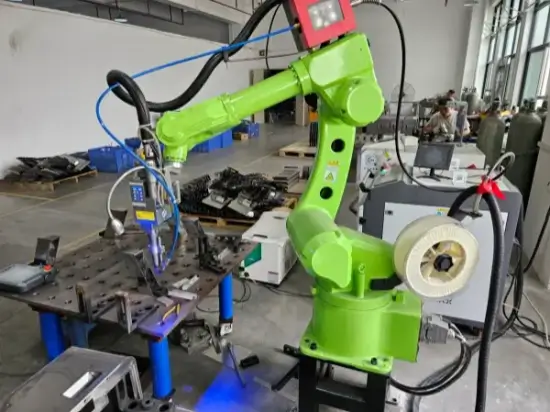
High-quality welding depends not only on advanced equipment but also on coordinated design and process planning. Designers and welding engineers should collaborate early to ensure compatibility between structural requirements and welding methods. In deep-sea diving equipment, robotic arm welding systems use precision sensors and controlled weld trajectories to produce dense, seamless welds that maintain sealing performance and structural integrity under extreme underwater pressure. 

robotic arm welding

How Does the HRCCNC Welding Manufacturing Process Work?

HRCCNC’s welding manufacturing process follows five structured phases from design through inspection, ensuring every custom metal component meets dimensional accuracy, weld integrity, and production quality requirements before delivery. Each phase supports controlled fabrication, process consistency, and reliable weld performance across industrial fabrication, welded assemblies, pressure vessels, and precision-engineered components. 

What Are the Application Examples of Professional Welding Services?

Professional welding services apply across industries, including aerospace, automotive, structural fabrication, and pressure vessel manufacturing, each requiring specific materials, joint types, and welding methods. HRCCNC provides custom welding services for industrial fabrication projects that demand controlled penetration, structural durability, dimensional accuracy, and consistent weld performance across different operating environments. 

Application Area Materials Used Joint Type Welding Method Notes
Pressure Vessels Carbon Steel, Stainless Steel Cylinder and End Cap Joints TIG + Submerged Arc Welding Requires full penetration and leak-proof weld integrity
Steel Frames Mild Steel T-Joints, Fillet Joints MIG + Arc Welding Supports durable and rigid structural fabrication
Automotive Chassis High-Strength Steel, Aluminum Lap Joints, Spot Welds MIG + Resistance Welding Supports thin-sheet welding with high automation
Aerospace Components Aluminum, Titanium Butt Joints TIG + Laser Welding Requires precision welding with minimal distortion

What Is the Average Cost for Custom Welding Service?

Custom welding service rates typically range from $80 to $120 per hour, depending on project complexity, materials, location, and required expertise. Many welding shops charge minimum service fees to cover setup, transportation, and operational overhead. Standard fabrication and pipeline welding projects generally follow hourly pricing, while complex industrial fabrication and precision welding can reach rates of up to $150 per hour, depending on material selection, weld complexity, and production scope.

Total welding cost depends on material type, joint configuration, production volume, finishing operations, and fabrication complexity. HRCCNC supports prototype development, structural fabrication, precision components, and production manufacturing with welding solutions optimized for performance, quality, and cost efficiency.

Factors That Affect Custom Welding Costs

Several factors influence the final cost of a custom welding project, including the selected process and materials, as well as the part’s size, complexity, and finishing requirements.

Aluminum Welding for CNC-Machined Parts

What Are the Benefits of Our Professional Welding Services?

Our professional welding services help businesses achieve strong, accurate, and production-ready metal fabrication for industrial, structural, and custom-engineered applications. At HRCCNC, we combine certified welding expertise, advanced fabrication equipment, and strict quality control processes to deliver reliable weld performance, faster turnaround times, and consistent manufacturing results across every project. 

Why Choose HRCCNC for Metal Welding Services?

HRCCNC provides precision welding and integrated manufacturing solutions for industrial fabrication, welded assemblies, and custom-engineered metal components. Our certified production capabilities, advanced machining systems, and quality-controlled fabrication processes support reliable performance, fast turnaround times, and global manufacturing requirements. 

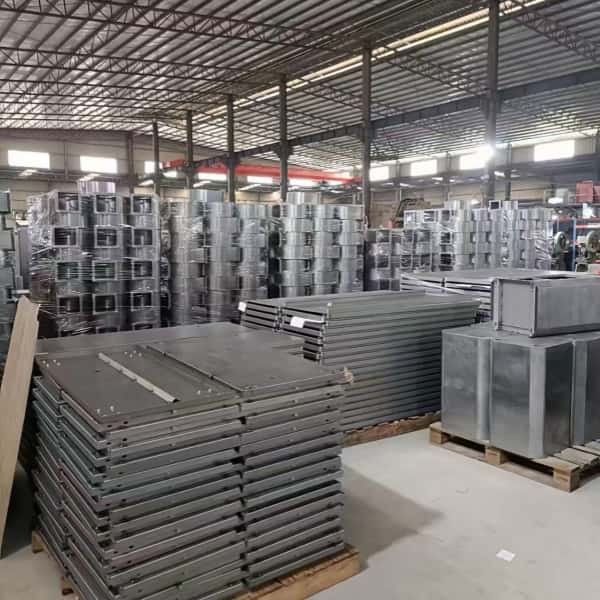
Factory Pictures

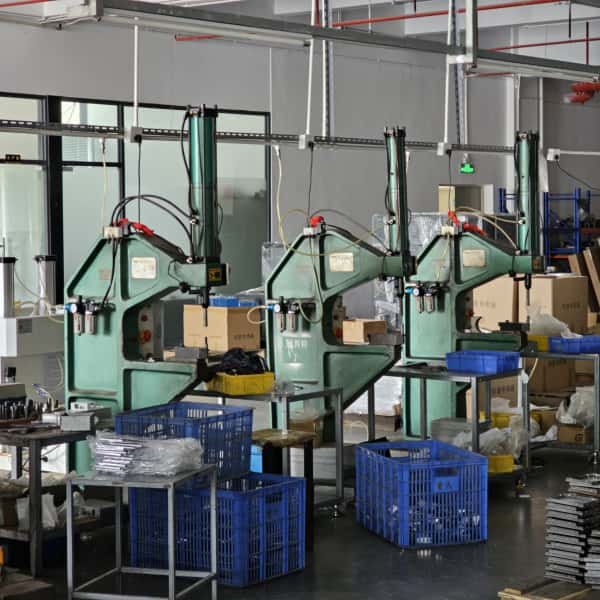
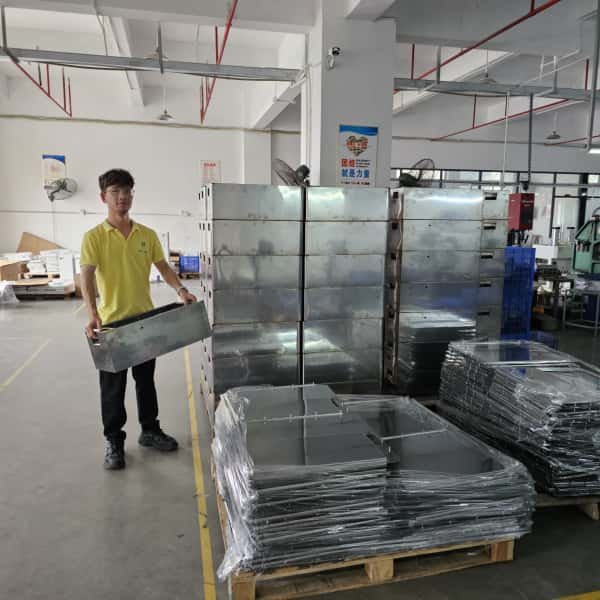
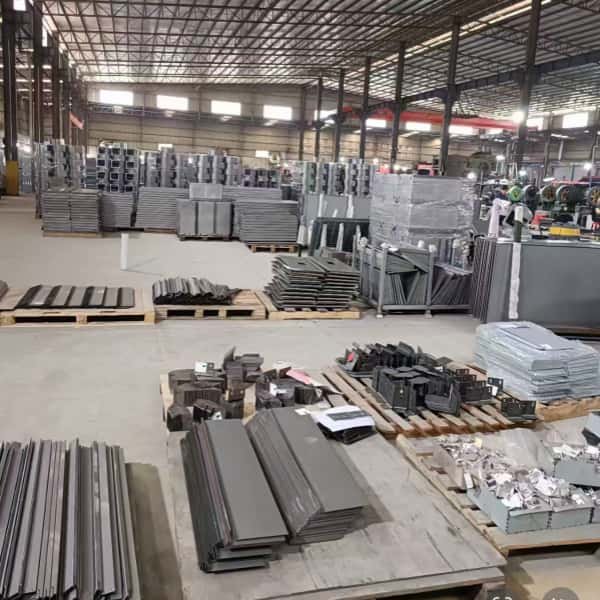
Below are some photos of our factory. We can provide you with quick quotes for not only welding but also CNC machining, Sheet Metal bending, and laser cutting. If you have a new design, please do not hesitate to contact us for a quote.

Resource & Guides

About Us

Since 2008, HRCCNC has provided precision CNC machining, custom welding, die casting, and sheet metal fabrication services for global industrial manufacturing projects. Our engineering and production teams deliver one-stop manufacturing solutions from product design through final production across North America, Europe, and Asia.

From a small CNC workshop to an international manufacturing partner, HRCCNC has expanded through continuous equipment upgrades, advanced fabrication capabilities, and certified quality management systems. Our factory is ISO 9001:2015 certified and SGS-audited, supporting strict quality control, traceability, and compliance with international manufacturing standards for precision-engineered custom parts and welded assemblies.

Frequently Asked Questions

What Is the Difference Between Welding and Brazing?

Welding joins metals by melting the base materials to form a fused joint, while brazing joins metals using a filler metal heated above 450°C but below the melting temperature of the parent materials. 

TIG welding is commonly preferred for aluminum because it provides precise heat control, a clean weld appearance, and stable fusion quality. MIG welding is also used for higher deposition rates and larger production fabrication.

Yes. Stainless steel can be MIG welded using appropriate filler wire and shielding gas combinations. MIG welding supports fast production speed and consistent weld quality for stainless steel fabrication and welded assemblies. 

Titanium welding requires strict shielding and contamination control, making it highly process-sensitive. Oxygen and nitrogen contamination can quickly cause brittleness and reduce weld integrity without proper inert gas shielding.

Porosity occurs when gas becomes trapped inside the weld metal during solidification. Common causes include contamination, inadequate shielding gas coverage, moisture, improper welding parameters, and poor surface preparation. 

Arc welding requires welding helmets, protective gloves, flame-resistant clothing, respiratory protection, welding curtains, and proper ventilation systems to reduce exposure to sparks, UV radiation, fumes, and heat.

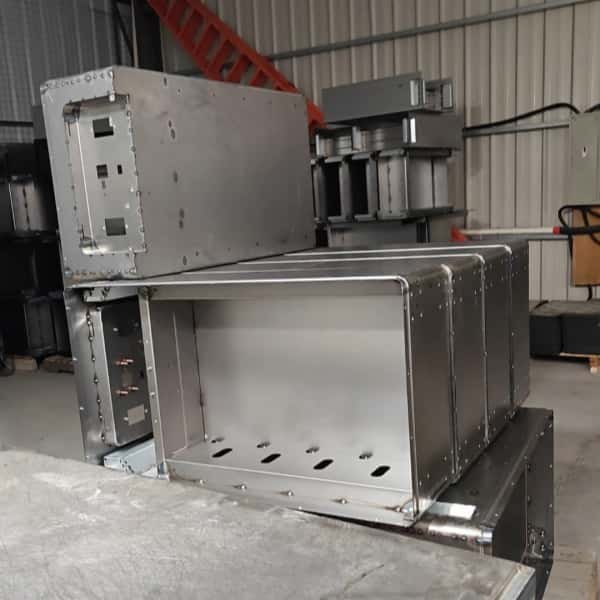
HRCCNC manufactures welded frames, brackets, machine bases, enclosures, structural assemblies, pressure vessel components, automotive parts, aerospace components, and precision-engineered industrial fabrication systems. 

Yes. HRCCNC provides both manual welding and automatic welding services, including robotic welding systems for production fabrication requiring repeatable weld consistency, controlled quality, and higher manufacturing efficiency. 

Scroll to Top

Get Requests

Contact us right now, get a reply today! We will provide a quote within 2 hours. WhatsApp: +86 17318068324, E-mail: info@hrccnc.com