
Professional Brushed Finish Services
HRCCNC provides professional brushed finish services that create uniform grain patterns, refined surface textures, and a clean satin appearance across a wide range of metal components. Our controlled metal brushing process helps conceal minor imperfections, fingerprints, and handling marks while improving surface durability and reducing glare. Suitable for aluminum, stainless steel, brass, copper, titanium, and steel parts, brushed finishing delivers an attractive, easy-to-maintain surface for both decorative and industrial applications.
- Creates a uniform brushed texture and directional grain using controlled abrasive belts, pads, and brushing equipment.
- Produces low-glare, satin-finish surfaces that help conceal fingerprints, smudges, and minor scratches.
- Supports aluminum, stainless steel, brass, copper, titanium, mild steel, and tool steel components.
- Integrates seamlessly with CNC machining, deburring, anodizing, passivation, and powder coating processes.
- Integrates seamlessly with CNC machining, deburring, anodizing, passivation, and powder coating processes.
Our Certifications
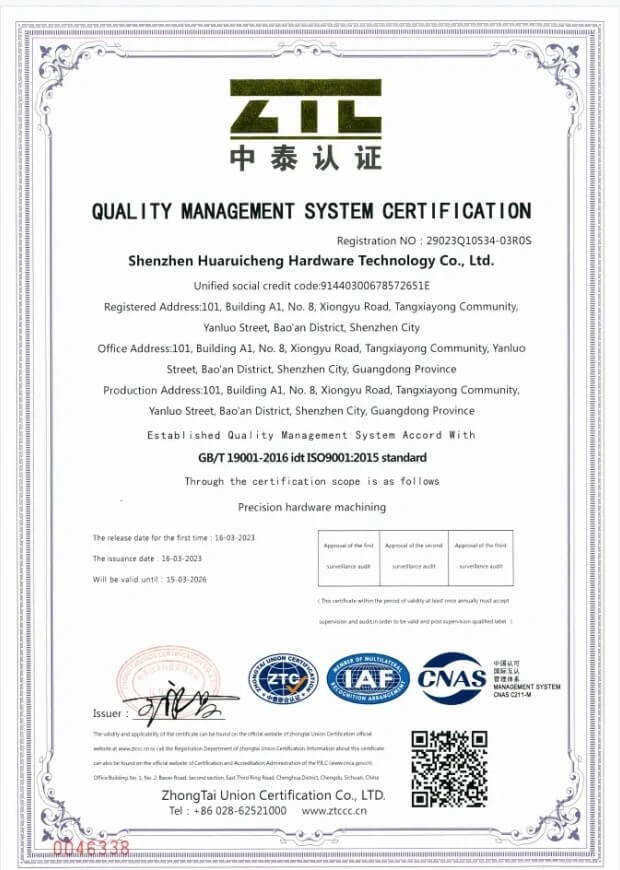
ISO 9001:2015
This certification demonstrates that our company follows internationally recognized quality management standards. It ensures consistent product quality, process optimization, and a strong focus on customer satisfaction.
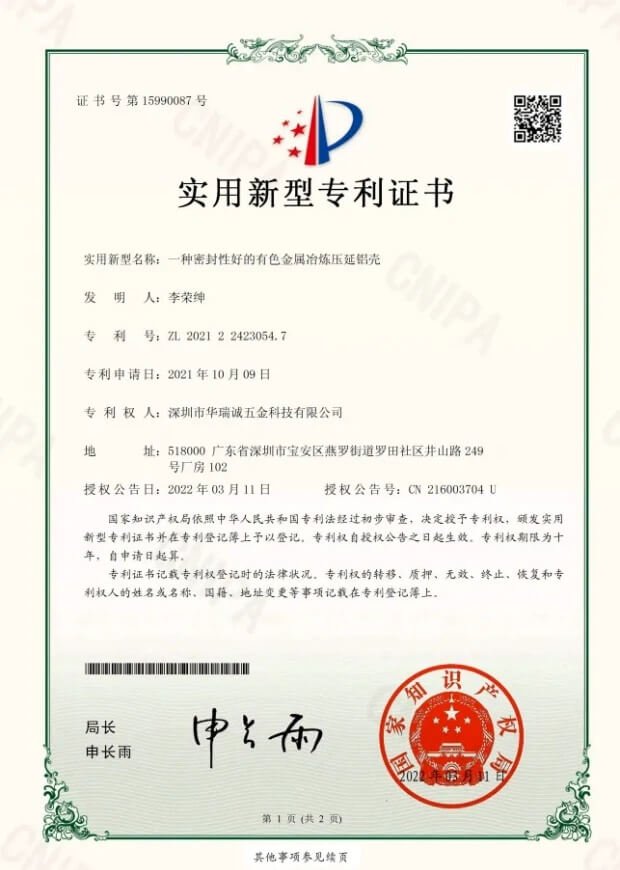
Patent Certificates
Our patents represent innovation and originality in manufacturing processes and product development. They highlight our ability to deliver unique solutions and maintain a competitive edge in the industry.
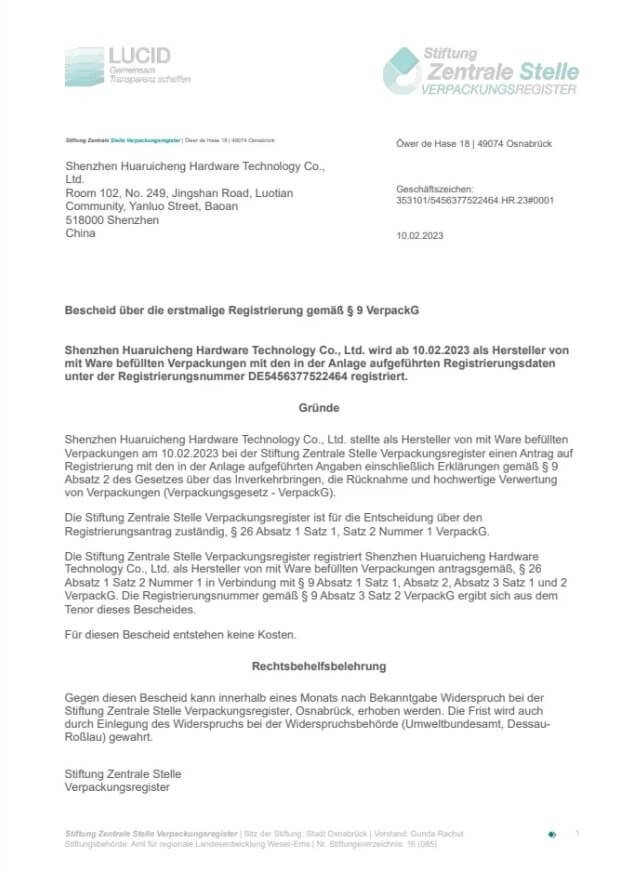
EPR-Certificate
As a compliant producer of goods-containing packaging, we can ensure our product packaging fully meets the regulatory requirements for the German market, this is our EPR-Certificate. Please contact us right now.
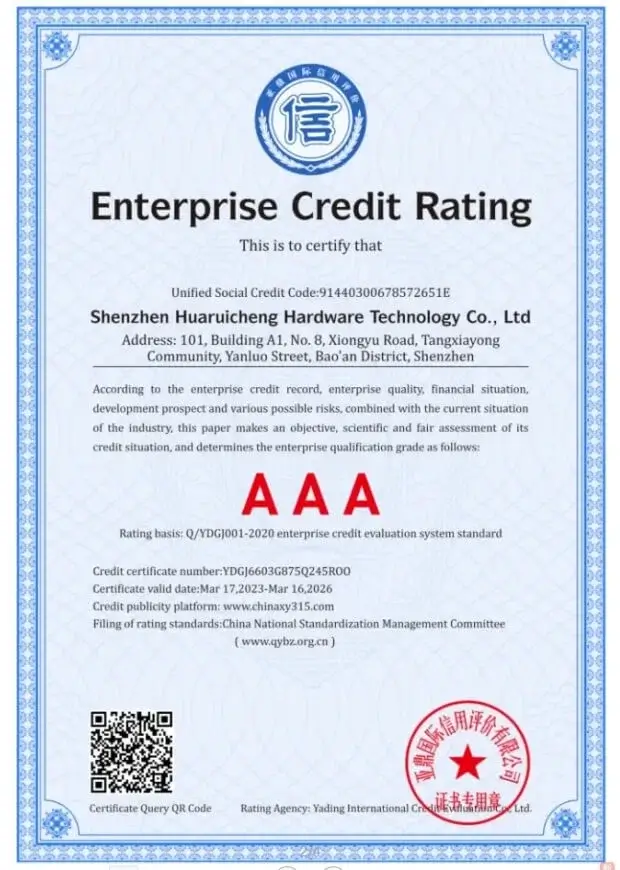
Enterprise Credit Rating Certificate
This certificate reflects our financial stability, business credibility, and trustworthy reputation in the industry. It reassures clients and partners that we are a reliable and long-term business partner.

Software Copyright Certificates
These certificates confirm ownership and protection of our self-developed software systems. They validate our technical expertise and guarantee the originality, security, and reliability of the digital tools we use in manufacturing.

SGS and HRCCNC company certificate
This certificate verifies our company as an Alibaba.com SGS Verified Supplier, ensuring compliance and reliability for our cooperation, SGS and HRCCNC company certificate, please contact us right now.
What Is a Brushed Finish?
A brushed finish is a mechanical surface treatment that uses abrasive belts, abrasive pads, or other abrasive material to create a uniform grain on metal surfaces. The brushing process removes minor surface imperfections, machining marks, and fine scratches while producing a refined directional texture. Unlike polished metal surfaces, a brushed metal finish creates a low-glare appearance with a visible grain that helps hide fingerprints and everyday wear. This combination of aesthetics and functionality makes brushed-finish metal applications popular in both decorative and industrial environments.
The process can be applied to aluminum, stainless steel, brass, copper, and other metal products, with each material developing a distinct brushed texture and surface finish. Manufacturers can control the brushing process to produce anything from a fine satin sheen to a more pronounced industrial finish. In architectural metalwork, brushed surfaces create a modern and professional appearance, while in manufacturing, they improve durability, facilitate surface preparation, and enhance long-term usability. As a result, brushed stainless steel, brushed brass, and brushed steel finishes remain widely used across commercial, industrial, and consumer products.
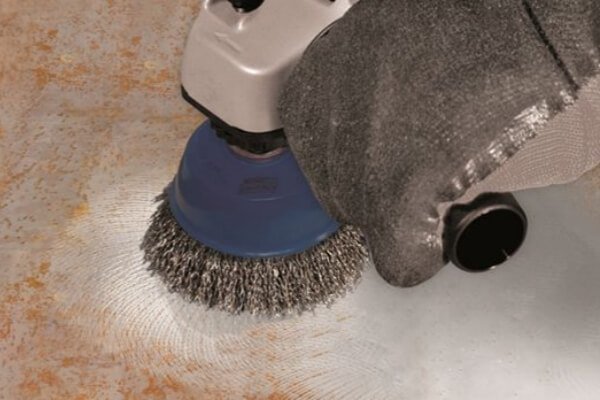
Types of Brushed Finish We Offer
We offer Linear Brushed Finish, Circular Brushed Finish, Cross-Hatch Brushed Finish, Fine Satin Brushed Finish, Coarse Industrial Brushed Finish, and Random Orbital Brushed Finish. Each brushed finish creates a distinct surface texture, grain pattern, and visual effect to suit different metal products and applications. HRCCNC customizes the brushing process, abrasive material, and grain direction to deliver a consistent brushed metal finish that meets both functional and decorative requirements.
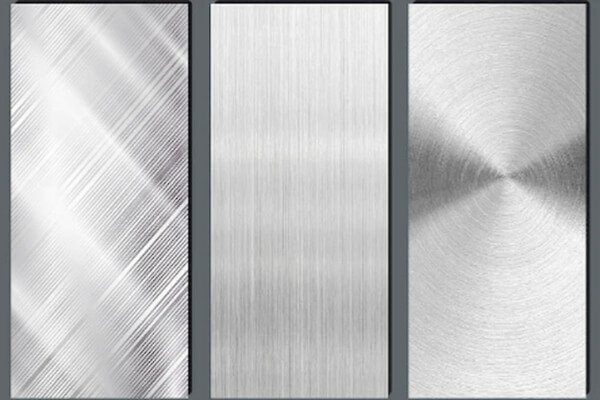
Linear Brushed Finish
Parallel grain lines run across the metal surface, creating a clean, modern brushed appearance. HRCCNC controls abrasive belt movement and grain direction to maintain a consistent texture across panels and machined parts. The result is a professional surface finish that reduces fingerprint visibility and supports applications in architecture and consumer products.
Circular Brushed Finish
Circular brushed finish creates a radial pattern with visible concentric lines across the surface. Our team applies specialized brushing techniques to achieve a consistent decorative finish. This style adds visual depth, enhances surface appeal, and is well-suited for control panels, decorative plates, and display components.
Cross-Hatch Brushed Finish
Cross-hatch brushed finish combines intersecting brush lines to form a textured geometric pattern. We create this finish through multi-directional metal brushing processes. The distinctive appearance improves surface character, reduces the visibility of wear marks, and supports decorative and industrial metal applications.
Fine Satin Brushed Finish
A fine satin finish produces a smooth brushed texture with subtle grain lines and a refined satin sheen. We create this appearance through controlled brushing using fine-grit abrasive belts and finishing pads. The finish is widely specified for luxury fixtures, decorative panels, and high-visibility components where surface consistency matters.
Coarse Industrial Brushed Finish
Machinery covers, structural components, and fabricated metalwork often require a more pronounced brushed texture. To achieve this effect, we use coarse abrasive material that produces deeper grain patterns and stronger surface character. This durable finish helps mask handling marks and performs well in demanding industrial environments.
Random Orbital Brushed Finish
When a project requires a decorative surface without a dominant grain direction, a random orbital finish provides an effective solution. Using orbital finishing equipment, we create overlapping brush patterns that distribute texture evenly across the metal surface. This approach minimizes reflections and helps conceal scratches from routine handling.
How Does Our Brushed Finish Process Work?
Our brushed finish process includes pre-brushing surface preparation, brushing operation and grain control, post-brushing surface treatment, and final quality verification. Each stage plays a specific role in creating a consistent brushed texture, uniform grain, and durable surface finish. HRCCNC follows a controlled metal-brushing workflow to prepare the material, achieve the required finish, protect the surface, and verify quality before delivery.
Pre-Brushing Surface Preparation
Every brushed finish begins with careful surface preparation to create a stable foundation for the brushing process. Our team cleans the metal surface to remove oil, dirt, oxidation, and other contaminants. We also deburr edges and perform sanding or grinding when necessary to eliminate surface irregularities. This preparation improves grain consistency, prevents texture distortion, and helps produce a cleaner brushed metal finish.
Brushing Operation and Grain Control
The brushing stage creates the desired brushed texture using abrasive belts, pads, or specialized brushing equipment. We control brush pressure, feed rate, grain direction, and abrasive selection to achieve the specified surface finish. Whether the requirement is a linear brushed finish or a decorative pattern, controlled grain alignment ensures a uniform appearance, consistent texture depth, and professional visual quality.
Post-Brushing Surface Treatment
After metal brushing, we perform cleaning and surface treatment to preserve the finished appearance. Residual particles are removed through air cleaning, rinsing, or other suitable methods to maintain surface cleanliness. Depending on the material and application, protective coatings, anodizing, or passivation may be applied. These treatments improve corrosion resistance, reduce tarnishing, and help maintain the brushed finish over time.
Final Quality Verification
Before shipment, every finished component undergoes a detailed quality inspection to verify surface consistency and finish requirements. Our inspection process includes grain direction checks, texture uniformity evaluation, visual appearance assessment, and surface defect identification. This final verification confirms that the brushed finish meets project specifications, maintains a consistent appearance, and delivers reliable performance for its intended application.
What Materials Do We Brush Finish at HRCCNC?
HRCCNC provides brushed finish services for aluminum, stainless steel, steel, brass, copper, titanium, and tool steel components. Each material responds differently to the brushing process, allowing us to create customized surface finishes that meet both visual and functional requirements. By selecting the appropriate abrasive belt, grain pattern, and finishing method, we deliver consistent brushed textures across a wide range of metal products and CNC machined parts.
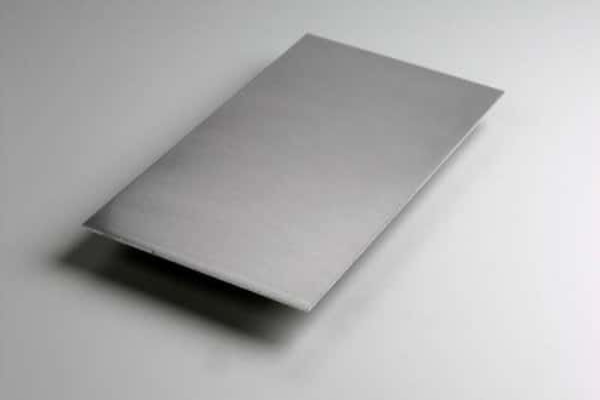
Aluminum 6061
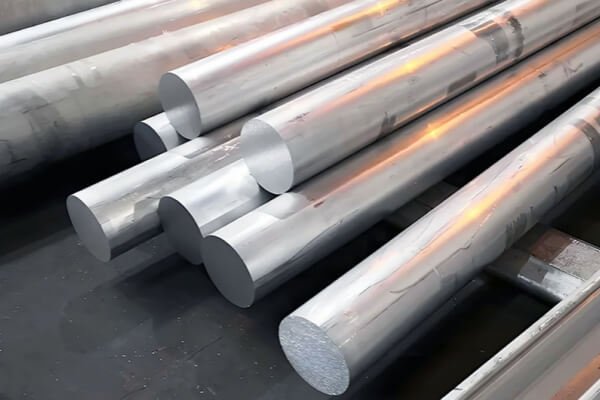
Aluminum 6061 combines excellent machinability with corrosion resistance, making it suitable for structural and machined parts. Through controlled metal brushing, we create a uniform satin finish that improves appearance, reduces visible handling marks, and provides an ideal surface for anodizing.
Aluminum 7075
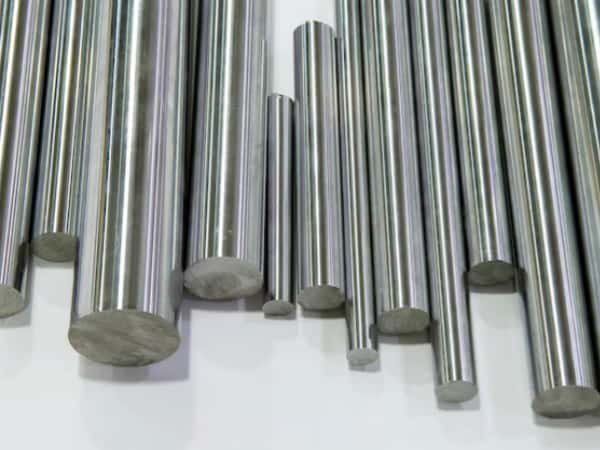
Known for its high strength, Aluminum 7075 is widely used in demanding engineering applications. Our brushing process refines the machined surface and creates a consistent grain pattern. The finish improves visual quality while preserving the dimensional accuracy and performance characteristics of the alloy.
Stainless Steel
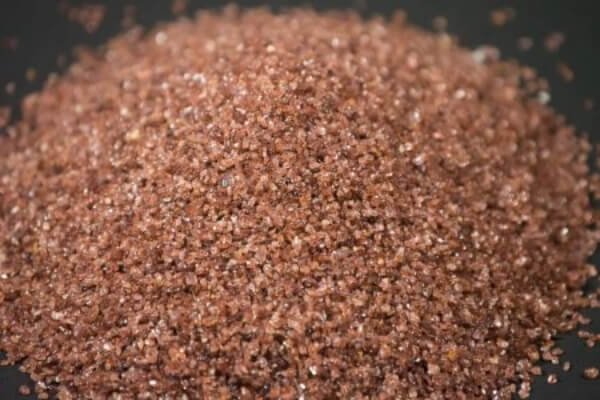
Stainless steel produces one of the most attractive brushed metal finishes due to its durability and corrosion resistance. We control abrasive selection and grain direction to create a refined brushed texture that reduces glare, hides fingerprints, and supports architectural and industrial applications.
Mild Steel
Mild steel can achieve a clean and professional brushed finish when properly processed. We remove minor surface imperfections and establish a consistent grain pattern across the material. The finished surface improves appearance and creates an excellent foundation for painting or coating processes.

Brass
A brushed brass finish creates a warm and decorative appearance that is widely used in architectural and interior applications. We apply controlled abrasive finishing techniques to produce a smooth directional texture. The result is a premium-looking surface with improved visual depth and character.
Copper
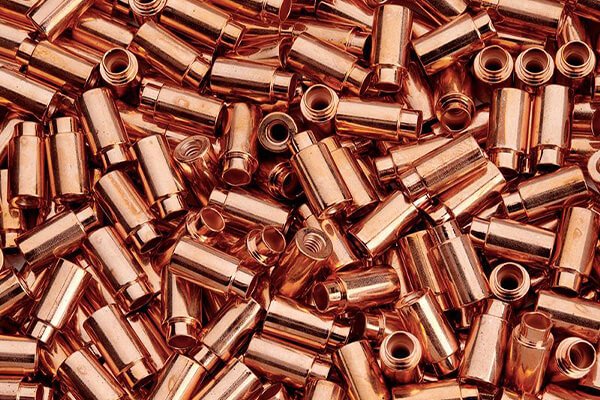
Copper develops a distinctive brushed texture that highlights its natural appearance while reducing the visibility of minor imperfections. Our brushing process creates a uniform grain across the surface, making brushed copper suitable for decorative panels, design features, and specialty metal components.
Titanium
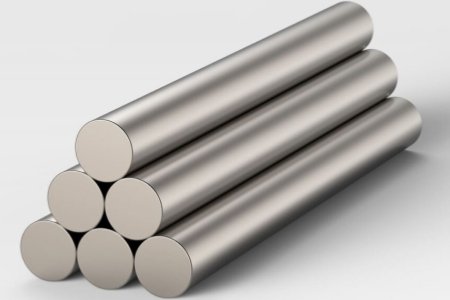
Titanium requires precise finishing control due to its unique material properties. We use specialized abrasive finishing methods to create a consistent brushed surface without damaging the material. This finish reduces glare, improves appearance, and supports aerospace, medical, and engineering applications.
Tool Steel
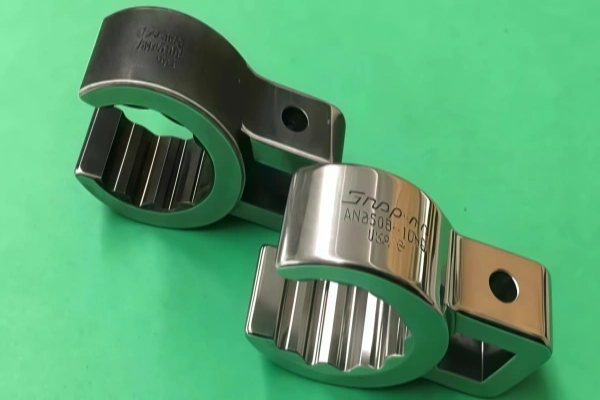
Tool steel benefits from brushing when a controlled surface finish and uniform grain are required. Our process removes minor surface irregularities and conditions the material for use. The resulting finish improves consistency, supports maintenance, and delivers a professional appearance for precision parts.
What Tools and Abrasives Do We Use for Brushed Finishing?
HRCCNC uses specialized brushes, abrasive belts, and surface conditioning tools to create consistent brushed finishes across different metals and applications. Tool selection depends on the material, required grain pattern, surface condition, and finish specification. By combining the right abrasive material with controlled processing parameters, we achieve uniform textures, reliable surface quality, and repeatable results for both decorative and industrial metal products.
Steel Wire Brushes
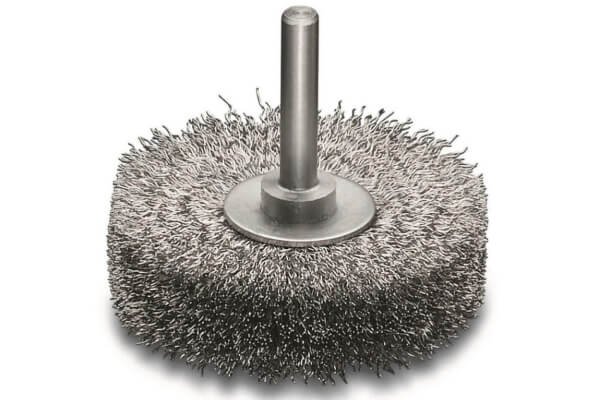
For aggressive surface conditioning and coarse brushing applications, steel wire brushes provide strong cutting action. We use them for deburring, edge blending, and removing surface contaminants before finishing. Their ability to create pronounced textures makes them valuable for industrial metalwork and heavy-duty applications.
Power Brushes
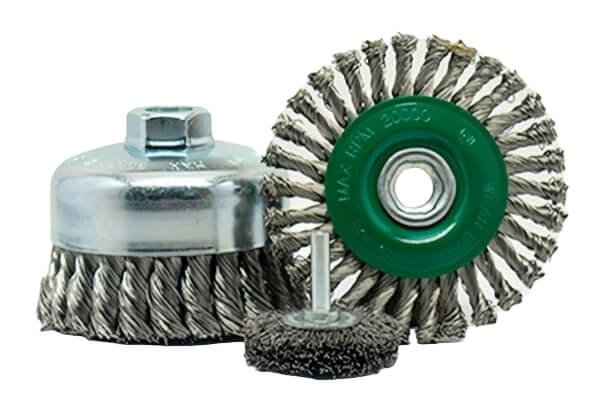
Power brushes use electric or pneumatic operation to deliver consistent brushing across large surfaces. Our finishing team uses these tools to maintain uniform grain patterns on high-volume production runs. The controlled operation improves efficiency, reduces processing time, and supports repeatable surface quality.
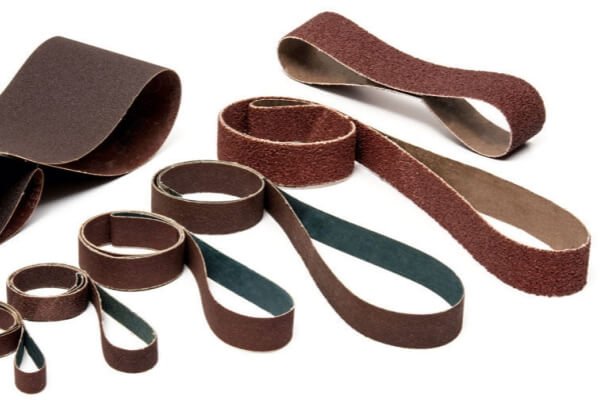
Abrasive Belts
Abrasive belts are among the most widely used tools in our brushing process. Available in multiple grit sizes, they allow precise control over texture depth and grain appearance. This flexibility helps us produce everything from fine satin finishes to more pronounced brushed surfaces.
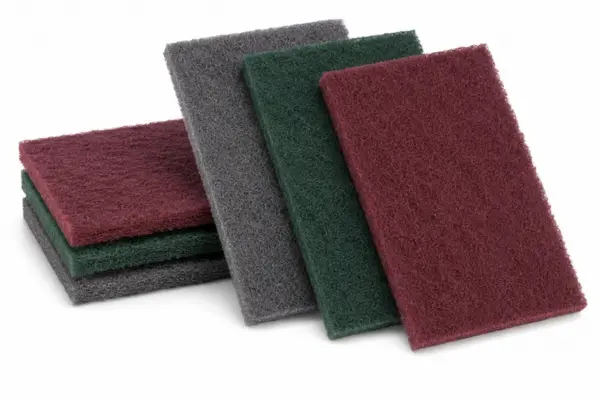
Abrasive Pads
Abrasive pads provide controlled surface conditioning without removing excessive material. We use them to refine brushed textures, blend grain patterns, and improve finish consistency. Their versatility makes them suitable for decorative finishing, surface preparation, and final appearance enhancement.
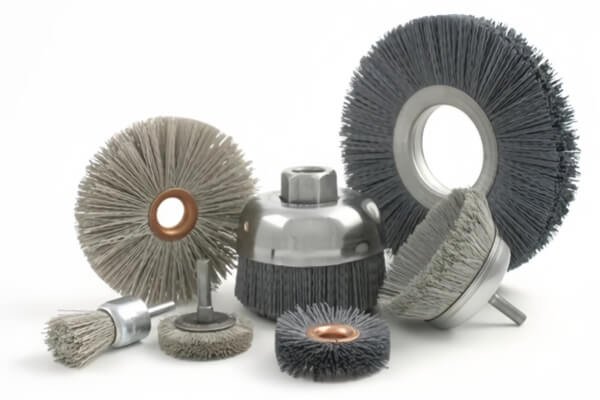
Nylon Composite Brushes
When a material requires a gentler brushing approach, nylon composite brushes provide excellent control. We use these brushes on sensitive surfaces where minimal abrasion is preferred. The process creates a refined texture while preserving dimensional integrity and reducing the risk of surface damage.
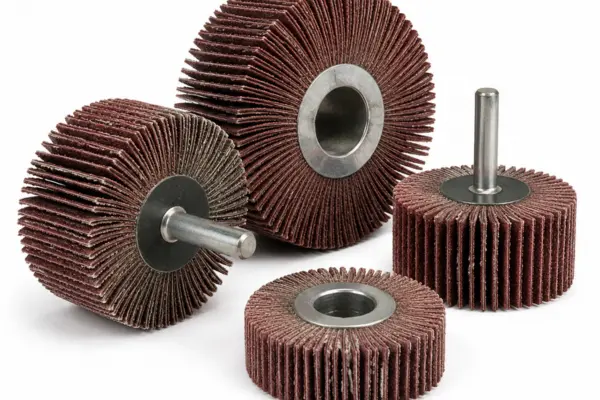
Flap Wheels
Flap wheels combine flexibility and abrasive performance to follow contours and complex geometries. We use them to finish edges, curves, and hard-to-reach areas that standard belts cannot easily access. This approach improves finish consistency across intricate components.
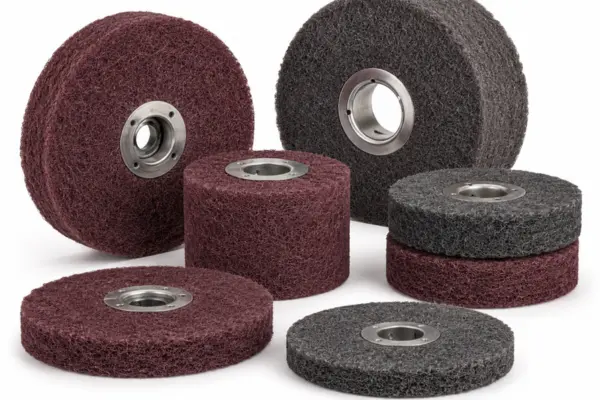
Scotch-Brite Wheels
Scotch-Brite wheels create a smooth, uniform brushed texture while minimizing aggressive material removal. Our team uses them for surface blending and finish refinement on stainless steel, aluminum, and other metals. They help achieve a clean satin appearance with excellent consistency.
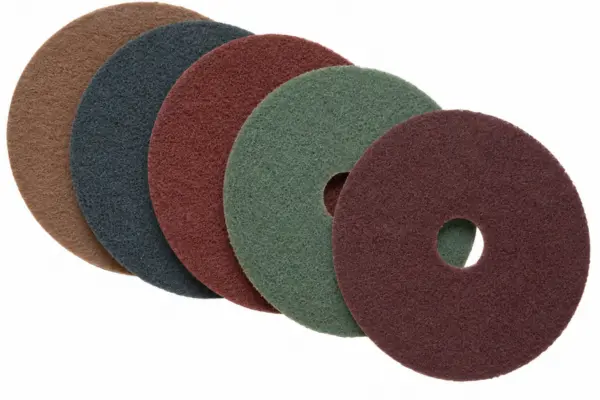
Fiber Discs
Fiber discs provide controlled abrasive action for surface preparation and texture development. We use them when removing imperfections or preparing metal surfaces before final brushing operations. Their durability supports efficient processing while helping establish a consistent foundation for the finished surface.
Steel Wire Brushes
For aggressive surface conditioning and coarse brushing applications, steel wire brushes provide strong cutting action. We use them for deburring, edge blending, and removing surface contaminants before finishing. Their ability to create pronounced textures makes them valuable for industrial metalwork and heavy-duty applications.
Power Brushes
Power brushes use electric or pneumatic operation to deliver consistent brushing across large surfaces. Our finishing team uses these tools to maintain uniform grain patterns on high-volume production runs. The controlled operation improves efficiency, reduces processing time, and supports repeatable surface quality.
Abrasive Belts
Abrasive belts are among the most widely used tools in our brushing process. Available in multiple grit sizes, they allow precise control over texture depth and grain appearance. This flexibility helps us produce everything from fine satin finishes to more pronounced brushed surfaces.
Nylon / Composite Brushes
These brushes are softer and ideal for delicate finishes or materials that require minimal surface abrasion. They are common in fine decorative work and where gentle brushing is necessary to preserve material integrity.if you need these,please contact us.
Why Choose HRCCNC for Your Brushed Finish Requirements?
HRCCNC provides precision brushed finishing services for CNC-machined parts, fabricated components, and custom metal products across multiple industries. Our integrated manufacturing capabilities, controlled finishing processes, and quality-focused production systems help deliver consistent brushed textures, reliable surface quality, and repeatable results for both prototype and production requirements.
Dedicated Finishing Line for Metal Components
In-House Quality Inspection at Every Stage
Custom Grit and Texture Specification per Project
Fast Turnaround with Consistent Output
Finishing Integrated with CNC Machining Workflow
ISO-Compliant Surface Finishing Standards
Support for Both Prototype and High-Volume Orders
What Our Brushed Finishing Service Clients Say About Us?
Request a Brushed Finish Quote Today
Industries We Serve with Our Brushed Finish Services
HRCCNC provides brushed finish services for industries that require a combination of surface durability, controlled appearance, and consistent quality. Our metal brushing capabilities support components ranging from precision-engineered parts to decorative products. By tailoring grain patterns, texture depth, and finishing requirements to each application, we help manufacturers achieve both functional and aesthetic objectives across diverse sectors.
Automotive Industry
Aerospace and Defense
Medical
Consumer Electronics
Robotics and Automation
Industrial Equipment & Machinery
Telecommunications
Energy Sector
Consumer Goods
What Are the Benefits of Using Our Brushed Finish Service
A brushed finish provides both visual and functional advantages for metal products used in industrial, commercial, and consumer applications. Through controlled metal brushing, HRCCNC creates a uniform surface finish that improves appearance, supports durability, and enhances long-term usability. From reducing visible wear to preparing surfaces for additional treatments, brushed finishing delivers practical value across a wide range of materials and components.
Conceals Fingerprints and Smudges
The directional grain of a brushed finish helps diffuse fingerprints, smudges, and handling marks across the surface. This characteristic makes brushed stainless steel, aluminum, and brass components easier to keep presentable in high-contact environments while maintaining a clean and professional appearance.
Reduces Surface Glare
Unlike polished metal surfaces, a brushed finish creates a low-glare and less reflective appearance. The controlled brushed texture scatters light across the surface, making components more comfortable to view and suitable for architectural, industrial, and consumer-facing applications.
Improves Scratch Resistance
While brushing does not prevent scratches, the visible grain pattern helps reduce the appearance of minor surface marks. The textured finish blends light wear more effectively than polished surfaces do, allowing components to maintain their appearance for longer.
Enhances Corrosion Resistance
When combined with treatments such as anodizing, passivation, or protective coatings, a brushed finish supports improved corrosion resistance. Proper surface preparation and finishing help create a stable foundation that contributes to long-term performance in demanding environments.
Simplifies Maintenance
Brushed metal surfaces are easier to maintain because they conceal everyday wear more effectively than mirror-polished finishes. Routine cleaning removes dust and other contaminants, while the uniform grain helps maintain a consistent appearance with less effort.
Delivers Consistent Grain
Controlled brushing processes create a uniform grain pattern across the entire component surface. Consistent grain direction improves visual quality, strengthens product presentation, and ensures that finished parts meet appearance requirements across production batches.
Supports Secondary Treatments
A brushed surface provides an excellent base for additional finishing operations. Processes such as anodizing, powder coating, passivation, and protective clear coating can be applied after brushing to achieve specific performance and appearance requirements.
Offers Custom Grit Selection
Different applications require different surface textures. HRCCNC offers custom grit selection to control the depth, visibility, and character of the brushed finish. This flexibility allows customers to achieve anything from a fine satin sheen to a more pronounced industrial grain.
Brushed finishing creates a directional grain and satin appearance that balances aesthetics, durability, and ease of maintenance. Unlike highly reflective polished surfaces or coated finishes, a brushed metal finish helps conceal fingerprints, reduces glare, and maintains a consistent surface texture. The table below compares brushed finishing with other common metal finishing methods.
| Attribute | Brushed Finish | Polished Finish | Bead Blasting | Anodizing | Powder Coating |
|---|---|---|---|---|---|
| Surface appearance | Satin, directional grain | Mirror-like, reflective | Uniform matte | Smooth oxide finish | Colored coated finish |
| Glare level | Low | High | Very low | Moderate | Low |
| Fingerprint visibility | Low | High | Low | Moderate | Low |
| Scratch visibility | Low | High | Moderate | Moderate | Low |
| Corrosion resistance | Moderate* | Moderate | Moderate | Excellent | Excellent |
| Surface texture | Visible grain | Smooth | Fine textured | Smooth | Coated texture |
| Maintenance | Easy | Frequent cleaning | Easy | Easy | Easy |
| Secondary treatments | Excellent compatibility | Good compatibility | Good compatibility | Limited need | Final finish |
| Best applications | Panels, appliances, machined parts | Decorative products | Industrial equipment | Aluminum components | Outdoor and fabricated products |
How Much Does a Brushed Finish Cost?
Brushed finishes cost between $3 and $10 per part for standard production components, while custom manual brushing operations generally range from $80 to $150 per hour. Many finishing projects also include a minimum lot charge, commonly between $200 and $250, regardless of order size. The final cost depends on several factors, including material type, part dimensions, surface area, finish requirements, and the complexity of the brushing process. Components requiring a fine satin brushed finish, cosmetic-grade appearance, or strict grain consistency often require additional processing and inspection.
Part geometry and production volume have a significant impact on pricing. Complex shapes, deep features, and difficult-to-access surfaces require more labor and specialized finishing tools. Materials such as stainless steel, titanium, and brass may also require different abrasive belts and processing parameters than aluminum or mild steel. Additional services such as deburring, surface preparation, passivation, anodizing, or protective coatings can further affect the overall project cost. For accurate pricing, HRCCNC evaluates your drawing, material, quantity, and finish specification before preparing a custom quotation.
FAQs About Brushed Finish
What Is the Difference Between Brushed and Polished Finish?
A brushed finish creates a directional grain pattern using abrasive finishing techniques, resulting in a satin, low-glare appearance. A polished finish produces a smooth, highly reflective surface with a mirror-like look. Brushed metal finishes conceal fingerprints and minor scratches more effectively, while polished finishes prioritize maximum shine and visual reflectivity.
What Grit Is Used for a Brushed Finish?
Most brushed metal surfaces are produced using abrasives between 120 and 320 grit, depending on the required grain definition. Lower ranges such as 80 to 120 grit create deeper, more visible brush lines that suit industrial applications. Mid-range abrasives generate a balanced directional finish, while 600+ grit and finer finishing pads create a smooth satin sheen with minimal reflection. Material type, grain visibility, and end-use requirements determine the most suitable abrasive range for the brushing process.
How Is Brushed Finish Applied to CNC Machined Parts?
Brushed finishing is performed after CNC machining and surface preparation. The process involves cleaning the part, removing burrs, and applying controlled metal brushing using abrasive belts, pads, or specialized finishing equipment. Grain direction, pressure, and abrasive selection are carefully controlled to achieve a consistent brushed texture across the component.
Can Brushed Finish Be Combined with Anodizing or Powder Coating?
Yes. A brushed finish is commonly used as a pre-treatment before anodizing, powder coating, passivation, or clear coating. The brushing process creates a uniform surface texture that improves visual consistency and provides an excellent foundation for additional finishing treatments, particularly on aluminum and stainless steel components.
How Long Does a Brushed Finish Last?
A brushed finish can last for 2-10 years when properly maintained and used in suitable environments. Factors such as material type, exposure conditions, cleaning practices, and protective treatments influence service life. Stainless steel, anodized aluminum, and coated brushed surfaces retain their appearance longer in demanding industrial and outdoor applications.
Can Brushed Finish Hide Scratches and Fingerprints?
Yes. The directional grain of a brushed finish helps reduce the visibility of minor scratches, fingerprints, and handling marks by diffusing light across the surface. While it does not eliminate surface damage, it makes everyday wear less noticeable than highly reflective polished finishes, making it a practical choice for frequently handled components.
What Is the Minimum Order Quantity for Brushed Finish at HRCCNC?
HRCCNC supports both prototype and production requirements, so there is no fixed minimum order quantity for most brushed finish projects. We can process single prototype parts, low-volume development orders, and large production batches. Order requirements may vary based on material type, component size, finish specification, and project complexity.
How Long Does It Take to Process a Brushed Finish Order?
Brushed finish lead times depend on part quantity, material type, surface finish requirements, and any secondary treatments involved. Prototype orders can often be completed within a few business days, while larger production runs may require additional scheduling. As soon as our team reviews your drawing, material specification, quantity, and brushing requirements, we provide a detailed quotation along with an estimated production timeline tailored to your project.