
Custom Electroplating Services
Get custom electroplating services for prototypes and production parts, with controlled coating processes, precision inspection, and engineering support. Upload your drawings or CAD files to receive a fast quotation, coating recommendations, and global delivery for electroplated parts.
- Custom electroplating services for prototypes and production parts.
- Nickel, zinc, copper, chrome, gold, silver, tin, and palladium plating options.
- Improve corrosion resistance, wear resistance, conductivity, and appearance.
- Controlled electroplating processes for uniform coating quality and adhesion.
- ISO 9001:2015 quality management with comprehensive inspection procedures.
- Free DFM engineering support and coating recommendations.
- Fast quotation turnaround.
- Global delivery for aerospace, automotive, electronics, medical, and defense industries.
What Is Electroplating?
Electroplating is an electrochemical metal finishing process that uses direct current (DC) to deposit a thin metallic coating onto the surface of a substrate. The process improves critical surface properties, including corrosion resistance, wear resistance, electrical conductivity, hardness, solderability, and decorative appearance, while preserving the mechanical properties of the base material. Common electroplated parts include automotive fasteners, electronic connectors, medical instruments, aerospace components, and precision-machined parts.
The electroplating process relies on four key elements: an anode, a cathode, an electrolyte solution, and an electrical power source. During electrolysis, metal ions dissolved in the electrolyte migrate toward the cathode and form a controlled metallic layer through a redox reaction. Depending on the performance requirement, manufacturers can apply coatings of nickel, zinc, copper, chrome, gold, silver, tin, or palladium to meet specific performance, environmental, and application requirements.

What Types of Electroplating Does HRCCNC Offer?
HRCCNC offers rack, barrel, brush, pulse, and reel-to-reel electroplating to accommodate different part sizes, production volumes, coating requirements, and performance objectives. The most suitable process depends on factors such as part geometry, coating thickness requirements, surface finish expectations, production efficiency, and cost targets.
Rack Electroplating
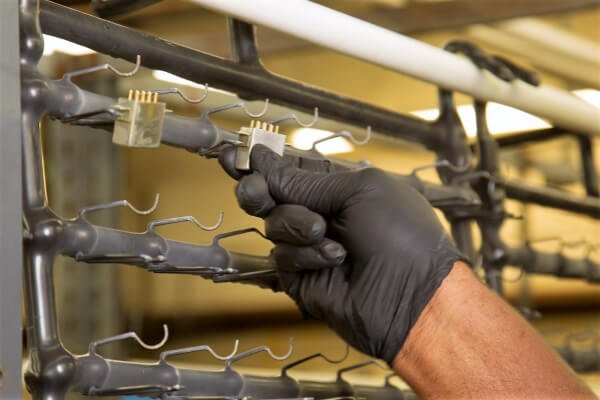
Rack electroplating secures individual parts onto specialized racks before immersion in the electrolyte bath. This method provides precise current distribution and coating control, making it suitable for large, delicate, or complex components that require uniform coating thickness and high-quality surface finishes. Aerospace components, medical devices, and precision-machined parts commonly use rack plating.
Barrel Electroplating
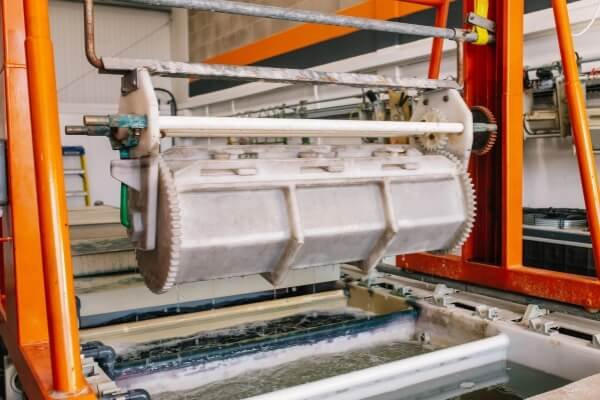
Barrel electroplating places small parts inside a rotating plastic or rubber barrel during the plating process. This method efficiently plates high volumes of fasteners, stamped parts, washers, pins, and connectors at a lower cost per part. Barrel plating offers excellent production efficiency for bulk manufacturing, although coating uniformity is generally lower than that of rack plating.

Brush Electroplating
Brush electroplating applies the coating directly to a localized area using a handheld anode wrapped with absorbent material saturated with electrolyte solution. This process is ideal for repairing worn surfaces and restoring dimensional tolerances without requiring full immersion of the component. Maintenance, repair, and refurbishment applications frequently use brush plating.
Reel-To-Reel Electroplating
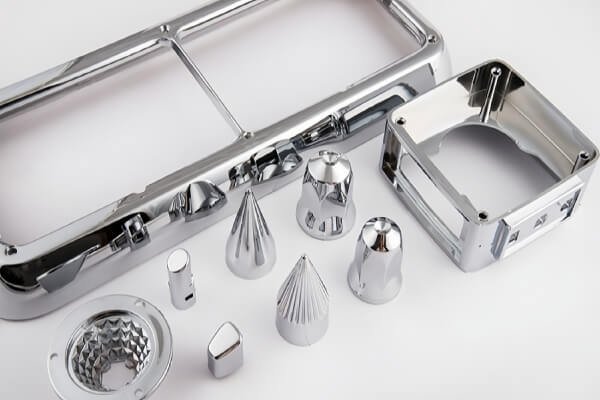
Reel-to-reel electroplating continuously plates metal strips, wires, and stamped components as they move through a series of processing stations. This automated process delivers high production speeds, consistent coating quality, and efficient material handling for electronic connectors, lead frames, terminals, and telecommunications components. It is particularly suited to selective plating applications, such as gold-tipped contact surfaces, where precise deposition on high-volume parts is essential.
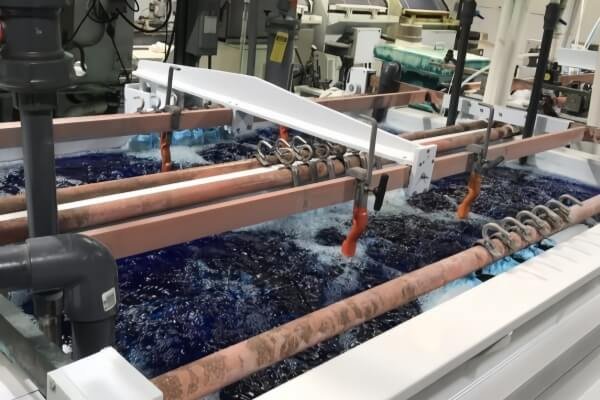
Pulse Electroplating
Pulse electroplating uses controlled electrical pulses rather than continuous direct current for metal deposition. The pulsed current produces a finer grain structure, higher coating density, improved adhesion, and greater wear resistance compared with conventional DC plating. Manufacturers often select pulse plating for high-performance components that require superior surface properties and precise coating control.
Which Metals Can HRCCNC Apply as a Coating?
HRCCNC applies nickel, zinc, copper, chrome, gold, silver, tin, and palladium coatings to meet specific requirements for corrosion resistance, wear resistance, electrical conductivity, solderability, and surface appearance. Each plating metal offers distinct performance characteristics and is selected based on the substrate material, operating environment, and end-use application.

Nickel
Nickel electroplating produces a hard, corrosion-resistant coating that improves durability, adhesion, and surface finish. It is commonly used for automotive trim, machinery components, kitchen utensils, and precision parts. Nickel accepts a bright polished finish and is frequently applied as an undercoat for chrome plating, combining wear resistance with corrosion protection. It provides lower electrical conductivity than copper, silver, or gold.
Zinc
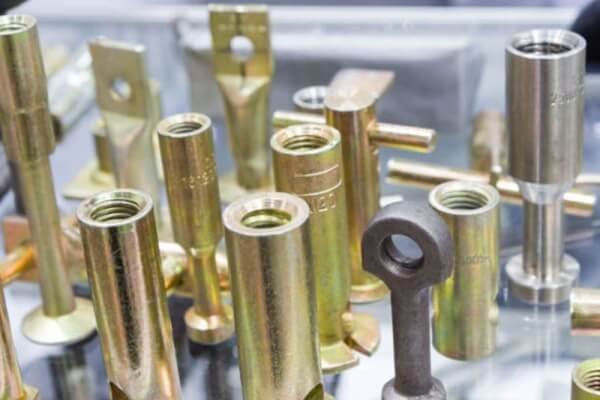
Zinc electroplating is widely used on steel parts because it provides sacrificial corrosion protection. Zinc coatings corrode before the underlying substrate, preventing rust in outdoor and high-moisture environments. Fasteners, brackets, stamped parts, and automotive hardware commonly use zinc plating, often combined with chromate conversion coatings for additional protection. Zinc plating is cost-effective, though it offers lower hardness than nickel or chrome.
Copper
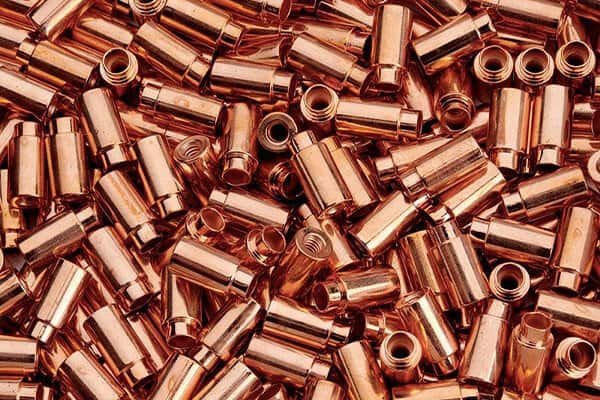
Copper electroplating delivers excellent electrical conductivity and strong layer-to-layer adhesion, making it widely used in electronics, connectors, and printed circuit boards. It also serves as a base layer for nickel or gold plating, and its malleability allows smooth, uniform coverage on complex geometries. Because copper oxidizes over time, a secondary protective coating is typically applied.
Chrome
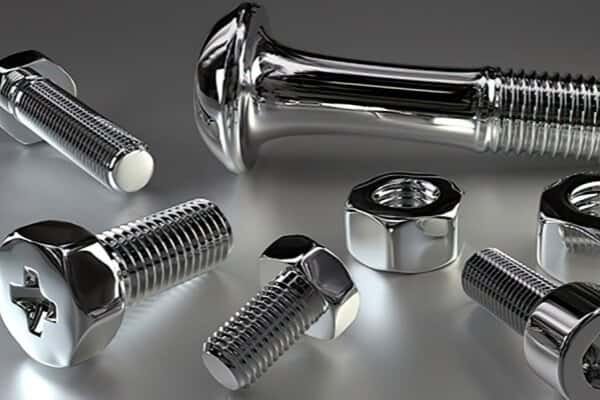
Chrome electroplating creates a hard, glossy, scratch-resistant finish that improves both appearance and wear resistance. Decorative chrome is used on automotive parts, bathroom fixtures, and consumer products; hard chrome is applied to industrial components subject to friction and mechanical wear. Both typically rely on a nickel underlayer for adhesion and corrosion protection.
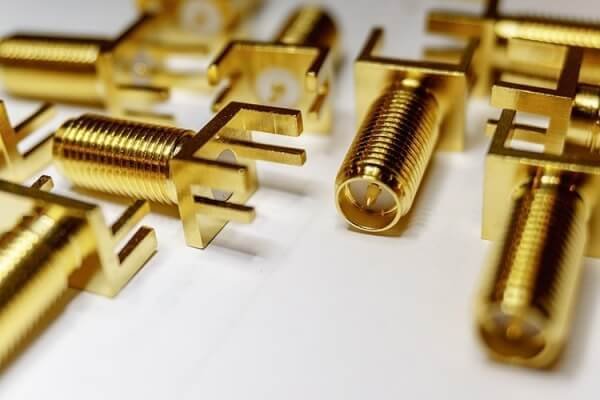
Gold
Gold electroplating provides exceptional electrical conductivity, corrosion resistance, and decorative appeal. It is widely used for electronic connectors, aerospace components, jewelry, and telecommunications equipment, where signal reliability is critical. Coating thickness varies by application, with thin layers used in electronics and thicker layers used for decorative products. The primary limitation is the higher material cost relative to other plating metals.
Silver
Silver electroplating offers the highest electrical conductivity of all plating metals and produces a bright, reflective finish. It is commonly used for electrical contacts, RF components, mirrors, tableware, and musical instruments. Its conductivity makes it particularly valuable in electronics and telecommunications. Although silver can tarnish over time, protective lacquer coatings reduce surface discoloration.
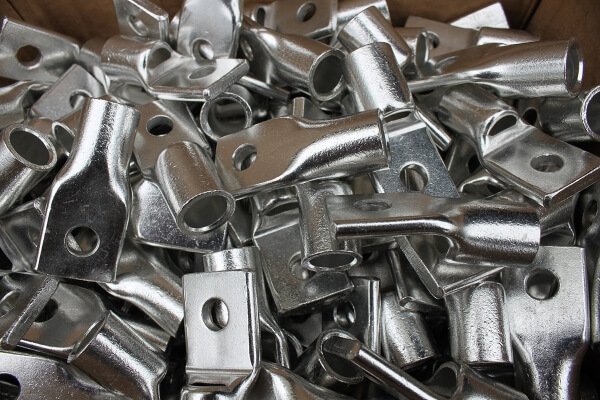
Tin
Tin electroplating produces a non-toxic, corrosion-resistant, and highly solderable coating used on electrical components, connectors, hardware, and food containers. It remains fully compatible with soldering processes, making it a common choice in consumer electronics and food-grade packaging. Tin plating is cost-effective for high-volume production, though some electronic applications require additional controls to minimize tin whisker formation.
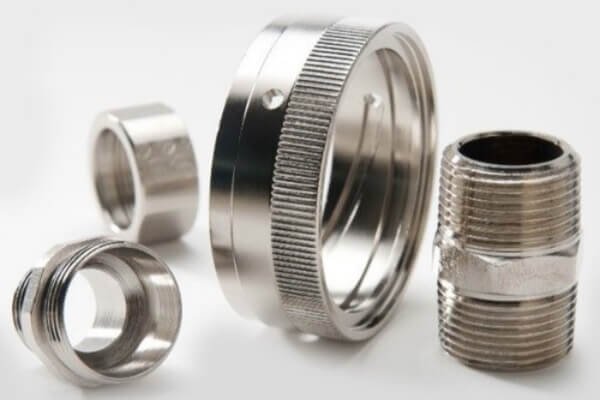
Palladium
Palladium electroplating is a durable, corrosion-resistant alternative to gold, commonly used in electronics, medical devices, jewelry, and high-reliability connectors. It provides excellent wear resistance, stable electrical performance, and high-temperature durability at a lower cost than gold. Palladium is biocompatible and is commonly used in medical instruments, diagnostic devices, and high-reliability electronic components requiring corrosion resistance and stable electrical performance.
What Are the Key Benefits Of Electroplating?
The key benefits of electroplating include corrosion resistance, sacrificial protection, wear resistance, improved surface durability, friction reduction, electrical conductivity, thermal reflectivity, improved appearance, cost efficiency, plating on plastics, and dimensional restoration. These advantages help extend component lifespan, improve performance, and reduce maintenance or replacement costs across industrial applications.
Corrosion Resistance
Electroplated coatings protect the substrate from oxidation, rust, moisture, and chemical attack, helping extend the service life of steel, aluminum, and other metal components used in harsh environments. Zinc, nickel, and chrome coatings are commonly specified for outdoor structures, marine hardware, and chemical processing equipment.
Sacrificial Protection
Certain coatings, such as zinc plating on steel parts, corrode before the base material. This sacrificial action protects the substrate and delays structural deterioration. Zinc-nickel and zinc-iron alloy coatings extend this protection further and are widely used on automotive underbody components and fasteners exposed to road salt and moisture.
Wear Resistance
Hard coatings such as nickel and chrome improve surface hardness and help parts withstand friction, abrasion, and repeated mechanical contact, reducing maintenance and replacement costs. Hard chrome plating is commonly applied to hydraulic cylinder rods, mold surfaces, and industrial tooling that operates under continuous mechanical stress.
Improved Surface Durability
Electroplated coatings improve surface hardness, wear resistance, and resistance to minor surface damage. While electroplating does not significantly increase the core structural strength of the substrate, it can enhance surface performance and extend component service life.
Friction Reduction
Smooth metallic coatings reduce surface friction between moving components, improving operating efficiency and minimizing wear in assemblies such as shafts, bearings, and sliding mechanisms. Electroless nickel and PTFE- composite coatings are commonly selected for gears, pump components, and valve seats where low friction and consistent performance are required.
Electrical Conductivity
Gold, silver, and copper coatings improve electrical conductivity and signal transmission, making electroplating critical for connectors, terminals, circuit boards, telecommunications equipment, and aerospace electronics. Silver is preferred for high-frequency RF components and bus bars, while gold is specified for low-insertion-force connectors and edge contacts in sensitive electronic assemblies.
Thermal Reflectivity
Certain specialized coatings, particularly gold and rhodium, provide high infrared reflectivity and are used in aerospace and electronics applications where thermal management is required. Gold and rhodium coatings are used on satellite components, rocket nozzle assemblies, and power electronics where thermal stability and low emissivity are required.
Improved Appearance
Electroplating creates smooth, bright, and visually appealing finishes ranging from polished nickel and shiny chrome to decorative gold and silver coatings used in consumer and industrial products. Automotive trim, luxury hardware, jewelry, and consumer electronics enclosures frequently specify decorative plating to meet both aesthetic standards and surface durability requirements.
Cost Efficiency
Electroplating allows manufacturers to use lower-cost base metals while achieving premium surface properties such as corrosion resistance, electrical conductivity, and wear resistance, making it a cost-effective metal-finishing solution. Steel and aluminum substrates plated with zinc, nickel, or tin can meet performance specifications across automotive, industrial, and consumer applications at significantly lower material cost than solid precious or specialty metals.
Plating on Plastics
Electroplating can be applied to certain engineered plastics after specialized surface preparation and electroless metallization processes have created a conductive layer on the substrate. ABS and PC-ABS substrates are commonly plated for automotive interior trim, plumbing fixtures, and consumer electronics housings, where weight reduction and design flexibility are priorities.
Dimensional Restoration
Electroplating can restore worn or undersized surfaces by depositing controlled coating thickness, helping repair valuable components and reducing replacement costs. Hard chrome and nickel plating are regularly used to restore shafts, bearing journals, mold cavities, and precision tooling to original dimensional tolerances, extending service life and avoiding costly component replacement
What Are the Limitations Of Electroplating?
The main limitations of electroplating include coating thickness variations, hydrogen embrittlement, substrate constraints, environmental concerns, processing time, and higher production costs. Although electroplating improves surface performance, process control and compliance requirements can increase manufacturing complexity and cost.
Non-Uniform Coating Thickness
Complex geometries can result in uneven current distribution, leading to thicker deposits along edges and thinner coatings in recessed areas.
Limited To Surface Benefits
Electroplating improves surface properties but does not significantly alter the substrate’s core mechanical properties.
Hydrogen Embrittlement
Hydrogen absorbed during plating can make certain high-strength steels brittle and more susceptible to cracking if not properly treated.
Substrate Conductivity Constraints
Conventional electroplating requires a conductive surface, making it more difficult to plate non-metallic materials without special preparation.
Environmental Concerns
Electroplating processes use chemicals and metal salts that require proper treatment and disposal to minimize environmental impact.
Severe Pollution Risks
Improper handling of plating waste can contaminate water, soil, and the surrounding environment with hazardous substances.
Health And Safety Hazards
Operators must manage exposure to chemicals, fumes, and electrical equipment through controlled safety procedures.
Processing Time
Surface preparation, plating, rinsing, inspection, and post-treatment steps can increase overall production lead time.
High Operational Costs
Equipment, chemical management, wastewater treatment, energy consumption, and quality control contribute to operational expenses.
Cost Considerations
Precious metals such as gold and palladium, along with thicker coating requirements, can significantly increase project costs.
What Are the Steps in the Electroplating Process?
HRCCNC follows a structured electroplating process that prepares the substrate, deposits the coating, verifies quality, and delivers finished parts. Every step influences coating adhesion, thickness uniformity, corrosion resistance, and long-term performance.
Request A Quote
Submit your drawings, specifications, coating requirements, and quantities for review. Our engineers evaluate the part geometry, substrate material, coating thickness, and application requirements before providing a quotation.
Preparation Of The Base Material
Before plating begins, our team inspects and prepares the base material. This step ensures the substrate can support strong coating adhesion and uniform metal deposition.
Cleaning And Degreasing
Our team removes oil, grease, dust, and surface contaminants from the part. Clean surfaces allow the coating to bond properly and help prevent adhesion failures.
Pickling And Surface Activation
Controlled acid treatments remove oxides and surface scale, activating the substrate for plating. Proper activation improves coating adhesion and deposition consistency.
Polishing And Rinsing
Technicians polish the surface to improve smoothness and rinse away residual chemicals from previous stages. These actions help create a cleaner and more uniform finish.
Current Density And Voltage Control
Our engineers immerse the parts in the electrolyte bath and apply controlled current and voltage to deposit the coating. Precise electrical control produces consistent coating thickness, grain structure, and surface quality.
Post-Plating Treatments
Depending on the application, our team performs rinsing, baking, polishing, or other required treatments after plating. These treatments improve coating performance, reduce defects, and enhance durability.
Drying And Buffing
Technicians dry the plated parts to remove moisture and buff the surface when the application requires a brighter finish. Proper drying helps prevent staining and contamination.
Sealing And Passivation
Our team applies sealing or passivation treatments to improve corrosion resistance and protect the plated surface. These treatments commonly support zinc electroplating and other protective coatings.
What Factors Affect Electroplating Quality?
Surface preparation, bath composition, pH control, temperature, electrical parameters, and post-treatment directly affect electroplating quality. Even small variations in these factors can cause poor adhesion, uneven coating thickness, rough surfaces, or reduced coating performance.
Surface Preparation
Oil, grease, oxides, and dust prevent proper adhesion. Alkaline cleaning, acid pickling, and electrolytic cleaning are selected based on substrate material and contamination level. Steel, aluminum, and copper alloys each require different preparation protocols before entering the plating bath.
Bath Composition
Metal salt concentration and additives control deposition rate, coating thickness, and surface finish. Brighteners, leveling agents, and wetting agents are maintained within tight tolerances to ensure consistent coating appearance and mechanical properties across production batches.
Solution Chemistry and pH Control
pH directly affects metal ion activity and deposition efficiency. Nickel baths operate at pH 3.5-4.5, whereas zinc and copper baths require different pH ranges. Automated dosing with buffering agents such as boric acid maintains stable conditions during production.
Temperature
Plating baths operate within defined temperature ranges specific to each coating type. Even a few degrees of deviation can shift grain structure, internal stress, and hardness, making temperature control critical for hard chrome, gold, and nickel plating processes.
Current Density and Voltage
Current density, measured in amperes per square decimeter, varies by coating — nickel typically requires 2 to 10 A/dm², hard chrome 30 to 60 A/dm². Rectifiers with precise output control stabilize deposition and prevent burning or thin spots.
Agitation And Circulation
Electrolyte circulation maintains a consistent ion concentration at the surface of the part. Air agitation, mechanical stirring, and cathode movement suit different bath chemistries. Barrel plating relies on tumbling, while rack plating uses filtered recirculation to reduce thickness variation.
Anode To Cathode Distance
Spacing between the anode and the cathode affects current distribution and coating uniformity. Optimal distances range from 10 to 30 centimeters, depending on part geometry. Conforming and auxiliary anodes are used for recessed features and complex profiles.
Plating Duration
Time in the bath determines coating thickness. Decorative nickel targets 5 to 15 microns, while hard chrome for industrial tooling can reach 500 microns. Duration is calculated from current density and bath efficiency to meet specified tolerances.
Post-Treatment
Post-plating treatments directly affect corrosion resistance and long-term adhesion. Hydrogen embrittlement relief baking is required for zinc or cadmium-plated high-strength steel parts. Chromate passivation on zinc coatings and hot-air drying on electroless nickel are standard finishing steps.
Which Industries Does HRCCNC Serve For Electroplating?
HRCCNC provides electroplating services for aerospace, automotive, electronics, telecommunications, medical, dental, jewelry, power generation, and prototyping applications. Our electroplating solutions enhance corrosion and wear resistance, conductivity, and surface performance for components operating in demanding environments.
Automotive
Aerospace
Medical And Dental
Electronics And Telecommunications
Jewelry
Power Generation
Prototyping
Why Choose HRCCNC For Electroplating Services?
Choose HRCCNC for electroplating services to access precision coating capabilities, along with CNC machining and surface finishing, all under one roof. Since 2008, we have supported global manufacturers with controlled electroplating processes across nickel, zinc, copper, chrome, gold, silver, tin, and palladium coatings, fast quotation turnaround, free DFM support, and strict quality control. Our team manages coating thickness, bath chemistry, current density, and post-treatment requirements to help reduce supplier complexity, shorten lead times, and maintain consistent coating performance for both prototypes and production orders.
18+ Years of Manufacturing Experience
Controlled Coating Thickness and Adhesion Inspection
Free DFM Support for Coating and Substrate Selection
Fast Quotation Turnaround for Most RFQs
One-Stop Machining, Plating, and Finishing Services
Competitive Pricing for Prototype and Production Orders
Reliable Global Delivery and Export Standards
What Our Electo Plating Service Clients Say About Us?
Industry Standards and Compliance
HRCCNC follows international and industry standards for electroplating, including ASTM B633 (Zinc), ASTM B733 (Autocatalytic Electroless Nickel-Phosphorus Coatings), ASTM B456 (Gold), ASTM B700 (Silver), ASTM B488 (Gold for Engineering Uses), ASTM B571 (Adhesion Testing), ISO 2081, ISO 4520, MIL-DTL-26074, RoHS, and REACH compliance.
How Does Electroplating Differ From Electroforming?
Electroplating is a process that deposits a thin metal coating onto an existing part, while electroforming is a process that creates the metal part itself by building layers of metal onto a mold or mandrel. Both processes use electrolysis, but electroplating focuses on improving surface properties such as corrosion resistance, wear resistance, conductivity, and appearance, whereas electroforming produces free-standing metal structures with fine details and complex geometries.
| Factor | Electroplating | Electroforming |
| Definition | Deposits a thin metal coating onto an existing part to improve surface properties. | Builds a standalone metal component by depositing metal onto a mold or mandrel. |
| Primary Goal | Improve corrosion resistance, wear resistance, conductivity, or appearance. | Create a fully formed metal part with precise dimensions and complex geometry. |
| Target Object | An existing substrate such as steel, aluminum, brass, copper, or plastic. | A temporary mold, mandrel, or pattern that is removed after forming. |
| Layer Thickness | 0.1 to 500 microns, depending on coating type and application. Decorative coatings typically range from 0.1 to 2.5 microns; hard chrome for industrial tooling can reach up to 500 microns. | Ranges from tens of microns to several millimeters. Micro- electroformed components for medical and microelectronic applications may achieve wall thicknesses as low as tens of microns |
| Final Result | Produces a coated part while retaining the original base material. | Produces a free-standing metal structure after mandrel removal. |
| Process Method | Deposits a metallic layer through electrolysis onto a conductive surface. | Continuously deposits metal until the required part thickness is achieved. |
| Applications | Automotive trim, fasteners, electronic connectors, tools, medical devices, and industrial components. | Aerospace waveguides, RF filters, micro-needles, precision nozzles, microfluidic components, and optical components. |
| Precision & Complexity | Primarily improves the surface of an existing component. | Produces fine details, sharp edges, and complex geometries that are difficult to achieve with traditional machining methods. |
| Advantages | Cost-effective, widely available, and improves base material performance without changing the core structure. | High precision, excellent mold surface replication, and the ability to create lightweight yet strong metal structures. |
| Cost | Lower due to thinner coatings and shorter processing times. | Higher because it creates the entire component through metal deposition. |
FAQs About Electroplating Services
Is Electroplating Environmentally Friendly?
Electroplating can be performed in an environmentally responsible manner when facilities implement proper chemical handling, wastewater treatment, emissions control, and regulatory compliance programs. Modern operations replace hexavalent chrome with trivalent chrome processes and recover precious metals from spent bath solutions. Compliance with RoHS, REACH, and local discharge regulations is standard in certified facilities.
What Types Of Metals Can Be Electroplated?
Common electroplating metals include nickel, zinc, copper, chrome, gold, silver, tin, and palladium. Nickel and chrome improve wear resistance, zinc provides sacrificial corrosion protection, copper improves conductivity and adhesion, gold and silver enhance signal transmission, tin improves solderability, and palladium offers a cost-effective alternative to gold in high-reliability connectors.
How Does Electroplating Work?
Electroplating uses direct current, an anode, a cathode, and an electrolyte solution to deposit a thin metallic coating onto a substrate. When current is applied, metal ions in the electrolyte migrate toward the cathode and bond to the surface of the part through a redox reaction. Coating thickness and quality are controlled by adjusting current density, bath chemistry, and plating duration.
What Are The Advantages Of Electroplating Gold?
Gold electroplating provides exceptional electrical conductivity, corrosion resistance, tarnish resistance, and stable contact performance. It is widely used for electronic connectors, RF components, aerospace assemblies, and medical devices where reliable signal transmission and long-term surface integrity are critical.
How Thick Is The Metal Coating In Electroplating?
Coating thickness varies by metal and application. Decorative gold and silver coatings typically range from 0.1 to 2.5 microns, nickel from 5 to 15 microns, and zinc from 5 to 25 microns. Hard chrome for industrial tooling and hydraulic components can reach 25 to 500 microns, depending on wear requirements.
What Factors Affect The Quality Of Electroplating?
Surface preparation, bath composition, pH, temperature, current density, plating duration, and post-treatment all directly affect coating quality. Poor control of any factor can cause adhesion failures, uneven thickness, or surface defects. Consistent results require monitoring bath chemistry and applying the correct post-plating treatments for each coating type.
Can Electroplating Aluminum Be Done Effectively?
Yes, aluminum can be electroplated effectively with proper surface preparation. Because aluminum forms a natural oxide layer that prevents adhesion, a zincate pre-treatment is applied first to create a zinc interlayer. Nickel, copper, chrome, and other coatings can then be reliably deposited to improve corrosion and wear resistance and surface finish.
What Industries Typically Use Electroplating Services?
Aerospace, automotive, electronics, telecommunications, medical, dental, jewelry, and power generation industries commonly use electroplating. Applications range from MIL- SPEC connectors and fasteners in aerospace, zinc-nickel coatings on automotive underbody components, gold and palladium on electronic connectors, to corrosion- resistant and biocompatible coatings used on medical instruments and surgical devices.