Skip to content

Aluminum alloys play a key role in countless industries, from aerospace to everyday products. Among them, 6061 and 7075 stand out as widely used types. Knowing their main differences helps you choose the right material for your project—whether you focus on strength, cost, machinability, or corrosion resistance. This guide breaks down all the information you need to make the best choice based on your specific needs.
Chemical Composition: The Base of All Differences
6061 Aluminum Alloy (Al-Mg-Si Series)
6061 aluminum mainly contains magnesium (Mg) and silicon (Si). Magnesium usually makes up about 0.8%–1.2%, while silicon is around 0.4%–0.8%. Magnesium not only increases tensile strength but also improves corrosion resistance in both atmospheric and marine environments. Silicon combines with magnesium during heat treatment to form Mg₂Si precipitates, which significantly boost the alloy’s hardness and machinability. These elements work together, giving 6061 a balanced performance in strength, corrosion resistance, and ease of machining.
7075 Aluminum Alloy (Al-Zn-Mg-Cu Series)
In 7075 aluminum, zinc (Zn) is the main alloying element, making up 5.1%–6.1%, while magnesium (2.1%–2.9%) and copper (1.2%–2.0%) act as key secondary elements. Zinc provides the core source of its exceptional strength, forming fine Zn-Mg precipitates during heat treatment. Magnesium further enhances strength and adds some corrosion resistance, while copper forms Al-Cu-Mg-Zn phases, pushing hardness and strength even higher. This high-strength aluminum alloy is commonly used in applications with extreme strength requirements, such as aerospace and defense.
Strength and Hardness Comparison
Due to its zinc-copper-magnesium composition, 7075 aluminum in the T6 temper typically reaches a tensile strength of 572 MPa (83 ksi), far higher than 6061 in the same condition, which is around 310 MPa (45 ksi). Its Brinell hardness is also much higher, about 150 compared to 95 for 6061. This makes 7075 ideal for applications that need to handle heavy loads, such as aircraft structures or high-performance sports equipment. While 6061 has slightly lower strength, it still offers reliable medium strength and hardness, enough for most general-purpose parts, and comes at a lower cost.
Machinability, Formability, and Welding
Machinability
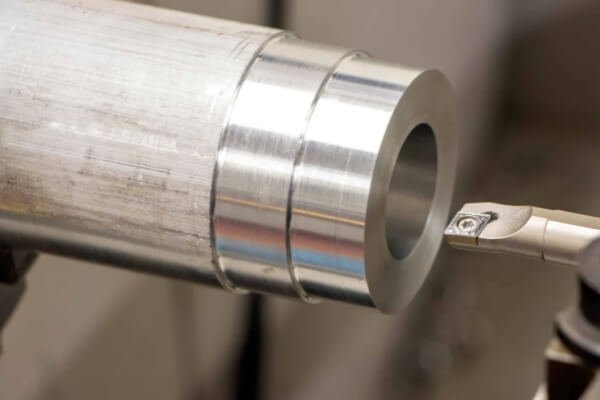
6061 aluminum is relatively easy to work with across various machining processes. Milling produces continuous, easy-to-handle chips, and drilling remains clean, even with standard high-speed steel (HSS) tools, which experience minimal wear. Its lower hardness reduces cutting forces, making it well-suited for mass production.
7075 aluminum also has good machinability, but its higher hardness and greater wear require carbide tools to extend tool life. It also demands precise cutting parameters—slightly higher speeds and lower feed rates—to prevent work hardening and ensure a smooth surface finish
Formability
6061 aluminum performs well in both hot and cold forming. Even in the annealed (O) condition, it bends easily into small radii, rolls into sheets, or forges into complex shapes without cracking. This flexibility makes it ideal for custom brackets, decorative parts, or bent components.
7075 aluminum has lower formability, especially in the T6 temper, where it can become brittle. It has some formability in the annealed state, but after heat treatment, it becomes very hard. Forming requires more force, and small-radius bends on thick sections may need preheating to prevent stress cracks.
Welding
6061 aluminum welds very well with most common methods. Using standard 4043 filler for MIG welding produces strong, tough, and low-porosity welds. TIG welding also delivers high-quality joints, suitable for structural applications in construction and other industries.
7075 aluminum welds poorly due to high zinc and copper content, which can cause hot cracks and porosity. It requires specialized techniques, such as pulsed TIG welding, along with 5356 or 2319 filler metals. In some cases, post-weld heat treatment is needed to ensure weld integrity.
Corrosion Resistance and Surface Finishing
Corrosion Resistance
6061 aluminum offers excellent corrosion resistance, especially in mild environments. Magnesium in the alloy helps form a dense, adherent oxide layer that protects against moisture, salt spray, and common chemicals, making it suitable for outdoor applications like marine hardware or outdoor furniture.
7075 aluminum resists corrosion in dry environments but is more prone to pitting in seawater or humid conditions. It often requires additional protection, such as chromate conversion coatings or powder coating, to extend its lifespan in harsh environments
Surface Treatment
Both alloys accept various surface treatments to enhance appearance and performance. Anodizing is the most popular option. Anodized 6061 forms a uniform, durable coating available in multiple colors. Anodized 7075 also performs well, but its higher copper content can result in slightly darker colors. Other options include powder coating (thick, scratch-resistant, vibrant finish), chemical polishing (mirror-like shine), and sandblasting (matte texture). The choice depends on functional requirements.
Cost and Availability
Cost
6061 aluminum is generally more cost-effective, priced 30%–50% lower than 7075. It’s simpler chemistry relies on abundant, low-cost magnesium and silicon, and large-scale production brings economies of scale.
In contrast, 7075 aluminum is more expensive due to its reliance on costly zinc and copper, plus more complex heat treatments, making it a premium choice for high-strength applications.
Availability
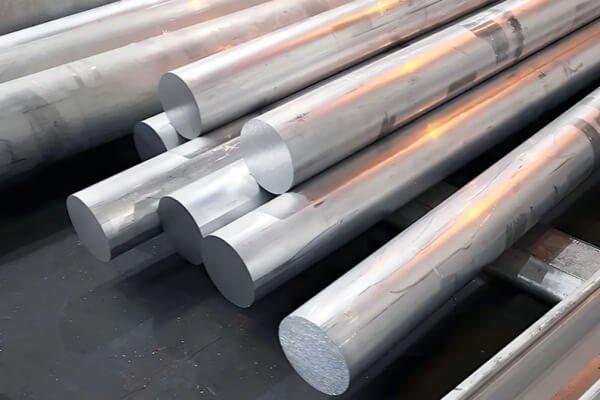
6061 is one of the most widely available aluminum grades. Major suppliers produce it in many forms—sheets, plates, bars, tubes, and extrusions—and can handle large orders with fast delivery.
7075 is available but in more limited forms and sizes. Its production is smaller and mainly serves aerospace and defense, so special shapes may require longer lead times or minimum order quantities.
Typical Applications
6061 Aluminum Applications
6061’s balanced performance makes it common across industries. In construction, it is used for window frames, door frames, and lightweight structural beams because it combines strength, corrosion resistance, and cost efficiency. In the automotive industry, it makes engine parts, wheels, and body panels, reducing weight and improving fuel efficiency. Everyday products like ladders, camping gear, electronic housings, and bicycle frames also use 6061.
7075 Aluminum Applications
7075’s exceptional strength-to-weight ratio makes it indispensable in high-performance applications. In aerospace, it is used for wings, fuselage spars, and landing gear components that must withstand extreme loads while remaining lightweight. Defense industries use it for armor plates and weapon components. High-end sports equipment—professional bike frames, golf club heads, tennis rackets, and racing components—also commonly use 7075, where strength and reliability are critical for safety.
Which Alloy Should You Choose?
When choosing between aluminum 6061 and 7075, start by defining your core requirements. If the application demands extreme strength and the budget allows, 7075 is the clear choice. For general-purpose, cost-effective solutions, 6061 fits better.
Consider machining factors as well: if complex shapes or simple welding are required, 6061’s formability and weldability save time and cost. For harsh environments, 6061’s corrosion resistance may meet your needs without extra coatings.
Partner with HRC for High-Precision Aluminum Solutions
HRC brings 17 years of experience and advanced equipment in precision aluminum machining. From 6061’s easy cutting to 7075’s need for carbide tools and precise feed rates, we provide full services: CNC milling, turning, drilling, and surface treatment.
Our quality control uses advanced metrology tools to ensure every part meets strict tolerances and excellent surface finish. Whether you need prototypes or high-volume production, contact us now for a customized quote and get your project started.
FAQs
1. What is the density difference between 6061 and 7075 aluminum?
2. How do the tensile strengths of 6061 and 7075 aluminum compare?
3. What about their yield strength? Which one performs better under stress?
4. What is the thermal conductivity of material 6061 aluminium?
In contrast, 7075 aluminum’s thermal conductivity is slightly lower, around 130 W/m·K, making 6061 more suitable for applications requiring efficient heat dissipation.