Skip to content

Nano machining is changing the manufacturing industry because it allows the production of extremely minute parts that are on an atomic scale. This technology has presented novel possibilities in other sectors such as electronics and medicine. Let’s have a closer look at how it works.
What is Nano Machining?
The science of machining materials on a nanometer scale is known as nano machining.
Defining Nano Machining
Nano machining is defined as the removal, shaping, or structuring of materials below a micrometer. In contrast to conventional machining, it aims for near-atomic or atomic accuracy, which is common in specialized applications such as semiconductors, optical components, and biomedical equipment.
How Nano Machining Differs from Conventional Machining
The conventional machining process operates at micrometer or millimeter levels using standard cutting tools and methods. The engineering of nano machining, however, requires very fine tools, minimal vibration, and sophisticated feedback to maintain sub-micrometer tolerances. It is not only the shape but also the surface quality on an atomic level.
Key Characteristics of Nano Machining
Nano machining is also characterized by a high level of precision, low surface roughness, and high repeatability. It can be controlled in many cases and used in cases where thermal expansion, vibration, and contamination are to be minimized. All these features make it a necessity in applications that require dimensional precision and surface quality.
Types of Nano Machining Processes
Let’s see how.
Mechanical Nano Machining
Mechanical nano machining is based on ultra-sharp tools to cut material atom by atom. Nanometer-level surface finishes on metals and crystals can be made in diamond turning, and micro-milling is applicable in making complex 3D microstructures. They both demand high performance machines and precise cutting parameters.
Focused Ion Beam (FIB) Machining
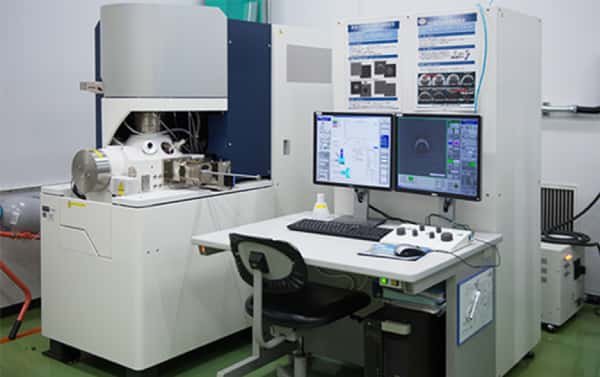
FIB machining involves a very focused beam of ions sputtering a substrate. It is good at patterning nanoscale circuits, editing circuits, and preparing samples to be viewed under a microscope. FIB enables selective material ablation at resolutions of sub-100 nm, so it is a popular application in studying semiconductor and nanotechnology.
Electron Beam Lithography (EBL)
EBL involves a high-energy electron beam that is used to create patterns on a substrate with a resist. It allows features smaller than a few nanometers and finds wide application in the manufacture of nanoscale electronic and photonic devices. It offers extremely high resolution but has lower throughput than optical lithography.
Abrasive Nano Machining
Abrasive processes use fine abrasive particles to remove material. They are commonly used to attain smooth finishes on hard substances such as ceramics, silicon wafers, or optical lenses. The success depends on controlling the particle size and slurry composition.
Nano Machining Laser-Assisted
Laser-assisted processes involve manipulating, ablating, or removing material at the nanoscale with the aid of laser energy. They can cut hard-to-machine materials without physical contact, and can frequently combine thermal and photochemical action to create high precision.
Hybrid Nano Machining Solutions
Hybrid nano machining methods combine multiple techniques, such as integrating FIB with mechanical or laser-assisted machining. These methods are efficient, accurate, and flexible in complex geometry and problematic materials. They represent the cutting edge of nano production.

Necessary Machinery and Equipment in Nano Machining
Effective nano machining involves the use of specialized equipment designed for accuracy and stability.
Ultra-Precision Machine Tools
Nano machining is based on machines whose positioning accuracy can be measured in nanometers. This is achieved using air bearings, linear motors, and closed-loop feedback, which minimize positioning deviations during cutting or structuring.
Diamond Cutting Tools
Diamond cutting tools offer unmatched hardness and sharpness, maximizing tool life and producing atomically smooth surfaces. Their geometry and quality have a direct impact on machining outcomes.
Advanced Control Systems
The position of tools, cutting forces, and environmental factors are controlled by high-speed controllers, feedback loops, and real-time monitoring systems, which minimize errors and maintain stable accuracy at the nanometer level.
Vibration Control and Thermal Management
Nano-scale machining can be adversely affected by vibrations and temperature fluctuations. The stability of high-precision operations is enhanced through the use of isolation tables, temperature-controlled environments, and active damping systems.
Quality Control and Metrology of Nano Machining
Assuring precision using advanced methods of measurement and monitoring in nano machining.
Measurement Technologies
- Laser interferometers measure distances and surface deviations with sub-nanometer accuracy, providing feedback for precise tool positioning.
- Scanning probe microscopes (SPM) scan surfaces to characterize topography and roughness at the atomic scale, which is necessary to describe features at the nanoscale.
- Optical profilers are noncontact methods that capture surface texture and provide rapid, high-precision measurements of roughness and form errors.
- Scanning electron microscopy (SEM) provides high-resolution images of a surface, revealing microstructure details that optical techniques cannot detect.
- Atomic force microscopy (AFM) is a 3D surface profiler at the nanoscale, important for measuring nanoscale surface interactions.
In-Process Monitoring
Continuous monitoring in nano machining plays an important role in identifying deviations at an early stage and ensuring the accuracy of the parts. State-of-the-art sensors are able to detect the position of tools, vibration, and temperature, and maintain quality in the production process.
Survey of Surface Integrity
Surface integrity affects the performance and reliability of nanoscale components. Assessing roughness, microstructure, and residual stress can help avoid failures and increase the life of parts.
Simulation of Molecular Dynamics
Atomic-level molecular dynamics simulations predict the behavior of materials. This model directs the optimization of processes, choice of tools, and cutting parameters, and minimizes trial-and-error experiments.
Materials that are Nano Machinable
The choice of materials is important to attain accuracy and reduce the wear of the tools.
Metals and Alloys
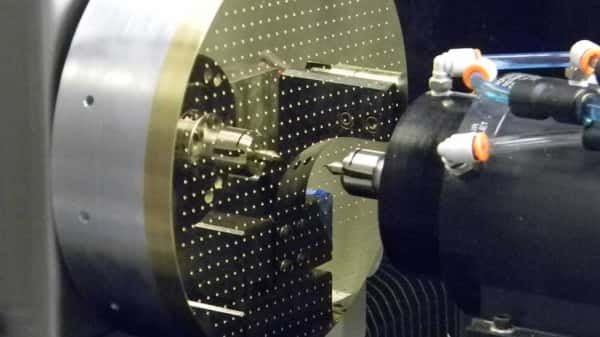
Aluminum, copper, and titanium are common metals that are nano machined because of their good mechanical properties. Alloys may provide greater hardness or thermal stability, and are therefore suitable for ultra-precise components. Selecting an appropriate metal helps minimize deformation and achieve an excellent surface finish.
Brittle Materials
Ceramics and glass, which are brittle materials, require specialized techniques. Nano machining enables the removal of materials in controlled amounts without causing cracks or fractures, making such materials suitable for optical components and microelectronics. Diamond turning and other methods are effective here.
Polymers and Plastics
Polymers and plastics have historically been considered unsuitable for precision applications. Polycarbonate and PMMA are the best materials to use during nano machining as they are flexible and have low thermal conductivity, improving dimensional accuracy at the nanoscale.
Advanced Materials
Modern manufacturing is driven to extremes by advanced materials, including composites, nanostructured coatings, and carbon-based materials. These materials can be processed by nano machining to produce high-performance parts for aerospace, medical devices, and electronics. These materials often require specialized cutting tools.
Industrial Applications of Nano Machining
Nano machining is no longer limited to laboratories; it is now widely implemented in industry.
Microelectronics and Semiconductor
Every single variation can be a problem in semiconductor manufacturing. Through nano machining, it is possible to produce microchips, MEMS devices, and integrated circuits with high precision and accuracy. Such accuracy directly translates to electronic devices that are faster and more efficient.
Optical and Photonics
Photonic devices, optical lenses, and mirrors require perfect surfaces. Nano machining is employed to achieve low surface roughness and high dimensional fidelity, thereby enhancing light transmission and minimizing scattering. It is essential in high-performance cameras, lasers, and optical sensors.
Biomedical and Medical Devices
Nano machining is of great benefit in the biomedical arena, particularly in the development of surgical equipment and implantable technologies. Accurate surfaces enhance biocompatibility, minimize wear, and increase functionality. Microneedles, stents, and lab-on-a-chip devices are devices that cannot operate without this technology.
Aerospace and Defense
Aerospace parts usually have severe conditions and close tolerances. Nano machining enables manufacturers to make lightweight, powerful, and highly accurate parts. Starting with turbine blades, all the way to satellite components, the technology can be used to guarantee safety and performance in critical applications.
Automotive Industry
Performance cars require both efficiency and durability. Nano machining is used in the manufacture of engine parts, fuel injectors, and sensors, which require extremely precise components. It reduces friction and wear, thereby increasing fuel efficiency and extending component life.
Consumer Electronics
Electronic gadgets used by consumers, such as smartphones and wearables, depend on small but powerful components. Nano machining ensures accuracy in microstructures, such as those found in chips, connectors, and lenses. This accuracy enhances performance, dependability, and general usability.
Difficulties and Limitations of Nano machining
Although nano machining is the most precise, it is also associated with challenges. Knowledge of such limitations helps manufacturers develop effective plans and mitigate risks.
Tool Wear and Management
Even a small wear on tools can be considered at the nanoscale. Regular checkups, proper lubrication, and high-quality tool materials are necessary. Proper management of tools will guarantee uniformity in the quality of the surface and will extend the life of the tool.
Thermal Effects and Control
During nano machining, heat may distort surfaces and cause expansion. Accurate and real-time temperature recordings, along with cooling measures, are used to control dimensional accuracy and prevent material degradation.
Process Complexity
Nano machining is characterized by its precise movements, specialized cutting techniques, and complex programming. To control these complexities, sophisticated software is needed, and careful planning of processes to prevent any mistakes and produce repeatability.
Material-Specific Challenges
Various materials will not act the same way when nano-machined. Brittle materials can crack, metals can deform, and polymers can melt. Individualized machining parameters should be applied to the individual material to achieve the best results.
Cost and Scalability
Nano machining is costly due to the use of finely tuned equipment, specialized tools, and skilled operators. One critical issue for industries seeking cost-effective solutions is the need to scale production while ensuring quality.
Combination with Traditional Manufacturing
It is quite common for nano machining to be used as a supplement to conventional manufacturing processes. The smooth integration will provide overall efficiency, and alignment between the nano and conventional methods can be complicated in terms of the tolerances and processes alignment.
Best Practices of Nano Machining Implementation
To implement nano machining successfully, it is necessary to plan, use the appropriate equipment, and hire qualified staff. The best practices provide high-quality results and long-term gains.
Process Planning
Proper scheduling of machining steps, tool paths, and cutting parameters reduces possible errors. The ability to foresee material behavior and requirements on the surface enhances productivity and quality of products.
Equipment Selection
It is essential to select suitable machines, cutting tools, and control systems. The machining accuracy and repeatability are improved by using high-stability platforms, precision actuators, and compatible software.
Training and Expertise of the Operators
Even advanced machines rely heavily on operator skill. Nano-scale processes, material behavior, and equipment handling are trained to minimize human error, ensuring that precision is not compromised.
Environmental Control
Vibration, temperature variations, and humidity may influence nano machining. The amount of consistency and surface integrity is increased through maintaining a controlled environment, cleanroom conditions, and appropriate isolation.
Conclusion
Nano machining is opening up previously unexplored precision in all industries, including semiconductors and biomedical equipment. Following best practices ensures efficiency and high-quality results. Research the possibilities of HRCCNC to assist you in deploying the latest nano machining solutions.