Skip to content
Few materials are directly comparable to Kovar, given its supreme reliability in high-stakes applications. However, its toughness and sensitivity to heat make it notoriously difficult to cut, shape, and finish.
Practical insights, proven strategies, and best practices are necessary to overcome such challenges. You’ll know about Kovar’s behavior, machining hurdles, and actionable solutions to achieve precision.
What is Kovar (Kovar Alloy)?
It’s a specialized iron–nickel–cobalt alloy for precision applications. The usability mostly revolves around thermal expansion control and glass-to-metal sealing.
Composition of Kovar
- Iron (Fe): 54%
- Nickel (Ni): 29%
- Cobalt (Co): 17%
The material features a silver-grey metallic finish, similar to stainless steel. Kovar was developed in the 20th century to match the thermal expansion of borosilicate glass and ceramics.
Properties of Kovar
- Thermal Expansion: Coefficient of Thermal Expansion (CTE) closely matches borosilicate glass.
- Mechanical Strength: Tensile strength remains 450 – 550 MPa, whereas hardness is 200 HB (Brinell).
- Magnetic Behavior: Retains ferromagnetic properties due to iron and cobalt content.
- Corrosion Resistance: Moderate; requires protective plating (nickel/gold) for long-term durability.
Applications of CNC-Machined Kovar
- Aerospace Industry: Hermetic seals in satellites and spacecraft.
- Sensor Housings: Gyroscopes, accelerometers, and infrared sensors.
- Glass-to-Metal Seals: Vacuum tubes, transistors, and semiconductor packages.
- Microelectronics: CNC-machined Kovar is widely used in IC packaging.
- Implantable Electronics: Pacemakers, cochlear implants, and neurostimulators.
- MRI-Compatible Components: Medical imaging devices for reliability.
- Vacuum Systems: Feedthroughs + connectors for electron microscopes.
Challenges Involved in CNC Kovar Machining
CNC machining of Kovar is notoriously problematic. Several sensitive factors contribute to tool wear, dimensional inaccuracy, and overspending for manufacturers.
a. Material Hardness + Brittleness
Kovar’s composition (iron–nickel–cobalt alloy) gives it high strength but also makes it tough to cut. Cutting tools wear out quickly, especially under high-speed machining.
Carbide tools often last only 30% – 40% of their normal lifespan when used on Kovar. Brittleness can cause micro-cracking if machining forces are not carefully controlled.
b. Work Hardening and Heat Sensitivity
Kovar tends to work-harden rapidly, meaning the surface becomes harder as machining progresses. It increases tool stress and reduces efficiency.
Excessive heat buildup leads to dimensional inaccuracies and surface defects. Maintain low cutting speeds and use copious coolant to dissipate heat.
c. Dimensional Precision Requirements
Industries like aerospace and medical devices demand tight tolerances. Even slight thermal expansion can compromise hermetic seals in electronics packaging.
d. Surface Finish and Post-Processing
Achieving smooth finishes is difficult due to tool wear and hardening. Kovar requires grinding/polishing after CNC machining to meet specific standards.
Protective plating (nickel or gold) is usually applied post-machining to improve corrosion resistance and biocompatibility.
e. Tooling and Cost Efficiency
Frequent tool replacement increases production costs. Specialized tooling (ceramic or diamond-coated) is often required, raising upfront investment.
In Asia-Pacific semiconductor plants, machining inefficiencies with Kovar can increase production costs by up to 15%, making optimization critical.
Tooling Recommendations for Machining Kovar
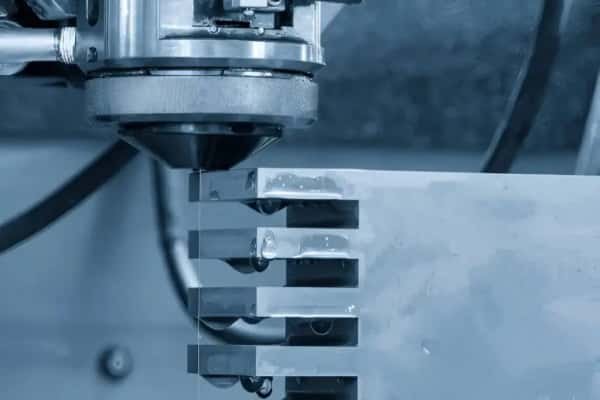
01. Cutting Tools
- Carbide Tools: Recommended for most CNC operations due to their durability. Carbide tools last 30% – 40% longer than high-speed steel (HSS) when machining Kovar.
- Ceramic and Diamond-Coated Tools: Used in high-precision aerospace and medical applications where ultra-tight tolerances (±0.002–0.005 mm) are required. Diamond-coated tools reduce friction and heat.
02. Cutting Parameters
- Speed: Keep cutting speeds low (20 – 30 m/min) to minimize heat and work-hardening.
- Feed Rate: Use higher feed rates to reduce tool dwell time and prevent surface hardening.
- Depth of Cut: Shallow passes are recommended to maintain dimensional accuracy.
03. Coolant and Lubrication
- Flood Coolant: Essential to dissipate heat and prevent thermal distortion.
- Oil-Based Coolants: Provide better lubrication, reducing friction and tool wear.
04. Grinding and Finishing Tools
Fine-Grain Abrasives: Required for achieving smooth finishes in optical and medical applications.
Polishing: Necessary before plating (nickel/gold) to enhance corrosion resistance and biocompatibility.
05. Cost Considerations
Kovar’s toughness leads to rapid tool wear, increasing production costs. Frequent tool changes can raise machining costs in semiconductor plants.
Investing in advanced tooling (ceramic or diamond-coated) reduces downtime. It also improves the overall efficiency despite higher upfront costs.
CNC Kovar Machining Parameters
a. CNC Turning (Lathe Operations)
- Cutting Speed: 20–30 m/min (low to minimize heat and work-hardening)
- Feed Rate: 0.05–0.15 mm/rev
- Depth of Cut: Shallow passes (0.25–0.5 mm) to maintain dimensional accuracy
- Tooling: Carbide inserts with positive rake angles; ceramic inserts for high-precision aerospace parts.
- Challenges: Rapid tool wear due to Kovar’s hardness (~200 HB).
b. CNC Milling
- Cutting Speed: 20–40 m/min
- Feed per Tooth: 0.02–0.05 mm
- Depth of Cut: Light passes (0.2–0.4 mm) to avoid excessive tool stress
- Tooling: Carbide end mills with TiAlN coating; diamond-coated tools for semiconductor packaging.
- Challenges: Work-hardening leads to chatter and poor surface finish.
c. CNC Grinding
- Wheel Speed: 30–35 m/s
- Feed Rate: 0.01–0.03 mm/pass
- Coolant: High-pressure flood coolant to prevent thermal distortion
- Tooling: Fine-grain alumina or diamond grinding wheels.
- Challenges: Achieving mirror finishes for optical or medical applications.
d. Tapping (Thread Cutting)
- Speed: 8–12 m/min (very low to prevent tool breakage)
- Lubrication: High-viscosity oil-based coolant
- Tooling: High-strength carbide taps with spiral flutes.
- Challenges: Kovar’s toughness causes high torque loads, increasing the risk of tap breakage.
e. CNC Drilling
- Speed: 15–25 m/min
- Feed Rate: 0.05–0.1 mm/rev
- Peck Drilling: Essential to reduce heat and clear chips
- Tooling: Carbide drills with TiN or diamond coatings.
- Challenges: Heat buildup leads to dimensional inaccuracies and tool wear.
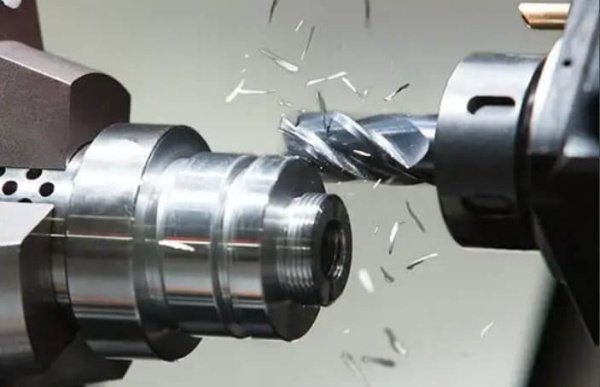
Heat Treatment, Lubrication, Surface Finish
01. Heat Treatment of Kovar
The process reduces hardness and internal stresses, improving machinability. Ensure dimensional stability for aerospace and electronics applications. Top processes –
- Annealing: Conducted at 850 – 1000°C, followed by controlled cooling. It softens the alloy and minimizes work-hardening.
- Stress Relief: Applied after machining to prevent distortion in hermetic seals.
- Controlled Atmosphere: Heat treatment is often performed in hydrogen or vacuum furnaces to prevent oxidation.
02. Lubrication in CNC Kovar Machining
Kovar’s toughness and tendency to work-harden generate high cutting forces and heat. Without proper lubrication, tool wear increases compared to softer alloys. Recommended actions –
- Flood Coolant: Essential to dissipate heat and prevent thermal distortion.
- Oil-Based Coolants: Provide superior lubrication, reducing friction and extending tool life.
- High-Pressure Coolant: Aerospace machining centers to hold ±0.005 mm tolerances.
Surface Finish of CNC-Machined Kovar
Proper finishing is critical for hermetic sealing, optical clarity, and medical biocompatibility. Poor finishes can compromise vacuum integrity or cause implant rejection. Top techniques –
- Grinding: Fine-grain alumina or diamond wheels achieve mirror-like finishes.
- Polishing: Often required before plating (nickel or gold) to enhance corrosion resistance and biocompatibility.
- Surface Roughness Target: Aerospace and medical industries often demand Ra ≤ 0.2 µm.
However, tool wear and work-hardening make achieving smooth finishes difficult. Post-processing is almost always required.
Common Kovar Machining Issues
a. Rapid Tool Wear
Cause: Kovar’s hardness (200 HB) and work-hardening tendency accelerate tool degradation.
Use carbide, ceramic, or diamond-coated tools. Apply low cutting speeds (20 – 30 m/min) and high feed rates. Employ copious coolant to minimize heat buildup.
b. Work Hardening + Heat Sensitivity
Cause: Kovar hardens quickly under machining stress, making subsequent passes more difficult.
Pre-anneal Kovar at 850 – 1000°C to reduce hardness. Use sharp tools with positive rake angles to minimize cutting forces. Adopt step drilling and peck cycles to reduce heat buildup.
c. Poor Surface Finish
Cause: Tool wear, chatter, and work-hardening lead to rough surfaces.
Use fine-grain abrasives and diamond grinding wheels. Employ climb milling to reduce chatter. Perform polishing and plating (nickel or gold) for corrosion resistance.
d. Dimensional Inaccuracy
Cause: Thermal expansion during machining distorts dimensions in tight-tolerance applications.
Apply high-pressure flood coolant to stabilize temperatures. Adopt a shallow depth of cut (0.25 – 0.5 mm) to minimize distortion. Use stress-relief heat treatment after machining.
e. Threading and Tapping Breakage
Cause: High torque loads during tapping increase the risk of tool breakage.
Use thread-forming taps for longer tool life. Apply oil-based lubricants to reduce friction. Keep tapping speeds very low (8 – 12 m/min).
Inspection and Quality Control
Kovar is used in hermetic seals, semiconductor packaging, and implantable medical devices. Even minor dimensional errors or surface defects can cause catastrophic failures. Key inspection parameters –
Dimensional Accuracy
- Coordinate Measuring Machines (CMMs) for 3D dimensional checks.
- Laser interferometry for ultra-precise measurements in semiconductor packaging.
Surface Finish
- Profilometers and atomic force microscopy for micro-level surface analysis.
- Visual inspection under magnification for burrs and micro-cracks.
Material Integrity
- Heat treatment validation: Hardness testing ensures proper annealing and stress relief.
- Microstructural analysis: Metallographic inspection confirms grain structure stability.
Hermeticity and Leak Testing
- Helium leak detection (sensitivity up to 1×10⁻⁹ atm·cc/s).
- Pressure decay and vacuum integrity tests.
Thread and Hole Quality
- Go/No-Go gauges for threads.
- Bore scopes for internal hole inspection.
Conclusion
Appropriate machining of Kovar immediately unlocks opportunities with precision, reliability, and innovation. Kovar stands as a perfect material to connect metal with glass. Yes, Kovar is tough. All you need is patience, specialized tooling, and meticulous process control.
Enjoy the Most Precise Machining Services at HRCCNC
We excel in metal machining with high experience, great innovation, and optimal precision. Our services have been around for 18 years. Contact us to learn further from the industry-leading experts.