Skip to content

A flange bearing is an essential component in modern mechanical systems, primarily used for shaft positioning, load transmission, and friction reduction. It is widely applied in automation equipment, heavy machinery, and precision instruments. As industrial systems continue to evolve toward higher accuracy and stability, the performance of flange bearings plays a direct role in determining the efficiency and lifespan of the entire machine.
With the rise of advanced manufacturing, CNC machining has become the core process for producing high-quality flanged bearings. Compared to conventional machining, CNC technology ensures superior dimensional accuracy, consistency, and the ability to handle complex geometries. Critical features such as flange flatness and bore concentricity can be tightly controlled, allowing the bearing flange to perform reliably even under demanding operating conditions.
Structural Advantages of a Flanged Bearing
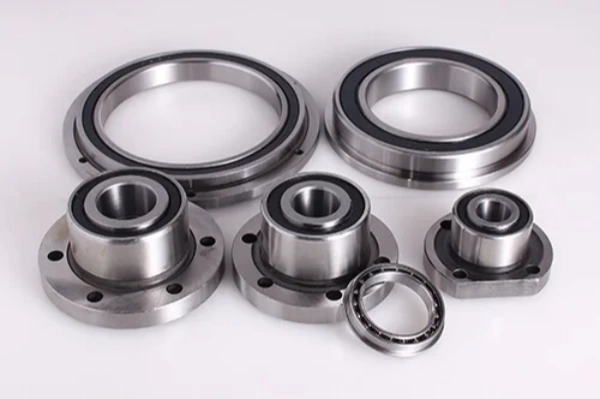
At its core, a flanged bearing integrates a mounting flange into the bearing structure, enabling direct axial positioning without additional locating components. This design simplifies assembly while significantly improving shaft stability. In real-world applications, flange bearings not only prevent shaft displacement under high-speed or heavy-load conditions but also distribute forces more evenly across the mounting surface, reducing localized stress and wear.
Because of this integrated design, flanged bearings are widely used in automated production lines and heavy-duty equipment where both precision and durability are required. The stability provided by the flange structure makes them especially valuable in applications where consistent alignment is critical.
Types of Flange Bearings and Application Matching
Flange bearing selection is fundamentally based on “application matching,” meaning the appropriate type should be chosen according to load, rotational speed, and available installation space. The common types and their typical applications are as follows:
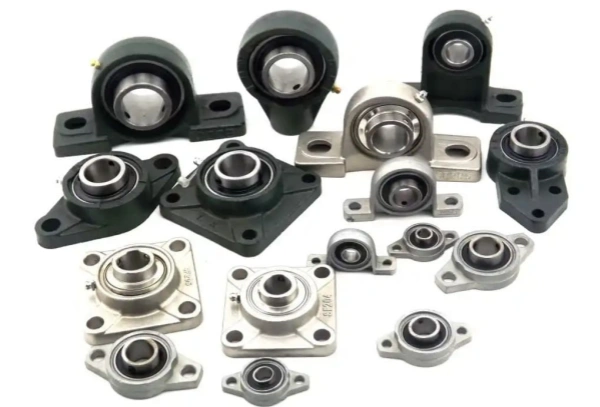
The 2 bolt flange bearing features a compact structure and easy installation, making it suitable for applications with limited mounting space, moderate loads, and relatively low speeds, such as small motors and light-duty conveying equipment. Its advantages lie in its small size and simple assembly, and it is relatively easy to manufacture through CNC machining; however, its load capacity is limited, so it is not suitable for high-load or high-speed conditions.
Self-aligning flange bearings are designed with an automatic alignment function that can compensate for slight shaft misalignment. They are well suited for applications where temperature fluctuations are significant, where minor structural deformation may occur, or where long shaft transmissions are prone to coaxial deviation, such as mining machinery and large industrial fans. During CNC machining, particular attention must be paid to the precision of the self-aligning structure to ensure that the alignment function performs as intended.
The flanged ball bearing is characterized by low friction, high rotational speed, and high precision. It is suitable for applications involving high speed, high accuracy, and medium to low loads, such as automated production lines, precision machine tools, and robotic joints. As a result, flanged ball bearings are currently among the most widely used types of flange bearings in industrial applications.
Flanged Sleeve Bearings and Material Considerations
In addition to rolling-element designs, the flanged sleeve bearing offers a different performance profile. Unlike ball bearings, flanged sleeve bearings rely on sliding contact, which makes them particularly effective in applications involving heavy loads or shock conditions. They also perform well in environments where lubrication may be inconsistent.
Because of their simpler structure and material flexibility, flanged sleeve bearings are often chosen for applications where durability and low maintenance are more important than high-speed performance.
CNC Machining Practices and Quality Control for Flange Bearings
The core objective of CNC machining for flange bearings is to achieve high precision and strong consistency. In practice, the entire process follows a structured workflow of “preparation – core machining – post-processing – quality inspection,” with strict control required at every stage. Based on practical machining experience, the key points throughout the process are as follows:
During the preparation stage, material selection comes first. The appropriate material should be chosen according to application requirements: aluminum alloys are suitable for lightweight and high-speed conditions, stainless steel is preferred for corrosion-resistant environments, and carbon steel is commonly used in general industrial applications. This is followed by raw material preparation, where bar stock or forgings undergo rough turning and stress-relief treatment. Finally, tooling and fixturing must be prepared, and engineering drawings carefully reviewed to clearly define machining tolerances and process planning.
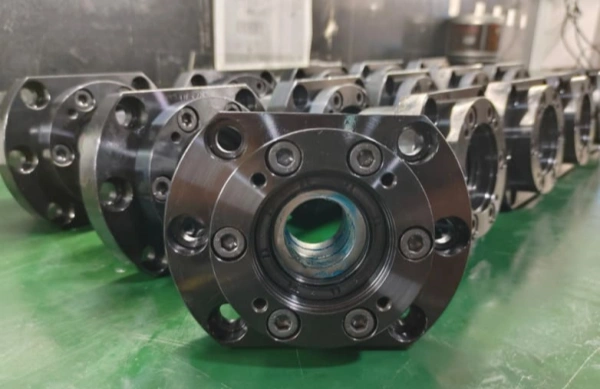
In the core machining stage, the process begins with secure clamping and precise positioning, typically using a three-jaw chuck, soft jaws, or a mandrel to ensure stability and accuracy. This is followed by rough turning, where the flange face, inner bore, and outer diameter are machined to remove most of the material while leaving a finishing allowance of approximately 0.2–0.5 mm. The next step is finish turning, focusing on the inner bore, flange face, and raceway in the case of a flanged ball bearing, ensuring that dimensional tolerances, geometric tolerances, and surface finish meet specifications. Milling operations are then carried out to machine mounting holes, slots, and other flange features. After machining, post-processing includes deburring, cleaning, and surface treatments such as anodizing, passivation, or black oxide coating.
Quality control is centered around three critical indicators: dimensional tolerances, geometric tolerances, and surface roughness. The inner bore is typically controlled within IT6–IT7 tolerance grades, while the flange outer diameter falls within IT8–IT9. Geometric tolerances such as concentricity and flatness must be maintained within 0.005 mm. Surface roughness requirements generally range from Ra 0.4–0.8 μm for mating surfaces and Ra 0.8–1.6 μm for mounting surfaces. Throughout the machining process, regular inspections are essential to monitor accuracy and allow timely adjustments to tool offsets and cutting parameters.
Addressing common machining challenges is also critical. For issues related to dimensional deviation, improvements can be achieved by optimizing clamping methods, regularly calibrating CNC machines, and using high-precision cutting tools. To prevent workpiece deformation, strategies such as separating rough and finish machining, incorporating stress-relief processes, and reducing clamping force should be applied.
Industrial Value of Flanged Bearings
From an industrial perspective, flange bearings play a key role in improving system stability and reducing maintenance costs. Their integrated mounting design simplifies installation, minimizes alignment errors, and enhances overall efficiency.
Whether used in high-speed automation systems or heavy-duty industrial equipment, flanged bearings provide a balance of precision, durability, and ease of use. As manufacturing continues to advance, the demand for high-quality components such as flanged ball bearings and flanged sleeve bearings will continue to grow.
Conclusion
The performance of a flanged bearing depends not only on its structural design but also on machining precision and proper selection. With CNC machining enabling higher accuracy and consistency, flange bearings have become a fundamental component in modern industry. Choosing the right type—whether a flanged ball bearing or a flanged sleeve bearing—ensures optimal performance and long-term reliability.
FAQ
What is the difference between a flanged bearing and a bearing flange?
A flanged bearing is a complete bearing unit with an integrated flange, while a bearing flange usually refers specifically to the mounting portion of the component.
What is a two bolt flange bearing?
A two bolt flange bearing is a compact mounting solution commonly used in light-duty applications, similar to a 2 hole flange bearing.
When should I use a 4 bolt flange bearing?
A 4 bolt flange bearing is typically used when higher load capacity and stronger mounting stability are required.
What are bronze flanged sleeve bearings used for?
Bronze flanged sleeve bearings are ideal for applications requiring excellent wear resistance and reliable performance under heavy loads.
What are flange mount bearings or flange mounted bearings?
Both flange mount bearings and flange mounted bearings refer to bearings designed with a flange for easy surface mounting and secure positioning.
How does a flange gasket work with flange bearings?
A flange gasket is often used between mating surfaces to ensure proper sealing and fit when installing flange bearings in certain assemblies.