Skip to content

CNC machining and injection molding are two widely used manufacturing methods for producing custom parts, prototypes, and production components across aerospace, automotive, medical, electronics, and industrial applications. CNC machining is ideal for low-volume, high-precision, or complex metal and plastic parts with short production lead times, while injection molding is better suited for high-volume, cost-effective plastic production with repeatable output and lower per-part cost at scale.
The right manufacturing process depends on production volume, material type, dimensional accuracy, lead time, tooling investment, and part geometry. CNC machining supports flexible design changes, tight tolerances, and a broad material range, including aluminum, stainless steel, brass, Delrin, and PEEK without requiring mold tooling. On the other hand, injection molding relies on custom mold fabrication but delivers faster cycle times and consistent plastic part quality during large-scale production.
This guide compares CNC machining and injection molding across cost, precision, workflows, materials, surface finish, production scalability, and industry applications to help you determine the best process as per your manufacturing requirements.
What is CNC Machining?
CNC (Computer Numerical Control) machining is an automated manufacturing process in which pre-programmed software controls the movement of mills, lathes, routers, and other cutting tools to shape raw materials into high-precision parts. CNC machining is also a subtractive manufacturing process that removes material from a solid workpiece to create custom components with tight tolerances and complex geometries. The process uses CAD and CAM software to convert digital part designs into machine instructions for accurate cutting, shaping, drilling, and finishing operations across metals, plastics, and composites.
CNC machining supports rapid prototyping, low-to-medium production, and custom manufacturing without requiring mold tooling. Common materials include aluminum, stainless steel, brass, titanium, Delrin, PEEK, and carbon fiber composites. Industries such as aerospace, automotive, medical, electronics, defense, and industrial engineering rely on CNC machining for precision components requiring dimensional accuracy, repeatable quality, and controlled surface finishes
What is Injection Molding?
Injection molding is a widely used manufacturing process for producing high-volume plastic parts by injecting molten material into a metal mold, where it cools and hardens into the desired shape. The process begins by heating thermoplastic pellets until they melt before injecting the material into a precision mold cavity under high pressure. Injection molding supports fast production cycles, repeatable manufacturing quality, and consistent dimensional accuracy for large-scale plastic component production across consumer, automotive, packaging, and medical industries.
Common materials used in injection molding include ABS, polypropylene, polyethylene, polycarbonate, and nylon because they provide good moldability, strength, and repeatable production performance. The process is commonly used to manufacture plastic housings, containers, automotive trims, medical devices, and packaging components with smooth surface finishes and lower per-part cost during high-volume manufacturing runs.
Comparison Table Between CNC Machining and Injection Molding
CNC machining is ideal for low-volume, high-precision, or complex metal and plastic parts with fast turnaround, while injection molding is best suited for high-volume, cost-effective plastic production. Both methods differ in tooling requirements, material compatibility, production speed, and design flexibility, making each suitable for different production goals.
The following comparison table highlights the key differences between CNC machining and injection molding in terms of cost, precision, materials, lead times, and manufacturing scalability.
| Attribute | CNC Machining | Injection Molding |
| Manufacturing Type | Subtractive manufacturing | Mold-based forming process |
| Best For | Prototypes and small-batch manufacturing | Mass production and large-scale manufacturing |
| Tooling Requirement | No mold tooling required | Requires mold tooling |
| Upfront Cost | Lower | High upfront tooling investment |
| Average Cost Range | $50–$150 per hour | $30–$200 per hour |
| Per-Part Cost | Higher at scale | Lower per-part cost during high-volume production |
| Setup Time | Rapid setup without mold fabrication | Longer setup due to mold fabrication |
| Materials | Metals, plastics, composites | Primarily thermoplastics |
| Precision | Tight tolerances and precision-controlled machining | Consistent repeatability |
| Design Flexibility | Easy design modifications | Limited after mold creation |
| Complex Geometries | Flexible multi-axis machining capability | Restricted by mold geometry and tooling constraints |
| Surface Finish | Requires machining and finishing | Smooth molded surfaces |
| Production Speed | Slower for large quantities | Faster cycle times during mass production |
| Common Applications | Aerospace, medical devices, prototypes | Packaging, consumer products, automotive plastic parts |
How Do CNC Machining and Injection Molding Work as Manufacturing Processes?
CNC machining works by removing material from a solid workpiece using computer-controlled cutting tools, while injection molding works by injecting molten material into a mold cavity to form plastic parts. CNC machining supports precision manufacturing, complex geometries, and flexible custom production across metals and plastics. Injection molding supports repeatable high-volume production with consistent plastic part quality, fast cycle times, and cost-efficient manufacturing scalability.
How Does CNC Machining Work as a Manufacturing Process?
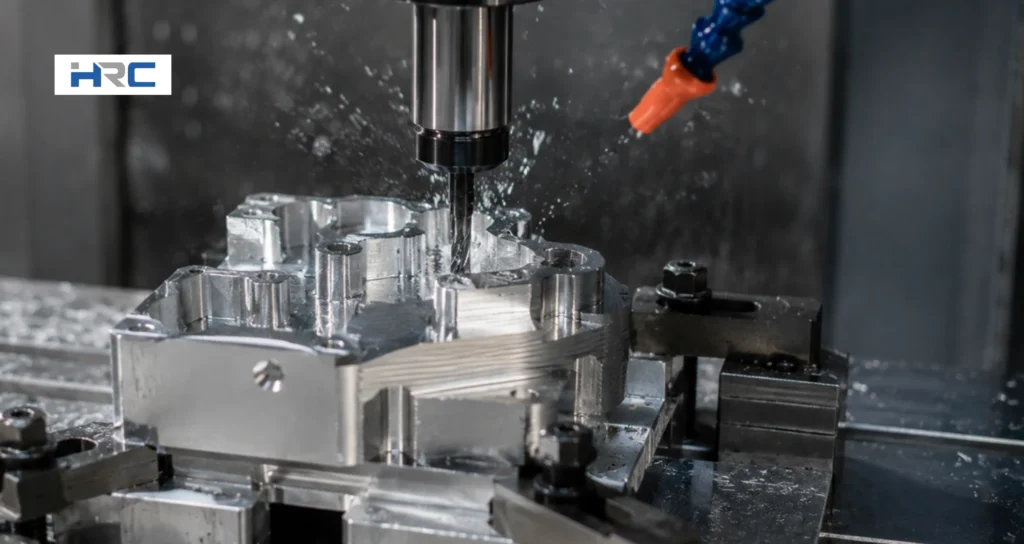
CNC machining is a subtractive manufacturing process that creates precise 3D parts by removing material from a solid workpiece using computer-controlled cutting tools. The process begins with a CAD model, which is converted into machine instructions for mills, lathes, and drills to cut, shape, and refine the material. CNC machining supports tight tolerances, complex geometries, prototype development, and custom component manufacturing across metals, machined plastics, and composites.
How Does Injection Molding Work as a Manufacturing Process?
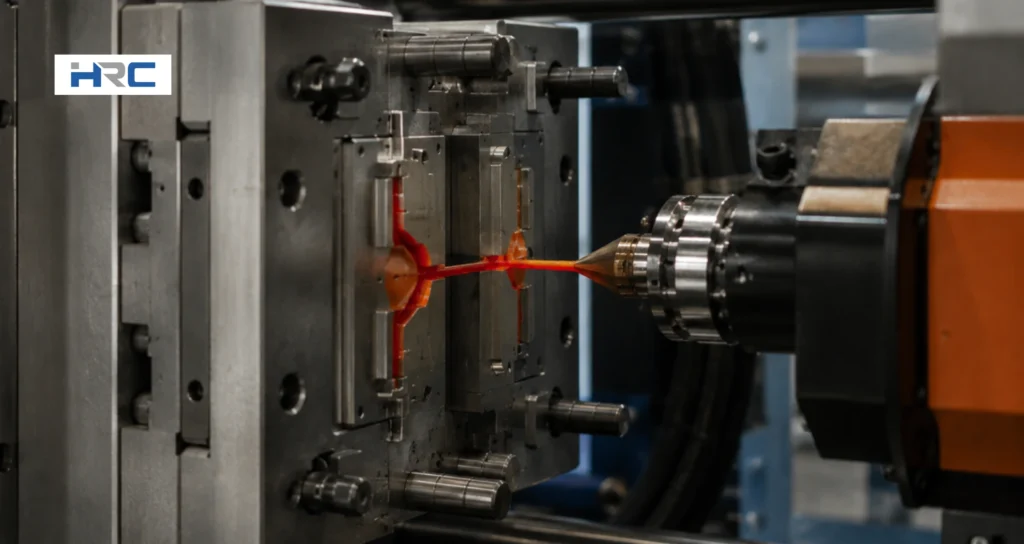
Injection molding is a manufacturing process that creates plastic parts by injecting molten material into a metal mold, where it cools and solidifies into the required shape. The process begins by heating plastic pellets before injecting the molten material into a mold cavity under high pressure. Injection molding supports repeatable high-volume production of cost-efficient plastic components for packaging, consumer products, automotive components, and electronic housings.
How Does CNC Machining Compare to Injection Molding for Prototyping and End-Use Parts?
CNC machining is ideal for fast, high-precision prototypes and low-volume production (1–1,000 units) due to its lack of tooling costs and flexible design changes. Injection molding is more suitable for end-use plastic parts in high-volume production because it delivers repeatable quality and lower per-part cost at scale. Both manufacturing methods differ in setup time, production speed, scalability, and customization flexibility.
Which Process Works Better for Rapid Prototyping?
CNC machining is better suited to rapid prototyping because it does not require mold tooling and supports fast setup, design modifications, and tight tolerances. Manufacturers can quickly machine prototypes, custom parts, and functional components from metals, machined plastics, and composites without waiting for mold fabrication, making CNC machining suitable for iterative product development.
Which Process Is Better for End-Use Production Parts?
Injection molding is more suitable for end-use production parts requiring large quantities of consistent plastic components. The process supports high-volume production, consistent part quality, and low per-part cost once tooling is complete. CNC machining remains suitable for low-volume end-use parts requiring high precision, custom geometries, or specialized metal and composite materials.
How Do CNC Machining and Injection Molding Differ in Speed and Lead Time?
CNC machining offers significantly faster lead times (days) for prototypes and low-volume production, while injection molding provides faster production cycle times typically ranging from 10 to 60 seconds per part once the lengthy tooling phase (weeks to months) is complete. CNC machining does not require mold fabrication, making it suitable for rapid prototyping, design changes, and custom production. Injection molding requires longer setup due to mold creation but delivers faster cycle times and repeatable output during high-volume production.
Which Process Has Faster Setup Time: CNC Machining or Injection Molding?
CNC machining has a significantly shorter setup time than injection molding because it does not require mold fabrication before production begins. CNC machining can start production within days after CAD programming and material setup, making it suitable for rapid prototyping and low-volume production. Injection molding requires mold design, tooling creation, and testing, which can extend setup and lead times from several weeks to months before high-volume production starts.
How Do CNC Machining and Injection Molding Handle Different Materials?
CNC machining supports a wider range of materials, including metals, engineering plastics, and composites, while injection molding primarily uses thermoplastics designed for moldability and repeatable production. CNC machining commonly uses aluminum (6061/7075), stainless steel, brass, Delrin, PEEK, carbon fiber, and fiberglass for precision parts and custom applications. Injection molding commonly uses ABS, polypropylene (PP), polycarbonate (PC), polyethylene, and nylon to produce high-volume, durable, and consistent plastic parts.
The table below compares CNC machining and injection molding by production volume and efficiency.
| Material Category | CNC Machining | Injection Molding |
| Metals | Aluminum, steel, brass, titanium | Primarily thermoplastics; separate processes such as Metal Injection Molding (MIM) are used for specialized metal components. |
| Plastics | ABS, nylon, acrylic, PEEK | ABS, polypropylene, polyethylene, nylon |
| Composites | Carbon fiber, fiberglass | Limited specialized applications |
| Elastomers | Limited | Silicone and thermoplastic elastomers |
What Materials Work Best for CNC Machining?
CNC machining works best with aluminum (6061/7075), stainless steel, brass, and engineering plastics like Delrin and PEEK, which offer strength, machinability, and dimensional stability. Common metals include aluminum, steel, brass, and titanium because they enable the production of high-precision, durable parts. Machined plastics such as ABS, nylon, acrylic, and PEEK provide lightweight and corrosion-resistant solutions. Composites such as carbon fiber and fiberglass are suitable for custom parts that require rigidity, strength, and reduced weight.
What Materials Work Best for Injection Molding?
Injection molding works best with thermoplastics, including ABS (versatile/strong), Polypropylene (PP) (cheap/flexible), Polycarbonate (PC) (durable/transparent), and Nylon (heat/wear-resistant), which provide good melt flow, moldability, and repeatable production quality. Common materials include ABS for impact resistance, polypropylene for chemical resistance, polyethylene for flexibility, and nylon for strength and wear resistance. These materials flow efficiently into mold cavities, cool consistently, and support high-volume production of injection-molded plastic parts with reliable dimensional consistency.
How Do You Choose Between CNC Machining and Injection Molding?
Choose CNC machining for prototypes, custom parts, rapid design changes, and low- to medium-volume production where precision, flexible geometries, and shorter lead times are required. Injection molding is more suitable for high-volume production of repeatable plastic components when lower per-part cost and fast manufacturing cycles become production priorities. CNC Machining is generally more cost-effective for low to medium volumes (typically 1 to 1,000–2,000 units), while injection Molding becomes more economical for high volumes (usually 2,000+ units, with significant cost advantages above 5,000–10,000 units).
Below is a comparison of CNC machining and injection molding to help decide which process to choose:
| Selection Factor | CNC Machining | Injection Molding |
| Production Volume | Low-to-medium production volumes | Medium-to-high production volumes |
| Material Type | Metals, plastics, composites | Primarily thermoplastics |
| Lead Time | Faster setup and prototyping | Longer tooling setup |
| Part Complexity | Flexible custom geometries | Limited by mold constraints |
| Precision | Tight tolerances and high accuracy | High repeatability during large-scale production |
| Best Use Case | Prototypes and custom precision parts | Mass production of plastic components |
CNC Machining or Injection Molding: Which Is Right for Your Production Volume?
For low- to medium-quantities (typically under 2,000 units) and complex precision parts, CNC machining enables flexible production changes, while injection molding is more cost-effective for high-volume production (typically above 2,000 units) with fast, repeatable manufacturing output. CNC machining is commonly preferred for low-volume production, prototyping, and small-batch manufacturing because it avoids mold tooling, reduces upfront costs, and enables easy design changes. Injection molding becomes more cost-efficient as production volume increases, spreading tooling costs across larger runs.
| Production Volume | CNC Machining | Injection Molding |
|---|---|---|
| 1–100 Units | Highly suitable for prototypes, custom parts, and rapid design changes | Not cost-effective due to high tooling investment |
| 100–2,000 Units | Suitable for low-volume production and complex precision parts | Suitable for selected plastic production runs |
| 2,000+ Units | Higher per-part cost during scaled production | Most efficient option for high-volume mass production |
How Do I Choose Between CNC Machining and Injection Molding for My Part?
You should choose CNC machining for prototypes, low-volume production (<2,000 units), high-precision metal components, or projects requiring rapid design updates and tight tolerances. CNC machining also supports custom geometries and engineering materials such as aluminum, stainless steel, Delrin, and PEEK. Choose injection molding for high-volume production (>2,000 units) when consistent plastic part quality, repeatable output, and lower per-part cost are priorities, especially for ABS, polypropylene, polycarbonate, and nylon components.
Which Process Delivers Better Dimensional Accuracy: CNC Machining or Injection Molding?
CNC machining delivers tighter dimensional accuracy than injection molding for parts that require strict tolerance control and precision engineering. Computer-controlled cutting tools allow CNC machining to achieve tolerances as tight as ±0.001 inches (±0.025 mm), making it suitable for aerospace, medical, and high-performance industrial components. Injection molding typically maintains tolerances between ±0.003–0.010 inches (±0.08–0.25 mm), depending on material shrinkage, mold quality, and part geometry. CNC machining is preferred for ultra-precise components, while injection molding is better suited for consistent large-scale production.
How Does Surface Finish Compare Between CNC Machining and Injection Molding?
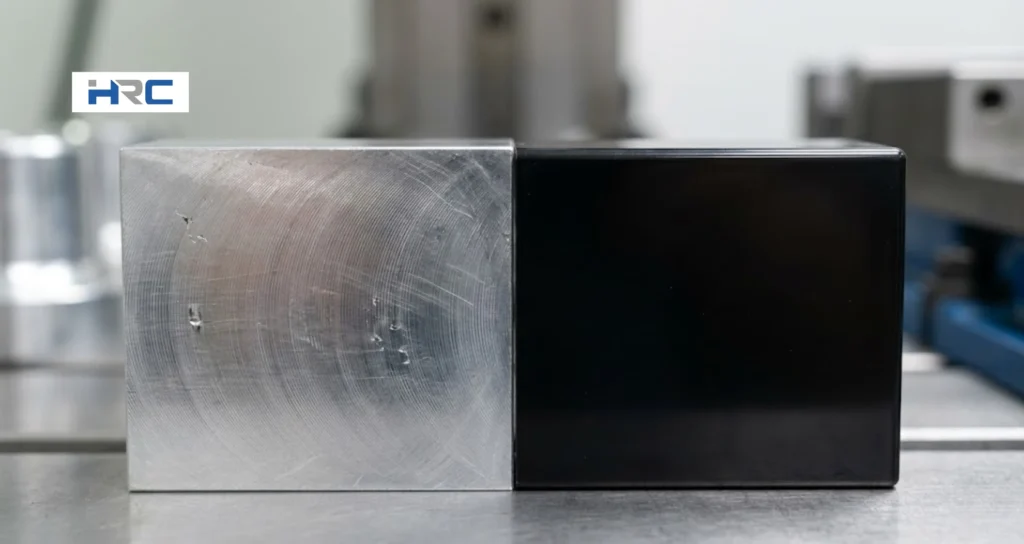
CNC machining commonly achieves surface finishes ranging from Ra 0.8–3.2 μm depending on tooling, machining strategy, and material. Injection molding creates smooth, consistent finishes directly from the mold cavity, especially with polished or textured molds. CNC parts may still require polishing, anodizing, or bead blasting to remove tool marks, while injection molding surface quality depends on mold condition, material flow, and tooling precision during high-volume plastic part production.
Can Injection Molding Achieve the Same Precision as CNC Machining?
Injection molding can achieve excellent repeatability for plastic parts, although CNC machining generally provides tighter tolerances and higher dimensional control for ultra-precision applications. CNC machining provides tighter tolerances and better dimensional accuracy for precision components because it directly removes material with computer-controlled cutting tools. Injection molding precision can vary due to material shrinkage, cooling behavior, mold dependency, and tooling wear, which may affect consistency across large production batches.
Which Process Handles Complex Geometries Better: CNC Machining or Injection Molding?
CNC machining is commonly preferred for highly intricate and precision-focused geometries. It offers superior design flexibility, easily accommodating complex internal features, deep cavities, threads, and tight tolerances without the limitations of tooling. In contrast, injection molding is better suited for high-volume production of parts with organic shapes and repeatable plastic geometries, where consistency and scalability are prioritized over extreme precision.
What Design Constraints Does CNC Machining Impose on Part Geometry?
CNC machining imposes geometric constraints based on tool shape, access, and rigidity, including required internal corner radii, limited feature depth, and “line-of-sight” tool access. Rotating cutting tools cannot create perfectly sharp corners or easily reach deep cavities and undercuts. Therefore, part geometry must allow clear tool paths to maintain dimensional accuracy, good surface finish, and efficient material removal during machining.
What Geometric Constraints Does Injection Molding Have Compared to CNC Machining?
Injection molding constraints are based on releasing parts from a rigid two-part mold, requiring draft angles, uniform wall thickness, and minimal undercuts. The process relies on controlled mold filling, cooling, and part ejection to maintain dimensional consistency. Parting lines must be carefully placed, while complex internal features and undercuts often need additional mold mechanisms, increasing tooling complexity and reducing design flexibility compared to CNC machining.
Which Manufacturing Process Has the More Complex Workflow?
Injection molding typically involves a longer and more tooling-intensive production preparation process because it requires mold design, tooling preparation, material melting, injection control, cooling, and part ejection before repeatable production begins.
CNC machining follows a more flexible workflow from CAD design to CAM programming, machine setup, material cutting, and finishing. CNC machining is faster to prepare for prototypes and custom parts, while injection molding becomes efficient after tooling is completed for high-volume production.
CNC Machining Workflow
CNC machining workflow includes CAD design, CAM programming, machine setup, material cutting, and inspection and finishing to produce precision parts with tight tolerances and consistent dimensional accuracy. Each stage controls tool movement, machining parameters, and material removal to manufacture custom metal, plastic, and composite components with repeatable quality.
- CAD Design: Create a digital 3D model defining the part geometry and dimensions.
- CAM Programming: Convert the CAD file into machine instructions and cutting toolpaths.
- Machine Setup: Install cutting tools, secure the workpiece, and configure machining parameters.
- Material Cutting: Remove material through milling, turning, drilling, or cutting operations.
- Inspection and Finishing: Verify dimensions and apply finishing methods such as deburring or polishing.
Injection Molding Workflow
The injection molding workflow includes mold design, material preparation, material melting, injection, cooling, and part ejection to produce repeatable plastic components at high production volumes. Each stage controls material flow, mold filling, cooling consistency, and dimensional stability to maintain repeatable part quality throughout the manufacturing cycle.
- Mold Design: Design and manufacture the mold cavity based on part geometry.
- Material Preparation: Prepare plastic pellets or polymer material for processing.
- Material Melting: Heat the material until it melts.
- Injection Process: Inject molten material into the mold cavity under pressure.
- Cooling Stage: Cool the material until the part solidifies into the required shape.
- Part Ejection: Remove the finished plastic component from the mold for final inspection.
What Are the Advantages and Disadvantages of CNC Machining and Injection Molding?
CNC machining and injection molding both support precision manufacturing, but they differ in flexibility, setup cost, production volume, and material compatibility. CNC machining is more practical for prototypes, custom parts, rapid design changes, and low-to-medium production because it offers high precision, fast setup without tooling, and support for metals, plastics, and composites. Injection molding becomes more efficient for large-scale plastic production where repeatability and lower per-unit cost are the primary manufacturing priorities.
What Are the Advantages of CNC Machining?
CNC machining offers high precision, tight tolerances, and excellent dimensional accuracy for custom parts and complex geometries. The process supports a wide material range, including aluminum, stainless steel, brass, titanium, Delrin, PEEK, and composites. CNC machining also provides fast setup without tooling, flexible design modifications, and efficient rapid prototyping, making it suitable for low-to-medium production where adaptability, customization, and precision machining are critical.
What Are the Disadvantages of CNC Machining?
The main limitation of CNC machining appears during large-scale production where machining time directly affects per-part cost. Material removal operations can also generate more waste compared to mold-based processes. Deep cavities, intricate undercuts, and extended machining cycles may increase production time and tool wear, particularly for high-volume manufacturing rather than short-run or custom production environments.
What Are the Advantages of Injection Molding?
Injection molding performs efficiently in large production runs where fast cycle times and repeatable manufacturing output are required. Typical injection molding cycle times range from 10 to 60 seconds, depending on material, wall thickness, and mold design. Once mold tooling is completed, the process can manufacture thousands of consistent plastic components with stable dimensional quality and smooth surface finishes. During large-scale manufacturing, injection molding can reduce per-part production costs by approximately 40–70% compared to lower-volume manufacturing methods because tooling expenses are distributed across higher production quantities (source: Injection Molding vs CNC Machining: Cost-Effectiveness, Eruka Patsnap, 2026). This makes injection molding well-suited for packaging, consumer products, automotive plastic components, and electronic housings.
What Are the Disadvantages of Injection Molding?
Injection molding depends heavily on mold tooling, which increases upfront manufacturing investment and extends initial setup time before production begins. Design modifications may require expensive mold changes, reducing flexibility during product iteration. Geometric limitations such as draft angles, wall thickness requirements, and mold-release constraints also restrict part design freedom, making the process less practical for prototypes, rapid changes, and low-volume production.
How Do Post-Processing Techniques Differ Between CNC Machining and Injection Molding?
CNC machining and injection molding use different post-processing techniques based on material removal, surface finish requirements, and final part functionality. CNC machining often requires additional finishing to improve dimensional accuracy, corrosion resistance, durability, and surface quality after cutting operations. Injection molding usually requires lighter cosmetic or assembly-focused post-processing because parts are produced directly from a finished mold cavity.
Common Post-Processing Methods for CNC Machining
CNC machining post-processing methods improve surface finish quality, dimensional precision, corrosion resistance, wear performance, and mechanical durability for machined metal and plastic parts. These finishing processes also help enhance appearance, extend component lifespan, and maintain consistent performance in precision manufacturing applications.
- Deburring: Removes sharp edges and leftover material to improve safety and smoothness.
- Anodizing: Creates a protective oxide layer on aluminum for better corrosion resistance, hardness, and appearance.
- Heat Treatment: Improves hardness, strength, and wear resistance through controlled heating and cooling.
- Plating (Nickel, Chrome, Zinc): Adds a metal coating to enhance corrosion resistance, durability, conductivity, and appearance.
- Passivation: Strengthens the protective oxide layer on stainless steel to improve corrosion resistance.
Common Post-Processing Methods for Injection Molding
Injection molding post-processing mainly focuses on cosmetic finishing, excess material removal, and product assembly rather than structural modification or dimensional correction. These finishing methods help improve product appearance, edge quality, surface consistency, and final assembly readiness for large-scale plastic production.
- Trimming: Removes flash, gate marks, and excess plastic using cutting tools or automated equipment for clean edges and accurate finishing.
- Surface Finishing: Improves texture and appearance through polishing, buffing, or mold-based texturing.
- Painting: Adds color, branding, UV protection, and enhanced surface aesthetics through coating applications.
- Assembly: Joins molded parts using snap-fits, adhesives, fasteners, or ultrasonic welding to form finished products.
Which Industries Use CNC Machining and Injection Molding?
CNC machining and injection molding are widely used across the aerospace, automotive, medical, defense, oil and gas, and electronics industries.
Different industries choose processes based on precision requirements, material type, production volume, cost efficiency, and part complexity.
CNC machining is commonly used for metal parts, tight tolerances, and complex geometries in low- to medium-volume production, while injection molding is preferred for high-volume plastic manufacturing with reliable consistency and lower per-unit costs.
CNC machining is suited for custom engineering and precision-critical components, whereas injection molding supports large-scale, standardized production across consumer and industrial applications.
CNC Machining Applications by Industry
Industries such as aerospace, automotive, medical, defense, oil and gas, and electronics widely use CNC machining to produce precision components, complex geometries, and metal parts with tight dimensional tolerances. The process supports precision machining for aerospace, medical, and industrial engineering applications.
- Aerospace: Manufactures precision aircraft components, turbine parts, brackets, and structural assemblies requiring lightweight materials and tight tolerances.
- Automotive: Produces engine components, transmission parts, custom prototypes, and precision metal assemblies for vehicle manufacturing and testing.
- Medical Devices: Machines, surgical instruments, orthopedic implants, diagnostic equipment components, and precision medical housings with strict dimensional accuracy.
- Defense: Supports the manufacturing of weapon system components, military-grade equipment, aerospace defense parts, and rugged precision assemblies.
- Oil and Gas: Produces valves, drilling equipment components, fittings, and corrosion-resistant metal parts for high-pressure operating environments.
- Electronics: Manufactures precision enclosures, heat sinks, connectors, and custom machined components for electronic systems and devices.
Injection Molding Applications by Industry
Injection molding plays a major role in consumer products, packaging, automotive, and medical manufacturing where large production volumes, repeatable plastic components, and consistent product quality are essential. It supports large-scale plastic manufacturing with consistent part quality, repeatable production output, and efficient cycle times for commercial and industrial applications.
- Consumer Products: Produces plastic housings, containers, toys, appliances, and household products requiring consistent quality and fast production cycles.
- Packaging: Manufactures caps, bottles, food containers, trays, and protective packaging components for large-scale commercial distribution.
- Automotive Components: Produces dashboards, interior trims, clips, panels, and lightweight plastic vehicle components with repeatable dimensional consistency.
- Medical Devices: Manufactures disposable syringes, plastic medical housings, laboratory containers, and high-volume healthcare components with controlled production standards.
Which Is More Cost-Effective: CNC Machining or Injection Molding?
CNC machining generally has lower initial manufacturing investment because it does not require mold tooling, making it more cost-effective for prototypes, custom parts, and low-volume production. Injection molding involves higher initial tooling and setup costs, but lower per-part cost during large-scale manufacturing runs because manufacturing cycles become faster and more repeatable at scale. The most cost-effective process depends on production volume, tooling investment, material requirements, and long-term manufacturing scalability. Businesses comparing production expenses can also evaluate the detailed cost of CNC machining based on material type, machining complexity, tolerance requirements, and production quantity.
The table below compares the major cost factors between CNC machining and injection molding for different production scenarios.
| Cost Factor | CNC Machining | Injection Molding |
| Tooling Cost | Low or no mold tooling required | High upfront mold tooling investment |
| Setup Cost | Lower setup cost | Higher setup and mold preparation cost |
| Production Volume | More cost-effective for low-volume production | More cost-effective for high-volume production |
| Per-Part Cost | Higher during large production runs | Lower after tooling costs are distributed |
| Design Changes | Easier and less expensive to modify | Mold modifications can increase the cost significantly |
| Lead Time Cost | Faster prototyping and setup | Longer tooling and production preparation time |
| Scalability | Limited cost efficiency at scale | Highly efficient for mass production |
Where Can You Get CNC Machining and Injection Molding Services?
CNC machining and injection molding services are available through specialized manufacturing companies, custom fabrication shops, and industrial production suppliers that support prototyping, low-volume production, and large-scale manufacturing. CNC machining services are commonly preferred for custom parts, precision components, rapid prototyping, and projects that require flexible design changes without the expense of mold tooling. Injection molding services are more suitable for high-volume plastic production where repeatable output and lower per-part cost are manufacturing priorities.
Businesses should evaluate manufacturing partners based on material capabilities, precision standards, production capacity, lead times, quality control, and engineering support. Companies offering advanced CNC machining services support metals, engineering plastics, and complex geometries for aerospace, automotive, medical, electronics, and industrial manufacturing applications that require consistent dimensional accuracy and reliable production quality.