Skip to content

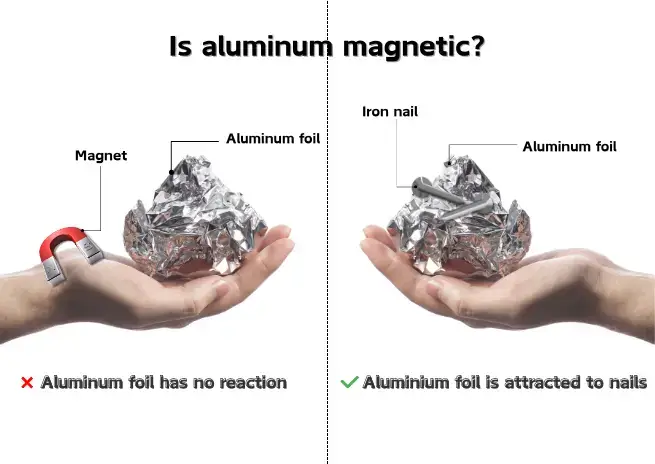
Aluminum products are everywhere, from kitchen utensils to aircraft fuselages. That’s where many are caught off guard with ‘Is aluminum magnetic?’ Retail users often associate ‘metal’ with ‘magnetism’.
All metals may behave the same around magnets. However, it’s the same with aluminum. Despite being a metal, aluminum isn’t magnetic. This article gives an explanation of aluminum’s magnetic behavior.
Is Aluminum a Magnetic Metal/Material?
Aluminum (Al) has been one of the most widely practiced metals in the world. Yet, its non-magnetic properties often surprise people.
Aluminum Is Barely Paramagnetic
The magnetism shown by aluminum is paramagnetic in nature. Therefore, it responds to external magnetic fields (other magnets) very weakly.
Magnetic susceptibility (χ) of aluminum is positive yet very small – around 2.2 × 10⁻⁵. It doesn’t retain magnetism once the external field is removed.
The magnetic behavior is also temperature-dependent. Aluminum magnetism also follows Curie’s Law – susceptibility decreases as temperature increases.
Aluminum can interact with magnetic fields, but the effect is subtle and temporary. For example –
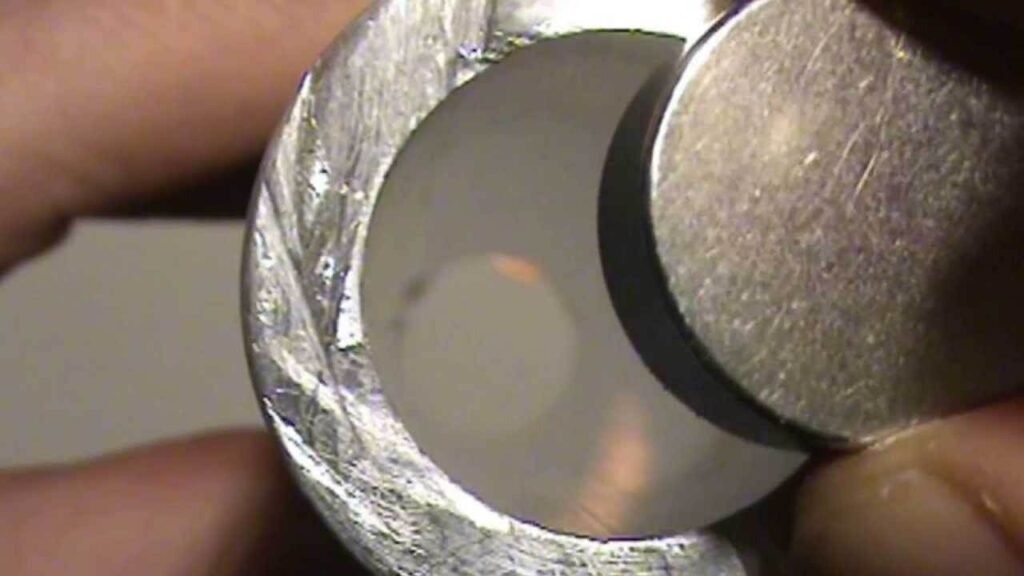
Drop a strong neodymium magnet through a thick aluminum pipe. The magnet will fall slowly as the metal isn’t magnetic. However, it creates opposing magnetic fields to resist the magnet’s motion.
Aluminum Is Not Ferromagnetic by Any Means
Ferromagnetism is what makes magnets stick to a refrigerator or iron filings dance around a magnet. Iron, cobalt, and nickel have been the prime examples with strong and permanent magnetism.
Aluminum, however, isn’t ferromagnetic. The metal lacks the internal molecular structures required for magnetism. A magnet won’t stick to aluminum, no matter how strong it is.
Aluminum vs Aluminum Alloys in Magnetism
Pure aluminum is non-magnetic by default. But what about aluminum alloys? The concern is genuine as aluminum alloys are the ones used in everyday applications for the most part.
Pure aluminum and its alloys differ in mechanical and chemical properties. They even differ in their interaction with magnetic fields.
Pure Aluminum: Paramagnetic and Predictable
Pure Al (≥99% purity) is paramagnetic. It exhibits a very weak attraction to magnetic fields. The effect is so minimal that it’s practically invisible in everyday scenarios.
Aluminum Alloys: Composition-Dependent Magnetism
Al alloys feature additional elements like copper, magnesium, silicon, zinc, or manganese. Such elements can subtly alter the material’s magnetic behavior. It sometimes makes alloys slightly more responsive to magnetic fields.
- Copper (Cu): It slightly increases paramagnetism in 2024 and 7075.
- Magnesium (Mg): It initiates minimal impact for 5052 and 5083.
- Silicon (Si): It reduces thermal expansion with negligible magnetic effect in 6061.
- Zinc (Zn): It comes with a minor influence for 7075.
- Manganese (Mn): It can enhance paramagnetism in 3003.
Wrought alloys (6061, 7075): The magnetic behavior remains weak for everyday structural applications.
Cast alloys (A356): The magnetic properties vary slightly depending on composition for complex shapes.
7075-T6 aluminum alloy, featuring Zinc and Copper, is deployed for aircraft landing gear and bicycle frames. It remains non-magnetic in practical terms, as magnets still won’t stick.
Aluminum Behavior in Magnetic Fields
Aluminum’s interaction with magnetic fields is subtle yet fascinating. It exhibits unique behaviors when exposed to magnetic fields. Such responses seem critical across industrial applications.
Aluminum interacts dynamically with changing magnetic fields through the ‘Eddy Current’ regarding Lenz’s Law. Aluminum’s role includes –
- Aluminum readily supports eddy currents as a good electrical conductor.
- The currents can slow down moving magnets, creating a damping effect.
That’s why aluminum plates are used in magnetic braking in roller coasters and high-speed trains. It generates resistance from aluminum without contact to enable smooth deceleration.
Real-Life Applications of Aluminum’s Magnetic Properties
Al’s magnetic properties, or more accurately, the lack of strong magnetism, play a vital role in modern engineering, manufacturing, and infrastructure. The behavior in magnetic environments enables a wide range of real-world applications that rely on its magnetic neutrality.
01. Magnetic Braking Systems
Al’s response to changing/dynamic magnetic fields remains at the core of non-contact braking. A magnet moving over an aluminum plate can resist the motion. It slows down the object without friction.
Roller coasters in the USA and Germany use aluminum fins for silent deceleration. High-speed trains in Japan and France employ magnetic braking with aluminum components to reduce wear for safety.
02. MRI-Compatible Equipment
The non-ferromagnetic action makes Al ideal for cases where magnetic interference must remain minimal. It doesn’t distort magnetic fields or attract/retain magnetism. Also, the metal’s lightweight and corrosion-resistant properties lend a hand.
MRI machines in hospitals across the UK and Canada use aluminum for patient beds, shielding panels, and support structures. Surgical tools made from robust aluminum alloys are highly preferred in MRI suites to avoid magnetic hazards.
03. Electromagnetic Shielding and Damping
Aluminum isn’t magnetic. However, it can block or redirect electromagnetic interference (EMI) when used in specific configurations.
Laptop casings (Apple MacBook) use aluminum to shield internal components from EMI. Smartphones in South Korea and China integrate aluminum frames for signal stability.
Industrial enclosures in Germany and the USA use aluminum panels to protect sensitive electronics from magnetic noise.
04. Automotive and Aerospace
Aluminum’s magnetic neutrality is a strategic asset in vehicles and aircraft. It’s because the installed electronic systems must operate without interference.
Aircraft fuselages (Boeing 737, Airbus A320) use aluminum alloys in navigation systems. Electric vehicles (EVs) like Tesla and BYD use aluminum in battery enclosures and motor mounts.
05. Material Sorting and Recycling
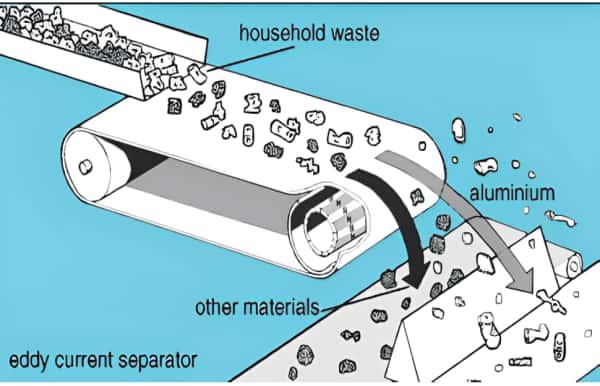
Aluminum’s magnetic properties are crucial in automated recycling systems. Ferromagnetic metals are separated using magnets. Aluminum, being non-magnetic, is sorted using eddy current separators.
Recycling plants in India and Brazil use this method to recover Al from mixed waste. EU regulations promote aluminum recovery for sustainability, as over 75% of aluminum ever produced is still in use.
Conclusion
Aluminum doesn’t attract or behave like steel or iron around magnets. The paramagnetic metal, even in alloys, holds the non-magnetic property. Surprisingly or not, the metal reveals a fascinating interaction of weak magnetic responsiveness. Such behavior makes the metal suitable for exclusive applications.
Get the Best-Quality Aluminum Products from HRCCNC
Achieving top-notch aluminum products is no longer a hassle with HRCCNC. We specialize in innovative and practical aluminum manufacturing—covering CNC machining for custom aluminum parts—for 18 years. Contact us for more on our aluminum service.