Skip to content

Steel is a metal alloy primarily composed of iron and Carbon, and it boasts high strength, flexibility, and numerous industrial applications. Throughout the centuries since ancient inventions, it has been the source of human innovation, from tools to modern skyscrapers and high-tech machines.
What Is Steel? – Definition & Meaning
It is worthwhile first to understand what makes steel a material and why it is superior to other metals before delving into its properties or uses.
Definition
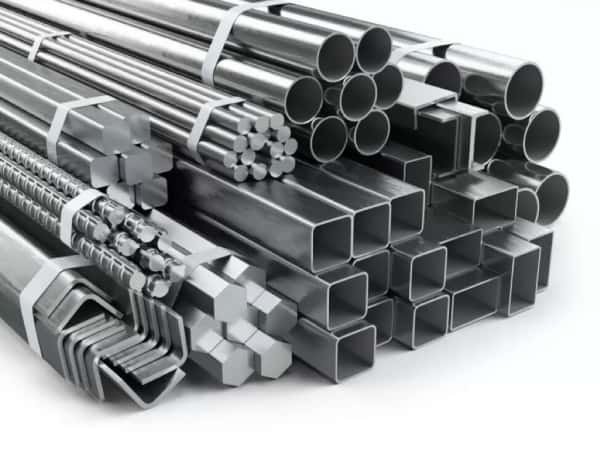
Steel is a type of alloy of iron (Fe) mixed with a certain percentage of Carbon, which is usually between 0.02 and 2.1 percent. Such a small addition of Carbon gives the iron strength, hardness, and increased longevity without diminishing ductility, allowing it to be remodeled without fracture.
Simply stated, steel is a combination of the natural qualities of iron, which are enhanced to create a new and more powerful material that can be easily shaped, welded, cut, and recycled.
Meaning of the term “steel”
Steel is named after the Old English word “steel” or “stile,” which is based on the Proto-Germanic word “stahlank,” meaning firm or hard. It is well said that steel is a symbol of strength, perseverance, and dependability. Nowadays, steel itself is a symbol of power, modernization, and industrialization.
A Brief History: When Was Steel Invented?
The history of steel is as ancient as that of civilization. Early man had learned that by heating iron ore with materials rich in Carbon, they obtained a stronger metal, the first form of steel.
- Ancient Beginnings: Ancient civilizations such as the Hittites and the Chinese developed the early techniques of iron-carbon smelting around 1000 BCE. High-quality wootz steel, known for its sharpness and durability and the forerunner of Damascus steel, was already being produced in India by the 3rd century BCE.
- Medieval Advances: In the Middle Ages, it was the blacksmiths who perfected a method of carbonizing (adding Carbon to iron) to create stronger but springier weapons and armor.
- Industrial Revolution: This changed when Henry Bessemer discovered the Bessemer Converter in 1856, a process that made it possible to produce steel on a large scale by blowing air into molten iron and removing impurities. This was a drastic cost-cutter that made steel a material accessible to the masses.
- Modern Era: Today, steel is a sustainable, high-technology material that is recycled using advanced steelmaking technologies, automation, and modern recycling methods, finding various applications from architecture to aerospace.
Steel Material: Composition and How It Is Made
The strength of steel and its versatility are the result of its composition and the nature of its processing. Every compound of its composition brings certain qualities, and the production process defines how good it will be.
Composition
Steel’s performance starts with its composition; every element plays a distinct role in its properties.
Base: Iron (Fe)
Iron forms the backbone of steel, comprising more than 98 percent of its composition. It offers magnetic possibilities, a framework, and an alloying foundation.
Carbon Content:
The transformation of steel depends on the Carbon. It makes the metal stronger as it forms iron-carbide structures that are resistant to deformation. The more Carbon is added to steel, the harder it becomes, but the less ductile it is.
- Low-carbon steel (less than 0.3% carbon): Softer, easier to weld, best to use in car bodies and pipelines.
- Medium-carbon steel (0.3–0.6%): Harder and more resistant to wear, applied to rails and equipment.
- High-carbon steel (>0.6%): Very hard, applied in tools and cutting edges.
Other Typical Elements:
Steel is not simply a combination of iron and Carbon: Steel commonly incorporates other alloying elements to improve its performance:
- Manganese (Mn): strengthens and reduces brittleness.
- Chromium (Cr): enhances corrosion resistance.
- Nickel (Ni): increases impact resistance and toughness.
- Molybdenum (Mo): enhances heat strength.
- Vanadium (V): enhances wear resistance and hardness.
- Silicon (Si): strengthens and improves elasticity.
When these components are mixed in various proportions, we end up having hundreds of grades of steel with customized properties.
Steel Production
The process of steelmaking has changed drastically, though the objective is the same: eliminating impurities in iron and adding controlled alloying elements to attain the intended properties.
Overview of Methods:
The world today uses two major production pathways, namely the Basic Oxygen Furnace (BOF) process and the Electric Arc Furnace (EAF) process.
Under the BOF technique, blast furnace molten pig iron is mixed with scrap steel in a huge converter. Pure oxygen is then blown through the melted metal, which combines with Carbon and other impurities, reducing their content and producing high-quality steel in large quantities. The process is still the most prevalent way of integrated steel plants because of its performance and magnitude.
In comparison, the EAF process is based on electricity as opposed to oxygen. It fuses scrap steel or direct-reduced iron (DRI) using electric arcs reaching temperatures of more than 3,000°C.
The method is quicker, more readily adjustable, and much more eco-friendly as it enables the recycling of available steel using less energy. The EAF route is currently embraced in the contemporary mini-mills that prioritize sustainability and localized production.
Steps:
- Iron making: Molten iron is obtained by heating iron ore, coke, and limestone using a blast furnace.
- Steel making: The molten iron is purified by removing the unwanted Carbon and impurities.
- Casting: Molten steel is cast in molds and is cast to form billets, blooms, or slabs.
- Rolling: The semi-finished steel is flattened by rolling into plates, sheets, rods, or structural sections using either hot or cold rolling.
- Finishing: Coating, surface finishing, and heat treatment are to provide strength, durability, and appearance.
Note on Recycling:
Steel is a material that is highly recycled worldwide. It can be remelted and reused countless times without any loss of quality. In fact, around 85% of steel products worldwide are recycled after use, making it one of the most sustainable materials on the planet.
The Properties of Steel
The combination of strength, toughness, and workability that steel has is unmatched in the current engineering field. This is because once we understand its key characteristics, it becomes clear why it leads global industries.
Explanation:
Every property indicates the behavior of steel under mechanical loads, environmental conditions, and manufacturing processes. These characteristics can be narrowed down to particular uses by altering their composition or heat treatment.
Key Properties:
- Tensile Strength: The maximum force that steel can resist before breaking. High-tensile steels are essential materials for constructing bridges, buildings, and automobiles.
- Hardness: Determines resistance to deformation or scratching. High-carbon and tool steels are very hard.
- Toughness: The capacity of steel to absorb energy before breaking down is crucial for buildings and machines subjected to impact or vibration.
- Ductility / Elongation: Demonstrates the amount of stretching or bending steel can undergo without breaking, allowing it to be shaped into wires, sheets, and complex forms.
- Fatigue Strength: Refers to the ability of steel to withstand repetitive stress cycles over time, which is vital in the movement of parts such as gears or aircraft components.
- Corrosion Resistance: Stainless steels containing chromium and nickel resist rust and oxidation, making them suitable for use in medical, marine, and outdoor environments.
- Weldability / Machinability: This term describes the ease with which steel can be welded or moulded. Low-carbon steels are the most weldable and machinable.
What Is Steel Used For? (Applications)
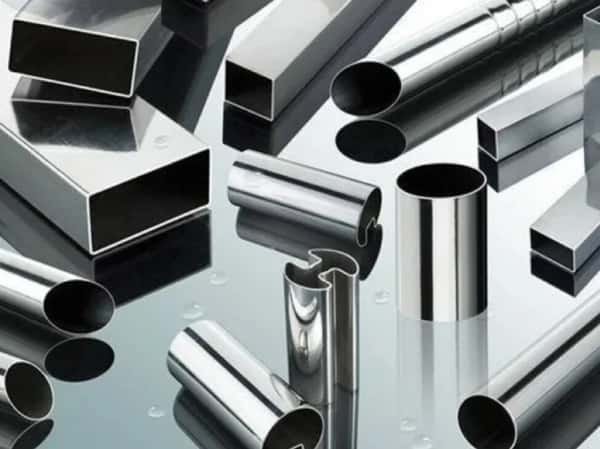
The versatility of steel makes it invaluable in all large-scale industries. We can take a glance at its applications and purposes.
Construction Infrastructure
Modern civilization is built on steel. Skyscrapers, railways, pipelines, and bridges depend on steel’s high load-carrying capacity and durability. Structural steel offers flexibility and safety during heavy stress, which is why it remains the preferred construction material in urban development.
Manufacturing
Steel is an important raw material in the manufacturing industry, used in the production of vehicles, aircraft, ships, and heavy machines. Its power-to-weight ratio provides performance efficiency, safety, and durability.
Everyday Items
Steel is subtle and often unnoticed in our daily lives; it drives our day-to-day activities in cutlery, appliances, office chairs, and bicycles, among other things. The aesthetic qualities and resistance to stains of stainless steel make it perfect for use in homes and kitchens.
Specialized Uses
Steel is used in medical devices to guarantee cleanliness and accuracy. It is used in the power industry to power turbines and oil wells. In the military, high-strength steels are used to safeguard military vehicles and infrastructure.
Why is Steel Chosen?
Steel offers technical, economic, and environmental advantages. With its balance of cost-efficiency, performance, and recyclability, it outperforms nearly any other material.
Steel offers not only technical and economic benefits but also serves as a material that, with its combination of cost-efficiency, performance, and recyclability, provides a better balance compared to practically any other material. It is strong, versatile, and endlessly reusable.
Kinds or Types of Steel (Different Grades & Classifications)
Steel may be categorized in terms of composition and use. The types have different purposes, each possessing its own strength, corrosion resistance, and machinability.
Carbon Steel:
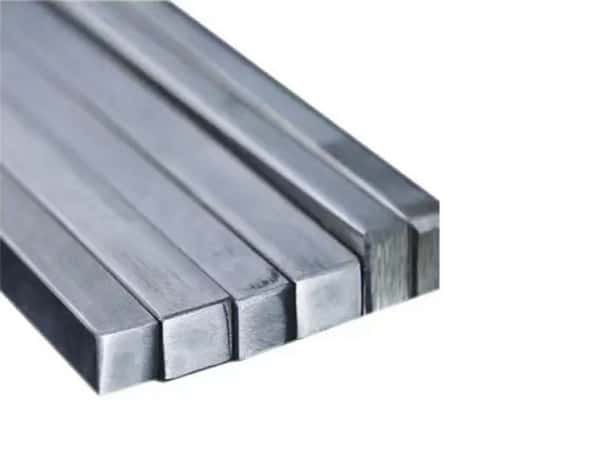
The most prevalent and the most affordable type is made of iron and Carbon.
- Low Carbon: soft and ductile; employed in the automotive panels and structural sheets.
- Medium Carbon: intermediate hardness; best used with gears, rails, and axles.
- High Carbon: hard and wear-resistant; used for springs and cutting tools.
Alloy Steel:
Has other alloying components (e.g., Ni, Cr, Mo) to enhance mechanical performance. Applied in pipelines, construction equipment, and industrial components.
Stainless Steel:
The material contains at least 10.5% chromium, which creates a stable oxide layer that protects the metal from corrosion. It is used in architecture, food processing, and medical devices because it is hygienic and aesthetically pleasing.
Tool Steel:
It includes tungsten, molybdenum, and vanadium, which give it the highest levels of hardness and heat resistance. Usually used in drills, molds, dies, and industrial blades.
Special Steels:
- HSLA (High Strength Low Alloy): This is a high-strength, low-weight material that is applied in vehicles and bridges.
- Weathering Steel forms a protective rust coating, making it suitable for outdoor sculptures and constructions.
- Electrical Steel: It is an alloy that efficiently allows magnetic conductivity and is used in transformers and electric motors.
Steel Working & Fabrication
It is through fabrication that steel is converted into usable parts and structures. This process involves physical shaping, thermal treatment, and surface protection to achieve specific performance.
Explanation of Working:
Steel working is the process that changes the shape and the properties of the metal while maintaining or enhancing its strength.
- Rolling: Rolls steel between rollers to make sheets, rods, and plates.
- Forging: This is a process of working steel through compressive forces that enhance the internal grain structure and mechanical strength.
- Casting: It is done by pouring molten steel into molds to produce complex components that have uniform sizes.
- Welding: Joins metal components together, commonly applied in the manufacturing of automobiles and ships.
- Heat Treatment: Hardness and ductility are altered through controlled heating and cooling to suit the intended purpose.
- CNC Machining: A computer-controlled process that precisely removes material from steel workpieces to create complex and high-tolerance parts.
- Cutting: Steel components are precisely cut using laser, plasma, or mechanical cutting.
- Shaping: The right temperature and method are used to minimize residual stress during shaping. Consider different edge techniques, such as Fillet vs Chamfer, for better performance.
Tips for Fabrication:
Selection of the Right Grade to Use in Workability: Determining the right steel grade is required to guarantee optimum machinability and performance in every application.
- Weldability: Ensure the carbon content and alloy composition are compatible with the welding process.
- Shaping: Consistently use the right temperature and method to minimize residual stress during shaping.
- Surface Finish: Smooth or polished surfaces are less frictional, more aesthetically pleasing, and also more resistant to corrosion.
- Corrosion Protection: Galvanizing, coating, or painting methods increase the life of the product in adverse conditions.
Conclusion:
Steel is not just a material; it is the foundation of human development. Its unparalleled strength, flexibility, and sustainability make it pertinent to future generations. Steel continues to shape the modern world, driving progress in construction, manufacturing, and technological innovation. To learn more about professional CNC steel fabrication and precision machining, contact HRCCNC.