Skip to content

Knurling appears everywhere in daily life. Engineers from many industries rely on this technique to design parts of all kinds—from small items like bottle caps, switch knobs, and tool handles to large equipment such as fitness machines and automotive components. It’s a simple yet essential process that adds textured patterns to a surface, improving grip, feel, and visual appeal. This article explains how knurling works, the main pattern types, suitable materials, cost factors, and examples of parts we’ve produced.
What Is Knurling?
Knurling is a process that forms raised ridges and grooves on a material’s surface. It’s often done on CNC lathes to create textured patterns made of straight or diamond lines. These patterns increase friction, making parts easier to hold or turn by hand. They also give a product a distinctive appearance, often seen on flashlights, knobs, and tool handles.
How Does Knurling Work?
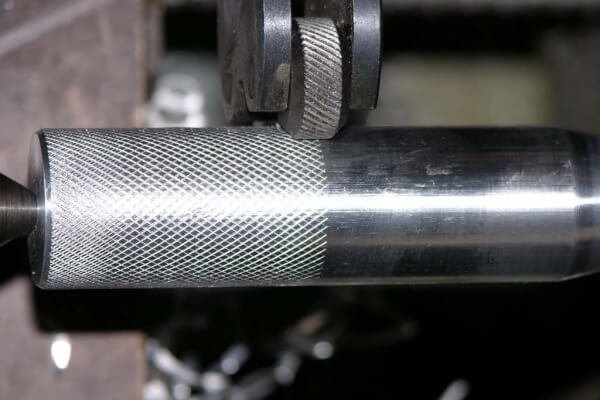
The process uses a hardened wheel with a preset pattern that presses against the rotating workpiece. As the wheel moves along the material, its pattern transfers to the surface through pressure. The metal flows and reshapes, forming consistent ridges and grooves. This method doesn’t remove material—it reshapes it, which makes knurling a forming process.
When working with harder metals, a cutting-style knurling process is often used. It relies on a carbide wheel with sharp edges to cut the surface and create the pattern. Unlike forming knurling, cutting knurling removes small chips of material. It prevents cracks or surface distortion that can occur when pressing on tough metals.
Types of Knurling Processes
Knurling falls into two main categories: manual knurling and machine knurling. The choice depends on production size and the level of precision required.
Hand Knurling
Manual knurling is done on a standard lathe, where the operator controls feed rate and pressure by hand. Using a handheld or mounted knurling tool, the operator presses the wheel into the surface to deform the metal and form the pattern.
This method works well for samples or small custom batches because it’s flexible and requires little equipment. However, results depend heavily on the operator’s skill. Inconsistent feed or pressure can cause uneven lines, pattern misalignment, or slippage. When parts don’t need high precision and budgets are tight, manual knurling offers a simple and affordable option.
Machine Knurling
Machine knurling takes place on automatic or CNC lathes. The workpiece is fixed securely while powered wheels perform the process. Feed rate, pressure, and depth are all controlled by program, ensuring consistent and repeatable results.
This method is ideal for medium to large production runs and high-precision parts. It delivers uniform textures quickly and can handle complex shapes. When combined with cutting knurling, it’s suitable for hard materials or parts that need fine surface detail.
For small batches, though, programming and setup time can raise costs, so it’s not always the most economical choice for short-term jobs.
Knurling Pattern Types
The three most common knurling patterns are straight knurling, diamond knurling, and diagonal knurling.
1. Straight Knurling
Straight knurling, also called linear knurling, features parallel grooves running along the axis of a cylindrical part. It mainly improves grip and provides anti-slip performance in one direction. This pattern appears on adjustment knobs, slider contacts, and some decorative components. Straight knurling offers excellent concentricity and fit accuracy while keeping production fast and cost-efficient.
2. Diamond Knurling
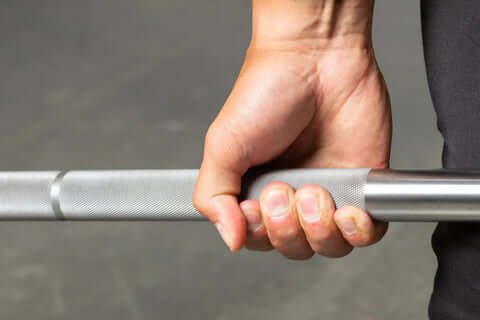
Diamond knurling is the most classic and widely used pattern. It’s created by pressing two knurling wheels in opposite directions, forming a crisscross diamond texture on the surface. This pattern greatly increases friction and grip strength, making it ideal for tool handles, thumb screws, barbell bars, and weapon grips. Whenever a firm hold is essential, diamond knurling is the go-to option.
3. Diagonal Knurling
Diagonal knurling features lines set at an angle, usually divided into left-hand and right-hand styles. Compared with straight knurling, diagonal patterns look more dynamic and stylish. Their anti-slip performance falls between straight and diamond types. This design is often used for parts that require both beauty and function, such as pen bodies, camera lens rings, and audio knobs.

What Materials Work Well for Knurling?
Not every metal works well for knurling. Since knurling is a forming process rather than a cutting one, the material must be soft enough to deform but strong enough to hold the pattern without distortion. Metals with medium hardness and good ductility perform best.
1. Aluminum
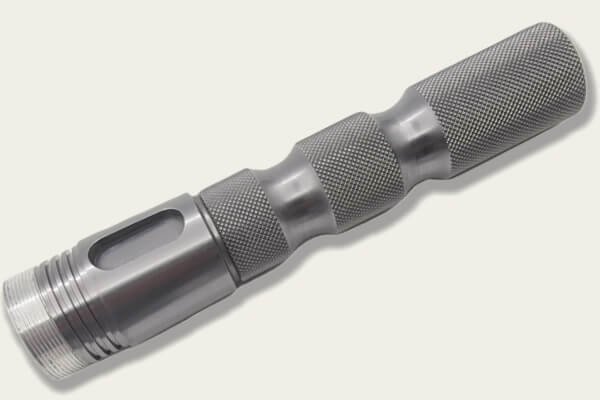
Aluminum is one of the most popular choices. It’s lightweight, easy to form, and produces clean, even patterns while causing minimal wear on the knurling wheel. CNC shops often apply knurling to anodized aluminum flashlight bodies, handles, and box lids to enhance grip and appearance.
Advantages: easy to form, bright texture, compatible with anodizing.
2. Brass
Brass has excellent ductility and forms sharp, detailed patterns with a natural golden shine. It’s often used for high-end or decorative parts such as pen barrels, camera adjustment rings, and precision instrument knobs.
Advantages: smooth surface, low friction, premium look.
3. Low Carbon Steel
Low carbon steel combines toughness with good formability, producing strong and durable patterns. It’s suitable for tool handles, mechanical knobs, and automotive parts. Knurled steel parts are often blackened or nickel-plated to protect the texture.
Advantages: high strength, low cost, easy to finish.
4. Stainless Steel
Stainless steel’s toughness makes it more challenging to knurl. Lower feed rates and hard knurling wheels are needed. Despite the difficulty, its corrosion resistance and professional finish make it popular in medical tools and marine components.
Advantages: durable, corrosion-resistant, clean polished finish.
5. Copper and Bronze
Copper and bronze have excellent plasticity, producing delicate and precise textures. They’re common in decorative parts, electrical components, and collectible pieces.
Advantages: high conductivity, attractive color, great ductility.
Soft metals like aluminum and brass create crisp, deep patterns with ease. Harder materials require slower feeds and higher precision. Choosing the right material ensures reliable grip performance, stable quality, and longer tool life.
Factors Affecting Surface Finish
The surface finish of a knurled part depends on several factors, including material hardness, knurling pressure, feed rate, and post-processing methods. Each of these steps influences how sharp, uniform, and visually appealing the pattern appears.
1. Can Knurled Parts Be Anodized or Painted?
Yes. Aluminum knurled parts can be anodized, but the depth and density of the pattern affect the final look. Fine knurls have shallow grooves that hold dye evenly, while coarse knurls absorb more dye and appear darker. For painting or powder coating, the surface must be cleaned thoroughly to avoid paint buildup inside the grooves. When done properly, these coatings not only protect against corrosion but also enhance appearance.
2. Can They Be Cleaned or Polished?
Knurled surfaces can be cleaned, but polishing should be done carefully. Over-polishing may flatten the raised ridges and reduce grip performance. Gentle methods such as brushing, ultrasonic cleaning, or air blowing are safer. For anodized parts, avoid strong alkaline cleaners—they can damage the oxide layer or cause uneven color.
3. What Surface Treatments Can Be Used?
Depending on the part’s purpose and design requirements, knurled components can be finished in several ways:
– Anodizing: Ideal for aluminum, improving wear and corrosion resistance.
– Sandblasting: Creates a uniform matte look and hides small machining marks.
– Painting or Powder Coating: Adds color and protection, but thickness must be controlled to avoid filling the grooves.
– Electroplating (Nickel, Chrome, Zinc, etc.): Suitable for steel or copper parts to enhance hardness and appearance.
– Passivation: Used for stainless steel to further boost corrosion resistance.
In short, surface finish results from the combined effects of material properties, process control, and finishing treatment. A well-managed process gives knurled parts both strong grip and a refined metallic look.
Benefits of Knurling
Knurling is common not only in industrial parts but also in everyday consumer products because it provides both functionality and style.
1. Better Grip and Anti-Slip Performance
The biggest advantage of knurling is improved grip. The raised ridges prevent slipping even when hands are wet or oily. Screwdrivers, flashlights, and control knobs all rely on knurling for safe and stable handling.
2. Enhanced Appearance and Texture
Knurling adds a distinct geometric pattern that reflects light beautifully, giving products a layered, professional look. Designers often use it to elevate a product’s visual appeal and brand quality.
3. Efficient and Consistent for Mass Production
Knurling is a highly efficient machining process. Once the tool is properly set, it can repeatedly produce uniform patterns across large batches, ensuring consistent performance and appearance.
4. Compatible with Post-Treatments
Knurled parts can still undergo anodizing, painting, or plating. These finishes improve corrosion resistance and expand design options without damaging the pattern. The grooves and ridges also help coatings adhere more evenly for a smoother, longer-lasting surface.
5. Improved Assembly Friction
In mechanical assemblies, knurling increases the friction between mating parts. For example, in interference fits between shafts and hubs, the knurled texture provides stronger grip and better torque resistance.
Limitations of Knurling
While knurling provides both functionality and aesthetics, designers and manufacturers must consider its limitations.
1. Tool Wear and Maintenance
Knurling tools face high friction and pressure during processing. Over time, the teeth on the knurling wheel wear down, causing patterns to blur or vary in depth. Regular inspection, cleaning, and replacement of tools are necessary to maintain surface quality and accuracy.
2. Hard to Clean
The grooves in knurled patterns can trap dust, oil, or leftover coatings. Without proper cleaning, prolonged use may lead to maintenance issues and affect the part’s appearance.
3. Not Suitable for Thin-Walled or High-Precision Parts
The pressure applied during knurling can deform thin tubes or small parts, especially in softer metals. This deformation can affect dimensional accuracy and mating tolerances. Knurling works best for surface texture enhancement rather than strict tolerance control.
4. Can Affect Coating Uniformity
For parts that will be anodized or painted, deep knurling grooves may absorb excess dye or paint, resulting in uneven color or gloss.
5. Rough Hand Feel
Deep or sharp knurling may feel uncomfortable for products handled for long periods. In some cases, it can even scratch the user’s hand.
Additionally, knurling is not ideal for all materials. Hard metals accelerate tool wear, while soft metals may deform under excessive pressure, affecting pattern quality. Most issues can be avoided by carefully controlling tool pressure, feed rate, pattern depth, and choosing the right knurling style during the design stage.
Common Applications of Knurling
Knurling finds wide use in industrial manufacturing and consumer products. It improves grip, serves decorative purposes, and can enhance mechanical performance.
1. Tool Handles and Industrial Equipment
Knurling is common on screwdriver handles, wrenches, and machine knobs. The textured surface increases friction, allowing safe operation even with gloves or oily hands.
2. Electronics and Precision Instruments
High-end products like camera lens rings, microphone housings, and audio knobs often feature fine or diagonal knurling. These patterns provide both anti-slip performance and a professional, refined appearance.
3. Mechanical Components
Knurled shafts or bushings improve friction in press-fit assemblies. Patterns help parts hold together more securely without adhesives and increase torque resistance and stability.
4. Consumer Metal Products and Accessories
Many everyday items, including flashlights, metal pens, and cosmetic bottle caps, use knurling. It improves grip and adds a premium metallic feel.
For example, we have produced flashlight housings with knurled surfaces to enhance grip and aluminum box lids with side knurling for easier opening and a more appealing look.
5. Decorative and High-End Products
Knurling also appears as a design element in jewelry, watches, and luxury goods. Fine diagonal or diamond patterns create unique light-and-shadow effects, enhancing visual appeal and tactile experience.
Difference Between Knurling and Engraving
Knurling and engraving are both surface finishing techniques, but they differ in principle and purpose. Knurling is a mechanical forming process that presses a patterned wheel onto a metal surface to create raised textures without removing material. It mainly improves grip, prevents slipping, or enhances mechanical assembly fit, commonly found on tool handles, knobs, and mechanical parts.
Engraving, on the other hand, removes material from the surface using a cutting tool or laser to create text, patterns, or logos. Its focus lies in decoration and identification, commonly seen on nameplates, logos, or artistic designs.
In short, knurling emphasizes functionality and tactile experience, while engraving prioritizes aesthetics and visual communication.
Conclusion
Knurling makes metal parts safer, more durable, and visually appealing. Choosing the right pattern and material enhances both performance and design. We have extensive experience in knurling and have produced a wide range of knurled products for clients worldwide, including anodized flashlight housings and storage box lids.
If you want your products to have better grip and a premium feel, knurling is an ideal choice.
For precision knurled components or other custom metal parts, contact HRCCNC. We specialize in high-quality CNC machining and provide excellent surface finishing solutions.