Skip to content

When choosing a metal for manufacturing or CNC machining, hardness is one of the most important properties to understand. Hardness affects how resistant a metal is to deformation, scratching, and wear over time. It also determines how the metal behaves during machining—whether it cuts smoothly, causes tool wear, or forms burrs.
Brass and aluminum are two of the most widely used non-ferrous metals in engineering. While they may appear similar in many applications, their hardness, durability, and machining performance differ significantly.
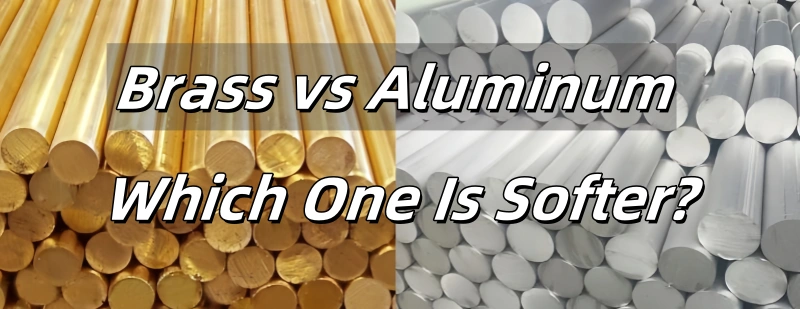
Brass vs. Aluminum: Which One Is Softer?
In most commonly used grades, aluminum is softer than brass.
For example, a common free-machining brass like C3604 (also known as C36000) typically has a Vickers hardness of around 100–120 HV. Aluminum, on the other hand, especially pure or soft grades such as 1100 or 3003, generally measures around 25–40 HV. This means aluminum can be indented, scratched, or deformed more easily than brass under the same load.
However, there are exceptions. Some heat-treated aerospace-grade aluminum alloys, such as 7075-T6, can reach 150–180 HV, making them harder than certain brass alloys. This is why 7075 is widely used in aircraft structures and high-performance mechanical components.
So the quick summary is:
| Comparison | Result |
|---|---|
| Common aluminum vs. common brass | Brass is harder |
| High-strength 7075 aluminum vs. softer brass | 7075 can be harder |
This relationship aligns with material property data discussed in technical sources such as the Vickers hardness test methodology and standard metal datasheets commonly referenced in engineering handbooks.
What Does “Softer” Actually Mean in Metal Science?
In metal terminology, “softer” refers to a metal having lower hardness. This means the metal has a weaker ability to resist local plastic deformation, indentation, or scratches, and its shape is more likely to change when force is applied.
Common indicators for measuring metal hardness include Brinell Hardness (HB), Rockwell Hardness (HR), and Vickers Hardness (HV).
- Brinell Hardness (HB): A hard alloy ball with a specific diameter is pressed into the metal surface. The hardness value is calculated based on the size of the indentation left.
- Rockwell Hardness (HR): A hardness tester applies an initial and then a total test force to press an indenter into the metal. The hardness value is determined by measuring the depth of the permanent indentation.
- Vickers Hardness (HV): A diamond pyramid indenter is pressed into the metal surface. The hardness value is calculated by the ratio of the test force to the surface area of the indentation.
Understanding the Material Characteristics
Brass: Properties and Advantages
Brass is primarily an alloy of copper and zinc, sometimes with small additions of lead to improve machinability. Because of its composition, brass offers:
| Property | Advantage |
|---|---|
| Hardness | Higher wear resistance |
| Machinability | Smooth, clean cutting and low tool wear |
| Corrosion resistance | Performs well in water, humidity, and industrial environments |
| Dimensional stability | Maintains precision over time |
| Appearance | Gold-like finish suitable for decorative and premium components |
This makes brass popular in:
- Precision valves and fluid control parts
- Gears and motion components
- Electrical connectors and terminals
- Luxury hardware and decorative fittings
- Musical instruments
Aluminum: Properties and Strengths
Aluminum is lightweight, affordable, and easy to work with, which makes it extremely popular in mass production. Its key advantages include:
| Property | Advantage |
|---|---|
| Low density | Ideal for lightweight structural applications |
| High thermal conductivity | Excellent for heat sinks and electronic housings |
| Good machinability | High cutting speeds enable high productivity |
| Surface treatment flexibility | Can be anodized for protective or decorative finishes |
| Low cost | Cost-effective for medium and large volume CNC production |
Aluminum is widely used in:
- Aerospace and drone frames
- Automotive and motorcycle parts
- Consumer electronics housings
- Machine brackets and structural supports
- LED and industrial heat dissipation components
Hardness Comparison Overview
| Material | Common Grade | Typical Hardness (HV) |
|---|---|---|
| Aluminum (Pure) | 1100 | 25–35 |
| Aluminum (General Purpose) | 6061-T6 | 85–100 |
| Aluminum (Aerospace Grade) | 7075-T6 | 150–180 |
| Brass (Free-Cutting) | C3604 / C36000 | 100–120 |
| Brass (High-Strength) | C46400 / Naval Brass | 120–150 |
What Affects the Hardness Difference?
- Alloy composition
Brass contains zinc and sometimes lead, which increase hardness. Aluminum alloys require magnesium, zinc, or copper plus heat treatment to increase hardness. - Heat treatment
Aluminum can be made significantly harder only through controlled aging and heat treatment processes. - Work hardening
Brass typically work-hardens faster, so machining or forming can make the material harder.
Why Hardness Matters in CNC Machining
Impact on Cutting Behavior
In CNC machining, material hardness directly affects the selection of cutting parameters. For harder materials (such as certain high-hardness brass grades), the cutting speed must be reduced to prevent excessive heat generation, which can accelerate tool wear or even cause tool chipping. In such cases, the cutting speed is typically kept at several tens of meters per minute, the feed rate at 0.1–0.3 mm/rev, and the cutting depth at 0.5–1 mm with multiple gradual passes to reduce cutting load and extend tool life.
In contrast, aluminum alloys with lower hardness generate less cutting resistance, allowing for higher cutting speeds and feed rates. Cutting speeds can reach several hundred meters per minute, with feed rates of 0.3–0.5 mm/rev to improve machining efficiency. However, excessively high parameters may still lead to issues such as vibration, increased surface roughness, or poor chip evacuation. Therefore, a balance between machining efficiency and surface quality is essential.
| Material | Cutting Characteristics |
|---|---|
| Brass | Cuts cleanly, forms short chips, produces smooth surfaces |
| Aluminum | Machines quickly but may stick to the cutting tool (built-up edge) |
Impact on Tool Selection
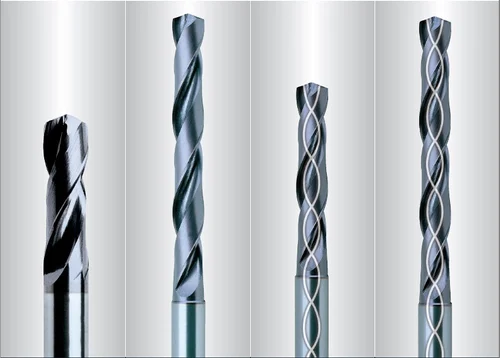
Tool selection is closely related to material hardness. When machining harder brass, carbide tools are preferred due to their high hardness, wear resistance, and thermal stability, which allow them to withstand greater cutting forces and reduce tool wear. Common YG-grade carbide tools include YG8, which has higher cobalt content and better toughness for roughing, and YG6, which has higher hardness for finishing. PCD tools offer even higher hardness and wear resistance, enabling high-precision machining, though their cost is higher, so they are typically used when superior surface quality is required.
For softer aluminum materials, HSS (High-Speed Steel) or coated tools perform well. HSS tools have sharp edges and good toughness, suitable for general aluminum machining. Coated tools, such as those with TiN or TiC coatings, reduce friction and heat generation, minimizing built-up edge and improving surface finish. For applications requiring mirror-like surfaces or high-precision aerospace aluminum components, PCD tools are also widely used due to their excellent sharpness and wear resistance.
| Material | Recommended Tooling | Notes |
|---|---|---|
| Brass | YG-grade carbide tools | Low tool wear and long tool life |
| Aluminum | HSS or carbide tools | Helps prevent chip welding and improves finish |
Surface Finish Considerations
- Brass naturally produces very smooth surface finishes
- Aluminum may require careful lubrication and sharp tooling to avoid edge tearing
Hardness, Wear Resistance, and Long-Term Durability
Harder materials generally:
- Wear more slowly
- Maintain precision better
- Require less frequent replacement
This is why brass is often used in valve seats, bushings, gears, and bearings, where friction cannot be avoided.
Aluminum components can also achieve good durability, but often need:
- Hard anodizing
- Surface coatings
- Avoidance of metal-to-metal sliding contact
Machining Experience Comparison
Brass Machining – Stable and Smooth
- Low cutting resistance
- Excellent chip control
- High dimensional accuracy without excessive heat
Aluminum Machining – Fast but Requires Control
- Allows high spindle speeds and rapid cycle times
- Requires coolant and the right tool geometry to prevent sticking
- Heat management is important to avoid tolerance drift
Common CNC Application Examples
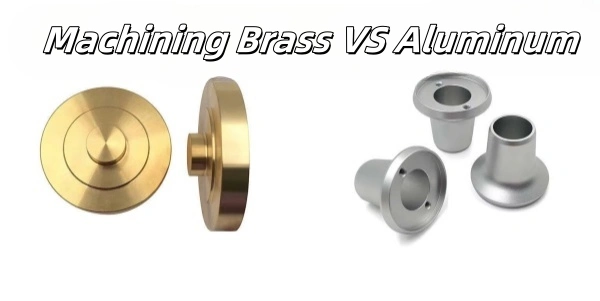
| Application Type | Preferred Metal | Reason |
|---|---|---|
| Precision wear-resistant moving parts | Brass | Hard, stable, excellent for friction |
| Lightweight structural or high-volume parts | Aluminum | Light, affordable, fast to machine |
| Decorative premium-feel products | Brass | Aesthetic gold color finish |
| Electronics & heat management | Aluminum | Superior thermal conductivity |
Conclusion: How Hardness Shapes Material Choice
- If you need durability, stability, and wear resistance → choose brass.
- If you need lightweight construction, thermal performance, and lower cost → choose aluminum.
- If strength-to-weight is critical → consider high-strength aluminum like 7075.
Ultimately, the right choice depends on the balance between performance + cost + appearance + operational conditions.
CNC Machining Services from HRCCNC
At HRCCNC, we specialize in precision CNC machining of both brass and aluminum, supporting:
- Prototyping and small-batch custom parts
- Mid-to-large scale manufacturing
- Surface finishing including anodizing and plating
- Engineering support for material selection
If you need guidance choosing the best metal for your part, our team is ready to help.
👉 Contact us via: https://www.hrccnc.com/
We respond fast and support global shipping.