Skip to content

Delrin is a high-performance acetal homopolymer commonly used in engineering applications where precision, strength, and durability are required. Knowledge of its properties and benefits can guide manufacturers, engineers, and hobbyists in making informed material selections.
What Is Delrin?
Delrin is a polyoxymethylene (POM), which has superb mechanical properties and is also resistant to chemicals. It provides an effective solution for components subjected to stress and friction.
Learning about Polyoxymethylene (POM)
Polyoxymethylene or POM is a thermoplastic polymer that is a very rigid, low-friction material with excellent dimensional stability. Its molecular structure enables it to be strong when under heavy weight, which is its best attribute when it comes to engineering parts.
What Is Delrin Specifically?
Delrin is an acetal homopolymer trademarked by DuPont. It offers outstanding mechanical strength, minimal wear, and strong resistance to chemicals, which makes it widely used in automotive and electronic applications.
What Is Acetal?
Acetal refers to a family of formaldehyde-based thermoplastics known for their strength, hardness, and low moisture absorption. These properties make acetal plastics suitable for gears, fasteners, and precision mechanical parts.
POM Plastic: Understanding the Two Main Types
There are two major types of POM plastics, namely homopolymers and copolymers.
POM-H (Polyacetal Homopolymer,a.k.a. Delrin)
The acetal homopolymer is known as POM-H, also referred to as Delrin. It exhibits increased crystallinity, resulting in enhanced tensile strength, stiffness, and wear resistance. POM-H is suitable for precision components where dimensional stability is critical.
POM-C (Acetal Copolymer)
POM-C is an acetal copolymer that is a blend of various monomers to enhance thermal stability and chemical resistance. Slightly less brittle than POM-H, POM-C is more resistant to stress cracking and is suitable for more chemically demanding environments.
Polyacetal Delrin: A High-Quality Material
Delrin is considered a high-quality acetal plastic. It features a combination of mechanical strength, low friction, and high chemical resistance, ensuring excellent performance in some of the most demanding engineering applications. Delrin is the preferred choice of many manufacturers for making key components that cannot afford to fail.
Delrin Plastic(POM-H): Properties and Characteristics
Delrin is a flexible material used in various industries due to its combination of properties.

Mechanical Properties
Delrin is of superior tensile and flexural strength, modulus, and low creep. It maintains its characteristics across a broad temperature range, ensuring stability for mechanical assemblies and moving parts.
Thermal Properties
The melting point of Delrin is approximately 175°C and can be continuously used at temperatures up to 100°C. It exhibits low thermal expansion and maintains strength even under extreme heat, that are extremely important in components with varying temperatures.
Tribological Properties
Delrin is ideal for applications that demand low friction and high wear resistance, including sliding components, gears, and bearings. Its tribological characteristics lower the quantity of lubricated products, thus increasing efficiency and the lifespan of components.
Chemical Properties
It is not easily degraded because it is chemically stable, making it suitable for use in automotive fuel systems, chemical processing equipment, and food-contact components.
Electrical Properties
Delrin is an excellent low-loss electrical insulator. These properties enable it to be utilized in electronic components, connectors, and insulation parts without affecting performance.
Physical Properties
Delrin has high density, low moisture uptake, and a smooth, glossy surface. It is very machinable or moldable into fine shapes, and thus is a good material for prototyping and mass production.
Acetal Copolymer (POM-C): Alternative
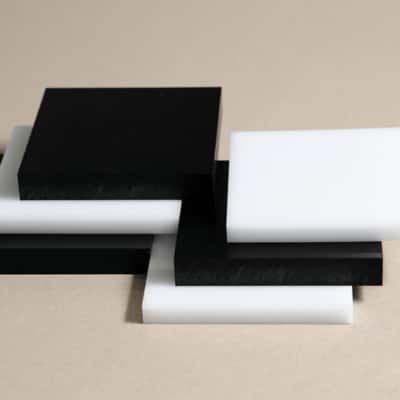
Acetal copolymer (POM-C) is a chemically stable substitute of Delrin (POM-H) that can be used under conditions when the product is exposed to moisture or strong chemicals.
Structure and Composition
POM-C is prepared by mixing formaldehyde and comonomers that disrupt the regularities of the chains, thereby slightly increasing crystallinity, while also enhancing chemical and thermal stability.
Benefits vs. Homopolymer
- Increased ability to endure heat degradation.
- Reduced risk of centerline porosity.
- Better adaptability to alkalinity.
- Increased dimensions in wet conditions.
Trade-Offs
POM-C loses a minor portion of stiffness and tensile strength in comparison to Delrin. It can also have a slightly increased friction and thus is lower in the case of high-load moving parts.
Application Selection
POM-C is used where exposure to chemicals or moisture is an issue, such as in plumbing devices, medical devices, and industrial fluid systems. Delrin remains superior in producing high-strength, wear-resistant precision parts.
Acetal vs Delrin: The Differences at a Glance
Acetal and Delrin are terms that are used interchangeably, although there are minor differences that affect performance.
Chemical Structure
Acetal plastics include both homopolymers and copolymers. The homopolymer, in particular, Delrin, has a more regular molecular chain, which helps to increase crystallinity and mechanical properties. This structural difference is a key factor in the improved performance of Delrin.
Mechanical Properties
Delrin has a greater tensile strength, stiffness, and fatigue resistance as compared to generic acetal. It retains dimensional stability and is suitable for repetitive stress applications, where it is used in gears, bearings, and other structural parts.
Chemical Resistance
Both acetal and Delrin exhibit strong resistance to numerous chemicals, solvents, fuels, and mild acids. Nevertheless, the homopolymer structure of Delrin provides slightly more protection against hydrolysis and long-term exposure to chemicals, thereby increasing the material’s longevity in harsh conditions.
Physical Characteristics
Delrin is moisture-resistant, dimensionally stable, and features a smooth surface finish. These features render it viable in precision machining, whereby strict tolerances and motion are of high importance.
Cost Considerations
Delrin is also more costly than generic acetal because it is a branded, high-quality material. The increased longevity of components, reduced maintenance requirements, and improved performance often offset the increased initial price.
Material Selection Guide
The choice of the appropriate type of acetal guarantees performance and cost-efficiency in any use.
When to Choose Delrin (POM-H)
Select Delrin when high stiffness, strength, and wear resistance are required.
It is good with high-load and precision-engineered components in automotive, industrial, or mechanical systems.
When to Choose Acetal Copolymer (POM-C)
Use POM-C in environments exposed to moisture, chemicals, or varying temperatures.
It is more dependable in tough environments as it is stable and not easily degraded.
Design Considerations
In high-performance parts, tight tolerances should be used, and the effect of shrinkage during the processing ought to be considered. Delrin’s low friction allows designers to reduce lubrication needs and extend part lifespan.
Processing and Fabrication
Delrin (an acetal homopolymer) is produced through a controlled polymerization of formaldehyde, followed by precision processing to retain its mechanical and dimensional accuracy.
Primary Forming Processes
Production Process
Delrin is produced through the anionic polymerization of formaldehyde, resulting in highly crystalline polymer chains. This is a controlled process that results in high levels of strength and hardness.
Extrusion Process
Melted polymer can be extruded into rods, sheets, and profiles. Delrin has a high degree of crystallinity, and special attention must be paid to the extrusion temperature to prevent surface flaws and ensure density homogeneity.
Injection Molding
Complex parts of Delrin are typically injection molded in high volumes. Its low shrinkage and flow behaviors make it suitable for use in tight-tolerance parts, such as gears and bearings.
Secondary Machining & Finishing
Machining Delrin
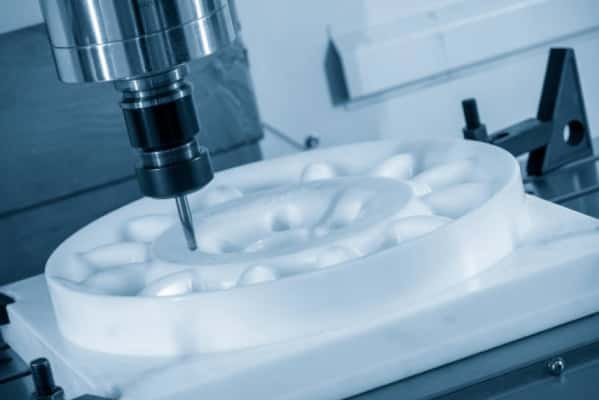
Sharp tools and moderate speeds should be used to prevent overheating. Coolants or air streams are used to ensure dimensional accuracy and surface quality.
Bonding and Joining
Delrin has low surface energy and, thus, is difficult to bond. Adhesives are not as effective as mechanical fastening or ultrasonic welding.
Surface Treatment
Light etching or texturing of the surface enhances the adhesion of paint or adhesive. Enhancements on visible parts are achieved through polishing.
Applications Across Industries
Durability, machinability, and low friction are some of the reasons why Delrin cannot be ignored in various industries.
Automotive Industry
Gears, fuel system components, door locks, and safety restraints in the automotive industry are made using Delrin with long-term usage reliability to mechanical forces and chemical environments.
Consumer Electronics
The qualities of dimensional stability and insulation of Delrin make it the perfect choice in precision housings, connectors, and switch components.
Industrial Equipment
Delrin’s strength and wear resistance make it suitable for gears, conveyor components, and valve parts used in machinery exposed to repetitive stresses.
Food Processing
Delrin is an FDA-approved material and can therefore be used in conveyor parts, blades, and mechanical components that require exposure to food contact and cleaning procedures.
Medical Devices
Drug dispensers, diagnostic devices, and mechanical joints are made using POM materials because they are biocompatible and easy to machine.
Consumer Products
The smoothness of Delrin and its ability to last long have created widespread use of the material in zippers, parts of appliances, sportswear, and home tools.
Advantages and Limitations
Delrin has numerous engineering advantages with certain trade-offs.
Key Advantages
- Good strength-to-weight ratio.
- Very good dimensional stability.
- High wear resistance and low friction.
- Excellent resistance to water and chemicals.
- Easy machinability
Notable Limitations
- Poor bonding with most glues.
- Not to be used at high temperatures continuously.
- Releases formaldehyde on overheating.
- More expensive than normal plastics.
Cost and Availability
Market Pricing
Delrin costs between $6 and $15 per pound, depending on quantity, thickness, and supplier. Other grades, such as Delrin 150 or FDA-approved grades, can be more expensive.
Sourcing and Suppliers
The large chemical corporations like DuPont and Celanese produce Delrin and sell it globally through plastic distributors and CNC material distributors. HRCCNC.com can provide custom fabrication of Delrin sheets and rods to meet specific requirements.
Trends and Developments of the Future.
With the continued development of technology, Delrin is also in the process of improving its formulations and methods of manufacture.
Material Innovations
The grades of acetal in the future will improve its chemical stability, thermal stability, and recycling ability. The eco-friendly development of Delrin composites is to minimize the environmental impact.
Expanding Applications
Emerging fields such as robotics, medical engineering, and electric vehicles are expected to drive further applications of Delrin.
Conclusion
Delrin continues to be an icon of precision engineering due to its strength, low friction, and flexibility. Delrin has a high-performance solution that you can count on whether machining gears, creating prototypes, or producing industrial components. Go to HRCCNC and check out the best Delrin sheets, rods, and cut to order to make your custom parts with precise tolerances, reliable performance, and fast turnaround for any engineering or manufacturing project.
Explore More About Delrin
For more specialized knowledge, explore our related articles:
Delrin 150: In-Depth Analysis of Properties and Uses
Delrin Sheet: Applications and Uses
Acetal Filament: 3D Printing with POM
Delrin vs Nylon: A Detailed Comparison