Skip to content

Acetal (POM) filament enhances engineering quality in 3D printing, producing strong parts with low friction and suitability for mechanical and industrial applications. It is, however, very crystalline and, therefore, it must be closely controlled during printing.
POM Filament Characteristics
The POM filament has been known to be strong, stiff, and self-lubricating. It is used in gears, bearings, and mechanical joints with low-friction smooth surface parts that are created using it.
Printing Requirements
POM needs a hot bed (approximately 120°C) and a closed build chamber to avoid distortion. Optimum nozzle temperature is between 210°C and 230°C. The printing may contain fumes, and therefore, ventilation becomes necessary.
Printing Challenges
Since POM is prone to shrinkage and is adhesive, warping is likely to occur. Print success can be enhanced by using adhesives or a POM-compatible bed surface. It should also be controlled in terms of moisture to prevent bubbling or deformation.
Printed Components Characteristics
POM components printed in 3D retain most of their natural characteristics, including high tensile strength, low friction, and dimensional accuracy. However, interlayer bonding may be slightly weaker mechanically than in molded components.
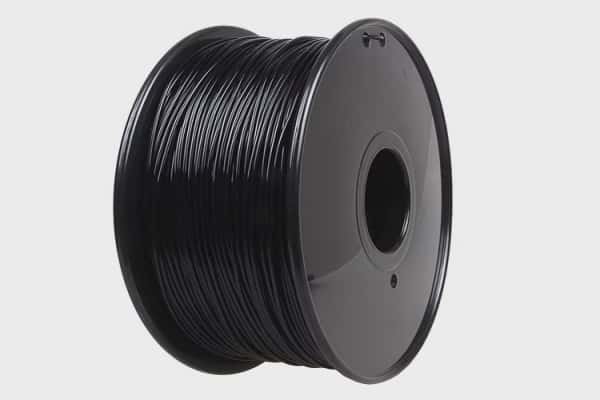
POM-C vs POM-H for 3D Printing
POM-C tends to be the preferred 3D printing material, as it contains approaches to higher thermal stability and adhesion. POM-H (Delrin) is more rigid and more difficult to print, as it is more crystalline and tends to shrink.
Acetal 3D Printed Applications
Acetal is well-suited as a 3D printing material for creating custom gears, jigs, bearings, bushings, and mechanical linkages. It is also applied in prototypes that replicate injection-molded acetal parts.
Safety Considerations
Print POM is to be performed in an adequately-ventilated area or through a filtration system. Formaldehyde, which is present during the heating of POM, is a toxic fume that can accumulate in enclosed spaces. Utilize personal protective equipment and increase ventilation.
Conclusion
3D Printing with Acetal (POM): Boasting high rigidity, high strength and self-lubrication, it’s ideal for engineering components. Maintain proper heated chamber temperature and ventilation, and you’ll get durable, low-friction gears and bearings that can be put into use directly.
HRCCNC offers one-stop solutions for Acetal (POM) 3D part printing.
Dive Deeper into Delrin
For more specialized knowledge, explore our related articles:
Delrin (POM-H) – The Ultimate Guide to Acetal Homopolymer
Delrin 150: In-Depth Analysis of Properties and Uses