Skip to content
Cast aluminum is one of the most essential and widely used manufacturing methods for producing complex, lightweight metal components. From consumer electronics to automotive and aerospace engineering, alu cast metal plays a critical role in modern production.
This guide provides a full breakdown of what cast aluminum is, how it’s made, the pros and cons, common aluminum casting material options, design considerations, and detailed comparisons with other metals.
What Is Cast Aluminum?
Cast aluminum refers to aluminum alloys that are melted and poured into a mold cavity to form cast aluminum parts of a specific shape and size.
Thanks to aluminum’s excellent fluidity, corrosion resistance, and formability, cast aluminum has become a core material for automotive components, electrical housings, appliances, and structural products.
In many industries, choosing aluminum versus cast aluminum comes down to manufacturing complexity—cast aluminum excels when you need intricate shapes, thin walls, or high-volume production.
How Is Cast Aluminum Manufactured?
Core Principle
The idea behind cast aluminum is straightforward: molten aluminum solidifies inside a mold and replicates its geometry.
The success of this process depends greatly on:
- Mold design
- Flowability of molten aluminum
- Control of cooling and solidification
Basic Steps
- Melting aluminum alloy above its liquidus temperature.
- Pouring or injecting the metal into cast aluminum molds.
- Solidifying the metal into the desired shape.
- Demolding and moving the parts into post-processing.
These steps typically take place inside a professional aluminum cast house, where temperature, pressure, and cooling conditions are strictly controlled.
Key Process: Aluminum Die Casting
Of all casting methods, die casting is the most efficient and widely used. This method uses high pressure to inject molten metal into a steel mold, making it ideal for mass production of precision cast aluminum parts.
Why Die Casting Works So Well
High injection pressure (from a few MPa to several dozen MPa) forces molten metal into every fine detail of the mold. This ensures:
- Accurate reproduction of thin walls
- Smooth surfaces
- High dimensional stability
- Fast cycle times
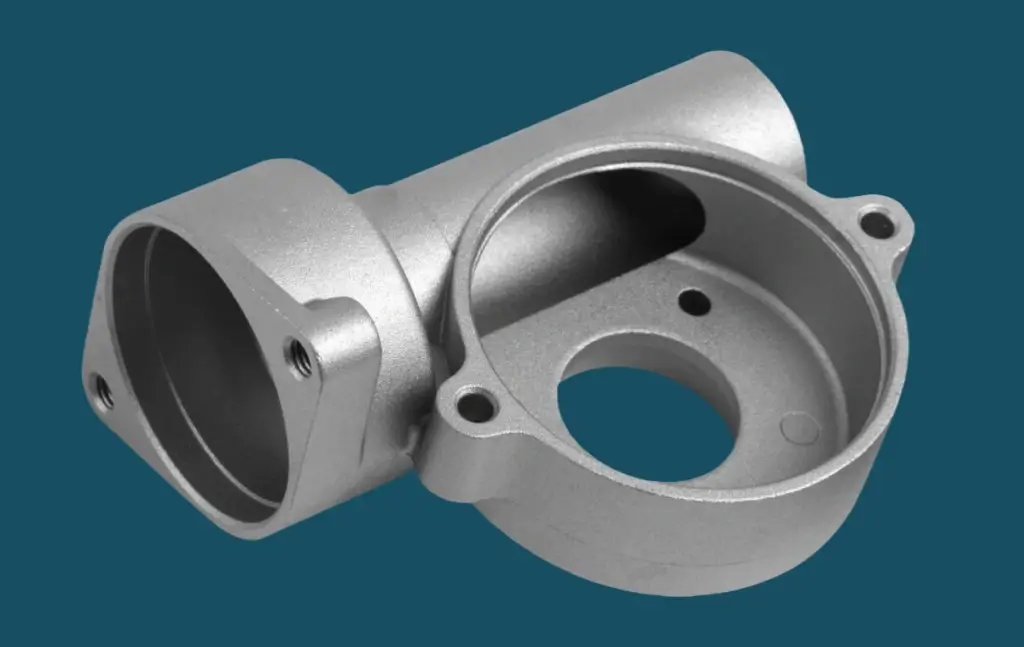
Die Casting Workflow
- Mold Preparation – designing, machining, and preheating the cast aluminum molds.
- Melting the alloy – preparing the required die cast aluminum material.
- Injection – a plunger pushes molten metal into the cavity at high pressure.
- Holding Pressure / Cooling – solidification under pressure to ensure density.
- Opening the mold and ejecting the part.
- Post-processing such as trimming, machining, and finishing.
Both die cast aluminum material and aluminum die cast material are commonly used terms in industrial sourcing.
Other Common Aluminum Casting Processes
- Sand Casting – best for large, low-volume parts; lower surface quality.
- Permanent Mold Casting – reusable molds; better strength and precision than sand casting.
These processes also produce alu cast metal parts but generally lack the speed and accuracy of die casting.
Why Choose Cast Aluminum?
Key Advantages
- Lightweight – aluminum density is far lower than steel or iron.
- Excellent strength-to-weight ratio – some alloys rival lower-grade steels.
- Outstanding corrosion resistance – natural oxide layer protects the surface.
- Great thermal & electrical conductivity – ideal for heat sinks and motor housings.
- High production efficiency – especially in die casting.
- Complex shape capability – perfect for intricate or thin-walled cast aluminum parts.
Limitations of Cast Aluminum
- Higher tooling cost – cast aluminum molds and die sets are expensive.
- Lower absolute strength than steel – especially when compared in cast aluminium vs aluminium forged grades.
- Lower ductility – compared to forged metals in cast aluminum vs wrought iron comparisons.
- Possibility of internal defects – porosity and shrinkage if not well controlled.
Design & Material Selection for Cast Aluminum
Design Essentials
To ensure high-quality cast aluminum parts:
- Include proper draft angles for easy mold release.
- Use rounded corners to improve flow and prevent stress concentration.
- Maintain uniform wall thickness to reduce shrinkage and deformation.
- Add ribs where added stiffness is needed without increasing weight.
- Design proper gating and venting to minimize porosity.
Common Die Casting Aluminum Alloys
| Alloy | Key Features | Typical Applications |
|---|---|---|
| ADC12 / A383 | Excellent flowability, economical | Electronic housings, auto parts |
| A360 | Strong corrosion resistance | Structural and mechanical housings |
| A380 | Strong all-around performance | Engine components, brackets |
These alloys represent the most widely used aluminum casting material choices in any modern aluminum cast house.
Post-Processing Options
- Machining – turning, milling, drilling, tapping for high precision.
- Surface Finishing – sandblasting, polishing, plating, painting, and anodizing to improve durability or aesthetics.
Material Comparisons
Cast Aluminum vs Cast Steel
- Cast aluminum: lighter, better corrosion resistance, better thermal conductivity.
- Cast steel: much stronger and tougher; better for heavy-load applications.
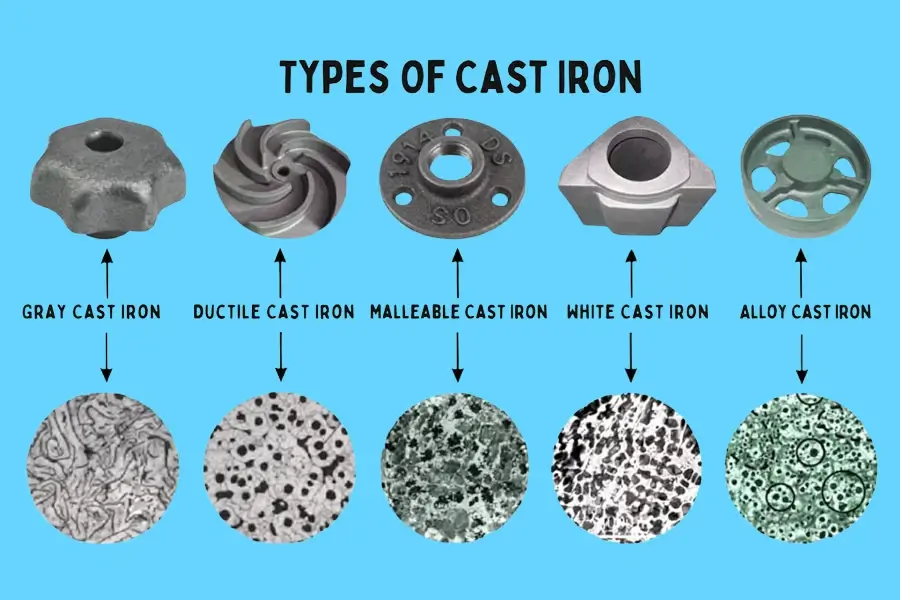
Cast Aluminum vs Gray Iron
- Cast aluminum: lightweight with good mechanical strength.
- Gray iron: excellent vibration damping and wear resistance but heavier and more brittle.
Cast Aluminium vs Aluminium (wrought aluminum)
Wrought aluminum (extruded/rolled) offers higher mechanical performance in specific directions, while cast aluminum is ideal for complex shapes and mass production.
Cast Aluminum vs Wrought Iron
- Cast aluminum: lightweight, corrosion-resistant, cost-effective.
- Wrought iron: much stronger and more ductile but far heavier and more expensive.
Applications of Cast Aluminum
Automotive
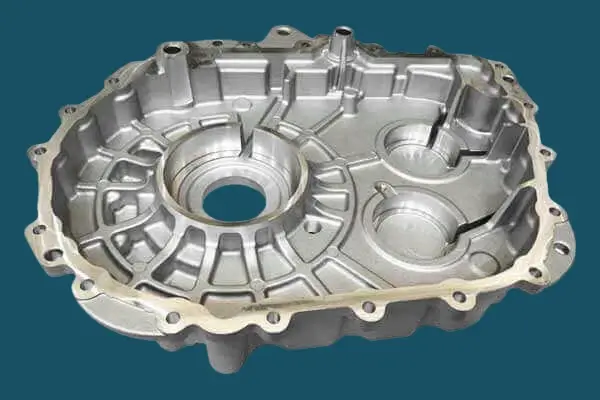
Used for engine blocks, transmission housings, wheels, brackets, mounts, and more—lightweighting is essential for fuel efficiency and EV design.
Electronics
Ideal for heat sinks, smartphone housings, motor casings, and power equipment thanks to its conductivity and formability.
Aerospace
Used in high-strength-to-weight structural brackets, housings, and interior components.
Home & Consumer Products
Furniture hardware, modern lighting bases, tool housings, outdoor décor—cast aluminum parts fit functional and aesthetic needs.
A professional aluminum cast house can supply precision components for all these sectors.
Conclusion
Cast aluminum is a highly refined technology that integrates materials science, mold engineering, and advanced manufacturing processes. Through various casting methods—especially high-efficiency aluminum die casting—it transforms die cast aluminum material into precision components used across countless industries.
Although cast aluminum has certain limitations in ultimate strength and toughness, its unmatched lightweight characteristics, ability to form complex shapes, and high production efficiency make it an irreplaceable material in modern manufacturing.
FAQs
1. What is the difference between cast aluminum and aluminum material? (cast aluminum vs aluminum )
Cast aluminum is ideal for complex shapes and mass production, while aluminum material is better for high-strength structural components. Therefore, when comparing cast aluminum vs aluminum, the choice depends on strength requirements, weight targets, and part complexity.
2. Is cast aluminum more durable than wrought iron? (cast aluminum vs wrought iron)
3. How are cast aluminum parts manufactured? What equipment is required?
4. What are the most common cast aluminum materials?
5. What factors should be considered before designing a cast aluminum mold?
Work With HRC
HRC operates an independent aluminum cast house with a dedicated engineering and production team. We offer a complete suite of services, including:
- Cast aluminum mold design
- Production of die cast aluminum material and aluminum casting material
- CNC precision machining for cast aluminum parts
- Surface finishing and coating services
- Full inspection and testing support
You are welcome to send us your drawings—we will provide a quotation and manufacturing recommendations within 12 hours.
We look forward to working with you!