Skip to content
Titanium is one of the most fascinating metals in modern industry — strong, lightweight, corrosion-resistant, and biocompatible. Its unique blend of strength and low density has made it essential in aerospace, automotive, and medical applications.
But a common question arises: how much is titanium worth?
Unlike gold or silver, titanium isn’t traded as a precious metal. Instead, its price depends on industrial demand, processing complexity, and alloy grade. In this article, we’ll explore the titanium price, the factors influencing it, and how much titanium is worth in different forms today.
What Is Titanium?
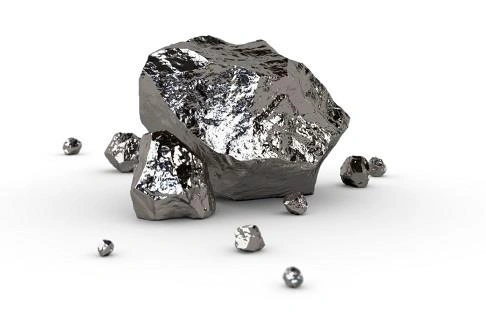
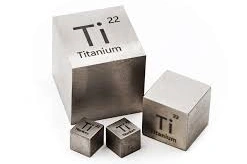
Titanium (chemical symbol Ti) is a transition metal known for its exceptional strength-to-weight ratio and excellent corrosion resistance. It’s about 45% lighter than steel but almost equally strong.
Found mainly in minerals like ilmenite and rutile, titanium requires complex extraction processes — primarily the Kroll process — which contribute to its relatively high cost compared to common metals.
According to the U.S. Geological Survey (USGS), titanium metal production involves refining sponge and alloy materials for aerospace, chemical, and energy industries (U.S. Geological Survey, 2024).
Understanding the Price of Titanium in Today’s Market
Titanium’s market price depends heavily on its form (bar, sheet, sponge, or scrap) and grade (purity or alloy type). Below is a breakdown of the most common grades and their pricing.
Commercial Purity (CP) Titanium (Grades 1–4)
Commercially Pure (CP) titanium, Grades 1–4, is widely used in chemical and marine applications.
These grades vary in oxygen content — higher oxygen means higher strength but less ductility.
- Grade 1: Softest and most ductile; excellent for forming.
- Grade 4: Strongest CP grade; used for structural and pressure applications.
According to recent USGS and market data, commercially pure titanium typically costs between $5 and $8 per pound, or roughly $0.31 to $0.50 per ounce (USGS, 2024).
Grade 5 Titanium (Ti-6Al-4V)
The Grade 5 titanium price (also called Ti-6Al-4V) is significantly higher because it’s an alloy with aluminum and vanadium, offering greater strength and heat resistance.
Used in aircraft components, implants, and high-performance automotive parts, Grade 5 titanium generally costs $20–$30 per pound, or about $1.25–$1.90 per ounce (Trading Economics, 2025).
Titanium Alloy Prices
Beyond Grade 5, other titanium alloys — such as Grade 9 (Ti-3Al-2.5V) and Grade 23 (ELI Ti-6Al-4V) — are also common. Prices vary depending on alloying content, purity, and availability.
Average titanium alloy prices range between $10 and $25 per pound.
Titanium Ingots and Bars
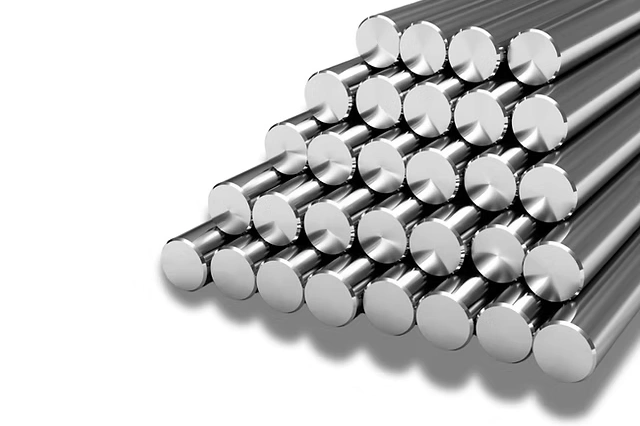
Titanium bars and ingots are standard materials in CNC machining and manufacturing.
The titanium bar price usually ranges between $12 and $25 per pound, depending on grade and order volume.
High-purity aerospace-grade ingots can reach $30 per pound or more, reflecting higher processing and certification costs.
Prices in Common Units
| Measurement | Average Titanium Price | Notes |
|---|---|---|
| Per ounce | $0.30 – $1.90 | Depends on grade and form |
| Per pound | $5 – $30 | CP vs. Grade 5 |
| Per kilogram | $11 – $66 | Approximate conversion |
(Data summarized from USGS 2024 and Trading Economics 2025.)
What Are the Key Factors Affecting Titanium Prices?
The titanium cost is influenced by multiple economic and industrial variables, including production efficiency, demand cycles, and global trade conditions.
Supply and Demand
Demand from aerospace and defense industries is a key driver. When global aircraft production rises, titanium demand — and therefore the price on titanium — tends to climb.
Conversely, during slowdowns, prices stabilize or drop. USGS reports indicate consistent demand growth in both aerospace and industrial applications (U.S. Geological Survey, 2024).
Production Costs
Producing titanium is costly. Extracting and refining titanium sponge involves high-energy, high-temperature processes. These costs make titanium more expensive than aluminum or steel on a per-ounce basis.
According to the U.S. Bureau of Labor Statistics index for titanium mill shapes (series WPU102505), prices have risen steadily since 2020, reflecting energy and labor cost increases.
Market Conditions and Economic Situation
Fluctuations in energy costs, raw materials, and geopolitical events can directly affect titanium pricing.
For example, supply chain disruptions or sanctions affecting major producers (e.g., Russia, Japan) can raise the price of titanium per ounce worldwide.
Titanium Scrap: Understanding Its Value and Price Dynamics
Recycling plays a critical role in titanium economics. Manufacturers often reclaim machining scrap to lower costs and environmental impact.
Value of Scrap and Recycled Titanium
The titanium scrap price depends on purity and cleanliness.
Clean, high-grade aerospace scrap may sell for $6–$10 per pound, while mixed or contaminated scrap might fetch $3–$5 per pound.
According to Trading Economics (2025), global scrap value trends mirror those of primary titanium — rising when demand for aerospace materials increases.
Recycling significantly enhances sustainability and supports circular manufacturing.
What Are the Future Trends in Titanium Prices?
The titanium price outlook for the next 5–10 years is shaped by evolving supply chains, emerging industry demands, and global sustainability goals. Below are key trends likely to influence pricing.
Increasing Global Competitiveness
The titanium market is becoming more competitive as new producers enter the fray. China, already the largest titanium producer, is expanding its high-grade alloy capacity, which could moderate price increases in the short term . Meanwhile, countries like Brazil and Thailand are investing in titanium processing to reduce reliance on imports, creating regional price competition . However, this competition may be offset by rising production costs (e.g., energy, labor), preventing significant price declines.
Resources for Survival and Development
Nations with abundant titanium ore — like China, Australia, and India — continue to invest in resource development. According to USGS, titanium reserves remain sufficient for decades, providing a stable base for price control.
Increasing Demand from Emerging Industries
Emerging industries are set to drive long-term titanium demand. Electric vehicles (EVs) use titanium in battery components and lightweight chassis parts, and as EV adoption grows (projected to reach 50% of global car sales by 2030), titanium demand from automotive will rise. The space industry is another growth area: private companies like SpaceX use titanium in rocket structures, and the expanding commercial space sector could boost demand for high-strength alloys.
These emerging demands will likely outpace supply growth, putting upward pressure on titanium price over the next decade. Analysts predict that EV and space sector demand could increase titanium consumption by 25% by 2030 .
Geopolitical and Economic Factors
Geopolitical risks remain a wild card for titanium price. Tensions between major producers (e.g., U.S.-China trade disputes) could disrupt supply chains, while sanctions on countries like Russia (a key titanium exporter) could limit supply. Economic factors like rising interest rates (which slow industrial investment) or a global recession could temporarily suppress demand, but the long-term trend toward titanium-intensive technologies will likely prevail.
Sustainability – Recycling and Titanium Scrap
Sustainability is transforming the titanium market, with recycling playing a central role. As governments and industries adopt stricter carbon reduction targets, recycled titanium— which uses 90% less energy than primary production—will become more attractive. This shift will boost titanium scrap demand and titanium scrap price, while also creating a more resilient supply chain less dependent on primary mining.
By 2030, recycled titanium could account for 40% of global supply, which would help stabilize titanium price by reducing reliance on volatile primary production costs.
Why Is Titanium Considered a Long-Term Investment?
Despite the high initial titanium cost, it is often seen as a superior, long-term investment compared to cheaper alternatives like steel or aluminum. This is because:
- Lifetime Value: Titanium components, due to their superior corrosion resistance and strength, have a service life that can be many times longer than other materials, drastically reducing long-term maintenance and replacement costs.
- Performance Criticality: In fields like aerospace and medicine, the unique properties of titanium are non-negotiable. Its role in ensuring safety, performance, and efficiency makes the titanium price a necessary and acceptable investment.
- Unique Properties: The sheer strength-to-weight ratio and biocompatibility of titanium have no true equivalent, insulating its value from the price fluctuations of commodity metals.
Why Choose Titanium? Titanium’s Uses and Demand in Various Industries
Titanium’s popularity across industries boils down to its unrivaled set of properties. Below are its key applications and the demand drivers behind them:
- Aerospace: The largest consumer of titanium, aerospace uses Grade 5 titanium for jet engines, airframes, and landing gear. A single commercial airliner uses 4–6 metric tons of titanium, and with global aircraft orders projected to reach 40,000 over the next 20 years, demand will remain strong .
- Medical: Titanium’s biocompatibility (it does not react with human tissue) makes it ideal for implants (hip replacements, dental implants) and surgical tools. The aging global population is driving growth in this sector, with medical titanium demand expected to rise 8% annually through 2030.
- Chemical Processing: CP titanium’s corrosion resistance makes it essential for pipes, valves, and reactors handling acids and harsh chemicals. As industrial production expands in Asia and Africa, this demand will grow.
- Automotive: High-performance and EV manufacturers use titanium to reduce weight and improve fuel efficiency. A luxury EV can use up to 100 kilograms of titanium, and as EVs become mainstream, automotive demand will surge.
- Marine: Titanium’s resistance to saltwater corrosion makes it ideal for ship hulls, propellers, and offshore oil rig components. The growing offshore wind industry will further boost this demand.
Each of these sectors contributes to the stability of titanium price, as no single industry dominates demand—reducing the risk of price collapses due to sector-specific downturns.
HRC Custom CNC Machining: Providing You with High-Performance Titanium Alloy Parts
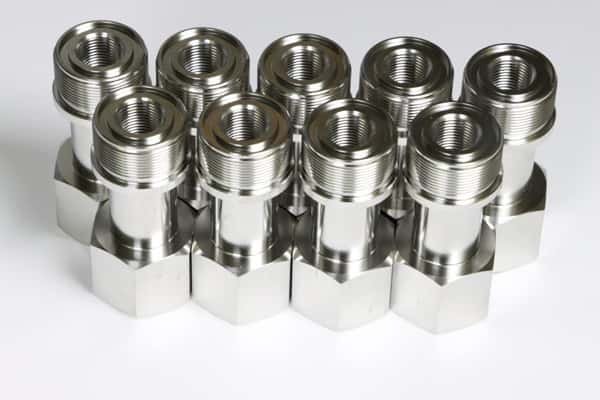
At HRC, we specialize in precision CNC machining of titanium alloys, offering custom parts for aerospace, medical, and industrial sectors.
Our advanced CNC equipment and experience with Grade 5 titanium bars ensure your components meet strict performance and tolerance standards.
👉 Contact HRC today for a customized quote — from prototypes to full-scale titanium production, we deliver durable, high-quality results that enhance your product performance.
FAQs
1. Is titanium worth anything in the jewelry market?
2. Why is the grade 5 titanium price so much higher than pure titanium?
3. What determines the titanium scrap value?
4. Is titanium expensive compared to stainless steel?
5. Why is titanium bar more expensive than raw titanium?
6. How does the titanium cost per pound compare globally?
7. How is titanium used in CNC machining?
References
- U.S. Geological Survey (USGS). (2024). Mineral Commodity Summaries: Titanium and Titanium Dioxide.
Retrieved from https://pubs.usgs.gov/periodicals/mcs2024/mcs2024-titanium.pdf - Federal Reserve Bank of St. Louis (FRED). (2025). Producer Price Index by Commodity: Metals and Metal Products – Titanium and Titanium-Base Alloy Mill Shapes (WPU102505).
Retrieved from https://fred.stlouisfed.org/series/WPU102505 - Wikipedia. (2025, October). Prices of chemical elements.
Retrieved from https://en.wikipedia.org/wiki/Prices_of_chemical_elements - Trading Economics. (2025). Titanium Price – Chart, Historical Data & Forecasts.
Retrieved from https://tradingeconomics.com/commodity/titanium