Skip to content

Aluminum is a metal that can conduct electricity, making it popular in electronics, electrical systems, and industrial applications. While its conductivity is slightly lower than copper, aluminum is lighter and more cost-effective, allowing engineers to replace heavier metals in many situations.
Aluminum not only carries current efficiently but also transfers heat well. Its atomic structure and alloy design make it an ideal conductor.
This article explores aluminum’s electrical properties, compares conductivity across different aluminum grades, examines factors that affect performance, and discusses ways to maintain conductivity in practical applications.
Is Aluminum a Good Conductor of Electricity?
Aluminum has good conductivity. Its electrical conductivity reaches about 61% of copper, while its weight is only one-third of copper. This combination makes aluminum a cost-effective conductor in many electrical and electronic applications.
Engineers widely use aluminum in power lines, busbars, cables, and structural components that handle high currents because of its light weight.
Pure aluminum achieves around 37.8 MS/m conductivity at room temperature. This performance comes from the three valence electrons in each aluminum atom, which move freely in the metal.
Conductivity varies with crystal structure, temperature, and impurities. Higher purity improves conduction, while alloying elements can slightly reduce efficiency.
Electrical Conductivity vs Electrical Resistivity
Many engineers confuse conductivity and resistivity, but these properties describe the same characteristic from opposite perspectives. Conductivity measures how easily electrons flow, while resistivity measures how strongly a material resists current. A simple reciprocal relationship links them:
Conductivity = 1 / Resistivity.
Aluminum has a typical resistivity of about 2.82 μΩ·cm, which supports good conduction. Copper resists current less, at 1.68 μΩ·cm, which makes it more efficient and explains why engineers often choose copper for high-performance power transmission.
Thermal Conductivity vs Electrical Conductivity
Thermal conductivity and electrical conductivity often appear together in discussions but describe different physical effects. Electrical conductivity shows how easily electrons move, while thermal conductivity measures how fast heat travels through a material.
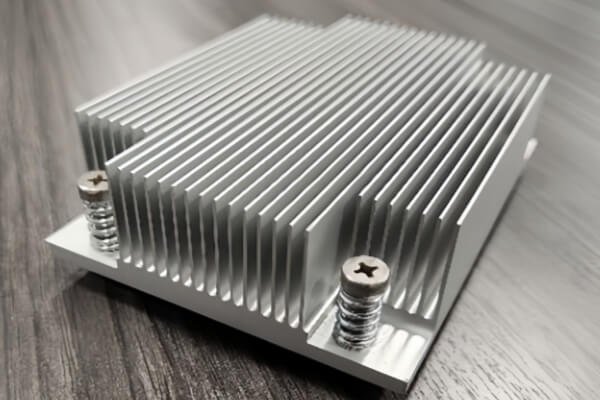
Aluminum performs well in both areas. Its thermal conductivity is about 205 W/m·K, allowing it to spread and release heat quickly. This property makes aluminum ideal for heat sinks, cookware, and thermal management components.
Metals often show a connection between heat and electrical conduction because free electrons carry both energy and charge. However, the two do not always match. Diamond, for example, conducts heat extremely well but hardly conducts electricity. In metals, the Wiedemann–Franz law explains why good electrical conductors usually also conduct heat efficiently.
Copper outperforms aluminum in both heat and electricity, but aluminum’s light weight and lower cost make it a practical choice when engineers need both conductivity and heat management.
How Does Aluminum Conduct Electricity?
Aluminum conducts electricity through the free electrons in its metallic lattice. Aluminum atoms release valence electrons easily, which move freely inside the crystal structure. When a voltage or electric field is applied, these electrons flow and create current.
Higher electron mobility and greater purity increase aluminum’s conductivity. Pure aluminum conducts better than aluminum alloys that contain other elements.
How Many Electrons Does Aluminum Have?
An aluminum atom has 13 electrons arranged in three shells. The outermost shell contains 3 valence electrons. These electrons are weakly bound and move freely inside the metal. They provide aluminum’s electrical conduction and form the foundation of its metallic conductivity.
What Are the Key Factors Affecting the Conductivity of Aluminium?
Several factors influence aluminum’s conductivity, with purity being the most important.
High-purity aluminum contains fewer impurities, allowing electrons to move more freely in the crystal lattice. As a result, it conducts electricity better than aluminum alloys with added elements.
Temperature also plays a key role. As the temperature rises, lattice vibrations increase, which slows electron flow and slightly reduces conductivity.
Other factors such as mechanical processing, cold working, aging, surface oxidation, and internal stress can change the material’s microstructure, affecting how electrons move.
In summary, the main factors that affect aluminum’s conductivity include purity, temperature, alloy composition, and structural changes introduced during processing.
How to Measure Electrical Conductivity?
Engineers measure aluminum’s electrical conductivity using various industrial and laboratory methods. The most common approaches are the four-point probe method and the eddy current method.
The four-point probe applies a constant current through the outer probes and measures voltage across the inner probes. This method calculates resistivity while minimizing errors from contact resistance.
The eddy current method uses electromagnetic induction for non-destructive testing and is particularly useful for quickly assessing metals.
Digital conductivity meters and Hall effect testers are also commonly used in labs or production lines to gather more detailed data. For all methods, proper calibration is critical for accuracy, as emphasized by standards from the National Institute of Standards and Technology (NIST).
Electrical Conductivity of Different Aluminum Grades
Aluminum grades differ in conductivity because of variations in purity and alloying elements.
Series 1 aluminum contains the fewest impurities, giving it the highest conductivity, but its mechanical strength is relatively low.
Series 6 aluminum includes elements like magnesium and silicon. These reduce conductivity slightly but significantly improve strength and durability.
Engineers choose materials based on application needs. High-purity aluminum suits situations where maximum conductivity matters, while 6-series aluminum balances good conductivity with structural strength.
Compare Conductivity and Cost in Series 1 Aluminum
| Alloy | Conductivity (% IACS) | Typical Cost | Common Applications |
| 1050 | 61 | Low | Low-voltage cables, busbars, cookware, aluminum composite boards |
| 1060 | 61 | Low-Medium | Electronic enclosures, USB shells, solar panel frames |
| 1070 | 62 | Medium | Low-voltage cables, busbars, cookware, and aluminum composite boards |
| 1090 | 63 | Medium-High | Electrical contacts, heat sinks, and lighting fixtures |
Compare Conductivity and Cost in Series 6 Aluminum
| Alloy | Conductivity (% IACS) | Typical Cost | Common Applications |
| 6061 | 40 | Medium | Structural components, housings, automotive parts |
| 6063 | 46 | Medium | Architectural profiles, heat exchangers, electronic frames |
| 6101 | 57 | Medium-High | Electrical conductors, transformer windings |
| 6201 | 55 | Medium-High | Busbars, electrical strips, high-current connectors |
Product Applications of Conductive Aluminum
Conductive aluminum plays an important role in many industries, and its specific uses depend on the aluminum grade. Series 1 aluminum (1050, 1060, 1070, 1090) is known for high purity and excellent conductivity. Engineers use it for busbars, cables, transformer windings, electronic housings, cookware, and composite panel substrates.
For example, premium cookware uses 1050 aluminum for even heat distribution and energy efficiency. Grades 1060 and 1070 suit capacitor foils, solar panel frames, and precision electronic wiring, ensuring low resistance and stable current flow.
Series 6 aluminum (6061, 6063, 6101, 6201) balances strength and conductivity, making it suitable for structural and electrical applications requiring load-bearing capacity.
Grades 6061 and 6063 often appear in automotive parts, electronic housings, building doors and windows, and industrial control equipment. 6101 and 6201 focus on electrical applications, such as busbars, conductive rails, and long-distance power lines, providing stable performance under high voltage and large currents.
Contact Resistance of Aluminum
Contact resistance in aluminum occurs where two surfaces meet, such as in joints or connectors.
Aluminum naturally forms a very thin oxide layer on its surface. This layer acts as an insulator and can increase contact resistance significantly. Several factors affect contact resistance, including surface roughness, oxide layer thickness, contact pressure, and micro-movements during assembly.
A clean, smooth surface combined with moderate pressure or slight sliding (around 10 microns) can break part of the oxide layer and reduce resistance. Engineers can also improve stable conductivity by designing proper joints, using compatible hardware, and applying anti-oxidation compounds, ensuring reliable current flow in electrical systems.
Does Aluminum Corrosion Affect Conductivity?
Aluminum naturally forms a dense oxide film, which gives it good corrosion resistance while minimally affecting overall conductivity.
However, aluminum oxide is an insulator. When the oxide layer thickens or corrosion worsens, such as with pitting, electron flow is hindered, and surface resistance increases. This effect becomes more pronounced in high-current or high-reliability applications.
Uniform, light oxidation usually has minimal impact. But prolonged exposure to corrosive environments, chemical attacks, or thickening of the oxide layer can reduce effective conductivity.
Choosing more corrosion-resistant aluminum alloys, applying protective coatings, or performing regular surface cleaning and maintenance can help maintain stable electrical performance over time.
Does Anodized Aluminum Conduct Electricity?
Anodized aluminum does not conduct electricity. During anodizing, the surface forms a dense, hard aluminum oxide layer. No matter the color, thickness, or finish, this layer blocks current flow. Conventional anodized aluminum cannot be used directly for grounding or high-current applications.
Based on our 17 years of experience in CNC aluminum machining and long-term production in our anodizing plant, we have validated three effective methods to maintain electrical conductivity while preserving the appearance and quality of anodized surfaces.
Method 1: Conductive Oxidation / Conversion Coating
Conductive oxide treatments, such as chromate conversion coatings, suit applications that require conductivity but only light protection. Examples include electronic components, connectors, conductive aluminum housings, and contact surfaces.
Unlike thick anodizing, this process creates a very thin protective layer on aluminum, which does not significantly block current. It allows good electrical conductivity while providing basic corrosion resistance.
The thin film usually appears pale yellow to light gold and slightly improves dirt resistance. It can also enhance adhesion for painting or bonding. This method is cost-effective and suitable for mass production, making it a common solution for products that need both conductivity and light protection.
Method 2: Anodizing + CNC Machining Exposed Areas
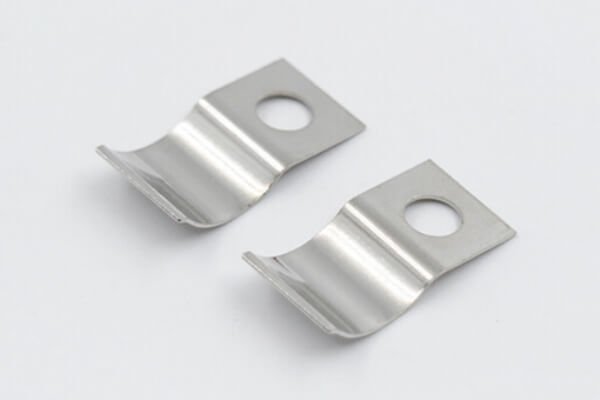
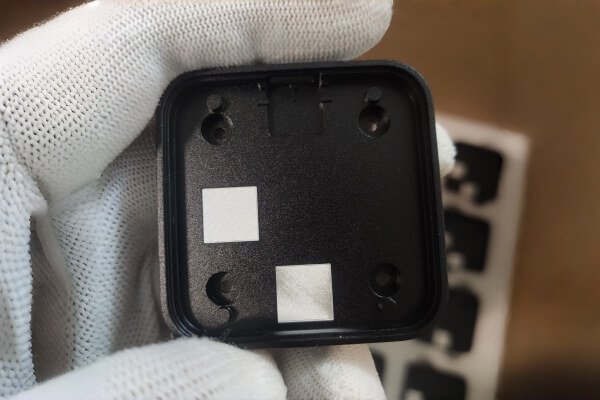
For products that need local conductivity, a reliable approach is to anodize the entire part first, then use CNC machining to remove the oxide layer from specific areas. This exposes bare metal in precise locations while keeping the anodized appearance and protective function elsewhere.
This method works well for grounding points, fastening areas, or electrical contact surfaces. Compared to traditional masking methods using tape or rubber, CNC machining after anodizing ensures precise positioning of conductive areas. It also avoids potential problems like mask shifting, chemical intrusion, or surface scratches during mask removal.
By defining conductive regions through post-processing, engineers achieve consistent electrical contact while preserving the overall aesthetics and reliability of the product.
Method 3: Customized Hybrid Process (Conductive + Anodized)
For products that require both good conductivity and high corrosion resistance, a custom hybrid process can combine conductive oxide and anodizing benefits.
The process starts with pretreatment, including degreasing, acid cleaning, and chemical polishing. A carefully controlled, short anodizing step forms a thin, uniform oxide layer. Final sealing and drying complete the process.
By precisely controlling electrolysis time and process order, this method maintains usable conductivity while enhancing corrosion resistance and environmental stability.
Products treated with this hybrid process may have slightly lower conductivity than bare aluminum, but they usually meet the requirements of most conductive applications.
Is Aluminum More Conductive Than Copper?
Pure aluminum does not surpass copper in electrical conductivity. According to the International Annealed Copper Standard (IACS), copper has 100% conductivity, while pure aluminum reaches about 61%.
In practical engineering, conductivity alone is not the only factor. Aluminum weighs only about one-third of copper, giving it a higher “conductivity-to-weight ratio.”
This lightweight advantage, combined with lower cost and easier machining, makes aluminum a common choice in power transmission and large electrical structures. It is especially preferred for overhead power lines and other applications where weight is critical, offering better overall value than copper in many cases.
Comparison Table: Aluminum vs Copper vs Brass Conductivity
| Material | Conductivity (% IACS) | Density (g/cm³) |
| Copper (Pure) | 100% | 8.96 |
| Aluminum (Pure) | 61% | 2.70 |
| Brass (30% Zn) | 28% | 8.50 |
Conclusion
Aluminum achieves an ideal balance between light weight, good conductivity, cost stability, and ease of machining. Different aluminum grades offer distinct combinations of conductivity and strength: Series 1 aluminum provides higher electrical conductivity, while Series 6 aluminum maintains reasonable conductivity with better mechanical performance.
By applying suitable surface treatments—such as conductive oxide coatings, localized CNC machining, or hybrid processes—engineers can ensure that aluminum parts meet both aesthetic and protective requirements while providing reliable conductivity in specific areas or across the whole part. Understanding these material properties and processing strategies is essential for selecting the best solution for any project.
If you are looking for professional CNC machining and conductive surface treatment for aluminum, HRCCNC can help. With years of experience in aluminum machining and surface finishing, we deliver precise, consistent, and high-quality manufacturing solutions for your projects.