Skip to content

Some materials/metals cling to magnets with sheer force. Iron, nickel, and cobalt instantly hit the mind upon thinking of magnetic elements. What about lead that has been around for centuries?
The heavy or dense metal holds excellent industrial importance to this day. So, the question of “is lead magnetic” should spark your curiosity at some point. That’s what this article is all about.
Is Lead (Pb) Magnetic?
Quick Answer: Lead is non-magnetic. It belongs to the category of diamagnetic materials. Therefore, lead actually repels magnetic fields instead of being attracted. However, the repulsion or repellency isn’t that strong.
The Science Behind Lead’s Magnetism
– Atomic Structure: Lead atoms have completely filled outer electron shells. Since all electrons are paired, the net/total magnetic moments cancel out each other. It leaves zero magnetism.
– Diamagnetism: Lead exhibits a rather weak repulsion against magnetic fields. You can’t even magnetize lead permanently by any means.
– Magnetic Susceptibility: Lead’s negative magnetic susceptibility ( -1.8 × 10⁻⁵ [SI units]) confirms its diamagnetism. The value is significantly smaller than positive-valued paramagnetic or ferromagnetic materials.
Magnetism in Other Alternative Metals
| Element | Magnetic Property | Magnetic Susceptibility |
| Lead (Pb) | Diamagnetic | –1.8 × 10⁻⁵ |
| Iron (Fe) | Ferromagnetic | +1 to +1000 |
| Nickel (Ni) | Ferromagnetic | +600 |
| Copper (Cu) | Diamagnetic | –1.0 × 10⁻⁵ |
| Aluminum (Al) | Paramagnetic | +2.2 × 10⁻⁵ |
| Cobalt (Co) | Ferromagnetic | +250 |
Testing the Magnetism of Lead with a Magnet
a. What Happens When You Put a Magnet Near Lead?
Observation: A magnet will not stick to lead. Instead, lead exhibits a tiny repulsive force because it is diamagnetic.
Example: If you place a fridge magnet on a lead sheet, it will slide off. In contrast, the same magnet clings strongly to iron or nickel.
Scientists use sensitive instruments like a SQUID magnetometer to detect the magnetism. It’s because the effect is too subtle for casual observation.
b. Is Molten Lead Magnetic?
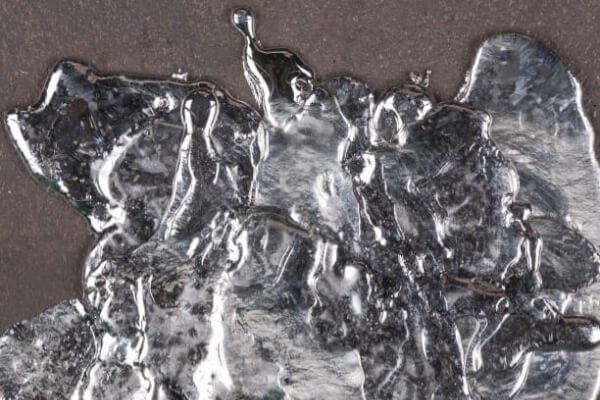
Molten State Behavior: Lead remains non-magnetic even when melted. Heating does not create unpaired electrons or magnetic moments.
Molten lead is handled near strong magnetic fields in metal casting and battery recycling. Its non-magnetic property helps minimize magnetic interference when properly engineered.
Fact: Ferromagnetic metals lose magnetism above Curie temperatures. However, lead has no ferromagnetism to lose as it’s diamagnetic in all states.
c. Lead Alloys and Magnetism
– Pure Lead: Always diamagnetic, never magnetic.
– Lead + Iron/Nickel: Such alloys may show weak magnetic attraction when the ferromagnetic component dominates (when the ferromagnetic component is present in sufficient proportion).
– Lead + Tin (Solders): The alloys are still non-magnetic. They have extensive uses in electronics where magnetic neutrality is essential.
– Lead + Antimony (Battery Grids): Non-magnetic nature enables stable performance for lead-acid batteries.
Misconceptions About Lead Magnetism
1. “All Metals Are Magnetic, So Lead is Also Magnetic”
Reality: Only a few metals like iron, cobalt, and nickel are strongly magnetic (ferromagnetic).
2. “Lead Can Be Magnetized Like Iron”
Reality: Lead can’t be permanently magnetized. Its electron configuration is perfectly paired, canceling out magnetic moments.
3. Molten Lead Becomes Magnetic
Reality: Lead remains diamagnetic even when melted. No matter how much heat you deliver, lead has no ferromagnetism to lose.
4. Lead Alloys Are Always Non-Magnetic
Reality: Pure lead is non-magnetic, whereas some of its alloys can behave differently. Lead + Iron/Nickel may show weak magnetic attraction when the ferromagnetic elements dominate.
5. Pencil Lead Is Magnetic
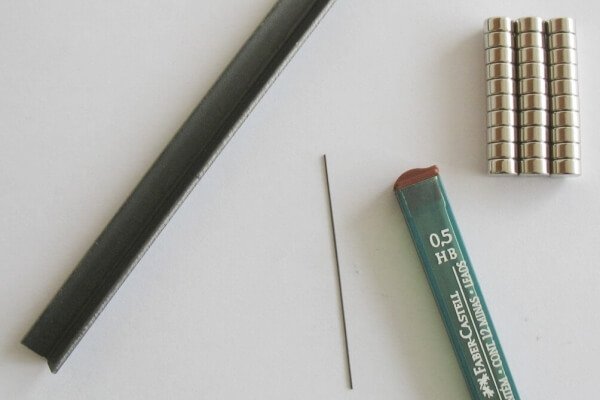
Reality: Pencil “lead” is actually graphite mixed with clay, not metallic lead. Graphite is also non-magnetic, though it can show weak diamagnetism.
Real-World Applications: Lead Magnetism
– MRI Shielding
MRI machines rely on strong magnetic fields. Lead shielding in MRI rooms can block radiation when other engineering factors (eddy currents, electrical conductivity, and structural fasteners with iron) remain favorable.
– Radiology
Lead aprons protect patients and technicians from X-rays. The non-magnetic property ensures they don’t distort the imaging results.
– Nuclear Reactors
Lead acts as a radiation shield in sensitive instruments like Geiger counters and magnetic sensors.
– Particle Accelerators
Top research facilities such as CERN use lead shielding to protect equipment and researchers.
– Satellite Electronics
Lead shielding protects delicate electronics from cosmic radiation without interfering with navigation systems.
– Military Applications
Lead in protective coatings can save equipment exposed to radiation. It ensures compatibility with magnetic compasses and guidance systems.
– Lead-Acid Batteries
Lead plates inside batteries remain unaffected by external magnetic fields. It enables stable performance in vehicles and backup power systems.
– Circuit Boards
Lead-tin solder is widely used in electronics manufacturing. No magnetism prevents interference with magnetic-sensitive components.
– Hospitals and Laboratories
Lead-lined walls ensure radiation safety while maintaining magnetic neutrality for sensitive instruments.

Conclusion
The magnetic properties of materials have a direct impact on CNC machining, sorting methods, quality control, and material selection for applications. However, most of the metals are non-magnetic, including lead for the most part. The diamagnetic metal even dares to repel magnetic fields quietly to suit industrial and commercial applications.
Top Metal Parts with or without Magnetism at HRC
HRC, a leading name in metal manufacturing, thrives through excellence and satisfaction. We know how to handle your needs, thanks to our 17+ years of experience. Contact us to know about our services.