Skip to content

Titanium (Ti) houses many great mechanical and physical advantages. No wonder it receives high favor across many industries. However, the metal mostly sparks confusion in terms of magnetism.
Is Titanium magnetic, non-magnetic, or somewhere in between? And what difference does it make? This article explains the magnetic behavior of the metal in its pure, alloyed, or processed form.
Magnetism in Metals: Ferromagnetism, Paramagnetism, Diamagnetism
Metallurgical magnetism comes from electron behavior (spinning and orbital motion). The arrangement can exhibit either of three primary magnetisms –
- Ferromagnetism (unpaired electrons with aligned spins): Strong attraction to retain magnetism in metals like Iron (Fe), Nickel (Ni), and Cobalt (Co).
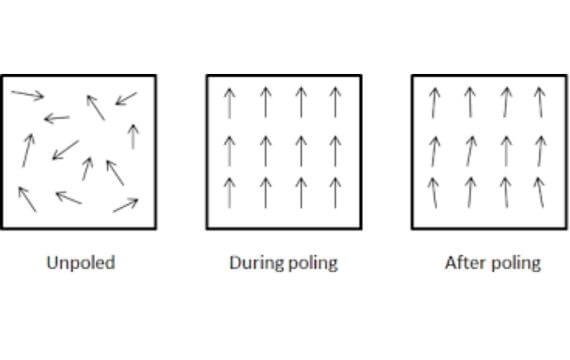
- Paramagnetism (unpaired electrons with random spins): Weak attraction without magnetic retention in metals like Titanium (Ti), Aluminum (Al), and Magnesium (Mg).
- Diamagnetism (all electrons in pairs): Weak repulsion without any retained magnetism in metals like Copper (Cu), Bismuth (Bi), and Zinc (Zn).
Titanium’s Magnetic Properties
Titanium exhibits paramagnetism by default. It refers to the metal’s weak magnetic attraction under an external field. Therefore, you can simply consider Ti non-magnetic as the distinction is minimal.
Magnetic Behavior from Atomic Structure
Magnetic susceptibility for pure Ti measures about ~+1.3 × 10⁻⁶ cm³/mol. It’s a significantly low value to consider non-magnetic. For reference, magnetic metals like iron measures ~+2.2 × 10⁻³ cm³/mol.
Magnetic Testing in the Field
On-field magnetic testing involves rare-earth magnets. And titanium shows –
- No visible attraction under normal conditions.
- Slight deflection in high-intensity magnetic fields (neodymium magnets)
- No residual magnetism after the field’s removal.
Such behavior confirms Titanium’s non-ferromagnetic nature. Meanwhile, it also reinforces the metal’s classification as practically non-magnetic for engineering applications.
Difference Between Pure Ti and Ti Alloys
Pure Titanium (CP-Ti): Pure Ti is commercially classified into Grades 1 – 4. It contains over 99% titanium with trace amounts of oxygen, nitrogen, and iron. The magnetic behavior is defined by –
- Magnetic Susceptibility: ~+1.25 × 10⁻⁴ m³/mol.
- Electron Configuration: two unpaired electrons to show weak paramagnetism.
- Residual Magnetism: None; zero retention of magnetism.
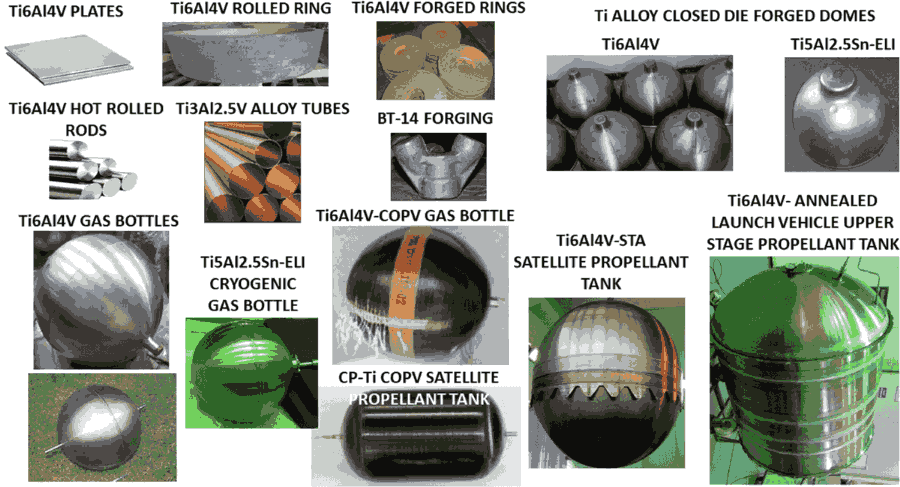
Titanium Alloys: Ti alloys have added elements like aluminum (Al), vanadium (V), iron (Fe), niobium (Nb), and molybdenum (Mo). It enhances mechanical, thermal, and sometimes magnetic properties.
| Alloy Type | Primary Composition | Magnetic Behavior | Magnetic Susceptibility (m³/mol) | Tensile Strength (MPa) |
| Ti-6Al-4V (Grade 5) | 6% Al + 4% V | Paramagnetic | ~+1.5 × 10⁻⁴ | 900 – 1200 |
| Ti-Fe | Variable Fe% | Ferromagnetic (limited) | Up to ~+10⁻³ | 700 – 1000 |
| Ti-Ni (Nitinol) | ~50% Ti + ~50% Ni | Weakly Magnetic | ~+10⁻⁴ to +10⁻³ | 500 – 2500+ |
| Ti-6Al-7Nb (Grade 23) | 6% Al + 7% Nb | Paramagnetic | ~+1.4 × 10⁻⁴ | ~950 MPa |
| CP-Ti (Grade 2) | ~99.2% Ti | Weakly paramagnetic | ~+1.25 × 10⁻⁴ | 275 – 450 |
Not to mention, Ti alloys are also commercially classified into α, β, and α+β phases. Such technical distinctions influence their magnetic and mechanical behavior.
Temperature Effect on Titanium’s Magnetism
Temperature, or more precisely, heat, plays a crucial role in Ti’s electron alignment. Higher temperatures increase atomic vibrations. It disrupts the spin alignment to reduce magnetic susceptibility.
Meanwhile, lower temperatures can mitigate thermal agitation. That’s why titanium may experience slightly increased magnetic susceptibility under colder temperatures. For instance, the susceptibility measures –
- ~+1.25 × 10⁻⁴ m³/mol at 300 K or 26.85°C (room temp).
- ~+2.0 × 10⁻⁴ m³/mol at 77 K or -196.15°C (liquid Nitrogen).
- ~+3.5 × 10⁻⁴ m³/mol at 4 K or -269.15°C (liquid Helium).
The progressive values denote a minimal-level increase with temperature drops. Nonetheless, the non-magnetic nature doesn’t change, and Ti remains non-magnetic.
Magnetic Behavior of Titanium Alloys
Alloying elements like Al, V, Fe, Ni, N, and Mo primarily enhance mechanical and thermal properties. However, they can also influence the alloy’s magnetism slightly. Key factors –
- The presence of ferromagnetic elements (Fe, Ni) increases magnetic susceptibility.
- Heat treatment and processing can alter magnetic domains and phase distribution.
Take a look at some of the most common Ti alloys’ magnetic susceptibility –
- Ti-6Al-4V (Grade 5): ~+1.5 × 10⁻⁴ m³/mol (Slightly higher).
- Ti-Fe: Up to ~+10⁻³ m³/mol (Considerably high).
- Ti-Ni (Nitinol): ~+10⁻⁴ to +10⁻³ m³/mol (Moderately to considerably high).
- Ti-6Al-7Nb (Grade 23): ~+1.4 × 10⁻⁴ m³/mol (Almost standard).
Since the values are more or less close to one another, even Ti alloys are considered non-magnetic.
Applications of Non-Magnetic Titanium
The weak paramagnetic is a strategic choice to discard magnetic interference. It provides magnetic neutrality, a high strength-to-weight ratio, corrosion resistance, and biocompatibility at once.
01. Medical + Biomedical
Hospitals worldwide use Grade 5 Ti-6Al-4V ELI for implants due to its strength and MRI compatibility. Titanium’s biocompatibility also reduces immune response and promotes osseointegration.
- Orthopedic implants: Hip and knee replacements, bone screws.
- Dental implants: Titanium posts and abutments.
- Cardiac devices: Pacemaker housings and heart valve frames.
02. Aerospace + Aviation
Over 60% of the produced/manufactured Titanium in the US goes to aerospace applications. Its non-magnetic nature ensures the uninterrupted operation of flight control systems and magnetic sensors.
- Jet engine components: Compressor blades, casings.
- Airframe structures: Fuselage panels, landing gear.
- Satellite exteriors: Thermal shielding and structural supports.
03. Electronics + Instruments
Titanium is a well-known choice for cryogenic systems and quantum computing setups. Even minimal magnetic interference can disrupt data integrity.
- Magnetic analysis instruments.
- Sensor housings.
- Electronic enclosures for high-frequency devices.
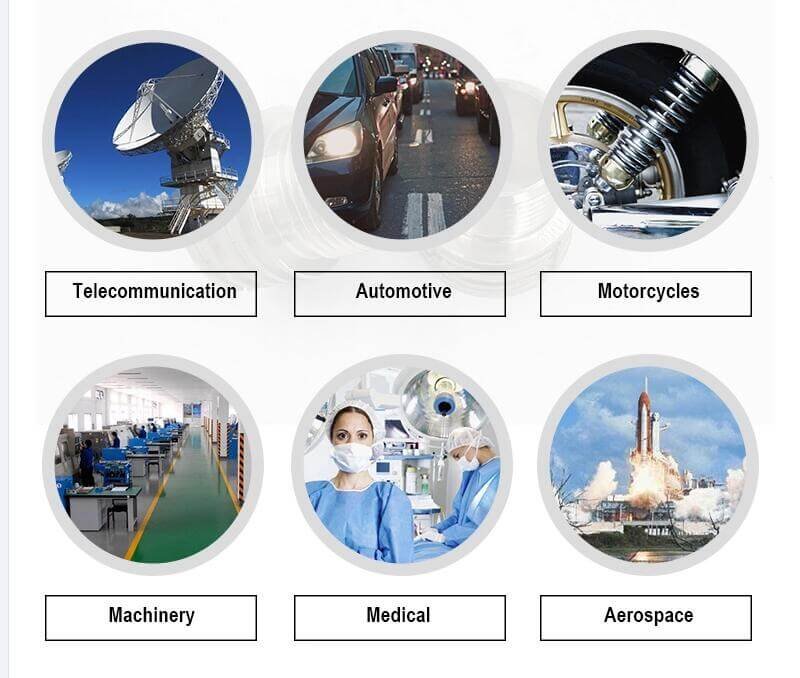
04. Marine Engineering
Titanium alloys are used in ROVs (Remotely Operated Vehicles) and subsea sensors, ensuring long-term durability and magnetic neutrality in high-pressure environments.
- Submarine hulls.
- Deep-sea exploration equipment.
- Offshore oil rig components.
05. Chemical + Nuclear
In nuclear facilities, Titanium is used for non-magnetic shielding around sensitive instruments. It can actively prevent magnetic field distortion during radiation monitoring.
- Heat exchangers.
- Acid-resistant piping.
- Nuclear waste containment vessels.
Frequently Asked Questions (FAQs)
1. Can Titanium be magnetized permanently?
2. Is Titanium magnetic enough to interfere with electronic devices?
3. Do titanium tools affect magnetic resonance imaging (MRI)?
4. Are titanium coatings magnetic?
5. Does machining titanium affect its magnetic properties?
6. How to enhance Titanium’s magnetism?
– Alloying with ferromagnetic elements.
– Surface treatments like magnetic layering or ion implantation.
– Embedding magnetic nanoparticles.
Such complex techniques are mainly applied to spintronics, magnetic separation, and smart materials. These applications need controlled magnetic behavior.
Conclusion
Titanium isn’t exactly something like steel or iron that’s known for magnetic properties. However, the weak paramagnetism doesn’t have to be a limitation. Instead, it’s more like a strategic advantage. Ti’s magnetic neutrality enables precision and safety in many applications.
Best Quality Titanium Parts are Here at HRC
Don’t let the magnetic properties confuse you about titanium parts. HRC has been leading the industry with innovative solutions and maximum precision for 17 years. Contact us to know more about our top-notch titanium parts.