Skip to content

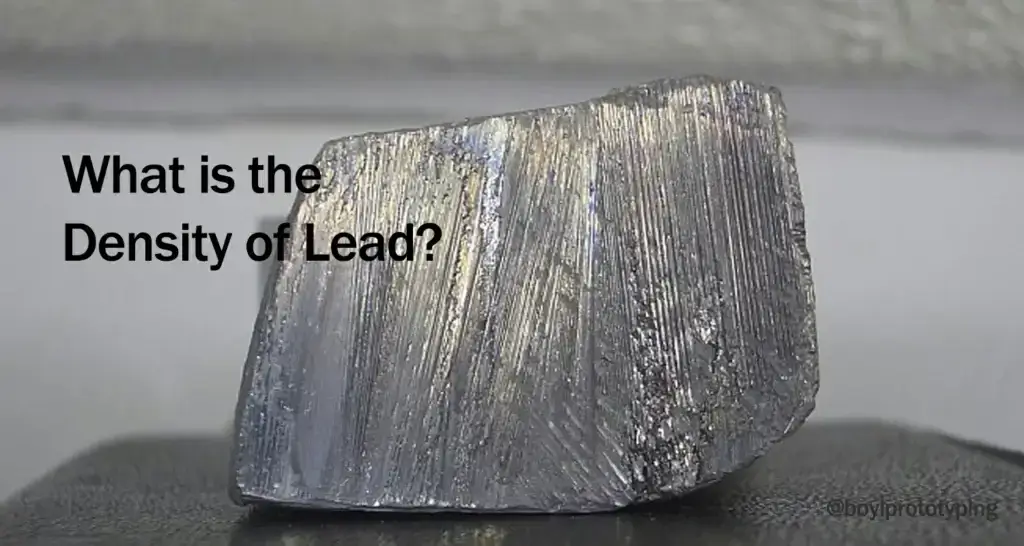
Lead (Pb), despite its well-regarded toxicity, continues to serve high-end industries due to its unique properties. Among those, lead’s relatively low melting point marks a crucial physical feature.
Understanding the melting behavior of lead is mandatory for safe handling, efficient manufacturing, and innovative applications.
Explore the science behind lead’s melting points, the exact temperatures, and the practical implications. You’ll gain a clear grasp of lead’s thermal behavior and how it adapts to contemporary needs.
What is the Melting Point of Lead?
Lead’s melting point is about 327.46°C (621.43°F) at standard atmospheric pressure. Therefore, solid lead transitions to liquid lead at approximately 327.46°C or 621.43°F at standard atmospheric pressure.
It’s a relatively low temperature compared to other alternative metals, despite being a heavy metal. It also makes Pb highly usable in industrial processes like casting, soldering, and battery manufacturing.
Melting Point Comparison: Lead vs Common Metal Alternatives
When it comes to suitable lead alternatives, manufacturers and customers mostly stick to aluminum, copper, silver, and iron based on project specifications.
| Metal | Melting point (°C) | Melting point (°F) |
| Lead (Pb) | 327.46 | 621.43 |
| Aluminum (Al) | 659 – 660 | 1218 – 1220 |
| Copper (Cu) | 1084 | 1983 |
| Silver (Ag) | 961 | 1761 |
| Iron (Fe) | 1538 | 2800 |
| Gold (Au) | 1064 | 1947.5 |
As you can see, even lightweight aluminum or heavy metals like gold have higher melting points than Pb. Such a difference is vital in precision machining and CNC manufacturing. It’s because the melting range enables proper cutting speeds, tool selection, and thermal management for custom metal components.
Why is the Melting Temperature of Lead Lower?
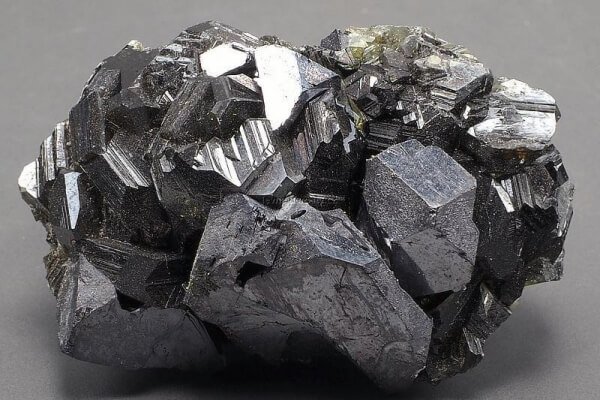
The low melting temperature comes from lead’s atomic structure, weak metallic bonding, and electron configuration. Atoms can easily break free from the core to move around within the solid chunk.
They influence how lead alloys are cast, machined, and added to specialized parts in custom component manufacturing. More specifically, dimensional accuracy and thermal stability are prioritized.
Electron Configuration: Lead’s outer 6p electrons are loosely bound, contributing weakly to metallic bonding. It’s an important factor engineers consider during precision machining.
Bond Strength: Pb’s weaker bonds mean less energy is needed to break apart. It causes a lower melting temperature. It directly impacts CNC machining tool wear and cutting efficiency.
Crystal Structure: The face-centered cubic (FCC) lattice is less tightly bound, initiating easier atomic mobility. The property is leveraged in custom casting and component prototyping.
Does/Can Lead’s Melting Point Change?
The nominal melting point is 327.46 °C (621.43 °F) at standard atmospheric pressure. It’s the baseline value for industrial CNC machining and custom metal fabrication.
Precise thermal data ensures consistent production quality. It also serves as the reference for industrial processing, safety standards, and phase-diagram calculations.
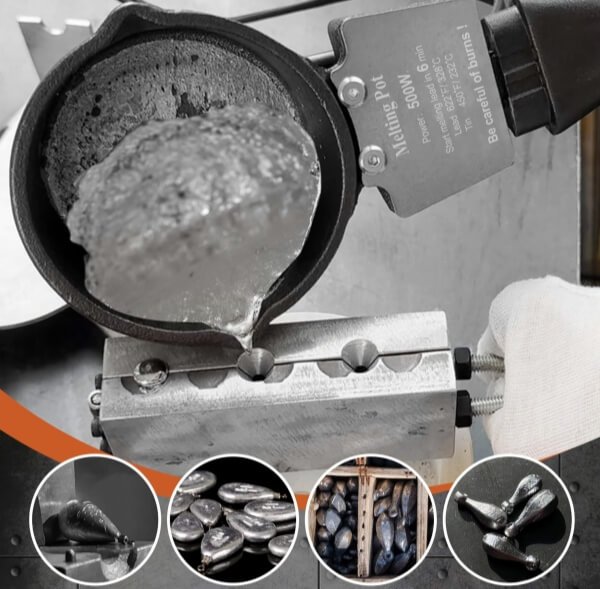
You may ask whether it’s possible to alter/deviate from the temperature. The answer is yes. Several factors can help you change the nominal melting point. Take a look at the factors below.
Core Factors to Affect Lead’s Melting Point
1. Pressure and Thermodynamics
Increased pressure raises the melting point slightly as the solid phase is denser than the liquid. You can neglect pressure effects in everyday industrial contexts. However, the shifts are massive in geological or high-pressure lab experiments.
2. Purity and Impurities
Pure lead has a sharp melting point. Impurities (tin, antimony, bismuth, or calcium) disrupt the lattice. They lower the melting point while expanding the melting range. Impure lead from informal recycling causes inconsistent melting behavior.
3. Alloying Effects
Tin, antimony, and calcium can be present as alloying elements as well. Such alloying changes the melting behavior. For instance:
Lead-Tin (Pb-Sn) Alloys: Melts at 183 °C, far below pure lead, being suitable for soldering electronics + precision-machined connectors.
Lead-Antimony (Pb-Sb) Alloys: Increases hardness and alters melting behavior in bullets + batteries. They often come with custom machining requirements.
Lead-Calcium (Pb-Ca) Alloys: Modifies melting and solidification in no-maintenance batteries with exact part tolerance for CNC machining.
4. Particle Size (Nanoscale Effects)
Lead particles exhibit melting point depression at the nanoscale. Pb nanoparticles melt at temperatures significantly lower than bulk lead, relevant in powder metallurgy and advanced materials research.
5. Defects and Microstructure
Cold working, strain, or high defect density can broaden the melting range. Rapid cooling during casting may trap impurities, altering reheating behavior. Industrial smelters carefully control cooling rates to ensure predictable re-melting cycles.
6. Atmosphere and Oxidation
Lead oxide on the surface can interfere with heat transfer. It eventually makes melting inconsistent. Controlled atmospheres or fluxes are used in industrial furnaces to stabilize melting behavior.
Applications Involving Lead Melting Point
1. Battery Manufacturing
Over 85% of consumed lead goes into lead-acid batteries. They power vehicles, backup systems, and renewable energy storage. The low melting temperature allows efficient casting of battery grids + plates to reduce energy costs.
2. Electronics and Soldering
Lead-tin alloys with a significantly lower melting temperature that pure lead is perfect for soldering delicate electronic components without damages. They also keep manufacturing costs and thermal management requirements within reach.
3. Radiation Shielding and Healthcare
Lead can serve X-ray room shielding, nuclear containment, and protective clothing when alloyed properly with other metals. Hospitals rely on lead sheets and cast bricks due to the cost-effective production of customized shielding.
4. Ammunition and Casting
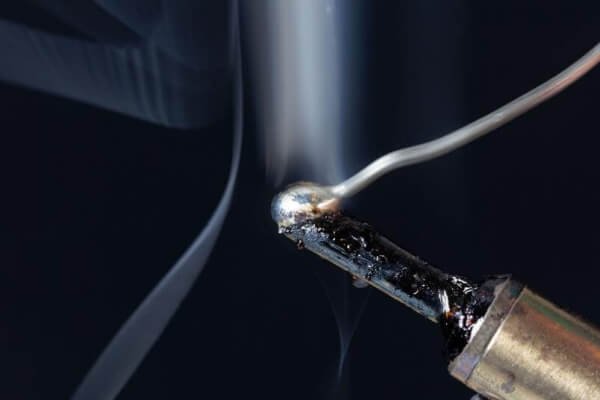
Lead’s low melting point allows easy casting of bullets, fishing sinkers, and counterweights. Many countries now restrict lead ammunition due to environmental concerns, but it remains in use for specialized applications.
Safety and Environmental Concerns
The comparatively low melting point surely makes lead easy to work with. However, lead fumes can become quite toxic when heated. Industries must enforce strict safety standards to prevent exposure.
Developed countries have phased out leaded gasoline and restricted lead-based paints due to potential health risks. Nonetheless, lead recycling (especially from batteries) remains a major global industry.
Global Perspectives: Regulation, Process Economics, Recycling
Regulatory Shifts: Many regions have moved away from lead in consumer electronics. Industrial uses persist where performance and shielding matter.
An alternative with a higher melting point can raise the energy demands and change process design. It also impacts the cost structures.
Recycling Infrastructure: Lead’s low melting temperature supports efficient closed-loop recycling for batteries. Smelters are optimized for minimal energy per ton.
Countries with robust automotive and electronics sectors balance material selection against thermal budgets. Pb’s low melt underpins specialized niches and recycling economics.
Conclusion
Overall, lead’s low melting temperature requires a balance between efficiency and responsibility. Though lead surely enables cost-effective recycling and energy savings, it also demands strict safety measures and environmental awareness.
From a growing recycling sector to regulated smelters, the same property can be an opportunity and a challenge. Lead’s low melting point is why the hazardous metal is still in use across industries. Its thermal behavior has filled the gap between accessibility and utility.
Custom Machining Available for Metal Parts at HRC
HRC holds in-depth expertise in balancing material properties and processing technologies. We offer lead and lead alloy products within a broad range that comply with ASTM standards. Our 17+ years of precision machining experience can get you the best advantages of high-performing lead components.
Do you need to figure out the right lead product for your project? Or do you need customized lead components? Contact us to get valuable insights from our material and processing experts for support.