 Skip to content
Medical Industry Solutions with HRC
HRC specializes in medical device prototyping and medical CNC machining, offering precise,
certified manufacturing solutions to support the full product lifecycle in the medical industry.
- We deliver accurate medical prototypes to speed up product development.
- HRC provides precise CNC machining for medical industry applications with strict quality control.
- Our CNC machining medical services produce complex, high-performance components efficiently.
Why Collaborate with HRC for Medical Manufacturing?
We combine advanced technology with rigorous quality standards to deliver medical components you can trust.
Quality Assurance with Certified Standards
Quality and consistency are the foundation of our medical manufacturing services. HRC operates under ISO 9001 and ISO 13485 quality management systems, ensuring every product is produced under strict process control. From raw material inspection to final testing, we maintain full traceability and rigorous documentation to meet the exacting requirements of medical-grade components.
Comprehensive Manufacturing Technologies
We combine advanced CNC machining, 3D printing, sheet metal fabrication, and wire EDM to provide comprehensive manufacturing options for medical devices and components. Whether you need a functional prototype, surgical instrument, or implant housing, HRC’s versatile production capabilities deliver precision and reliability across a range of materials and complexity levels.
Rapid Delivery with Reliable Lead Times
In the medical field, speed can be critical. HRC offers rapid prototyping and flexible production scheduling to meet urgent development timelines without compromising quality. Our streamlined workflow and automated production systems allow us to consistently deliver on time, even for complex custom projects.
Expert Engineering & Technical Support
Our engineering team brings deep expertise in medical component design and manufacturability. We provide design-for-manufacturing (DFM) advice, tolerance analysis, and material recommendations to help you refine your designs for better performance and cost efficiency.
Simple and Transparent Quotation Workflow
Getting a quote from HRC is fast and straightforward. Simply upload your CAD files and specifications, and our team will provide a detailed quotation with lead time, cost breakdown, and recommendations — all within 24 hours. No hidden fees or unclear pricing structures.
End-to-End Assistance from Concept to Production
HRC supports you through every stage of product development. From early design consultation to prototyping, testing, and full-scale production, our integrated services help accelerate your product launch while maintaining consistent quality.
From Prototype Development to Scalable Production
Our structured process ensures your medical device meets the highest standards of quality and performance.

Rapid Medical Prototyping
Turn your medical concepts into tangible prototypes quickly. Our rapid CNC machining and 3D printing services allow for the fast fabrication of components used in early functional testing or design validation.

Engineering Verification & Functional Testing
We help ensure your prototypes meet design intent and performance requirements. Tolerances, assembly fits, and functionality are verified to identify potential improvements before scaling production.

Design Validation & Pre-Production Trials
After design verification, we run small-batch pre-production trials to confirm repeatability, manufacturability, and compliance with medical-grade requirements.

Process Optimization & Production Testing
Before mass production, we fine-tune machining parameters, implement inspection checkpoints, and optimize production workflows to ensure efficiency and stability.

Full-Scale Manufacturing
Once validated, HRC transitions seamlessly into full-scale manufacturing. Our precision CNC machines, quality control systems, and experienced technicians ensure consistent production quality for large-volume medical parts.
Our Medical Manufacturing Capabilities
We employ a diverse set of advanced technologies to manufacture complex aerospace components.
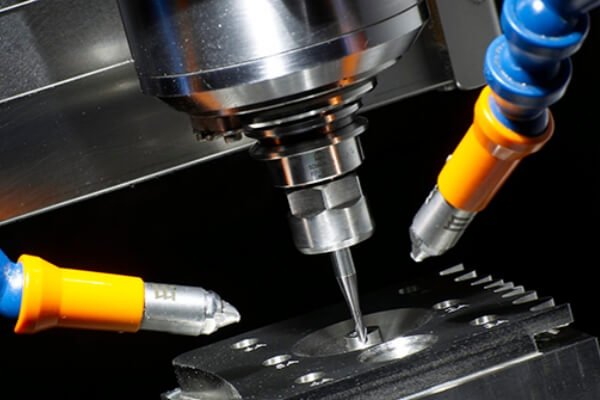
High-Precision CNC Machining
We offer 3-, 4-, and 5-axis CNC machining for medical components requiring extreme precision. Applications include surgical tools, orthopedic implants, diagnostic housings, and medical device parts with tight tolerances down to ±0.005mm.

Medical-Grade 3D Printing
Ideal for rapid prototyping or low-volume production, our 3D printing solutions support biocompatible and sterilization-friendly materials such as PEEK, ULTEM, and medical-grade resins. Perfect for ergonomic design testing and patient-specific models.
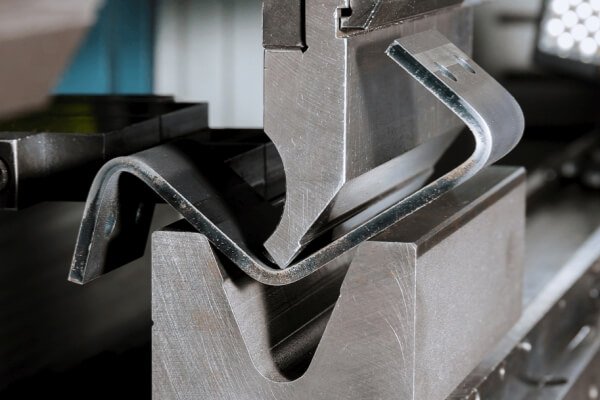
Sheet Metal Fabrication
HRC’s precision sheet metal services are used to create medical enclosures, chassis, and custom instrument casings. We offer laser cutting, bending, and welding with smooth edges and clean finishes suitable for sterilization.
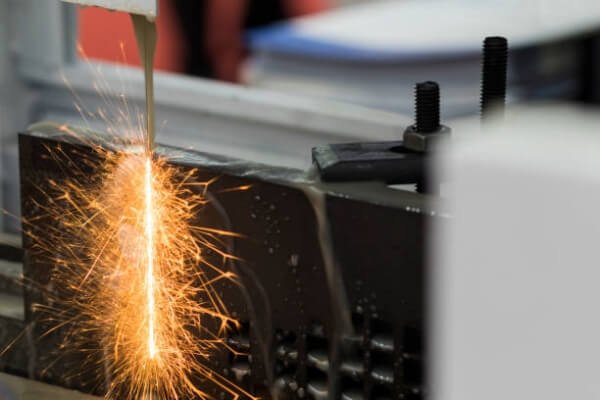
Wire EDM & Micromachining
For intricate parts and micro-features, wire EDM and micromachining deliver unmatched accuracy. This is especially useful for surgical tools and components that require sharp edges, fine holes, or ultra-small features
Materials for Medical Applications
HRC works with a wide range of certified medical-grade materials to ensure safety, biocompatibility, and performance. Common materials include:
| Material | Best Technologies | Benefits | Example Parts |
|---|---|---|---|
| Steel |
|
|
|
| Aluminum |
|
|
|
| Titanium |
|
|
|
| PA (Nylon) |
|
|
|
| PMMA |
|
|
|
| Silicone |
|
|
|
Surface Finishes for Medical Components
Surface finishing enhances both the functionality and aesthetics of medical parts. Common finishes include:
Anodizing is widely used for aluminum medical components such as housings, handles, and instrument enclosures. It forms a durable oxide layer that improves corrosion and wear resistance while maintaining excellent biocompatibility. HRC offers both clear and colored anodizing with tightly controlled film thickness to ensure consistency and smooth surfaces ideal for sterilization.
Sandblasting provides a clean, uniform matte finish that helps remove surface imperfections and machining marks. It is particularly useful for titanium, stainless steel, and aluminum parts, offering an attractive, non-reflective surface that improves grip and reduces glare. For medical devices, sandblasting ensures a hygienic surface suitable for further treatments such as anodizing or coating.
Electroplating adds a protective metal coating that enhances corrosion resistance, conductivity, and durability. In medical applications, it is often used for components that require both functionality and a clean, professional appearance. HRC provides nickel, chrome, and gold plating options with precise control over layer thickness to ensure uniform coverage and excellent adhesion.
A brushed finish creates fine, linear textures on the surface of metals, giving medical parts a professional, satin-like appearance. This finish helps conceal minor surface imperfections and provides a smooth yet non-slip texture—ideal for surgical instruments, housings, and device casings that require both aesthetics and function.
Powder coating is a durable and eco-friendly surface treatment commonly used for external medical equipment, control panels, and housings. It offers excellent resistance to chemicals, scratches, and wear. HRC provides a range of color and texture options, helping you achieve both functional protection and visual appeal while maintaining compliance with medical safety standards.
Laser engraving is an essential marking process in medical manufacturing, providing precise, permanent, and contamination-free identification. It is ideal for marking serial numbers, scales, or logos on metal and plastic medical components. HRC’s laser engraving process ensures sharp contrast, smooth edges, and no risk of ink or residue contamination — meeting medical device traceability requirements.
Request Your Custom Medical Quote Today!
FAQs – Medical Manufacturing
What is a medical prototype?
A medical prototype is a physical or functional model of a medical device used for testing, design validation, and regulatory review.
What does medical prototype design involve?
Medical prototype design includes concept development, CAD modeling, material selection, and prototype fabrication to meet regulatory and functional requirements.
How do you create a prototype medical device?
We develop a prototype medical device using advanced CNC machining, 3D printing, and prototyping techniques to ensure accuracy and performance.
How does rapid prototyping for medical devices work?
Rapid prototyping for medical devices uses CNC machining, 3D printing, and other technologies to quickly produce functional models for testing and design verification.
What is a medical device prototype and why is it important?
A medical device prototype is an early model of a medical product used to test design, functionality, and manufacturability before full-scale production.
What are the benefits of producing medical device prototypes?
Medical device prototypes help validate design, reduce development risks, and shorten time-to-market for medical products.
How can I find a reliable medical device prototype manufacturer?
Choose a medical device prototype manufacturer with ISO certifications, proven industry experience, and expertise in both prototyping and full-scale manufacturing.
How do I choose among medical device prototyping companies?
Look for experience, quality certifications, fast turnaround, and the ability to handle both medical prototype design and manufacturing requirements.
