Skip to content

For high-quality advanced manufacturing, precision CNC machining has become vital. Many industries, such as aerospace, automotive, medical, and electronics, have begun to incorporate it to produce high-quality, accurate parts. Let’s understand what precision CNC machining is and how it transforms industries.
Fundamentals: CNC Machining & Precision Concepts
It is ideal to begin with fundamentals. Hence, we will first explore the basic concepts of CNC machining and precision.
What is CNC Machining?
CNC (Computer Numerical Control) machining is a manufacturing method that utilizes pre-programmed software. This software controls all the movements made by the tools. Hence, CNC machining automates the process of cutting raw material into specific shapes.
Conventional machining methods depend on human operators for the movement of machines. However, CNC machining provides you with precise, repeatable control over movement along several axes. By using advanced CNC machining, you can program toolpaths that allow you to automate the cutting and shaping of materials.
With CNC machining, you can achieve efficiency and consistency while drilling simple holes or even intricate aerospace parts.
What is Precision Machining?
Precision machining ensures that machines are manufactured with tight tolerances and the best finishes. These tolerances must be as small as a few microns. So, the parts that have to work together under demanding conditions pair up perfectly to perform smoothly.
Industries such as medical implants and aerospace seek to avoid even the slightest deviations, instead turning towards precision machining. Precision machining provides them with safety and performance.
What is “Precision CNC Machining”?
Precision CNC Machining combines CNC automation with precision machining to ensure highly accurate results. To reduce error, precision CNC uses advanced multi-axis systems and rigid fixturing. It also benefits from advanced tooling and closed-loop feedback systems, which contribute to accuracy as well.
Precision machining is ideal when manufacturing parts with intricate geometries. It is also helpful when dealing with repeatability of machining operations and varying industry-grade surface finishes.
Precision CNC Machining Techniques & Processes
Precision CNC machining has specific techniques and processes that are important to know.
Precision CNC Milling
Below you can find the techniques and processes for Precision CNC milling.
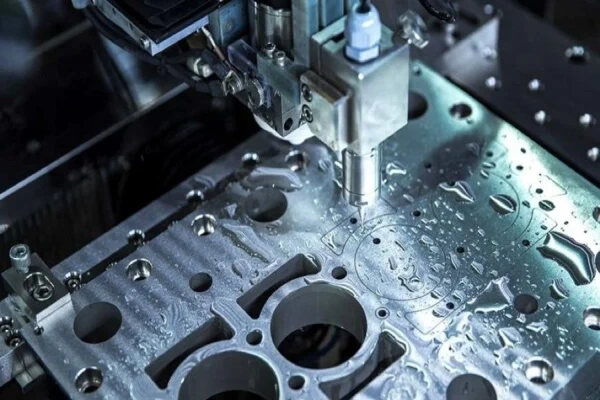
● Single/Multi-Axis Milling
When it comes to single or multi-axis milling, the 3-axis machines can move along the X, Y, and Z axes. The addition of a 4th axis allows it to rotate; however, 5-axis machines can cut in virtually any direction. This versatility minimizes the number of setups and chances for errors.
● High-Speed and Micro-Milling
High-speed and micro-milling require the use of small-diameter cutters, vibration control techniques, and advanced CAM strategies. This is needed in the fabrication of medical devices that have fine, detailed features like a microchannel.
● Toolpath Planning and Optimization
By using CAM software, the step-over, feed rates, and spindle speeds can be balanced to control the material removal and intended surface quality. By defining optimal chip load through CAM software, tool life and accuracy can be improved.
● Surface Finish and Scallop Height
Scallop heights are the small ridges of material that are left on the surface. If the height is small, this means your surface is smooth. The larger ridges left behind may be reduced with compensation techniques, like fine step-overs and finishing passes, to improve the finish.
Precision CNC Turning / CNC Precision Turning
Below, you can find the techniques and processes for Precision CNC turning.
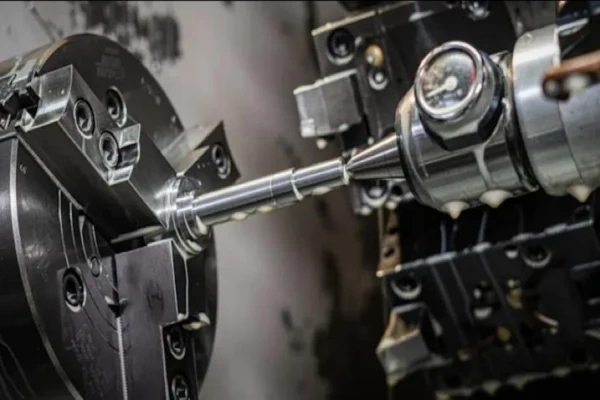
● CNC and Swiss-Style Lathes
With CNC lathes, you can rotate the workpiece to cut symmetric parts. Swiss lathes offer additional support to produce long, slender parts with less deflection.
● Applications
Cylindrical components like bushings, shafts, pins, and threaded parts are perfect for these applications.
● How Precision is Achieved
High spindle accuracy, rigid fixturing, and the right backlash compensation guarantee consistent concentricity and diameter control.
Combined / Hybrid Machining (Mill-Turn, Turn-Mill)
Hybrid machines are great at eliminating errors from reclamping as they combine milling and turning in a single setup. In cases where parts require both prismatic and cylindrical features, like in aerospace housings or automotive shafts, hybrid machines are best.
Other Precision Methods / Finishing Steps
To achieve ultra-high tolerances, CNC parts need to be post-processed. The finishing steps include.
- Grinding for ultra-flat surfaces
- For hole accuracy and smoothness, honing and lapping can be done
- EDM (Electrical Discharge Machining) for hard materials and intricate shapes
- Superfinishing for mirror-like surfaces.
Fixturing, Tooling & Workholding
For precision machining, holding a part is critical. If a part is misaligned or held loosely, the vibrations and misalignment will ruin tolerances. Workholding can be done with vacuum fixtures, magnetic chucks, or custom jigs. Some also incorporate adaptive fixturing, which adjusts based on the part’s geometry.
Calibration, Metrology & Feedback
For precision work, the most critical factor is real-time monitoring. This means that touch probes and laser scanners can get the measurements and do the required adjustments while the part is being machined.
Closed-loop feedback systems are able to automatically make adjustments for thermal expansion, tool wear, or deflection. Coordinate Measuring Machines (CMMs) will check the completed piece for compliance with the stated specifications.
In most cases, this will be done with sufficient precision to within a few micrometres.
Challenges, Limitations & Trade-offs
Precision machining also comes with different challenges and limitations. Being aware of these can help you make a wise decision. Let’s have a look at these:
● Cost and Complexity
Additional time, advanced machines, and more extensive inspections are required to achieve micrometer tolerances, and this will, of course, increase the costs.
● Thermal Expansion and Vibration
Even a small temperature change can trigger precision dimension shifts. To ensure precision, climate control, and vibration-damped bases are used.
● Tool Wear, Chatter, and Deflection
With time, the cutting tools degrade due to wear and tear. Sufficient monitoring and the use of high-quality coated tools will certainly reduce tool downtimes.
● Material Constraints
Cutting hard alloys such as titanium is a considerable challenge, and plastics may warp under heat. Specialized tools do help overcome these challenges.
● Volume vs. Cost
Ultra-precise machining will most likely be done on small batches, prototypes, or critical parts, as the costs will increase dramatically if scaled to high volumes.
Applications & Use Cases
Precision CNC machining is being utilised in various industries around the world. Hence, its demand is increasing day by day. Below are a few common applications of precision CNC machining:
● Aerospace and Defense
Turbine blades, structural components, and landing gear parts are critical to the industry. All of these demand strong, lightweight, and precise machining with tight tolerances to operate well.
● Medical and Biomedical
Each implant, prosthetic, surgical instrument, and other medical device must be precise, safe for use, biocompatible, and of patient-grade quality.
● Automotive
Brake systems, fuel injectors, and transmission gears are crucial for precision machining, enhancing quality and safety.
● Electronics and Semiconductors
CNC machining is ideal for the creation of housings, heat sinks, and micro-scale components, as they require consistency.
● Other Industries
Integrated CNC machining has proven helpful to the industry of Robotics, Optics, and Instrumentation, where precision and dimensional stability are vital.
How to Choose a Precision CNC Machining Service Provider
Selecting a good precision CNC machining service provider makes a huge impact on the outcome. Let’s break down some tips to help you choose the best option.
● Technical Capabilities
Look for a provider that offers advanced machining capabilities, such as 5-axis, mill-turn, micro-machining, and hybrid capabilities. With these technical capabilities, you can meet complex geometries and high-precision requirements.
● Certifications
Look for a provider that has verified certifications, such as ISO 9001, AS9100, or industry-specific certifications, to ensure standards. These are proof that the company is compliant with internationally recognized quality standards.
● Inspection Equipment
Your provider must have advanced quality control tools, like in-house CMMs, surface testers, and laser metrology. With this equipment, you can ensure precise measurements and defect detection. To show commitment to quality, a provider must have a reliable inspection setup installed.
● Material Expertise
A reliable machining provider must have work experience with metal types like aluminum, stainless steel, titanium, and brass, as well as engineering plastics. With diverse knowledge of materials, a provider can ensure correct material selection for your project needs.
● Lead Times and Scalability
Look for a provider that offers quick prototype delivery, as well as the ability to scale production. If a provider offers flexible lead times, you won’t have many issues when demand starts to grow. It is better to opt for a provider that is comfortable with scalability, as this helps partnerships last longer.
● Case Studies
You should always check real-world examples to confirm the provider’s expertise in the industry, along with its reliability. This can help you analyse whether the provider is trustworthy or not. You can also evaluate how the provider solved challenges in the past. This will give you a better idea of what to expect.
Conclusion
Industries continue to advance with dependable and high-performing components thanks to precision CNC machining. Working with specialists allows businesses to optimize their investments while ensuring scalable and accurate results. Contact HRCCNC to learn how we can make your designs with exceptional accuracy.