Skip to content
Titanium is an amazingly strong, corrosion-resistant material with a high melting point, making it essential for aerospace, medical, and industrial applications. Its knowledge of its melting temperature can help engineers and manufacturers select appropriate methods and alloys when designing high-performance systems.
What Temperature Does Titanium Melt?
The melting point of titanium is the temperature at which it transitions from solid to liquid while maintaining structural stability. This knowledge can be used to guarantee the accuracy of processes in high-temperature conditions.
Pure Titanium Melting Point
Pure titanium melts at 1,668°C (3,034°F). This is much higher than most common metals, such as iron and aluminum, giving it an advantage in strength and heat resistance.
Boiling Point of Titanium
Titanium has a boiling point of 3,287°CC (5,949 °F). Such an unprecedented limit highlights its ability to withstand extreme temperatures in which other metals could evaporate or deteriorate.
Basic Properties of Titanium Metal
Titanium is a transition metal that is extremely lightweight, tougher than normal, and less prone to heat and corrosion.
Physical Characteristics
The density of titanium is approximately 4.5 g/cm 3, roughly 60 percent of that of steel. Though lighter, it retains the same strength, making it a better fit for weight-sensitive structures such as aircraft frames and medical implants.
Key Thermal Properties
Titanium is stable over a wide range of temperatures. It has a thermal conductivity of approximately 21.9 W/m·K, and its low coefficient of thermal expansion ensures dimensional accuracy even when heated.
Why Does Titanium Have Such a High Melting Point?
Its atomic structure and bonding strength are key, making it resilient to breakdown even under extreme heat.
Atomic Structure Explanation
Metallic and covalent bonds hold the titanium atoms tightly. Such a two-fold character of bonding increases thermal and structural stability, requiring a lot of energy to break the network of atoms.
Crystal Lattice Energy
The alpha form of titanium has a hexagonal close-packed (HCP) lattice, giving it high interatomic cohesion. The high melting temperature and overall hardness of this crystal structure are due to its tightly packed arrangement.
Titanium Alloys and Their Melting Points
Depending on the metal mix, alloys alter titanium’s melting point and mechanical behavior.
Common Titanium Alloys
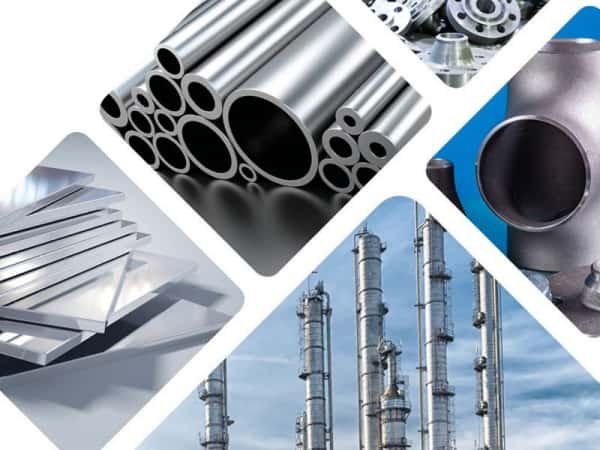
- Ti-6Al-4V (Grade 5): Ti-6Al-4V is the most commonly used alloy, which fuses with 1,600 °C to 1,660 °C. It has a good balance of weldability, corrosion resistance, and strength.
- Ti-6Al-4V ELI (Grade 23): A purer form of Grade 5, ELI (Extra Low Interstitial), is slightly lower melting, but more biocompatible, and is commonly used in surgery and dental practice.
- Other common alloys, including Ti-3Al-2.5V and Ti-6Al-2Sn-4Zr-2Mo, have melting ranges of 1,600 to 1,670 °C, which are modulated by the alloying elements.
How Alloying Elements Affect the Melting Point
Adding aluminum usually increases strength without significantly lowering the melting point. Vanadium and molybdenum stabilize certain phases, which can slightly reduce the melting point. These factors influence titanium’s thermal stability and processing characteristics.
Comparison: Titanium vs. Other Metals
Titanium is one of the most heat-resistant structural materials due to its high melting point, which is higher than that of most industrial metals. Let’s take a closer look at its comparison across different categories.
Metals with Lower Melting Points
Most widespread engineering metals are fused at far lower temperatures than titanium. For instance:
- Aluminum (660 °C / 1,220 °F): Great conductivity, poor heat resistance, not suitable for high environments.
- Copper (1,085 °C / 1,985 °F): This is very conductive and is readily softened by heat.
- Iron (1,538 °C / 2,800 °F): Hard but easily oxidized, and becomes soft as it approaches its melting temperature.
- Nickel (1,455 °C / 2,651 °F): Good high-temperature metal, but not yet at the level of titanium.
Titanium is superior to these metals because it remains strong and structurally stable close to its melting point.
Metals with Similar Melting Points
Other metals approach the thermal endurance of titanium, but none have unlimited thermal endurance:
- Chromium (1,907 °C / 3,465 °F): Brittle and more likely to corrode.
- Cobalt (1,495 °C / 2,723 °F): Comparable strength, but heavier and less resistant to corrosion.
- Molybdenum (2,623 °C / 4,753 °F): It has a higher melting temperature than titanium, yet it is heavier and much harder to machine.
These metals are mostly used as substitutes for titanium, as they are used in high-temperature operations but do not offer titanium-like lightweight or oxidation-resistant properties.
Metals with Higher Melting Points
Some of the refractory metals melt at even greater temperatures:
- Tungsten (3,422 °C / 6,192 °F): The hardest and brittle of the metals, and the densest.
- Rhenium (3,180 °C / 5,756 °F): Excellent heat resistance, but rare and prohibitively expensive.
- Tantalum (3,017 °C / 5,462 °F): Unbelievably stable but extremely expensive, and reacts violently with oxygen.
Titanium cannot compete with these metals in terms of pure melting temperature. Still, it offers a balance of heat resistance, machinability, and cost-effectiveness, making it widely useful in industry.
The sweet spot between ordinary and refractory metals is why Titanium is the most widely used in aerospace and high-performance engineering..
Factors Affecting Titanium’s Melting Temperature
The following are some of the variables that affect the melting behavior of titanium in practice.
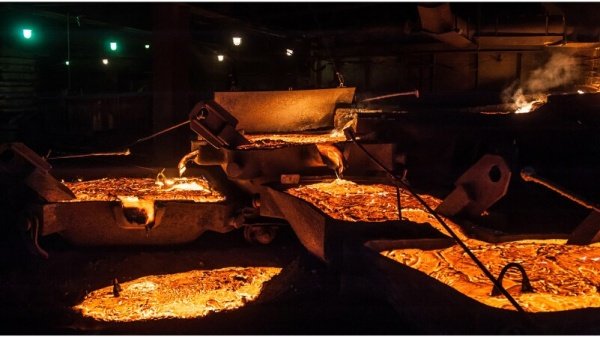
Purity Levels
Contaminants such as oxygen or nitrogen can slightly raise the melting point but also increase brittleness, reducing ductility.
Alloying Composition
The various alloying elements alter the melting range by stabilizing certain crystalline phases; therefore, composition control is a necessary part of precision casting.
Processing Methods
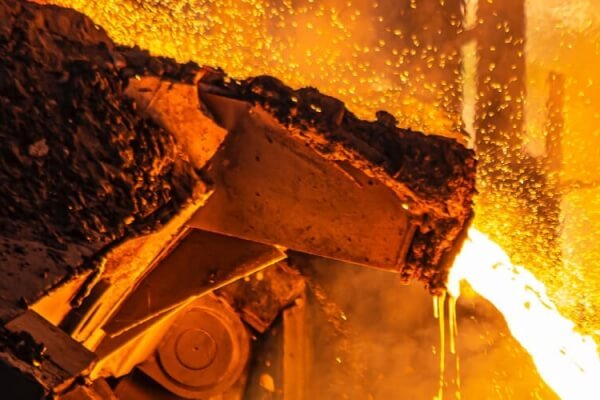
Controlled conditions are ensured by vacuum arc remelting (VAR) and electron beam melting (EBM) to prevent contamination, thereby guaranteeing uniform melting temperatures and purity.
Industrial Applications Based on High Melting Point
Titanium’s heat resistance enables its use in industries that require durability and resistance to high temperatures.
Aerospace Industry
Titanium is used in jet engines, turbine blades, and airframes due to its strength-to-weight ratio and ability to withstand high temperatures, making these components safe even in extreme conditions.
Heat Exchangers and Thermal Systems
Titanium is resistant to seawater and chemicals, and is therefore used in condensers, heat exchangers, and desalination plants.
Refractory Metal Applications
Titanium is not a refractory metal in its pure form, but it can be used at high temperatures and is often a cost-efficient substitute.
Medical Applications

Titanium has been found useful in implants, bone screw, and dental devices due to its biocompatibility and stability at sterilization temperatures.
Other Industrial Uses
The other application of titanium is in chemical processing tools, automobile exhaust systems, and even sports equipment that require strength and heat resistance.
Processing and Manufacturing Considerations
Titanium is reactive to oxygen and nitrogen at high temperatures, and it must be melted using specialized methods.
Melting Challenges
Titanium reacts rapidly with oxygen when molten, so it must be handled in a vacuum or inert atmosphere to prevent contamination and oxidation.
The Kroll Process
Titanium is commonly produced by the Kroll process, in which TiCl4 (titanium tetrachloride) is reduced to sponge titanium using magnesium. The product is refined and remelted again to make an alloy.
Fabrication Methods
Common industrial methods for ensuring the purity and reliable mechanical properties of titanium billets and ingots include electron beam melting (EBM) and vacuum arc remelting (VAR).
Titanium Melting Point vs. Stainless Steel
This higher melting point gives titanium a clear advantage in demanding applications.
Direct Comparison
- Titanium: 1,668°C (3,034°F)
- Stainless Steel: 1,400-1,530°C (2,552–2,786°F)
Titanium is better suited for applications at higher temperatures and is typically used in aerospace and thermal systems. Stainless steel has found extensive application due to its affordability and resistance to corrosion at lower temperatures.
Performance Implications
Titanium is stronger than stainless steel at high temperatures, maintains its dimensions, and has high fatigue resistance. This benefit warrants its increased prices in high-performance settings.
How to Improve the Melting Point of Titanium
Innovations in research and manufacturing are increasing the thermal performance and material stability of titanium.
Purity Control
One of the best methods to enhance the melting behavior of titanium is to maintain high purity. Refining methods remove oxygen, nitrogen, and other impurities that may alter its crystalline structure. The outcome is increased uniformity of melting properties and enhanced heat-mechanical integrity.
Modification of the Crystal Structure
The thermal stability of Titanium can be tailored by adjusting its cooling rate and crystal orientation during solidification. Slow, gradual cooling minimizes internal stress and refines grain boundaries, thereby improving high-temperature strength and thermal tolerance.
Strategic Alloying
Adding elements such as titanium, aluminum, zirconium, or molybdenum can also slightly increase its oxidation resistance and high-temperature stability. These components enhance the bonding of atoms on the lattice and reduce brittleness. Balanced alloy design provides high thermal limits without compromising machinability.
High-tech Methods of Processing
Current manufacturing techniques, including vacuum melting, additive manufacturing, and powder metallurgy, help preserve uniform microstructures. These processes allow easy control of temperature and remove contamination, improving overall consistency and thermal tolerance of titanium. They are particularly useful in the manufacture of aerospace-grade material.
Thermal Stability and Dimensional Control
The thermal stability of titanium is very high, so it can be used in high-energy applications without failure. It exhibits predictable expansion behavior; thus, it is used in applications where precision is critical.
Advantages of Low Thermal Expansion
Titanium has a low thermal expansion coefficient (8.6 × 10^-6/K /K), meaning it does not deform or change dimensions when heated. This property helps maintain structural accuracy in engines, turbines, and medical implants subjected to thermal loads.
Service Temperature Range
With a service temperature range of 280-600°C, titanium allows engineers to design components that withstand stress and retain their shape even under extreme conditions, making it an ideal material for heat-resistant applications.
Conclusion
Aerospace, medical, and industrial applications depend on titanium due to its high melting point and durability. Advanced manufacturing techniques such as HRCCNC ensure precise CNC machining of titanium components for these applications.