Skip to content
Transparent Aluminum has a scientific name, Aluminum Oxynitride (AlON). The name does not refer to metallic aluminum that is made transparent, but rather is a polycrystalline ceramic capable of transmitting light just like glass can. To understand why this material is unique, let’s look at its chemistry.
The Science Behind Transparent Aluminum
To gain more insight into transparent aluminum, we should know its base compound.
What is Aluminum Oxynitride (AlON)
Aluminum Oxynitride (AlON) is a polycrystalline ceramic material that comprises aluminum, oxygen, and nitrogen. Unlike ordinary aluminum (opaque), AlON is transparent, covering a broad spectrum of light, from visible light to infrared. This property is obtained through a rigorous synthesis and sintering procedure.
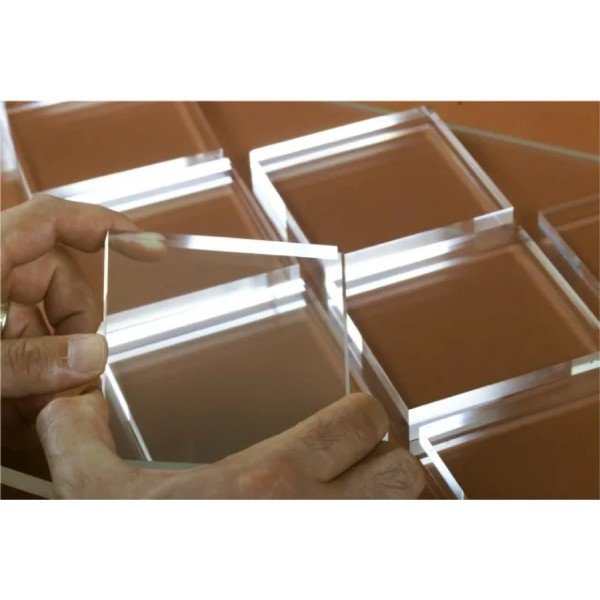
At the microscopic level, AlON exhibits a cubic spinel crystal structure that allows for the passage of light while maintaining exceptional strength. This makes it ideal for use in devices that require both transparency and high impact resistance.
Mechanical, Thermal & Physical Properties
AlON has characteristics that make it an ideal material for many high-tech applications:
Mechanical:
- Hardness: AlON measures approximately eight on the Mohs scale, which is far harder than steel (4-4.5) and superior to most traditional safety glasses.
- Impact Resistance: The material exhibits a high ability to absorb impact force. This makes it ideal for lightweight transparent armor and bulletproof vests.
Thermal: AlON is extremely heat-resistant, up to approximately 1200°C, and has a melting point of around 2150°C. Thus, it is applied in very harsh conditions, like aircraft or aerospace gear.
Physical:
- Density: About half that of typical bulletproof glass, resulting in lighter vehicles and improved energy efficiency.
- Optical Transparency: AlON transmits about 80-85% of visible light and is partially transmissible in the mid-infrared range. This allows infrared sensors and viewing equipment to function even when enclosed within this material.
How It Differs from Ordinary Aluminum
Regular aluminum is a soft, opaque metal commonly used in construction, manufacturing, and the consumer goods industry. “Clear aluminum” (AlON) is not a metal but a ceramic compound, made up of aluminum, oxygen, and nitrogen, combining metallic and non-metallic elements to create an entirely different material in terms of properties.
- Transparency: The aluminum is metallic and reflects and blocks light, making it have a shiny yet opaque surface. AlON, conversely, can transmit light, just like glass, because of its special crystal structure.
- Chemical bonding: In metallic aluminum, the atoms are joined by metallic bonds, which allow the free movement of electrons. In the case of AlON, the atoms are stabilized by ionic and covalent bonds, which are inherent to ceramic materials, offering enhanced levels of hardness and thermal stability.
- Uses: The aluminum metal is frequently used in buildings, mechanical parts, aircraft skins, or electrical equipment. AlON is used in systems where there should be a high light transmission and strength, like protective windows, optical sensors, infrared observation equipment, as well as transparent shields of military vehicles.
History & Origins: From Fiction to Reality
The idea of transparent aluminum did not originate in the laboratory.
Transparent Aluminum in Popular Culture
The science fiction movie Star Trek IV: The Voyage Home (1986) gave rise to the focus on transparent aluminum. In the film, engineer Scotty sold the recipe for the so-called Transparent Aluminum to a robust and transparent substance to create a massive whale tank.

Even though it is only fictional, this scene popularized the idea of Transparent Aluminum and made scientists attempt to make it a reality during the decades to come.
Development & Commercialization
Aluminum Oxynitride (AlON) was developed by Surmet Corporation (USA) in the late 1980s and early 1990s. First, AlON was designed for the US Department of Defense, where the aim was to replace sapphire, which is challenging yet costly and complex to fabricate in vast quantities.
Surmet has managed to commercialize the AlON after several years of enhancing the technology of production so that it can produce bigger and easier-to-handle material sheets at a cheaper cost.
Manufacturing & Processing
The AlON manufacturing process is what makes it so expensive and unique:
Powder Processing & Sintering
The AlON process is initiated by the generation of high-purity aluminum oxide (Al₂O 3) and aluminum nitride (AlN) powder. These two elements are measured in specific proportions so that the correct chemical equation takes place in the AlON formation process.
This mix is then exhaustively blended and pressed to the required mould, either in a sheet form, a dome, or an optical window form. Then, sintering, which involves heating the material at very high temperatures, usually higher than 1800°C, in a nitrogen-based atmosphere to avoid oxidation, is done.
In this step, the tiny particles in the material connect, sealing the gaps and creating a dense polycrystalline structure. And it is this which makes AlON have its unusual combination of high mechanical strength and efficient transmission of light.
Sintering is highly sensitive; even small changes in temperature, pressure, or gas composition can cause defects that reduce transparency.
It is also the reason why AlON is not only costly but special, since to produce an optically grade material, the process should be controlled to within a near absolute accuracy.
Grinding, Polishing & Finishing
When the sintering is done, AlON is of the fundamental shape and structure, but has not yet attained transparency for optical applications. At this stage, the material undergoes detailed surface treatments such as grinding, polishing, and finishing.
In the grinding process, the material is sliced and moulded to the desired thickness, size, and technical specifications. This measure is essential to be able to achieve high mechanical accuracy in AlON parts that are particularly required in areas like defence or aerospace, where a minor mistake may lead to poor performance.
Then, polishing of the material takes place with high-precision methods. This process determines the optical clarity of the AlON, as any minor defect on the surface would result in scattering of light, which would decrease the transmission of light.
By a multi-step polishing procedure, the AlON surface can become a light-transmittance of over 80 per cent in the visible light spectrum, which matches the conventional glass, with much greater hardness and strength.
Lastly, finishing operations are carried out to machine AlON into sophisticated forms (domes, missile windows, or rounded covers to protect their observation devices). Due to such superior finishing technologies, AlON can respond flexibly to the high demand of high-performance industries, such as defence and aerospace, up to precision optics.
Limitations & Challenges
Some of the main limitations include:
- High manufacturing costs: Manufacturing AlON requires specialized equipment, high-tech furnaces, and precise polishing processes. These factors make manufacturing costs much higher than materials such as glass or sapphire.
- Difficult to scale: Producing large AlON sheets without internal defects is very difficult, leading to limitations on product size and increasing costs.
- Long processing times: From powder preparation, sintering, to polishing, it takes a long time. This slows down production and limits commercial output.
- Complex machining and finishing: AlON is very hard and brittle, so shaping or polishing requires highly skilled techniques, which can easily increase costs and lengthen the process.
- Limited range of applications: Due to its high cost and complex manufacturing process, AlON is currently mainly used in fields where performance and durability take precedence over price, such as defense, aerospace, and scientific optical equipment.
Applications & Use Cases
Among the key areas of application of AlON are:
- Military & Defense: AlON is thinner than conventional laminated bulletproof glass and also much lighter for vehicles. Bulletproof glass, transparent armor panels for armored cars, and domes covering missile sensors are commonly built using this material.
- Aerospace & Space: cockpit glass, infrared sensor window, and protective coating over observation or satellite are made using AlON. AlON is resistant to impact, high temperature, and abrupt pressure changes without altering its light transmission across a broad spectrum.
- Industry / Research: AlON finds application as optical windows on high-pressure chambers, protective coatings on sensors in hostile environments, and sub-assemblies in laser systems. This is an abrasion-resistant material that is also chemical-resistant and has better mechanical strength than glass or plastic, particularly in harsh working environments.
- Consumer Technology (Potential): Even at its current high production cost, AlON may find its way into future technology products such as phone screens, camera lenses, watch faces, and high-quality optical devices. As production technology improves and costs decrease, AlON could replace traditional tempered glass in consumer electronics.
Conclusion:
Transparent Aluminum (AlON) is being used in many industries due to its superior durability and optical properties. At HRCCNC, we provide precision CNC machining solutions for both traditional and advanced materials. Contact us to realize your ideas.