Skip to content
Why Choose Zinc Machining?
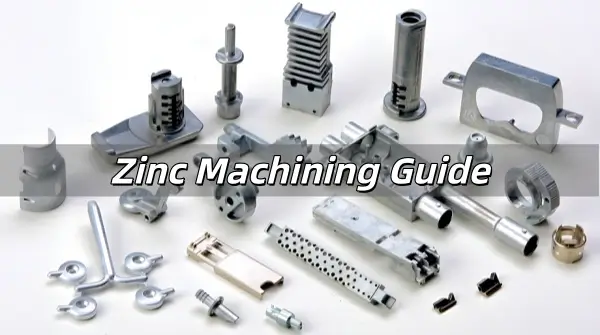
Zinc machining has become increasingly popular in modern manufacturing due to its excellent balance of cost, performance, and processability. Compared to many other metals, zinc alloys offer superior castability, stable dimensional accuracy, and efficient production cycles, making them ideal for both high-volume production and precision components.
One common question is: Is zinc alloy strong? The answer depends on the specific alloy. While pure zinc is relatively soft, engineered zinc alloys—such as Zamak and ZA series—can achieve impressive strength and wear resistance suitable for structural and functional applications.
What Is Zinc and Zinc Alloy?
To understand machining, it’s essential first to clarify what zinc alloy is and what zinc alloy metal is.
Zinc is a metallic element with the chemical symbol Zn, widely used in galvanization, die casting, and alloy production. However, pure zinc is rarely used alone in machining due to its softness.
So, what is zinc alloy material? Zinc alloys are formed by combining zinc with elements such as aluminum, copper, and magnesium to enhance strength, hardness, and corrosion resistance.
These zinc alloys are widely used in manufacturing due to:
- Low melting temperature
- Excellent fluidity
- Good dimensional stability
Interestingly, zinc is often processed in industrial melting systems, sometimes referred to as a zinc melting pot, especially in die casting environments where controlled molten metal handling is critical.
Common Machinable Zinc Alloy Types
Zamak Series Alloys
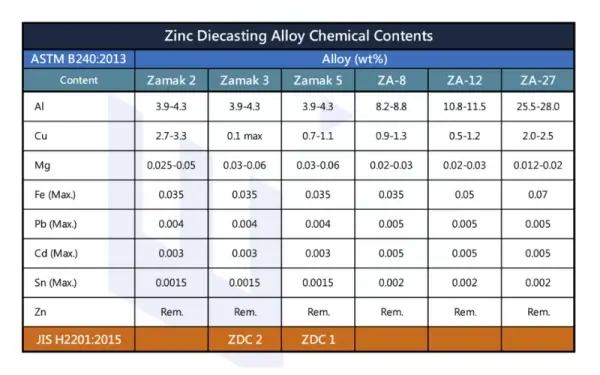
Zamak alloys are the most widely used zinc-based die casting materials. They typically contain zinc, aluminum, magnesium, and copper.
- Zamak 3: Excellent dimensional stability and surface finish
- Zamak 5: Higher strength and hardness than Zamak 3
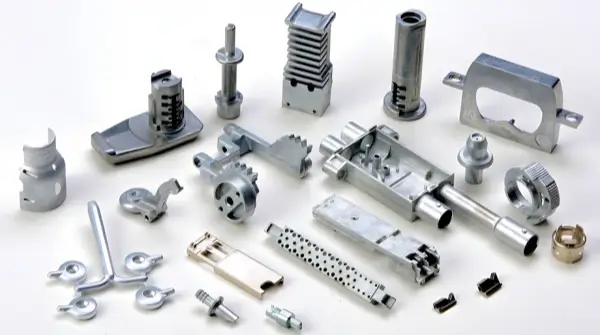
These alloys are ideal for precision parts such as housings, brackets, and consumer hardware.
ZA Series Alloys
ZA (Zinc-Aluminum) alloys contain higher aluminum content, resulting in improved mechanical performance.
- ZA-8: Good balance of strength and castability
- ZA-22 / ZA-27: Higher strength and wear resistance
These are often used in demanding mechanical applications where durability is critical.
High-Performance and Specialty Zinc Alloys
Advanced alloys such as EZAC and ACuZinc provide enhanced creep resistance, tensile strength, and long-term stability.
They are suitable for:
- Automotive components
- Load-bearing structures
- High-temperature environments
Copper-Zinc Alloys (Brass)
Brass is a well-known copper-zinc alloy that offers excellent machinability and corrosion resistance. It is commonly used in fittings, valves, and decorative components.
Complete Guide to Zinc Machining Processes
CNC Machining
CNC machining is suitable for the mass production of high-precision, complex-structured zinc alloy parts. Zinc alloy has low hardness (Brinell hardness 40-80HB), excellent cutting performance, low tool wear, and high processing efficiency. Using special cutting fluid can effectively avoid tool sticking and ensure machining accuracy and surface quality.
Turning
Turning is the core processing method for zinc alloy rotating parts, applicable to parts with circular cross-sections such as shafts, sleeves, and disks. When turning zinc alloy, the chip shape is stable and not easy to accumulate, with moderate plasticity, not easy to crack or deform, and a smooth surface with Ra1.6-3.2μm can be obtained. In actual operation, sharp turning tools should be selected (rake angle 15°-20°, relief angle 8°-12°), and the cutting speed should be controlled at 80-200m/min and the feed rate at 0.1-0.2mm/r; for high-precision parts, rough turning + finish turning process can be adopted to ensure IT7-IT8 grade tolerance. At the same time, the clamping force should be controlled, and soft jaws or special fixtures should be preferred to prevent workpiece deformation and runout.
Milling
Milling is suitable for processing complex-structured zinc alloy parts (planes, grooves, cavities, etc.). Due to the softness of zinc alloy, problems such as tool sticking and scratches are prone to occur, so it is necessary to focus on controlling tools and cutting parameters. Select sharp and polished high-speed steel or cemented carbide milling cutters (4-6 teeth), control the milling speed at 60-150m/min, feed rate at 0.05-0.2mm/tooth, and depth of cut at 0.3-1.5mm; supply sufficient emulsion or cutting oil, and adopt layered milling for complex cavities to reduce tool load and ensure machining accuracy.
Drilling
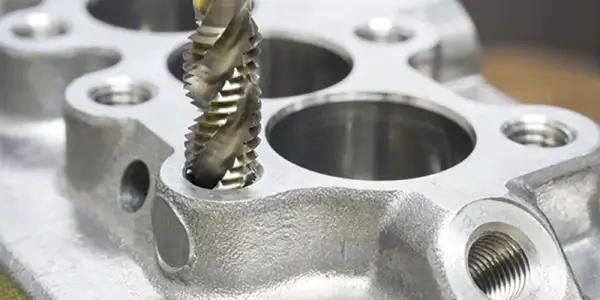
Zinc alloy drilling is low in difficulty, high in efficiency, and low in tool wear, suitable for processing through holes, blind holes, thread bottom holes, etc. The core is to ensure smooth chip removal. Select sharp twist drills with 118°-120° (chip flutes can be regrinded), control the drilling speed at 50-120m/min and feed rate at 0.1-0.2mm/r; for deep holes (depth: diameter >5:1), step drilling and chip cleaning are required, cutting fluid is used to protect the cutting edge, and the clamping is firm to prevent hole position deviation. For high-precision requirements, reaming can be performed subsequently.
Electrical Discharge Machining (EDM)
Electrical Discharge Machining (EDM) is suitable for complex, special-shaped structures, difficult-to-machine cavities, and high-precision micro-structures of zinc alloys, especially for mold manufacturing and precision part finishing. Zinc alloy has good electrical conductivity. During processing, material is removed by high-frequency pulse discharge. Copper electrodes (for high precision) or brass electrodes (for mass processing) are preferred. Control the pulse width at 10-50μs, interval at 50-200μs, and peak current at 5-50A, which can achieve ±0.005mm accuracy and Ra0.2-0.8μm surface roughness; ensure clean and sufficient kerosene or special working fluid, and control the processing speed to reduce electrode wear.
Comparison of Forming Processes
Die Casting
Die casting is the core process for mass production of complex and high-precision zinc alloy parts, with high efficiency, good consistency, and low cost. It is widely used in automotive, electronic, and home appliance industries, mainly divided into hot chamber and cold chamber types.
Hot chamber die casting (gooseneck type) is the first choice for zinc alloy die casting. The shot chamber is directly connected to the melting furnace, with a fast production cycle (100-300 pieces/hour), suitable for low melting point zinc alloys such as Zamak series (380-420℃). The casting dimensional accuracy is IT8-IT10 grade, with good surface quality, which can be directly assembled; the disadvantage is high equipment cost, fast wear of shot components, and regular maintenance is required.
The shot chamber of cold chamber die casting is separated from the melting furnace, which is only suitable for medium and high melting point, high-strength special grades of zinc alloys. It has low equipment wear and maintenance costs, but slow production cycle (50-150 pieces/hour). Oxide inclusions are easy to generate during the transportation of zinc alloy liquid, affecting product quality.
Gravity Casting
Gravity casting (sand mold gravity casting) is suitable for small and medium batch, rapid trial production of zinc alloys. The mold cost is more than 50% lower than that of die casting. The casting dimensional accuracy is IT10-IT12 grade, surface roughness is Ra6.3-12.5μm, which requires subsequent processing; the production efficiency is low (10-50 pieces/hour), and defects such as air holes and shrinkage holes are easy to occur, so the melting and pouring processes must be strictly controlled.
Sand Casting / Investment Casting
Both sand casting and investment casting are suitable for large or complex-structured zinc alloy parts with low precision requirements, adapting to different production needs.
Sand casting uses sand as the mold, which can produce large and complex castings of several kilograms to dozens of kilograms. The mold cost is extremely low, suitable for single piece and small batch production; the disadvantages are low efficiency, poor precision (IT12-IT14 grade), rough surface, easy air holes and sand holes in castings, and large subsequent processing volume.
Investment casting (lost wax casting) is suitable for small and medium-sized complex parts with medium precision. The casting accuracy is IT9-IT11 grade, surface roughness is Ra3.2-6.3μm, which does not require a lot of subsequent processing; the disadvantages are complex process, long cycle and high cost, which is not suitable for mass production.
How to Select the Right Zinc Alloy Material?
Selection Based on Strength and Performance
The strength and performance of zinc alloy depend on its chemical composition, and the type should be selected according to the application scenario: for high-load and high-precision scenarios (automotive load-bearing parts, mold cavities), ZA series (tensile strength 250-400MPa) and ACuZinc alloy (tensile strength 350-450MPa) are preferred, which have both wear resistance and stability; for general scenarios (electronic casings, daily hardware), Zamak series (tensile strength 180-250MPa) are selected, with low cost and convenient processing.
Selection Based on Machining Process
Selecting the type according to the machining process is the key to improving efficiency and quality. Different processes are suitable for different zinc alloy grades, as follows:
1. CNC Machining: Zamak 3 and Zamak 5 are preferred, with uniform texture, excellent cutting performance, low tool wear and high precision, suitable for high-precision complex parts; Zamak 3 has better dimensional stability, and Zamak 5 has slightly higher strength and hardness.
2. Die Casting: Zamak series are preferred, with low melting point, good fluidity, high forming efficiency and excellent casting quality, suitable for mass production; Zamak 3 is a general grade, Zamak 5 has slightly higher strength, and Zamak 7 has better corrosion resistance.
3. High-Load Parts: ZA series and ACuZinc alloy are preferred, with high strength and wear resistance, which can bear high load and impact, suitable for automotive gearbox gears, high-temperature load-bearing parts, etc.
Selection Based on Cost and Production Volume
Zinc alloy has significant cost advantages and is suitable for mass production: the material price is lower than that of copper, stainless steel and some aluminum alloys, with moderate density (6.6-6.8g/cm³), which saves more material usage; the melting point is low (380-450℃), the melting energy consumption is low, and the processing cycle is fast, which can greatly reduce the unit product cost. Zinc alloy is preferred for mass production, and Zamak or ZA series can be selected according to precision requirements for small-batch customization to avoid cost waste.
Selection Based on Application Industry
Select the type according to industry needs to ensure the adaptability and service life of parts. The suitable grades for different industries are as follows:
1. Electronic and Electrical Industry: Zamak 3 and Zamak 5 are preferred, with stable dimensions, high precision and moderate electrical conductivity, suitable for electronic casings, connectors, radiators, etc.
2. Automotive Industry: ZA series and ACuZinc alloy are selected for high-load key components, and Zamak series are selected for ordinary interior parts and decorative parts, balancing performance and cost.
3. Decoration Industry: Brass (corrosion-resistant and beautiful) or electroplated zinc alloy (low cost and excellent decorativeness) are preferred, suitable for furniture hardware, lamps, jewelry, etc.
Common Surface Finishing Processes
Surface finishing is a key link in zinc alloy processing, which can improve decorativeness, corrosion resistance and wear resistance. The type should be selected according to the use of parts to adapt to different scenario needs.
Electroplating
Electroplating is a common surface finishing process for zinc alloys. Metal coatings (such as zinc plating, chrome plating, nickel plating, etc.) are deposited by electrolysis to improve corrosion resistance and decorativeness. Hot-dip galvanizing (10-50μm) has strong corrosion resistance, suitable for outdoor and humid environments; electrogalvanizing (5-20μm) has a smooth surface, suitable for electronics and daily hardware; chrome plating is wear-resistant and bright, nickel plating is conductive and corrosion-resistant, and gold plating is suitable for high-end electronics and jewelry. Parameters must be strictly controlled to avoid coating defects.
Chromate Conversion Coating
Chromate conversion coating (passivation treatment) can form a 0.5-2μm passivation film on the surface of zinc alloy, which has both corrosion resistance and electrical conductivity, suitable for electronic parts (connectors, radiators). The process is simple, low-cost and can be processed in batches. The passivation film is colorless or light yellow, which does not affect the appearance; the disadvantage is low surface hardness, easy to scratch, and not suitable for wear-resistant scenarios.
Powder Coating
Powder coating forms a uniform 20-100μm coating through electrostatic spraying + high-temperature baking, which is wear-resistant, corrosion-resistant, rich in color and flat in appearance, suitable for automotive interiors and outdoor decorative parts. The coating has strong adhesion, environmental protection and no pollution, but high cost and long cycle, not suitable for high-precision complex parts (the coating affects assembly accuracy).
Painting
Painting is used for appearance customization and auxiliary protection of zinc alloy parts, with low cost, simple operation and various colors, suitable for small-batch customized parts (decorative parts, small mechanical parts). The mainstream is environmentally friendly, water-based paint. The disadvantage is that the coating has poor wear resistance and corrosion resistance, and is prone to sagging and color differences. The process must be strictly controlled to avoid scratches and humid environments.
Comparison Between Zinc Alloy and Other Metals
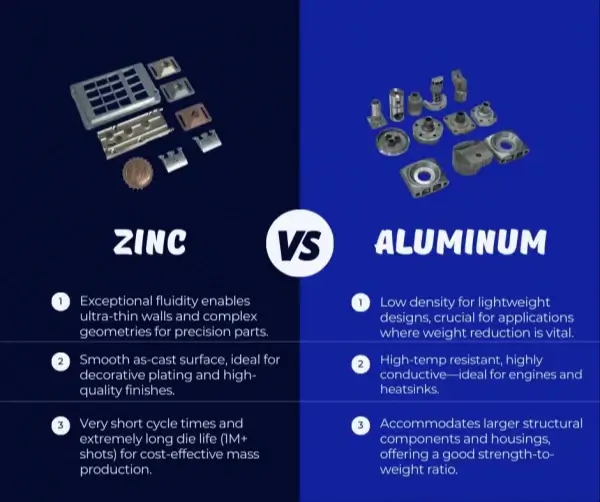
Zinc Alloy vs Aluminum Alloy
Both zinc alloy and aluminum alloy are commonly used light metals with significant performance differences, and the type should be selected according to part requirements:
Advantages of zinc alloy: high casting precision (IT8-IT10 grade), good fluidity, low melting point (380-450℃), low melting and processing cost, excellent cutting performance, low tool wear, and efficiency 20%-30% higher than that of aluminum alloy.
Advantages of aluminum alloy: light weight (2.7g/cm³), high specific strength, suitable for lightweight parts; a natural oxide film can be formed on the surface, and the corrosion resistance is better than that of untreated zinc alloy, suitable for automotive lightweight and aerospace fields.
Zinc Alloy vs Steel
Zinc alloy and steel have great performance differences and completely different application scenarios. The core differences are as follows:
Advantages of zinc alloy: low processing difficulty, good cutting performance, low tool wear and cost; inherent basic corrosion resistance, excellent casting performance, and can mass produce complex parts.
Advantages of steel: high strength (300-1000MPa+), heavy weight, strong wear resistance, suitable for high-load structural parts, heavy mechanical parts and wear-resistant components (gears, bearings).
Zinc Alloy vs Copper
The core differences between zinc alloy and copper focus on cost, electrical conductivity and processing performance. The key points of selection are as follows:
Advantages of zinc alloy: low cost (only 1/3-1/2 of copper), excellent cutting and casting performance, high processing efficiency, low tool wear, and suitable for mass production.
Advantages of copper: excellent electrical conductivity (conductivity 58S/m, much higher than 16S/m of zinc alloy), good corrosion resistance and decorativeness, suitable for conductive parts (wires, connectors) and decorative parts.
Summary Comparison Table
| Performance Indicator | Zinc Alloy | Aluminum Alloy | Steel | Copper |
| Strength | Medium (180-450MPa) | Medium (200-500MPa) | High (300-1000MPa+) | Medium (250-400MPa) |
| Weight | Medium (6.6-6.8g/cm³) | Light (2.7g/cm³) | Heavy (7.85g/cm³) | Heavy (8.96g/cm³) |
| Cost | Low | Medium | Medium | High |
| Machinability | Excellent | Good | Moderate | Good |
Key Considerations for Zinc Alloy Machining
Material Selection
Material selection is the foundation of zinc alloy machining, which needs to be comprehensively matched according to strength, scenario, process and cost: ZA series and ACuZinc alloy are selected for high load and high precision; Zamak series are selected for general scenarios; grades with strong corrosion resistance are selected for humid environments and matched with surface treatment; Zamak series are selected for mass die casting, and Zamak 3 and Zamak 5 are selected for small-batch high precision to avoid cost waste caused by blind pursuit of high performance.
Process Matching
Process matching needs to be combined with part design requirements: turning is selected for rotating parts, milling and CNC machining for complex structures, EDM for special-shaped cavities, and die casting for mass complex parts; CNC, turning and EDM are selected for high precision (IT7-IT8 grade), die casting and milling for medium precision (IT9-IT11 grade), and sand casting and gravity casting for low precision (above IT12 grade); die casting and CNC mass machining are selected for mass production, and milling, turning and investment casting for small-batch customization.
Cost Control
Cost control runs through the entire production process: optimize blank design to reduce material waste, select types reasonably to avoid cost redundancy, and recycle chips for secondary use; optimize processing parameters and adopt automatic equipment to improve efficiency, and arrange production plans reasonably to improve equipment utilization; strictly control melting and operation processes, strengthen quality inspection, and reduce waste and rework costs.
Surface Finishing
Surface finishing needs to balance function and cost: electroplating and powder coating are selected for high corrosion resistance requirements, chromate conversion coating and nickel plating for high conductivity requirements, and chrome plating and powder coating for high wear resistance requirements; electroplating, powder coating and painting are selected for high decorativeness requirements, and chromate conversion coating for ordinary internal parts; strictly control process quality to avoid defects, select appropriate coating thickness according to scenarios, and eliminate over-processing.
Conclusion
Zinc machining offers a highly efficient and cost-effective solution for producing precision components across various industries. By understanding what zinc alloy material is, selecting appropriate zinc alloys, and optimizing machining processes, manufacturers can achieve excellent performance and quality.
For common concerns like does zinc turn your skin green, the answer is generally no for properly coated or alloyed zinc products. Discoloration usually results from oxidation or reactions with sweat, which can be minimized through surface treatments.
Overall, zinc remains a versatile and practical material in modern manufacturing, combining machinability, affordability, and performance in one solution.
FAQs:
Zinc vs Steel: Which Is Better?
Zinc and steel serve different purposes in manufacturing. Zinc alloys are easier to cast and machine, offering excellent corrosion resistance and lower production costs. Steel, on the other hand, provides significantly higher strength and load-bearing capacity.
For lightweight, complex, or high-volume parts, zinc alloys are often preferred. For structural or heavy-duty applications, steel remains the better choice.
Is Zinc an Alloy?
No, zinc itself is a pure metallic element with the chemical symbol Zn. However, in most industrial applications, zinc is used to create zinc alloys by combining it with aluminum, copper, or magnesium to improve its mechanical properties.
What Is Zinc Alloy (zink alloy / zincalloy / zinc allo)?
A zinc alloy is a material composed primarily of zinc combined with other elements to enhance strength, hardness, and corrosion resistance.
Variations like zink alloy, zincalloy, or zinc allo are common misspellings but refer to the same material. These alloys are widely used in die casting, automotive components, electronics, and hardware products.
Are Zinc Alloys Magnetic?
No, zinc alloys are generally non-magnetic. Zinc itself does not exhibit magnetic properties, and most alloying elements used with zinc also do not create magnetism.
However, if a zinc component contains steel inserts or contaminants, slight magnetic behavior may be observed.
What Is Zinc Molecular Structure?
Zinc has a hexagonal close-packed (HCP) crystal structure at room temperature. This structure influences its mechanical behavior, including moderate strength and limited ductility compared to face-centered cubic (FCC) metals like aluminum.
What Is the Boiling Point of Zinc?
The boiling point of zinc is approximately 907°C (1665°F). Its relatively low boiling point, combined with a melting point of about 419°C (786°F), makes zinc highly suitable for die casting and high-efficiency manufacturing processes.
What Are Zink Alloys?
“Zink alloys” is simply a misspelling of zinc alloys. These materials are widely used in industries due to their:
- Excellent castability
- Good surface finish
- Cost-effectiveness
- Corrosion resistance