Skip to content

CNC milling plays a key role in modern manufacturing. It is a precise subtractive process and a core technology in industrial production. Industries such as precision machinery, aerospace, medical devices, automotive, and consumer products all rely on it.
This process uses computer control systems and automated cutting tools. It delivers high accuracy and consistent results for custom parts. It supports both small batch prototyping and large-scale production. As product designs become more complex and tolerance demands grow tighter, it becomes important to understand milling principles, workflows, machine types, material choices, machining capabilities, and cost structure.
Engineers, developers, and purchasing teams all benefit from this knowledge. It helps them improve production plans, control product quality, manage budgets, and keep delivery schedules on track.
This article provides a complete overview of CNC milling services. It combines theory with practical insights. The goal is to offer a clear guide from concept to real application. With this knowledge, you can make informed decisions before placing an order and avoid issues such as quality defects, budget overruns, and delivery delays.
What is CNC Milling?
CNC milling, also called computer numerical control milling, is a classic subtractive manufacturing process. It starts with a solid workpiece and runs on digital programs that drive the machine. High-speed rotating cutting tools remove extra material from the part to form the final shape. This method differs clearly from additive processes such as 3D printing.
It can often complete cutting, cavities, holes, and finishing in one setup. The whole process follows precise coordinates and tool paths. Engineers and programmers define cutting parameters during programming, which allows optimization for accuracy and deformation control.
This process works with metals, plastics, and engineering composites. It offers advantages such as tight tolerances, repeatability, and surface finish control. Before you explore machine selection and cost, you need to understand the core definition and process differences of CNC milling. This section explains how material removal works and outlines the key features that make it a leading technology in modern precision manufacturing.
Basic Concept and How It Removes Material
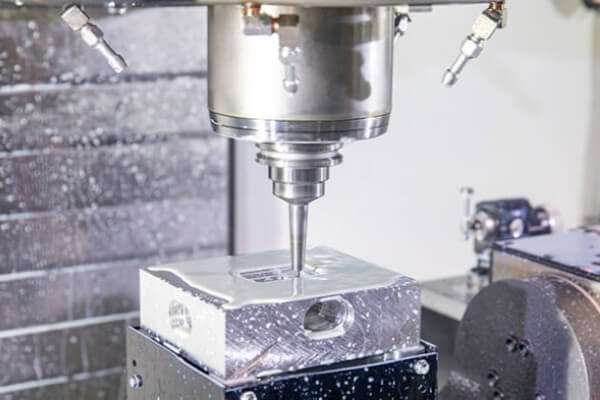
CNC milling is a widely used subtractive process based on computer control. It starts from a solid blank and runs according to preset programs. Multi-flute cutting tools rotate at high speed and follow planned paths to remove extra material layer by layer. This process stands in contrast to additive manufacturing, such as 3D printing, since it shapes parts through material removal.
Machines move accurately along multiple axes and support side milling, face milling, and contour milling. They can handle cutting, slots, holes, cavities, and surface finishing. They can also machine inclined surfaces and complex curves. Engineers can control machining parameters with high accuracy, which helps reduce the risk of deformation and errors.
This method supports metals, plastics, and engineering composites. It delivers high-dimensional accuracy and consistent results. With strong capability for complex structures, CNC milling has become a core process due to its ability to achieve tight tolerances and complex geometries.
Key Features That Make CNC Milling Popular
CNC milling stands out in modern manufacturing because of its strong overall advantages. It delivers high machining accuracy and keeps tight control of tolerances. It also produces good surface quality.
The process offers high repeatability and runs under full program control. It reduces human error during operation. In batch production, parts remain consistent in quality. The machine can also complete drilling, slotting, and contour machining in one process.
Production stays flexible across different needs. It can form complex structures in one setup and switch machining plans quickly. It supports single part customization, small batch prototyping, and large-scale production.
This process works with a wide range of materials, including industrial metals, hardened steel, and engineering plastics. It keeps a stable performance and offers strong versatility. It meets the demand for precision parts across many industries and holds strong value in manufacturing.
How Does CNC Milling Work?
CNC milling is not a single cutting action. It is a complete process that runs from design to machining. The workflow starts with digital design. Engineers use CAD software to create drawings and build 3D models.
During design, they consider use cases, structural strength, and machining features. They refine details and key parameters to improve the structure.
Good design avoids hard-to-machine areas and sets proper fillets, chamfers, and wall thickness. These choices improve manufacturability from the start. The process also includes CAM programming, machine setup, and actual machining. Each step, from modeling to programming to machine operation, affects part accuracy, production cost, and lead time.
A clear understanding of this workflow helps improve product design. It also makes it easier to work with machining suppliers. Teams can handle part customization, sourcing, and quality control with better efficiency.
Designing a Part with CAD Software
The CNC milling process begins with building a 3D digital model. Engineers use CAD software to create 2D drawings and 3D part models. They define dimensions, tolerance standards, and surface requirements during modeling. They also consider structural strength, assembly fit, and real machining conditions. Design for manufacturability plays an important role at this stage. Engineers avoid dead corners, narrow slots, and sharp internal angles.
They plan fillets, chamfers, and wall thickness in a proper way. This helps prevent issues such as thin-wall deformation. A well-prepared design reduces the difficulty of programming and machining. It lowers production risks, improves efficiency, and helps control overall cost. It also builds a solid base for mass production.
Converting Files into CNC Programs
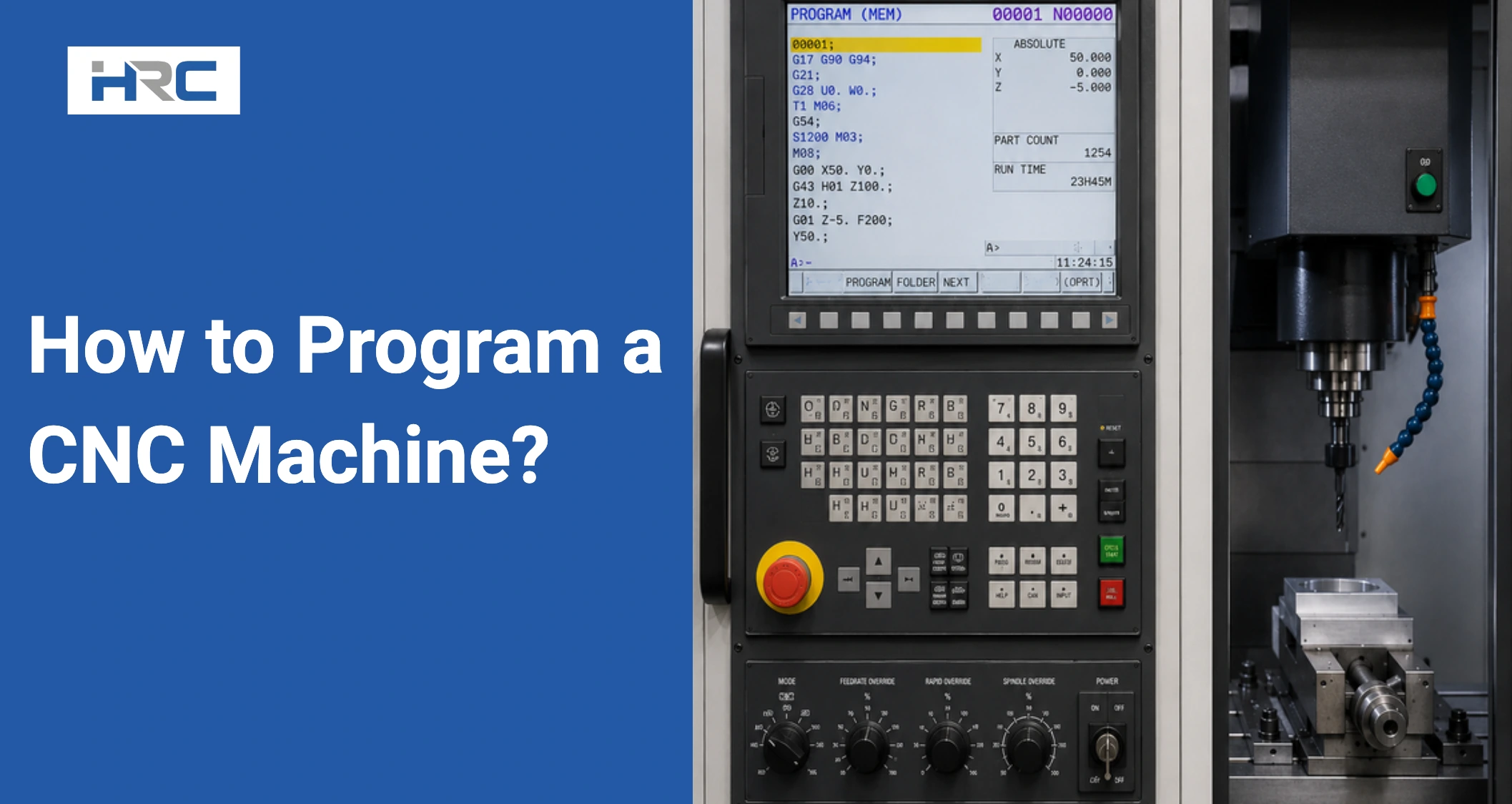
After the CAD design is complete, engineers import the 3D model into CAM software for programming. The software plans tool paths and cutting parameters based on part geometry, material, and accuracy needs. Key settings include spindle speed, feed rate, cutting depth, and machining sequence. Post-processing then converts the program into machine-readable G-code and M code. These codes control motion paths, tool changes, and coolant functions.
High-quality programming can optimize cutting paths and reduce idle movement. It also lowers tool wear, improves material use, and shortens machining time. A stable and well-planned program helps ensure good surface quality and high machining efficiency.
Machine Setup and Machining Process
After loading the program, operators prepare the machine before machining starts. They fix the workpiece with proper fixtures and clamp it securely. They set the work coordinate system and define the machining origin. They also choose suitable tools based on material and process needs, then complete tool installation and parameter setup. Stable clamping prevents movement and vibration during machining and helps maintain accuracy.
Once everything is ready, the machine runs automatically according to the program. The spindle drives the tool to cut at high speed. The process moves through rough machining, semi-finishing, and finishing, removing material step by step. Coolant is applied during machining to control cutting force and temperature. Some machines include probes for in-process measurement and error compensation. Proper setup and process control help prevent deformation and surface defects and ensure stable part quality.
Types of CNC Milling Machines
Different CNC milling machines offer different levels of capability, accuracy, efficiency, and application range. Machine selection not only sets the upper limit of part machining, but also directly affects production cost and delivery time.
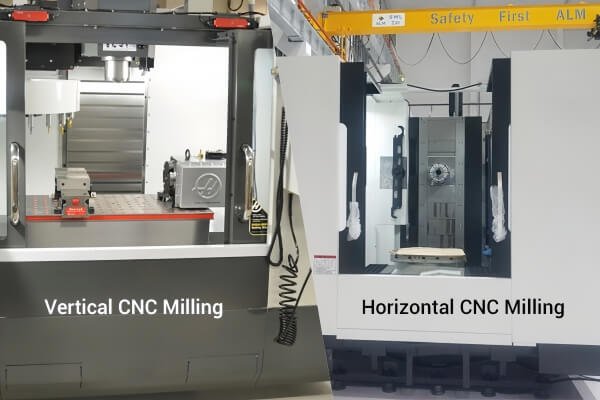
Common milling machines fall into two main types based on spindle direction: vertical and horizontal. These two types differ clearly in structure and application. Vertical machines place the spindle in a vertical position. They feature a simple structure and easy operation. They suit surface machining, slotting, cavity work, and standard contour machining. Horizontal machines arrange the spindle in a horizontal position. They offer higher rigidity and better chip removal. They suit large housings, molds, and heavy cutting tasks. In addition, three-axis and five-axis machines show a clear gap in capability. Multi-axis machines play a key role in machining complex geometries.
This section compares the core differences and application scenarios of each machine type. It helps you choose the right equipment for your needs.
Vertical vs Horizontal Milling Machines
CNC milling machines are mainly divided into vertical and horizontal types based on spindle layout. Each type shows clear differences in structure and use.
Vertical milling machines use a vertical spindle layout. The spindle axis stays perpendicular to the worktable, and the tool cuts from top to bottom. The structure stays simple and compact, and the operation remains easy. The machining area stays clear, so operators can observe the process directly. Workpiece clamping stays simple and does not require a complex setup. This type suits surface machining, slotting, cavity milling, and standard contour work. It works especially well for plate parts, small to medium components, and mold cavities. As the most common type, it serves a wide range of general milling tasks and meets most standard machining needs.
Horizontal milling machines use a horizontal spindle layout. The tool cuts into the workpiece from the side. The machine offers stronger rigidity and higher cutting capacity. Gravity helps remove chips, which improves heat dissipation. This reduces heat buildup, limits thermal deformation, and extends tool life. These machines often pair with rotary tables and support multi-face machining in one setup. They deliver high material removal rates and strong, heavy cutting performance. They suit large housing parts, long shaft components, and mold parts. This type fits high-load cutting conditions and large-scale production.
Multi-Axis Machines for Complex Parts
As industrial parts become more complex, 3-axis machines struggle with freeform surfaces, overhangs, and inclined features. Multi-axis CNC milling machines solve these challenges and serve as key equipment for complex parts. They add rotary axes on top of the standard three axes. This allows tools to cut from multiple angles and directions. It helps handle spatial curves and angled holes with ease.
4-axis machines add a rotary table around the X axis. They suit parts with circular patterns, such as holes or slots. 5-axis machines include two rotary axes. They allow the tool to approach the workpiece from a wide range of angles. Multi-axis machining can complete multi-face machining in one setup. This reduces repeated positioning errors and greatly improves accuracy and efficiency. It has become essential in high-end manufacturing.
3-Axis vs 5-Axis Capabilities
3-axis milling machines move along X, Y, and Z linear axes. The tool angle stays fixed, so they suit simple parts such as flat surfaces and straight wall cavities. These machines cost less and run with stable performance. They fit general machining tasks. When machining complex parts, operators need multiple setups. This increases production time and may cause cumulative errors.
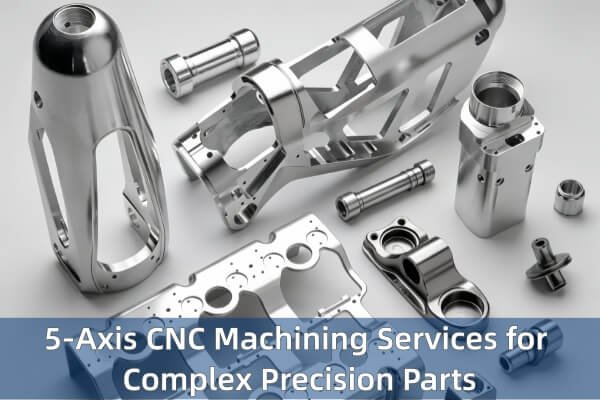
5-axis milling machines add two rotary axes to the three linear axes. They allow free adjustment of tool angle and orientation. One setup can handle multi-angle machining. They easily process complex shapes, angled holes, and curved surfaces. Short tools can machine deep cavities with better rigidity. This also improves surface finish on curved areas. 5-axis machining reduces process steps and improves accuracy. It often serves the aerospace and precision medical fields. However, these machines cost more. Programming and maintenance also require higher effort than 3-axis machines.
Common CNC Milling Operations
CNC milling includes many types of machining operations. Each process matches different part structures and surface needs. Surface milling and face milling are the most basic and common steps. They mainly handle surface leveling and thickness finishing. Special tools cut the workpiece surface and remove extra stock and surface defects. This creates a high-accuracy reference plane. This step builds a solid base for later machining and fits a wide range of applications.
These operations represent the most common categories in CNC milling. CNC milling does more than simple flat cutting. A single machine can complete multiple operations with one program. In addition to basic milling, it can perform slotting, drilling, and contour machining. A clear understanding of these operations helps explain how parts take shape. It also helps you evaluate machining processes and supplier capability.
Peripheral and Face Milling
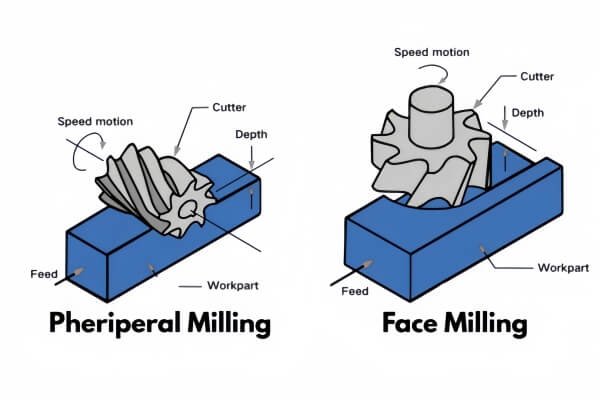
Peripheral milling and face milling are the most basic and widely used CNC milling operations.
Face milling uses the tool face to create flat surfaces. The tool axis stays perpendicular to the machining surface and creates large flat areas.
Peripheral milling uses the side edges of an end mill. It suits vertical walls and step surfaces.
These two steps usually take place at the early stage of machining. They handle surface leveling, thickness adjustment, and stock removal. They also remove surface impurities and uneven areas. This process builds a precise reference plane. The quality of this plane directly affects the accuracy of drilling, slotting, and assembly.
A proper choice of tools and cutting paths can improve the material removal rate and ensure a good surface finish. These operations suit plate parts, bases, and structural components.
Slotting, Drilling, and Contouring
Beyond basic milling operations, CNC machines can perform several advanced processes: Slotting, drilling, and contour machining form the core shaping processes in CNC milling.
Slotting creates open slots and closed slots for internal features. It often uses end mills to cut layer by layer and control slot size with precision. Drilling includes positioning, drilling, and reaming steps. It can create through holes, blind holes, and stepped holes to meet different assembly needs. Contour machining follows planned tool paths to cut outer edges and complex boundaries. It forms the final external shape of the part.
These processes require accurate path planning and cutting parameters. This ensures dimensional accuracy and surface quality. In real machining, these operations often work together. CNC machines can change tools automatically and complete multiple steps in sequence. This setup meets the needs of various custom parts.
Specialized Machining Techniques
In addition to basic operations, special machining techniques extend the capability of CNC milling. High-demand applications often use high-speed machining, adaptive cutting, and precision finishing.
These methods improve efficiency while keeping stable performance. They also reduce the need for later processing and improve overall part quality. For example, thread milling uses special tools or helical paths to create internal and external threads. It works better than tapping for large diameters and hard-to-machine materials. High feed milling uses special tools to lower the cutting force while keeping high material removal. It suits rough machining of hard materials. Trochoidal milling uses a constant engagement path to reduce heat load. It works well for materials with low thermal conductivity, such as stainless steel and titanium alloys.
CNC Milling Machine Components
A CNC milling machine includes several key systems and parts. Each part affects machining accuracy, efficiency, and stability.
A clear understanding of these components helps buyers evaluate a supplier’s equipment level and machining capability. It also helps define the limits of the machine. The basic structure includes the base, column, and worktable. Manufacturers often build these parts from high-rigidity materials. This design resists vibration and reduces deformation during cutting. The motion system includes servo motors and ball screws. It converts control signals into precise movement and ensures stable feed and positioning on each axis.
The machine also includes the spindle, tool setup, control system, and cooling system for continuous operation. Each part plays a specific role in accuracy, stability, and productivity.
Core Structural Parts and Motion System
Core structural parts and the motion system play a key role in machining accuracy. The main structure includes the base, column, and slide. These parts often use cast iron or welded steel. They provide the rigidity needed to resist cutting forces. Low rigidity can cause vibration and affect part accuracy and surface finish. The motion system usually includes servo motors, ball screws, and linear guides. Linear guides keep movement straight and stable. Ball screws convert motor rotation into precise linear motion. This allows accurate positioning of the tool and workpiece. High-end machines may use linear motors for direct drive. This removes screw deformation and backlash and supports high-speed and high-precision machining.
Spindle, Tooling, and Tool Changer
The spindle serves as the core part of the machine. It holds and drives the cutting tool at high speed. Spindle speed, power, and rotation accuracy directly affect cutting efficiency, material hardness range, and surface quality. Modern high-speed spindles can reach tens of thousands of revolutions per minute.
Tool selection depends on material and machining needs. Common tools include end mills, face mills, and drills. They connect to the spindle through tool holders such as taper shanks or strong chucks. Common holder standards include BT and HSK.
An automatic tool changer works with a tool magazine. It stores multiple tools and switches them quickly with a robotic arm. This avoids manual stops and keeps complex processes running continuously. It also improves overall machining efficiency.
Control System and Cooling Setup
The control system acts as the brain of the machine. It receives and processes machining instructions. It reads G code, interprets each command, and coordinates all machine movements. It also monitors machine status in real time and corrects errors to ensure precise operation. The cooling system includes pumps and nozzles. It sprays coolant onto the cutting area to remove heat and lubricate the tool. It also clears chips, reduces tool wear, and prevents part deformation. This helps improve surface quality. For special cases such as dry cutting, the machine may include chip conveyors and oil mist collectors.
Material Selection for CNC Milling
Material selection stands as one of the most critical decisions in a CNC milling project. It directly affects product performance, cost, machinability, and tool life. Different materials show clear differences in strength, weight, corrosion resistance, and machining difficulty. A proper choice can improve machining efficiency and part quality.
CNC milling supports a wide range of materials, mainly including industrial metals and engineering plastics. Common metals include 6061 and 7075 aluminum alloys, as well as stainless steel. These materials often serve high-end precision parts. Common plastics include ABS and POM, which fit consumer electronics and similar uses. This section introduces common materials, explains how to choose them for different applications, and discusses key factors such as strength and cost.
Metals and Plastics Commonly Used
CNC milling shows strong compatibility with both metals and engineering plastics.
Common metals include 6061 and 7075 aluminum alloys, stainless steel, carbon steel, brass, copper, and titanium alloys. Aluminum alloys offer good machinability and a strong strength-to-weight ratio, so they remain widely used. Stainless steel suits wear-resistant and high-temperature parts. Copper alloys often serve as electrical or heat transfer components. These metals provide high strength and stable performance. They see wide use in aerospace, automotive, and other precision industries.
Common plastics include ABS, POM, PC, nylon, and acrylic. These materials suit lightweight housings and insulating parts. They offer low weight, low cost, and good insulation. They fit consumer electronics and similar fields. High-performance plastics such as PEEK can also undergo precision milling. They require sharper tools and proper heat control. Differences in hardness, thermal conductivity, and cutting behavior directly affect machining efficiency and tool life.
Factors Affecting Material Choice
Material selection requires a balanced view of several factors. First, consider the service conditions of the part. Define the required strength, hardness, and corrosion resistance. Next, evaluate machining feasibility. Different materials vary in cutting difficulty and heat transfer. For example, soft aluminum may stick to tools, while titanium alloys transfer heat poorly. Both cases need special cutting strategies. Cost also plays an important role. Hard materials often cost more and may increase tool wear and heat treatment steps, which raise total machining cost. In addition, consider the working environment, surface finishing methods, assembly accuracy, and industry standards. A proper material choice balances part performance, machining efficiency, and production cost. It also avoids over-specification or quality issues.
Advantages and Disadvantages of CNC Milling in the Production Process
CNC milling offers clear strengths, but it also has limits. A full understanding of both sides helps you make better decisions in manufacturing and balance cost with performance. This process uses automation and high precision to control dimensions at the micron level. It delivers high accuracy and strong consistency in batch production, which suits high-end precision assembly.
Automation reduces manual work, shortens production time, and improves efficiency. It can form complex shapes in one setup and simplify both process steps and assembly. It also supports strong customization. You can create prototypes and small batches without tooling. This makes it ideal for development and custom projects. However, it does not fit every case. It has certain limits, and in some situations, other processes may offer better cost advantages.
Key Benefits for Precision Manufacturing
CNC milling stands out for its high dimensional accuracy and consistent batch quality. It can achieve tight tolerances (often up to IT6 depending on setup and conditions). The process stays stable and fully controlled by programs, so each part remains almost identical. This matters a lot for assemblies that require interchangeability.
It can machine complex three-dimensional shapes with high efficiency and form complex structures in one setup without expensive molds. It also keeps the material’s original properties and avoids internal defects or anisotropies. In addition, it offers strong flexibility. Design changes can move into production quickly, which shortens product development cycles. It supports sample development, small batch production, and mass production. Its strong customization ability also allows fast prototyping and niche production, which supports precision manufacturing.
Limitations and Cost Considerations
CNC milling is not a universal solution. It has limits and requires careful cost planning. As a subtractive process, it removes material and creates waste. This becomes more significant when using expensive materials. Tool movement limits make it hard to machine very deep narrow slots or fully enclosed cavities in one setup. Some complex internal features may need support from other processes. In large-scale production, the cost per part can exceed processes such as die casting or stamping.
High-end multi-axis machines require high investment and maintenance costs. Skilled operators must handle setup and operation, which increases running costs. Hard materials and special alloys demand advanced tools and cutting strategies. Tool wear rises and adds to production cost. Thin-walled or long slender parts may deform during machining. These parts often need extra support or multiple setups. Complex parts also require longer programming time and higher machining rates. All these factors can raise total cost, so planning ahead is important.
Applications of CNC Milling Technique
CNC milling serves a wide range of industries. It reaches from high-end manufacturing to general industrial use. Different applications require different levels of accuracy, material properties, and process control.
In aerospace, it machines aircraft structural parts, engine precision components, and lightweight brackets. These parts must meet strict standards for strength and accuracy. In automotive manufacturing, it produces engine parts, chassis structures, and battery housings for electric vehicles. This process supports lightweight design and high-performance upgrades.
CNC milling also plays an important role in the medical field. It produces precision components such as orthopedic implants. Its use now goes far beyond traditional machine shops. It supports industries like aerospace, automotive, and medical, where reliability, precision, and compliance matter. It can meet the precision machining needs of different sectors.
Aerospace and Automotive Parts
Parts in the aerospace and automotive fields often face high loads and complex conditions. They require strict control of accuracy and reliability. CNC milling meets these standards and ensures consistency in batch production.
In aerospace, it machines aircraft structural parts, engine precision components, and lightweight supports. It can also produce key parts such as engine housings and turbine blades. These parts often use materials like titanium alloys. Manufacturers rely on five-axis machining to reach high precision and meet strict weight and strength targets.
In automotive manufacturing, this process supports engine parts, chassis components, and battery housings for new energy vehicles. It also helps produce prototypes and racing parts. It offers strong design freedom for both custom parts and small batches. It supports lightweight design and performance improvement in modern vehicles.
Medical and Industrial Applications
Medical and industrial parts often require a precise fit and long-term stability. They demand strict control of accuracy and material performance. CNC milling provides a reliable solution for these needs.
In the medical field, it produces parts for medical devices and surgical tools. These parts meet medical-grade standards and require smooth surfaces and good biocompatibility. Complex parts such as orthopedic implants and surgical guides often rely on multi-axis machining. Common materials include titanium and stainless steel, and traceability remains important.
In industrial use, CNC milling produces parts for automation equipment and mold components. It also supports the production of pneumatic valve bodies and fixtures. In harsh working conditions, it offers an efficient solution for spare part repair and equipment upgrades. It provides stable support for many types of industrial production.
How to Choose a CNC Milling Service Provider
Choosing a CNC milling supplier requires more than checking the price. You need to review the overall capability. First, verify the equipment setup. Confirm that the supplier uses machines and inspection tools that meet your accuracy needs. Check whether they can handle complex and high-precision parts. Next, review technical strength. Look at programming skills, process optimization ability, and team experience.
Also, check how they handle hard-to-machine materials. Then evaluate the quality control system. Confirm certifications and ask for inspection reports and after-sales support. In addition, consider communication speed, delivery stability, pricing transparency, and supply chain reliability. A strong supplier should offer good value and support the full project cycle.
Why Choose Our CNC Milling Services
Our CNC milling services combine advanced equipment, a skilled technical team, and a standardized management system. We provide a one-stop solution for precision machining. HRCCNC workshop includes vertical and horizontal machines from 3-axis to 5-axis, along with advanced multi-spindle units. We can process metals and engineering plastics with high efficiency. We handle standard parts, complex curved shapes, and high-precision components.
Our team has years of experience in custom precision parts. Engineers perform design for manufacturability analysis at the early stage. They optimize the machining plan to reduce difficulty and cost. We run full process quality control, from raw material inspection to final part inspection. This ensures stable quality and full traceability.
We manage production with high efficiency and maintain a reliable logistics system. We support fast delivery, flexible customization, rapid prototyping CNC, transparent pricing, and complete after-sales service. Our CNC miling service covers needs from samples to mass production and from development to full-scale manufacturing. We also provide online tracking and production reports, so clients can check order progress and inspection data at any time. This keeps the process transparent and reliable.
How Much Does CNC Milling Cost?
CNC milling cost stands as a key factor in purchasing decisions. The pricing structure is not simple. Part design and structural complexity form the core of cost. Simple parts with regular shapes and fewer steps cost less. Complex parts with curved surfaces or deep cavities require more programming and steps, so the cost rises. Tight tolerances and high surface finish requirements also increase machining and inspection difficulty. These factors raise the final price. Material choice, production volume, surface finishing, and document requirements also affect cost. Pricing does not rely only on hourly machine rates.
Design and Complexity Factors
Part geometry and design play the most important role in CNC milling cost. Simple parts with regular shapes and fewer operations need less complex tool paths and programming. This keeps costs lower. Complex parts with curved surfaces or many holes require advanced programming and multiple setups. If five-axis machining is needed, the cost increases further. Thin walls and deep cavities often need extra semi-finishing and slower cutting. This extends machining time. Tight tolerances and high surface finish demands increase both machining and inspection effort. These needs often require multiple finishing steps and slower feed rates, which raise total production cost.
Material and Production Volume
Material choice and production quantity also affect milling cost. Different materials show different machining behavior. This directly changes cutting efficiency and tool wear. Hard alloys and special materials are harder to machine. They wear out tools faster and increase the overall cost. Common materials such as aluminum alloys, carbon steel, and general plastics are easier to cut. They offer more stable and controllable costs. Production volume also affects unit price. Prototyping and small batch orders require separate programming and setup. This raises fixed costs. As quantity increases, fixed costs spread across more parts, so the unit cost drops. After a certain volume, the price decrease becomes smaller.
Finishing and Additional Costs
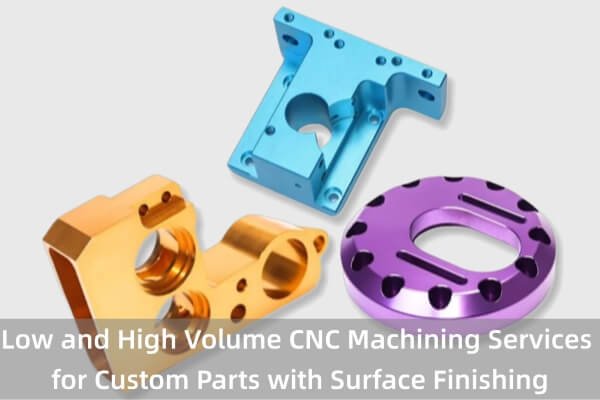
Finishing steps and extra requirements add to the total cost. CNC milling itself does not include deburring, sandblasting, or anodizing. These surface treatments require separate charges. Heat treatment, plating, and polishing also add cost based on the process type. Strict inspection needs, full dimensional reports, and material certificates increase labor and inspection costs. Special fixtures, custom tools, and custom packaging can also raise the price. Rush orders may require schedule changes and incur extra fees. Clear communication of all requirements in advance helps avoid hidden costs and balance quality with budget.
FAQs
1. What is milling in manufacturing?
Milling refers to a machining process where rotating cutting tools remove material from a solid workpiece to create the desired shape. In simple terms, milling meaning involves shaping parts by cutting away excess material using precision tools. This process is widely used in industries that require high accuracy and complex geometries.
2. What does milling mean in CNC machining?
In CNC manufacturing, what does milling is the use of computer-controlled machines to automate the material removal process. Unlike manual machining, CNC milling machining ensures high precision, repeatability, and efficiency. It allows manufacturers to produce complex parts with tight tolerances and consistent quality.
3. What is a milling machine, and how does it work?
The milling machine is a common question for beginners. A milling machine is a tool that uses rotating cutters to remove material from a workpiece. In modern production, CNC mills are controlled by computer programs that guide the tool along precise paths. This automation improves accuracy and reduces human error in milling machining operations.
4. What is the difference between CNC milling and traditional machining mills?
The main difference lies in automation and precision. A traditional machining mill requires manual operation, while CNC milling uses programmed instructions for higher efficiency. Parts produced through CNC-milled processes typically have better consistency, tighter tolerances, and smoother surface finishes compared to manual methods.
5. What materials can be used in CNC milling machining?
CNC milling machining supports a wide range of materials, including aluminum, stainless steel, brass, plastics, and engineering composites. The choice of material affects cutting speed, tool wear, and final surface quality. Different materials behave differently during milling machining, so proper parameter selection is important for optimal results.
6. Why are CNC mills widely used in modern manufacturing?
CNC mills are popular because they combine precision, efficiency, and flexibility. They can produce complex parts in both small batches and large-scale production. Components made through CNC-milled processes maintain high consistency, which is essential for industries such as aerospace, automotive, and medical manufacturing.