Skip to content

Ductility is a key mechanical property in materials science and engineering. When a part needs bending, stretching, or deformation without breaking, ductility directly affects performance, safety, and manufacturability.
In modern manufacturing, especially in CNC machining, sheet metal work, and welding, understanding ductility helps prevent failure and improve efficiency. This article explains the definition, measurement, influencing factors, material behavior, industrial uses, design considerations, and common questions about ductility.
What Is Ductility?
Before discussing testing methods and engineering use, it is important to understand the basic concept and main features. Ductility is one of the most fundamental mechanical properties. It determines whether a material can be formed and whether it remains safe and reliable in use. Comparing ductility with other material properties helps clarify its role in real engineering work.
Definition and Key Characteristics
Ductility describes a material’s ability to undergo significant plastic deformation before fracture. It shows how much a material can stretch, bend, or reshape while keeping its structure intact. This deformation is permanent and mainly happens through dislocation movement inside the crystal.
Ductility differs from elastic deformation. Elastic deformation is reversible. Once stress exceeds the yield point, a ductile material continues to deform under steady or slowly increasing stress until failure. High ductility supports many forming processes and allows complex shapes without cracks.
Ductility vs. Brittleness
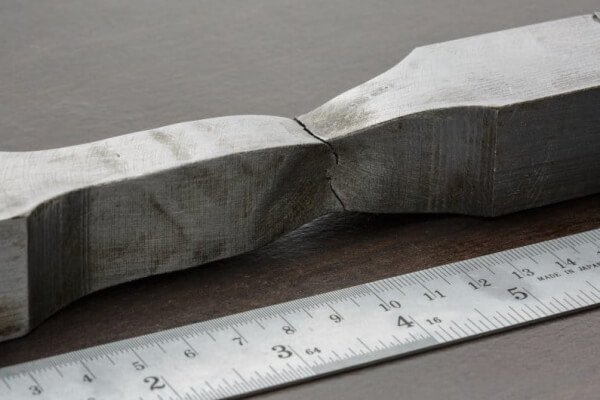
Ductility and brittleness show opposite behavior. A ductile material deforms clearly before fracture. A brittle material breaks suddenly with little or no plastic deformation.
Brittle failure is sudden and often catastrophic. Ductile failure develops gradually and can be predicted. Many manufacturing failures result from low ductility, especially in parts under impact, vibration, or forming loads. Engineers often prefer ductile failure because it absorbs energy and gives a warning, while brittle failure happens without notice.
How Is Ductility Measured?
Visual inspection cannot measure ductility. Engineers must use standard metrics and test methods. These methods support material selection, quality control, and production management.
Elongation and Reduction of Area
Engineers usually measure ductility using elongation and reduction of area. Both values come from standard tensile tests.
Elongation shows the percentage increase in gauge length after fracture. It reflects how much the material stretches before breaking.
Reduction of area measures the decrease in cross-sectional area at the fracture point. It evaluates local necking and uniform deformation. This value does not depend on gauge length and is often more reliable.
Using both values gives a clear view of plastic deformation under tensile load. Higher values indicate better ductility. Standard methods also ensure consistent data across labs and industries.
Common Testing Methods
The most common method is the uniaxial tensile test. Standards such as ASTM E8 guide this test. A machine applies a controlled increasing load until the sample breaks. The test records the stress-strain curve. After the fracture, the sample is fitted back together to measure elongation and reduction of area.
The bending test is another common method. It works well for sheets, tubes, and structural parts. The test bends a sample to a set angle or radius. Engineers check for cracks to evaluate deformation ability. This method helps assess forming behavior under combined stress.
Both methods show how much deformation a material can handle before failure. They help verify standards, guide process design, and support material selection.
Factors Affecting Ductility
Ductility is not fixed. Many factors influence it, including composition, microstructure, processing history, and environment.
Understanding these factors helps engineers make better decisions in material selection and process design. It also allows prediction of performance and even improvement through design or processing control.
We will look at three main factors: temperature, material composition, and manufacturing process.
Temperature
Temperature has a strong effect on ductility. For most metals, higher temperatures increase atomic activity. This promotes dislocation movement and lowers flow stress. As a result, materials deform more easily and show higher ductility. This explains why hot rolling and hot forging improve formability.
Lower temperature restricts dislocation movement and reduces ductility. Some materials, especially body-centered cubic metals, may show a ductile-to-brittle transition at low temperature. This increases the risk of brittle fracture.
Understanding temperature effects helps manufacturers choose proper forming conditions and avoid failure.
Material Composition
Chemical composition directly affects ductility by changing microstructure and bonding.
Pure metals usually allow easier dislocation movement. This leads to better ductility. Alloying elements and impurities strengthen the material but block dislocation motion. Secondary phases and complex structures can further reduce plastic deformation.
Engineers must balance ductility, strength, and hardness. Careful control of composition ensures the material meets process and performance needs.
Manufacturing Processes
Manufacturing processes change microstructure, grain size, and defect distribution.
Cold working processes such as rolling, stamping, and drawing increase dislocation density. This raises strength but reduces ductility.
Hot processes like forging and rolling refine grains and create uniform structures. These changes improve ductility. Heat treatments such as annealing remove internal stress and allow recrystallization. This restores or increases ductility.
Engineers must consider processing history when evaluating materials. Manufacturers often adjust process parameters to achieve the right ductility for forming, machining, and assembly.
Ductility of Common Materials
Different materials show large differences in ductility. These differences affect processing methods and final performance.
Some materials show very high ductility, while others behave in a brittle way. Ductile metals suit forming processes. Low ductility materials resist deformation but offer stiffness or wear resistance.
Classifying materials by ductility helps engineers choose the right option. It also shows how crystal structure and microstructure control deformation behavior.
High-Ductility Metals
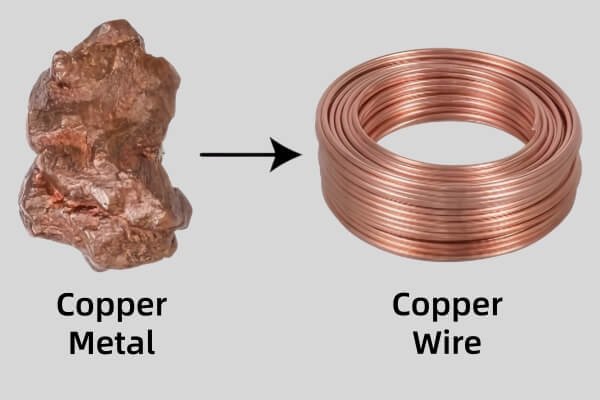
Aluminum, copper, gold, silver, and low-carbon steel all show high ductility. Metals with face-centered cubic structures deform easily. Annealed aluminum alloys often reach 20% to 40% elongation. Copper can exceed 35% to 50%.
These materials handle stamping, drawing, bending, and rolling without cracking. They maintain structural integrity during forming. Industries such as automotive, electronics, and construction use them widely.
High ductility also improves assembly reliability and performance under dynamic loads.
Low-Ductility Materials
Some materials show little plastic deformation and break easily. Cast iron, ceramics, and some high-strength alloys fall into this group.
Gray cast iron usually has elongation below 1% to 2%. Graphite flakes create stress concentration points. This leads to a brittle fracture. Ductile iron improves this behavior by forming spherical graphite.
Low ductility limits forming processes. However, these materials often provide high compressive strength and stability. Engineers use them in engine blocks, machine bases, and structural supports.
Design must avoid impact and tensile overload to prevent sudden failure.
Applications of Ductility in Manufacturing
Ductility plays a key role in many manufacturing processes. It is not just a theory. It directly affects forming, machining, assembly, and product quality.
High ductility allows materials to flow without cracking. This determines whether many processes can succeed.
We will look at three typical applications: sheet metal forming, machining and welding, and structural components.
Sheet Metal Forming and Bending
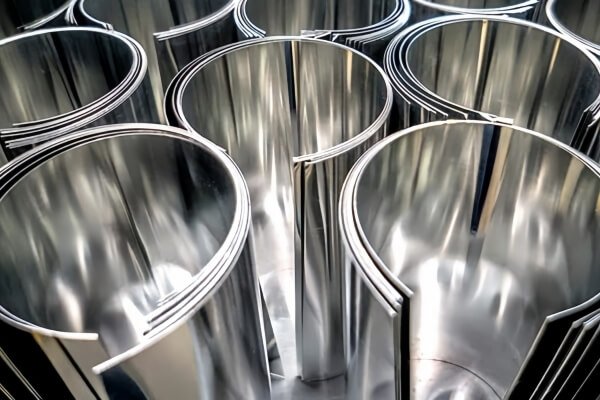
Ductility supports stamping, bending, deep drawing, rolling, and spinning. During forming, materials must deform without cracking. Good ductility reduces defects such as tearing and wrinkling.
This is critical in deep drawing and bending. High ductility materials allow complex shapes, tight bends, and deep forms. They also improve surface quality and accuracy.
Engineers use ductility data to design tooling, select materials, and optimize parameters. It helps define forming limits and improves yield.
Machining and Welding
In CNC machining, ductility affects chip formation and cutting stability. Materials with moderate ductility produce continuous chips. This improves tool life and surface finish.
In welding, ductility helps relieve stress during heating and cooling. Materials with good ductility reduce cracking in weld zones. This improves joint strength and durability.
Ductility also reduces the need for preheating or post-treatment.
Structural and Functional Components
Ductile materials are widely used in structures, automotive systems, pressure vessels, and pipelines.
These materials redistribute stress through deformation. They absorb energy and improve safety under impact and vibration. They also provide a warning before failure.
In beams and frames, ductility prevents sudden collapse. In functional parts, it improves stability under cyclic loads.
Design Considerations for Engineers
During product design, engineers must consider ductility together with strength, stiffness, and toughness.
Proper use of ductility improves safety, formability, and damage tolerance. Poor consideration may lead to cracking or failure.
Two key ideas are important: balancing ductility and strength, and preventing failure.
Balancing Ductility and Strength
Ductility and strength often show a trade-off. Higher strength usually means lower ductility.
Engineers must balance these properties. Strong materials carry higher loads but may fail suddenly. Ductile materials form easily but may lack stiffness.
Material selection, heat treatment, and processing help achieve the best combination. Advanced steels and alloys show this balance clearly. This balance affects cost, manufacturability, durability, and safety.
Preventing Material Failure
Considering ductility helps prevent failure modes such as fracture, tearing, necking, and fatigue.
Engineers use ductility data to set safety factors, define bending limits, and choose working temperatures. They also reduce stress concentration and avoid brittle transition.
Optimized design and processing reduce cracking and early failure. They also improve reliability and service life.
FAQs
1. What is the ductility definition in materials science?
Ductility refers to a material’s ability to undergo plastic deformation before fracture. In simple terms, the ductility definition describes how much a material can stretch or bend without breaking.
2. What is the ductile meaning in engineering applications?
Ductile material refers to a material that can deform significantly under stress while maintaining integrity. Engineers value ductile materials because they provide a warning before failure.
3. What is ductile deformation, and why is it important?
Ductile deformation is the permanent change in shape that occurs when a material stretches or bends under stress. It helps absorb energy and reduces the risk of sudden failure.
4. Are metals ductile, and why are metals ductile?
Most metals are ductile because their atomic structure allows dislocations to move easily. This is why metals like aluminum and copper can stretch or bend without cracking.
5. What are malleable materials, and what is the malleable definition in chemistry?
Malleable materials can deform under compressive stress, such as hammering or rolling. The malleable definition in chemistry describes a material’s ability to change shape without breaking under pressure.
6. What is the brittleness of a material?
Brittleness describes a material’s tendency to fracture without significant plastic deformation. Unlike ductile materials, brittle materials break suddenly and without warning.
7. What is the difference between malleable and ductile materials?
Malleable vs ductile refers to two types of deformation. Malleable materials deform under compression, while ductile materials deform under tension. Many metals show both properties.
8. How does ductility affect material selection in manufacturing?
Ductility affects how easily a material can be formed, machined, or welded. Engineers use ductility data to avoid cracking and improve product reliability.
Conclusion
Ductility is a key mechanical property that affects materials during manufacturing and service.
Engineers measure it using elongation and reduction of area through tensile and bending tests. Temperature, composition, and processing strongly influence it.
High ductility metals like aluminum and copper support complex forming. Low ductility materials require careful design to avoid brittle failure.
Engineers must consider ductility together with strength and toughness. This helps optimize material selection and processes while avoiding cracks and failure.A deep understanding of ductility improves efficiency, product quality, and structural reliability. It also supports lightweight design, functional integration, and long-term performance.