Skip to content

Steel can be magnetic, but not always. Its magnetism depends on its composition and crystal structure. Certain kinds of steel are particularly susceptible to magnetism, while others, such as austenitic stainless steel, are not. We shall deconstruct and discuss the science of steel being magnetic.
Understanding Magnetism in Metals
Metals become magnetized due to the flow and orientation of electrons in their atomic structure. All metals contain electrons, but only some configurations can result in the creation of a powerful magnetic field.
What Makes a Metal Magnetic?
A magnetic field forms in a metal when most of its unpaired electrons spin in the same direction, creating an overall magnetic moment. This fielding results in a magnetic field. The greater the alignment of electron spins, the stronger the magnetism.
Iron, cobalt, and nickel, which are metals, readily display such a property because the atomic structure of these elements allows for the long-range alignment of electron spins.
Types of Magnetism
Not every magnetism acts similarly. Scientists classify magnetism into five main types based on how atoms interact with magnetic fields.
Ferromagnetism
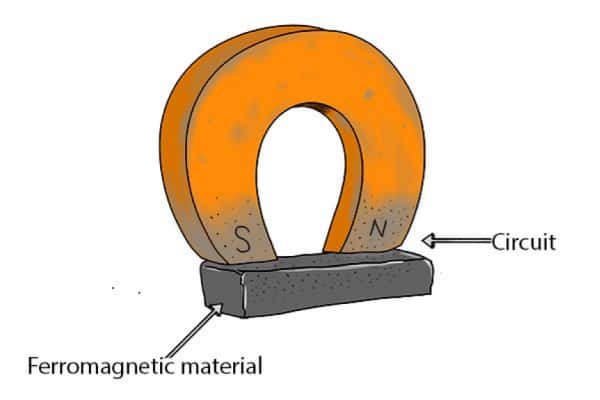
This is the most well-known and the strongest form of magnetism. Ferromagnetic metals such as iron, nickel, and cobalt are capable of retaining magnetism even after leaving the external magnetic field. This is why they are applied in permanent magnets.
Paramagnetism
Magnets weakly attract paramagnetic materials. Their electron spins are temporarily aligned when subjected to a magnetic field, and once the field is removed, they regain their original alignment. These are aluminum and platinum.
Diamagnetism
The diamagnetic materials repel magnets. The electrons induce small magnetic effects that resist an externally applied magnetic field. This is the case with copper, gold, and silver.
Ferrimagnetism
Ferrimagnetism is mixed magnetism in which the magnetic moments do not entirely cancel each other, resulting in stronger but weakly permanent magnetism. The traditional example is the ferrites, utilized in magnetic cores.
Antiferromagnetism
In an antiferromagnetic substance, the magnetic moments of atoms oppose each other, thus cancelling out. Consequently, the total magnetism is almost zero. A typical example is manganese oxide.
Do All Metals Have a Magnetic Field?
Not everything in the world is magnetic; however, all metals are responsive to magnetic fields. The behavior is influenced by the quantity of unpaired electrons and their configuration. Metals such as iron are highly attracted to the magnets, whereas other metals, such as copper and gold, are not.
Which Metals Are Magnetic?
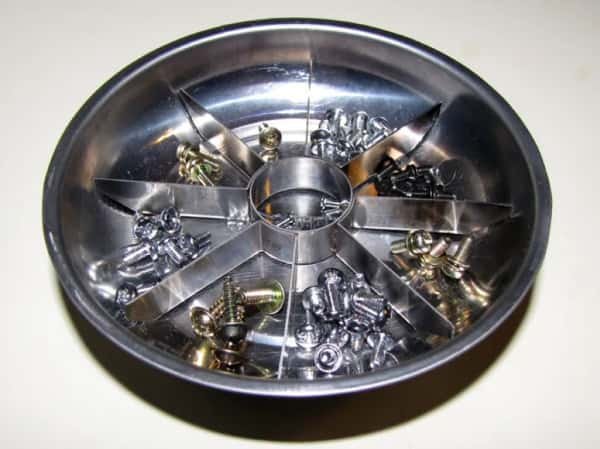
Certain metals are also naturally magnetic because their crystal structures permit the alignment of electrons’ spin.
The Three Main Ferromagnetic Elements
- Iron: The most magnetic of all the metals. Its unpaired electrons align easily, producing extremely strong magnetic fields, which is why most magnets contain iron.
- Nickel: Nickel contains a similar electron configuration to iron and is also a strong ferromagnet. It is commonly used together with alloys to make them stronger in magnetism.
- Cobalt: Cobalt exhibits permanent magnetism and retains its properties at high temperatures.
Other Magnetic Materials
- Rare Earth Metals: Other elements, such as neodymium and samarium, have complicated electron configurations that enable them to create extremely strong magnets.
- Magnetic Alloys: Some alloys, including Alnico (aluminum, nickel, and cobalt), are developed to combine elements that produce strong and long-lasting magnets.
- Neodymium Magnets (Nd₂Fe₁₄B): It is one of the strongest permanent magnets of all time, and it is a combination of neodymium, iron, and boron.
Which Metals Are NOT Magnetic?
Metals that are not magnetic do not become attracted to magnets, as the electron spins of these metals are paired and do not interfere with one another.
Common Non-Magnetic Metals
- Aluminum: This is light and is applied in aircraft and construction; it is paramagnetic and weakly magnetic.
- Copper: This is a diamagnetic metal that is highly conductive to electricity.
- Brass: This is an alloy of copper and zinc that is entirely non-magnetic.
- Bronze: This is made out of copper and tin and is also non-magnetic.
- Gold: Non-magnetic and used in electronics for stability.
- Silver: Non-magnetic and highly conductive.
- Lead: Weakly diamagnetic and applied as shielding.
- Tin: Soft, non-magnetic, and non-corrosive.
- Titanium: It is non-magnetic and suitable for aerospace.
- Zinc: Used for galvanization and is diamagnetic.
- Chrome (Chromium): A non-magnetic element, which may become magnetic as an alloy.
Why These Metals Aren’t Magnetic?
All the electrons in these metals are paired, and hence there is no net magnetic moment. Their atomic structures cannot pair the unpaired electrons to form a magnetic field.
Is Steel Magnetic? The Complete Answer
Steel is generally magnetic due to its iron content, a ferromagnetic element, though not every grade of steel exhibits this property. The difference comes from the presence of other components and the steel’s crystal structure.
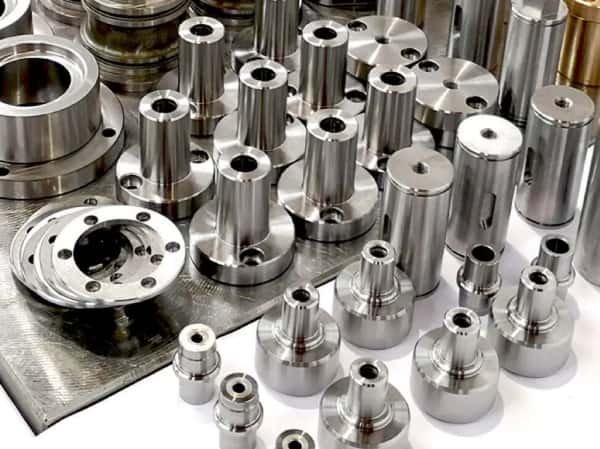
Steel Composition and Magnetism
Steel is primarily an alloy of iron and carbon. When elements such as nickel, chromium, or manganese are added, they can alter the alignment of atoms, either strengthening or interfering with magnetism.
Types of Steel and Their Magnetic Properties
Different types of steel have different microstructures and, therefore, varying magnetic properties.
Magnetic Steel Types
- Carbon Steel: It contains a high content of iron and carbon, making it highly magnetic and commonly used in tools, machinery, and construction.
- Mild Steel: This is a low-carbon steel. It is a magnetic substance and is widely adopted for structural uses.
- Ferritic Stainless Steel: it contains chromium but no nickel. Magnetism can be carried on in its body-centered cubic structure.
- Martensitic Stainless Steel: It is hardened through heat treatment and is magnetic due to the presence of iron within its structure.
- Alloy Steel: Most types of alloy steel are magnetic, although iron is predominant in the alloy, depending on the alloying elements.
Non-Magnetic Steel Types
- Austenitic Stainless Steel: This type has high levels of chromium and nickel. Its face-centered cubic (FCC) structure prevents magnetism.
- Surgical Steel: This alloy is a type of austenitic stainless steel used in medical applications; it is non-magnetic and therefore safe for use near MRI machines.
- Special Stainless Steel Grades (304, 316): These are non-magnetic, except when cold worked, at which point a slight magnetic field develops.
The Science Behind Steel’s Magnetism
Steel’s magnetic behavior depends not only on the magnetic nature of its elements but also on how these elements are arranged.
Crystal Structure and Magnetism
The orientation of atoms in a crystal structure determines whether steel is magnetic or non-magnetic. Ferritic and martensitic steels have body-centered cubic (BCC) structures that facilitate magnetic alignment. The face-centered cubic (FCC) structure of austenitic steels interferes with the alignment and renders them non-magnetic.
The Role of Chromium and Nickel
Chromium enhances corrosion resistance and weakens magnetism by distorting the crystal lattice. The austenitic structure is stabilized with nickel, which further reduces magnetism. This is why stainless steels enriched with such elements are not magnetic.
Cold Working and Magnetism
When cold worked (bent or stretched) non-magnetic steel, such as 304, is converted slightly into the martensitic form of the structure, and is therefore somewhat magnetic. This is a short-term effect confined to the deformed region.
Practical Applications
The magnetic or non-magnetic property of steel affects the application in the industry.
When Magnetic Steel Is Needed
- Electric generators and motors: The cores are made using magnetic steel materials, which transform electrical energy into mechanical energy.
- Electromagnets: Soft iron or magnetic steel is the best material to use when developing temporary magnetic fields.
- Magnetic storage devices: Hard drives and tapes use materials that can be magnetized.
- Transformers and inductors: Magnetic steel is useful in directing the magnetic flux efficiently.
- In recycling, magnetic separation is applied to remove ferrous metals from non-ferrous materials.
When Non-Magnetic Steel Is Required
- Medical devices (MRI machines): Non-magnetic steel eliminates the possibility of magnetic interference, ensuring patient safety.
- Precision tools: Non-magnetic objects are precise in delicate tools.
- Electronic appliances: Weak magnetic fields should be avoided in delicate appliances.
- Food processing equipment: Austenitic stainless steel is resistant to corrosion and does not attract metal particles by magnetic attraction.
- Marine environments: Stainless steel 316 is suitable in saltwater environments and does not corrode without magnetism.
How to Test If Steel Is Magnetic
To determine whether steel is magnetic, you do not need sophisticated devices.
Simple Magnet Test
Keep a little magnet near the steel surface. When fixed, the steel can be magnetic, probably ferritic, martensitic, or carbon steel. If there is no attraction, it is likely to be austenitic stainless steel.
Professional Assessment Systems
Magnetic measures, such as magnetometers or flux meters, can be utilized by industries to measure magnetic properties. The magnetic field strength can be measured using these tools, which can sense changes over a metal surface.
Conclusion
Steel can be either magnetic or non-magnetic, depending on its type and structure. Most steels that contain iron with little nickel or chromium are magnetic, whereas austenitic stainless steels such as 304 and 316 are not.
Do you need an accurate CNC machining that requires a certain type of metal? Call HRCCNC.com today at 1.800 and receive quality advice and quality results.