Skip to content
Powder metallurgy is an accurate and effective process of producing metal components. It conserves material, saves money, and enables complex designs that are impossible to achieve by other means.
What is Powder Metallurgy?
Powder metallurgy (PM) is a manufacturing process for producing solid parts from metal powders by heating. It integrates precision, productivity, and plasticity in industrial usage.
Definition and Core Concept
Powder metallurgy is the process of compacting metal powders into a form and heating them to unite the particles. This process results in high-dimensional, stable components.
Brief History and Evolution
The theory originated in ancient civilizations that used primitive sintering methods. Over the years, technological advancements have made powder metallurgy an essential process for the aerospace, automotive, and electronics industries.
Understanding Powdered Metal
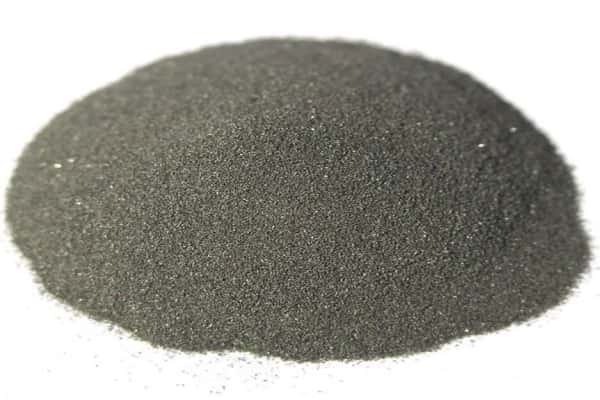
Powder metallurgy is based on powdered metal. Understanding PM performance is important for understanding how it is made and what influences its quality.
What is Powdered Metal?
Powdered metal is a fine metallic powder that has been formed by PM. The ease with which it compacts and sinters is dependent on its size, shape, and purity.
Techniques of The Production of Metal Powder
Powders produced by different methods exhibit different properties. The techniques are selected based on the characteristics and intended use of the desired type.
- Atomization: Fine fragmentation of molten metal is achieved using air, water, or gas, and the droplets are cooled into spherical powders. This method is the most commonly employed, offering excellent particle-size uniformity and high material purity.
- Direct reduction/solid-state reduction: Metal oxides can be reduced using either hydrogen or carbon monoxide as the reducing agent. This technique is the best for the manufacture of highly compressible iron and steel powders.
- Additional methods: electrolysis, mechanical milling, and thermal precipitation. In these methods, special powders are produced that are either magnetic, high-temperature, or corrosion-resistant.
The Powder Metallurgy Process
The PM process involves a set of well-managed steps that turn powders into fully functional metal parts.
Stage 1: Powder Preparation and Characterization
Powders are initially examined for particle size, shape, and composition. Adequate characterization provides uniform flow, compaction, and sintering achievement.
Stage 2: Mixing and Blending
Lubricants or alloying powders are commonly added to metal powders to achieve homogeneous distribution and the intended characteristics. Defects in the final component are reduced by proper blending.
Stage 3: Compacting (Die Pressing)
The powder mixture is pressed inside a mold to create a green compact. Its final density and mechanical strength depend on factors such as compaction pressure, die geometry, and powder flow characteristics.
Stage 4: Sintering
Sintering involves heating the green compact to a temperature just below its melting point, allowing the metal particles to fuse and form a solid structure. This process improves strength, durability, and dimensional stability, resulting in parts ready for finishing or secondary processes.
Types of Powder Metallurgy Processes
PM is a set of methods applicable across various applications and production volumes.
Conventional Powder Metallurgy (Press-and-Sinter)
The most widespread PM process is press-and-sinter. It is cheap, efficient, and best suited for the production of standard components in large volumes.
Metal Injection Molding (MIM)
MIM is a mixture of plastic injection molding and powder metallurgy. It enables the fabrication of small, sophisticated, and precision parts for the medical, aerospace, and electronic sectors.
Isostatic Pressing
- Cold isostatic pressing (CIP): CIP applies uniform pressure through a fluid medium, producing dense, uniform green compacts suitable for complex shapes
- Hot isostatic pressing (HIP): HIP is a technique used to densify metal powders by applying high temperature and uniform pressure simultaneously. This is a technique that establishes near-fully dense constituents with enhanced mechanical characteristics.
Powder Forging
Powder forging is the compression of powders into a near-net shape, followed by applying forging methods. This produces highly strong and structurally superior components.
Metal Additive Manufacturing (3d Printing)
By using metal powders, 3D printing enables the creation of complex geometries by layering powder. It is best for prototypes, small-batch production, and custom designs that cannot be adequately accomplished using traditional methods.
Materials Used in Powder Metallurgy
PM is flexible and can be used with a wide variety of metals and alloys.
Ferrous Metals
- Iron and iron-based alloys: Iron powders find wide applications in automotive and industrial sectors because they are strong, wear-resistant, and economical.
- Carbon steel and low-alloy steel: Low-alloy and carbon steels offer greater hardness and toughness for gears, bearings, and structural components.
- Stainless steel: Stainless steel powders are corrosion-resistant and strong, making them suitable for medical devices, aerospace, and industrial machinery.
Non-ferrous Metals
- Copper and copper alloys: The thermal and electrical conductivity of copper powders is considered desirable for electronics, connectors, and heat exchangers.
- Aluminum: The aluminum powders are non-corrosive, lightweight, and can be used in automotive, aerospace, and consumer products.
- Nickel: Nickel powders provide superior corrosion, high-temperature, and wear resistance.
- Titanium: Owing to its excellent strength-to-weight ratio and biocompatibility, titanium powder is commonly applied in aerospace engineering, medical implants, and other high-performance components.
- Bronze, tin, and specialty alloy: Bronze and tin powders find certain applications in bearings, bushings, and decorative items. Specialty alloys offer tailored properties for high-tech engineering applications.
Advanced Materials
The more sophisticated PM materials are composites, metal-ceramic mixtures, and high-performance alloys to serve the more demanding needs of high strength, high heat, or other special magnetic characteristics.
Powder Metal Parts and Components
The precision, versatility, and durability of PM components are used in various industries.
Automotive Industry Applications
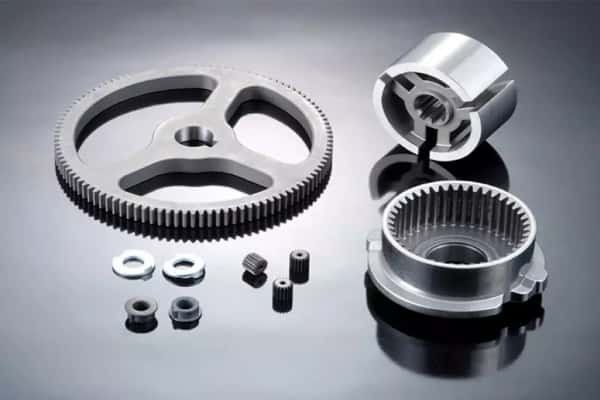
Fine metals are used to make gears, bushings, and structural parts. PM minimizes material waste and enables the mass production of materials of the same quality.
Aerospace Applications
The aerospace industry also uses PM to produce lightweight, high-strength products, including turbine blades, structural components, and fasteners.
Medical and Surgical Components
- Prosthetic components: PM allows the production of specific biocompatible implants and prosthetics.
- Surgical instruments: High-quality stainless steel powder ensures excellent durability, corrosion resistance, and sterilization compatibility of surgical equipment.
Industrial Components
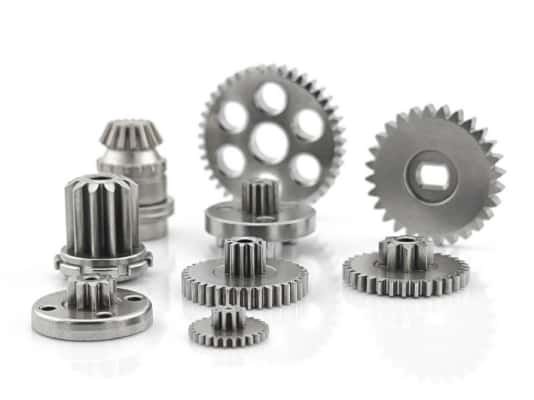
- Gears: Gears produced by PM have uniform density, good wear resistance, and good dimensional accuracy.
- Bearings and bushings: PM bearings are self-lubricating and offer great load-carrying capacity.
- Structural components: PM also enables the use of lightweight yet strong elements in machines and equipment.
Oil and Gas Industry
The PM products are resistant to harsh environments, including high pressure, toxic substances, and high-wear conditions.
Tools and Consumer Products
PM is used to make cutting tools, hand tools, and everyday consumer products, ensuring precision and repeatability.
Electronics and Electrical
Connected components, electrical contacts, and connectors use PM powders to achieve maximum conductivity and reliability.
Filtration Systems
The porous metal liquid and gas filters produced using PM can be made with accurate pore sizes and consistent performance.
Advantages of Powder Metallurgy
Powder metallurgy offers numerous advantages over conventional production methods.
Environmental Sustainability
PM reduces material waste, energy use, and emissions, making it environmentally friendly.
Cost Effectiveness
PM is cost-effective for most industries due to its efficient use of materials and large volume production.
Design Flexibility and Complexity.
PM can cast intricate shapes and complex geometries that would be hard or impossible to produce by casting or machining.
Dimensional Precision
Components created through PM have tight tolerances and consistent properties, so extensive finishing facilities are not required.
Material Versatility
Metals and alloys are highly diverse, allowing customization of characteristics to meet the requirements of a particular application.
Regular Quality and Consistency
Regulated processes ensure consistency in high-volume production, enhancing reliability and minimizing flaws.
Special Properties
The elements of PM can be engineered to have special properties, including controlled porosity, self-lubrication, or wear resistance.
High Production Rates
High-speed pressing and sintering enable large-scale, high-quality production.
Disadvantages and Limitations of Powder Metallurgy
PM also has certain limitations.
Size and Weight Constraints
Large parts are difficult and often costly to manufacture using PM.
Mechanical Property Restrictions
Certain applications may still need additional treatments to reach the required levels of strength or toughness.
Design Restrictions
Undercuts or very thin features are difficult to produce using PM.
High Initial Investment
PM equipment, such as presses and sintering furnaces, is expensive, especially for small-scale operations.
Material-Specific Challenges
Certain metals cannot be easily atomized or sintered, and their use in PM is restricted.
Secondary Processing Specifications
The finishing, machining, or heat treatment processes are performed on many PM components to meet final specifications.
Powder Metallurgy vs. Other Manufacturing Processes
Compared with other manufacturing processes, PM offers distinct advantages and trade-offs.
Casting vs. Powder Metallurgy
Casting is used to produce large components and complex shapes; however, PM is more precise, less wasteful, and better suited to some applications.
Forging vs. Powder Metallurgy
Forging is extremely powerful for building components, but it often requires additional machining. PM produces near-net shapes with uniform properties, reducing material waste.
Powder Metallurgy vs. Machining
Machining removes material and generates waste. PM creates near-net-shape parts, reducing scrap and enabling intricate geometries that other methods cannot efficiently machine.
Conclusion
Powder metallurgy enables the manufacturing of accurate, efficient, and high-performance metal components. At HRCCNC, we transform advanced PM techniques into precision-engineered parts, which are further refined through CNC machining to achieve superior dimensional accuracy and surface quality. Contact us to get started.