Skip to content

Electronic devices continue to move toward higher performance, smaller size, higher power, and greater density. Heat generation in chips and components has become a major challenge, and thermal management now plays a critical role. Excessive temperature can reduce performance, shorten service life, and even cause system failure.
A heat sink is a fundamental component of thermal management systems. It removes excess heat from electronic circuits, power modules, and high-performance mechanical parts. It transfers heat away from critical components and releases it into the surrounding environment. This process keeps operating temperatures within a safe range, ensures stable performance, improves reliability, and extends service life.
This article explains the definition, working principles, structure, design factors, materials, manufacturing methods, product types, and common applications of heat sinks. It also provides selection guidance and answers to common questions, offering a complete reference for engineering design, product development, and equipment maintenance.
What Is a Heat Sink?
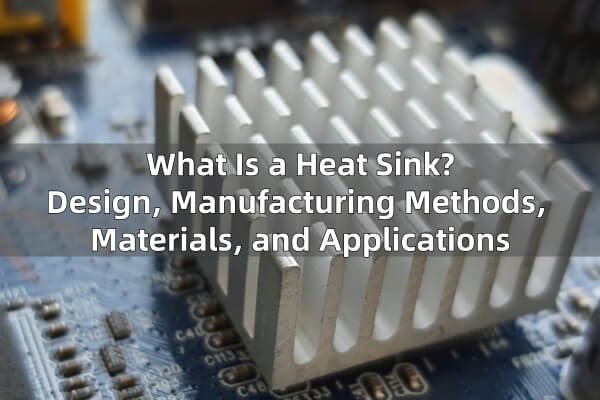
A heat sink is a passive thermal management component that absorbs and dissipates heat. It acts as a common heat exchange device. Manufacturers usually make it from high thermal conductivity metals such as aluminum and copper. It transfers heat by increasing surface area and reducing thermal resistance.
The device relies on conduction, convection, and radiation to release heat from electronic components, power modules, or mechanical systems into air or liquid coolant. Its structure typically includes a base and fins. It achieves efficient heat transfer without complex external systems.
Heat sinks are widely used in CPUs, power modules, LED systems, automotive systems, industrial equipment, and aerospace applications. They play a key role in maintaining safe operating temperatures and stable system performance.
What Does a Heat Sink Do?
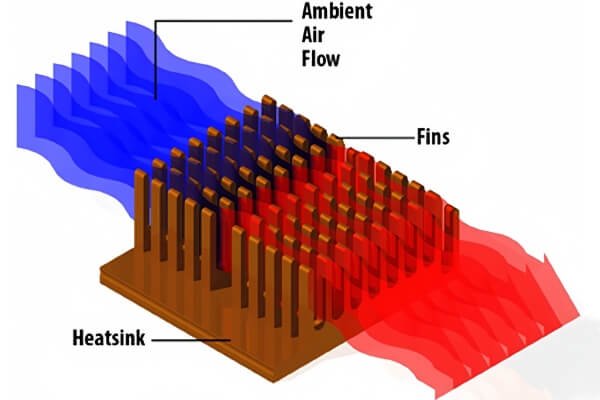
A heat sink collects heat from the source through its base and conducts it efficiently. Its fins increase the surface area and improve heat transfer efficiency. It mainly uses convection, supported by a small amount of radiation, to release heat into the surrounding air or cooling medium.
This process creates a temperature gradient that moves heat away from critical components. It reduces junction or case temperature and prevents overheating, performance loss, shortened lifespan, thermal runaway, and damage. It allows devices to operate within a safe temperature range and ensures stability, reliability, and efficiency under continuous, high-load conditions.
Why Is It Important?
Without effective cooling, electronic components may lose performance, become unreliable, or fail completely. High temperature accelerates material degradation, reduces electrical efficiency, and increases the risk of system failure.
In high-density and high-power systems, heat buildup can cause frequency throttling, signal interference, faster aging, and higher failure rates. Even a small temperature rise can shorten component life and increase energy consumption.
A well-designed heat sink reduces thermal resistance and improves temperature uniformity. It prevents local hot spots and supports higher power density. It also helps meet compact design requirements.In industries such as industrial control, electric vehicles, servers, and communication systems, reliable heat sinks ensure long-term stable operation, improve performance limits, and increase product competitiveness.
How Does a Heat Sink Work?
A heat sink works based on fundamental heat transfer principles. It uses conduction, convection, and radiation to move heat from a heat source to a cooler environment.
Heat first travels through the heat sink’s solid material by conduction. Then, air or fluid removes heat from the surface through convection. Material conductivity, structural design, and airflow conditions determine overall efficiency.
Basic Heat Transfer Principles
Heat sinks transfer heat through conduction, convection, and radiation. Heat moves from the source to the base and fins through conduction. This process follows Fourier’s law, where heat flow depends on temperature gradient and material conductivity.
Once heat reaches the surface, convection removes it through natural or forced airflow. This process follows Newton’s law of cooling, and the heat transfer coefficient depends on airflow speed, surface geometry, and fluid properties.
Radiation releases heat in the form of electromagnetic waves. It follows the Stefan-Boltzmann law. Its effect remains small at normal temperatures but becomes more important in high temperatures or vacuum environments.
Conduction and convection play the main roles, while all three mechanisms work together to form a complete heat transfer path and maintain stable temperatures.
How Design Improves Cooling Efficiency
The structure of a heat sink directly affects its performance. Fin spacing, thickness, height, and orientation all influence airflow and heat dissipation.
Optimized design increases effective surface area and balances airflow resistance with heat transfer. Improved geometry can promote turbulence and increase heat transfer efficiency.
A flat and properly sized base reduces thermal resistance and spreads heat evenly. Advanced designs may include variable fin height, heat pipes, or vapor chambers to improve heat spreading and long-distance heat transfer.
These improvements reduce both interface and air-side thermal resistance. They enhance performance in a limited space or changing conditions and ensure stable operation.
Heat Sink Design and Key Components
Heat sink performance depends heavily on structural design and component integration. A good design combines multiple elements to minimize thermal resistance, reduce weight, and ensure reliable installation within space and cost limits.
The main parts include the base for heat spreading and mounting, fins for convection, and high-quality thermal interface materials.
Base and Fins
The base contacts the heat source directly. It must have high flatness and good thermal conductivity to collect and spread heat quickly.
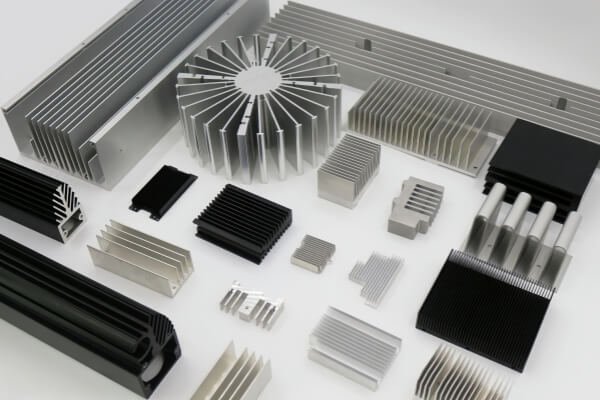
Fins extend from the base and increase surface area to improve convection. Common types include straight fins, pin fins, skived fins, and bonded fins.
Fin geometry and arrangement affect airflow and cooling performance. Designers must balance heat transfer and airflow resistance. Together, the base and fins create a continuous path that transfers heat efficiently to the environment.
Thermal Interface Materials
Thermal interface materials fill microscopic air gaps between the heat sink base and the heat source. They remove insulating air layers and reduce interface thermal resistance.
Common materials include thermal grease, gels, phase change materials, pads, and solder. Selection depends on thermal conductivity, ease of application, and long-term stability under temperature and mechanical stress. These materials are essential for effective thermal performance.
Key Design Factors
Design must consider fin structure, airflow conditions, size, weight, materials, surface treatment, mounting method, and ambient temperature.
Dense and thin fins increase surface area but may restrict airflow. Wider spacing suits low airflow conditions. Airflow direction and speed determine whether natural or forced cooling is used, and forced cooling usually provides better performance.
Engineers must balance thermal needs, space limits, weight, and cost. Simulation and testing help optimize the design and achieve the best performance within constraints.
Heat Sink Materials
Material selection plays a key role in performance and cost. It affects thermal conductivity, weight, manufacturing, and overall efficiency.
Aluminum and copper are the most common materials. Each offers unique advantages and suits different applications. Advanced systems may use composite or new materials.
Aluminum vs Copper
Aluminum is the most widely used material. Aluminum alloys offer about 180–220 W/(m·K), while pure aluminum reaches about 237. It is lightweight, cost-effective, easy to process, and corrosion-resistant. It works well for mass production and common applications.
Copper provides about 385–401 W/(m·K), offering better conductivity and heat spreading. It performs well in high-power-density and space-limited applications. However, it has a higher density, a higher cost, and is harder to machine. Designers often use copper in bases or heat pipes.
Selection depends on thermal needs, mechanical limits, and budget.
How to Choose the Right Material
Material choice depends on thermal resistance, environment, weight, production volume, and cost.
Aluminum works well for lightweight and cost-sensitive large-scale applications. It is easy to extrude and is recyclable.
Copper or copper-aluminum combinations suit high heat flux and limited space. Engineers often combine copper inserts with aluminum structures to balance performance and cost.
Extreme conditions may require advanced materials such as graphite, graphene, or ceramics. Designers must also consider manufacturability and corrosion resistance.
Heat Sink Manufacturing Methods
Manufacturing methods affect structure complexity, fin geometry, precision, and surface finish. They also influence performance and cost.
Common methods include extrusion, CNC machining, skiving, and casting. Each suits different production needs and design complexity.
Extrusion
Extrusion is the most common method for aluminum heat sinks. It pushes heated aluminum through a die to form continuous profiles with straight fins.
This method offers low cost, high efficiency, and consistent quality. It suits large-scale production for computers, LEDs, and power supplies. However, it limits complex structures and high-density fin designs.
CNC Machining
CNC machining removes material from solid aluminum or copper blocks. It creates precise and complex fin structures.
It suits prototypes, small batch production, and high precision applications. It allows flexible design changes but has higher material waste and cost.
Skiving and Casting
Skiving cuts fins directly from solid metal. It creates high-density fins with no interface resistance and excellent thermal performance.
Die casting forms complex 3D shapes in one step. It suits large-scale production but may introduce internal defects that affect conductivity.
Other methods include stamping, forging, welding, and 3D printing. Each meets specific design needs. Engineers must choose based on thermal requirements, complexity, and production volume.
Types of Heat Sinks
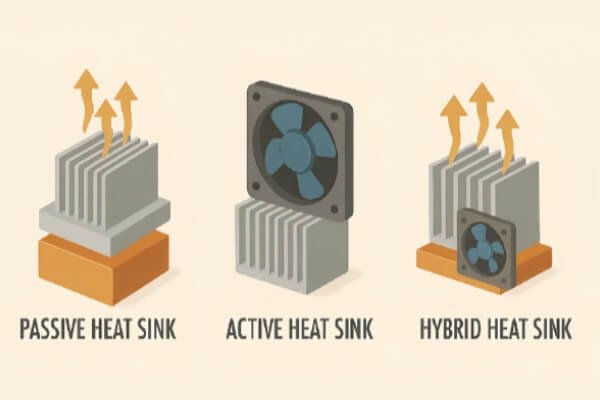
Heat sinks can be classified by cooling method, structure, and additional components. Common types include passive, active, hybrid, and specialized designs.
Passive Heat Sinks
Passive heat sinks rely on natural convection and radiation. They do not use fans or pumps.
They offer simple structure, silent operation, high reliability, and no maintenance. They suit low to medium power and noise-sensitive applications such as routers and small power supplies.
Active Heat Sinks
Active heat sinks use fans, blowers, or pumps to force airflow or liquid movement. This greatly improves cooling efficiency.
They handle higher power in compact spaces and are common in CPUs, GPUs, and servers. However, they consume power, generate noise, and may fail mechanically.
Hybrid Heat Sinks
Hybrid designs combine passive and active cooling. They often include heat pipes or vapor chambers with air or liquid cooling.
They improve heat spreading and reduce thermal resistance. They also adjust cooling based on load. These systems balance performance, energy use, and reliability.
Other Common Types
Other designs include pin fin, skived fin, bonded fin, folded fin, embedded tube, and liquid cold plates.
Pin fins suit multi-directional airflow. Folded fins maximize surface area in tight spaces. Some designs include heat pipes or vapor chambers to enhance heat spreading. Each type targets specific airflow, space, and power conditions.
Common Applications
Heat sinks play a vital role in many industries. They remove excess heat, improve performance, and extend device life.
Electronics and Computer CPUs
Heat sinks cool CPUs, GPUs, VRMs, SSDs, and integrated circuits. They prevent thermal throttling and ensure stable operation under high load. Data centers use large heatsink arrays and optimized airflow for continuous operation.
LED Lighting Systems
LED chips generate concentrated heat. High temperature reduces efficiency, causes color shift, and shortens life. Heat sinks control junction temperature and maintain performance. Proper cooling can extend the lifespan to 50,000 hours or more. They are widely used in indoor and outdoor lighting.
Power Electronics and Industrial Equipment
Devices such as inverters, chargers, and motor drives produce large amounts of heat.
Heat sinks keep power devices like IGBTs and MOSFETs within safe limits. They prevent shutdown and ensure reliable operation. These systems often use large surface designs with forced air or liquid cooling.
Automotive Applications
Heat sinks manage heat in battery packs, motor controllers, onboard chargers, and electronic control units.
They improve battery life, efficiency, and system reliability. Designs must handle vibration, temperature cycles, and space limits while maintaining lightweight structure.
Aerospace and High-Performance Systems
Aerospace systems require heat sinks to operate in extreme environments such as vacuum, high altitude, and large temperature changes.
They are used in satellites, radar, and onboard computers. Designs often use composite materials and advanced cooling methods to ensure reliability under harsh conditions.
How to Choose the Right Heat Sink
Selection requires system-level evaluation. Engineers must consider heat load, power, temperature rise, ambient conditions, airflow, space, weight, noise, cost, and reliability.
They calculate the required thermal resistance and surface area, then choose air or liquid cooling. Material and manufacturing method must match the application.
Simulation and testing help verify performance. The final design should balance performance and cost while avoiding overdesign.
FAQs
1. What is the meaning of heat sink?
The meaning of a heat sink refers to a device that absorbs and dissipates heat from a hot component. It transfers heat away from electronic parts and releases it into the surrounding air or cooling medium. This process helps maintain safe operating temperatures and prevents overheating.
2. What materials are commonly used to make a heatsink?
A heatsink is usually made from aluminum or copper because both materials offer good thermal conductivity. Aluminum is lightweight, cost-effective, and easy to manufacture, which makes it suitable for most applications. Copper provides higher thermal performance and better heat spreading, so it is often used in high-power or space-limited designs.
3. How do heatsinks improve cooling performance?
Heatsinks improve cooling by increasing the surface area that comes into contact with air. Their fin structure allows heat to spread out and transfer more efficiently. When airflow passes over the fins, it carries heat away faster, which helps keep components at a stable and safe temperature.
4. Why are heatsinks important in electronic devices?
Heatsinks play a critical role in preventing overheating in electronic systems. They help maintain stable performance, improve reliability, and extend the lifespan of components. Without proper cooling, devices may slow down, fail, or suffer permanent damage.
5. What is a computer CPU heatsink?
A computer CPU heatsink is a cooling component designed specifically for processors. It attaches directly to the CPU and draws heat away from it. Most designs include fins and are often paired with a fan to improve airflow and cooling efficiency.
6. What is a heat sink fan, and when is it needed?
A heat sink fan is an active cooling solution that combines a heat sink with a fan. The fan forces air through the fins, which increases heat dissipation. It is needed in high-performance systems where passive cooling alone cannot handle the heat load.
Conclusion
Heat sinks play a critical role in modern electronic and mechanical systems. They serve as essential thermal management components. Their performance depends on working principles, structure, materials, and manufacturing methods.
From consumer electronics to industrial systems, automotive, and aerospace, proper heat sink design improves stability, power density, and lifespan.
Engineers should understand thermal behavior and choose suitable types, materials, and processes based on real needs. This approach creates efficient, reliable, and cost-effective cooling solutions.
As technology advances toward higher performance and smaller size, innovation in heat sink design and materials will continue to support more powerful and compact systems.
Start Your Custom Heat Sink Project Today
If you are developing a new product or improving an existing design, choosing the right heat sink is critical to performance and reliability.
At HRCCNC, we specialize in custom CNC-machined heat sinks with tight tolerances and high-quality surface finishing. Our engineering team can support you from design optimization to full-scale production, ensuring your thermal solution meets both technical and cost requirements.
Send us your CAD files or project requirements today, and our team will provide a detailed quotation and professional feedback within 24 hours.