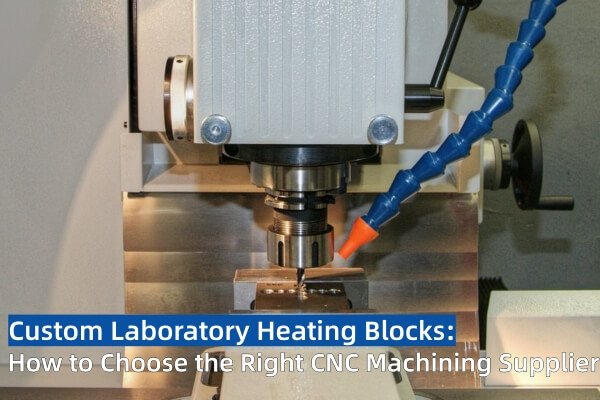

The wells are the most important feature of a dry bath block. When they are straight, clean and the correct depth, the block can do its job. When they are not, other features of the part are unlikely to make up for it.
Deep-hole drilling in aluminum becomes more demanding as holes get longer, closer together and held to a close tube fit. Chips can jam, drills can drift, and burrs can form where a tube has to seat. This article covers those problem areas in an aluminum heating block, what to measure on the finished part, and what a drawing should specify so a supplier can quote a custom aluminum heating block accurately. It follows the way HRCCNC reviews its aluminum dry bath blocks and avoids stating machining limits, since those vary with each drawing.
Why Deep Holes Matter in an Aluminum Heating Block
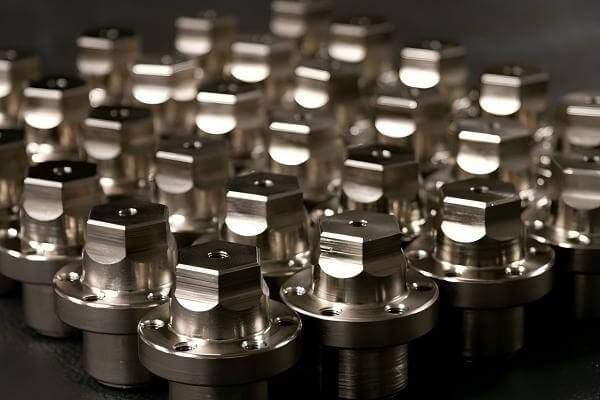
Wells, Sample Contact, and Heat Transfer
The tube sits in the well and receives heat largely through contact with the well wall. A well that is too shallow, slightly oversized or uneven along its length changes tube-to-well contact, so heat reaches one sample differently from the next. Over months of use the same wells take tubes in and out repeatedly, so small flaws can grow.
HRCCNC’s product page names bore depth, sample contact and flat bottom wells as key focus areas for laboratory heating equipment, which is why the wells receive the closest attention in a quotation review.
Why Both Hole Depth and Diameter Matter
Depth alone says little about how difficult a hole is. The depth-to-diameter ratio is more useful. As the ratio rises, the drill has to reach farther relative to its size, chips have a longer path out, and keeping the hole straight becomes harder. A smaller drill also has lower rigidity and is more prone to deflection, so a narrow bore is harder to hold straight and to finish evenly than a wide bore of the same depth.
Microtube and PCR tube blocks combine small bores with real depth, which makes them more demanding than they appear. The drawing should give both depth and diameter, because a depth without a diameter leaves the supplier to assume the other half.
Deep-Hole Drilling in Aluminum: Core Challenges
Chip removal, hole drift and dense layouts account for much of the difficulty in deep-hole drilling in aluminum, and the three tend to affect one another.
Chip Removal
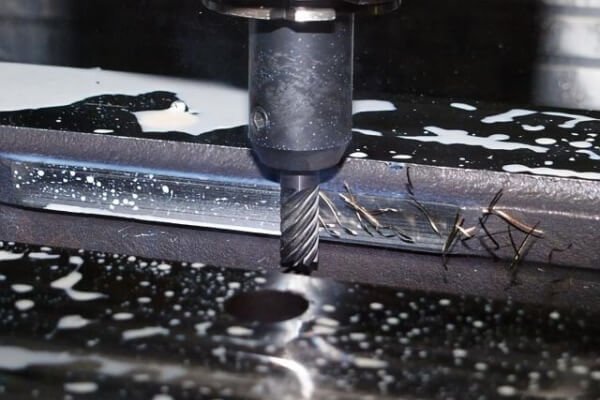
When drilling deep holes in aluminum, chips have to travel up the hole to get out, and aluminum tends to form long, soft chips that cling to the tool. If they pack into the flutes or press against the wall, they can mark the bore, raise temperature and load the tool. These effects are not visible until the well is finished, so a quote for deep wells should briefly explain how chips are cleared.
Hole Drift and Straightness
A drill does not always hold the line it started on, and the longer the hole, the more opportunity there is for it to drift. A well that finishes off position or slightly out of straight changes how the tube seats and how consistently each tube contacts its well. In a dense array there is a second consequence: a drifting hole leaves a thinner wall against its neighbor.
HRCCNC reviews hole depth, straightness and bore consistency before tooling is chosen, because drift found on a finished part can mean rework or a scrapped block.
Dense Hole Layouts and Drilling Accuracy
A single deep hole and a deep hole inside a 96-well block are different jobs. The dense layout leaves thin material between wells, so clamping and the order in which holes are cut both matter, and burrs are harder to control. This is why deep-hole drilling on an aluminum heating block is quoted from the drawing and not from a price list. Spacing can add as much difficulty as depth.
Drilling Deep Holes in Aluminum: Machining Route and Bore Quality
Drilling, Boring, and Reaming
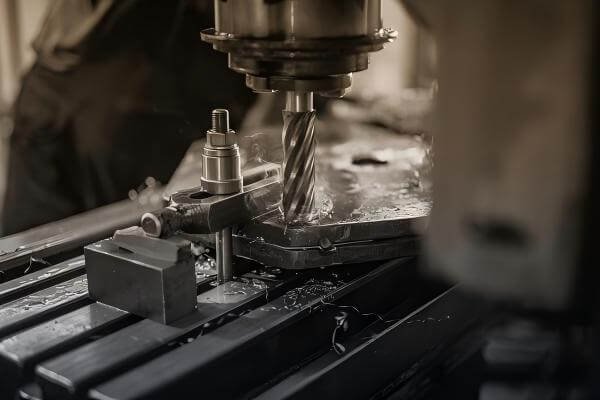
Many wells need more than one operation, though not all do. HRCCNC’s process list for these blocks includes CNC milling, deep-hole drilling, boring, reaming, tapping, chamfering, deburring and inspection. Drilling opens the hole, and boring or reaming may be added when the drawing calls for tighter size control or a finer wall. Which operations a block needs depends on its depth, diameter, fit and finish requirements. For hole work on its own, HRCCNC also offers CNC drilling.
Bore Finish and Well Bottoms
The product page lists a controlled internal bore finish for deep-well heating blocks and clean machined wells for standard ones. A rough wall can make tubes harder to insert and remove, and it can retain residue, so bore finish also affects cleaning. A specified roughness value can be checked with a profilometer where the bore is accessible.
The well bottom is a design choice as well. If a flat bottom is required, the drawing should say so.
Burr Control and Chamfered Entries
Burrs can form in several places, and each has a different cause. Entry burrs form where the drill enters the surface, at the well rim, where they can scratch a tube or prevent it from seating. Exit burrs form where a drill breaks through the far side of the material, which applies to through holes. Burrs at intersecting holes form inside the bore where two holes meet, and they are harder to reach for deburring.
The product page lists chamfered holes and burr-free dense hole arrays, with chamfering and deburring built into the process. The drawing can state which holes need an entry chamfer and what edge condition is acceptable.
Inspecting Deep-Hole Aluminum Blocks
A block can look right on arrival, with clean wells and tidy edges, and still have a well that is less straight or shallower than the first. Whether the last well matches the first is a measurement question. The checks that carry the most weight on deep-well parts are hole diameter, depth, straightness, spacing and position. Marking a dimension as critical on the drawing flags it for attention, but the inspection method and acceptance criteria should also be stated or agreed with the supplier. The methods below are general options.
Hole Diameter and Depth
Diameter and depth together decide whether a tube fits and how far it goes. Diameter is commonly checked with pin or plug gauges or a bore gauge, which can also show taper along the bore, and depth with a depth gauge or depth micrometer. HRCCNC checks hole size and depth according to drawing requirements. If some dimensions are critical and others only general, the drawing should say which is which.
Straightness
Straightness is easy to overlook on deep wells. The product page lists hole straightness and depth among the items reviewed on deep-well heating blocks. A common functional check is a long gauge pin that must pass the full depth. A bore gauge or CMM measurement may provide more detail where probe access allows. If straightness matters on the part, the drawing should state the allowed deviation and the check method, so it is inspected and not assumed.
Hole Spacing and Position
Spacing and position show whether an array matches its layout. The page notes that well spacing and position are verified against the drawing on multi-well blocks. A CMM or optical measuring system is typically used for this, working from datums stated on the drawing, so the supplier should be told which reference points the layout is measured from.
Anodizing and Cleaning Deep Bores
Finishing affects the bore, so it should be planned together with the drilling and not treated as a final step.
How Anodizing May Affect Deep Bores
Anodizing forms an oxide layer on the aluminum surface, and part of that layer builds outward from the original surface. It can therefore reduce the finished bore size and change the tube fit. Hard anodizing produces a thicker oxide coating than standard anodizing, so its effect on final bore size is larger and deserves extra attention where the bore is critical. Possible approaches include machining the bore with an allowance or specifying that final dimensions apply after anodizing. Finish, coating thickness and critical bore dimensions are best reviewed together before production starts.
HRCCNC reviews anodizing, hard anodizing and cleaning requirements according to final use, and its anodizing service covers the finishing side.
Cleaning Deep Bores and Blind Holes
Many deep wells are blind holes, where chips, fluid and residue have only one way out: the way they went in. Through holes drain more easily but still need cleaning. Cleaning is important before finishing and again afterward, since leftover residue can interfere with tube-to-well contact or contaminate the tube exterior and surrounding work area. If the blocks are headed for medical or biotechnology equipment, the cleaning requirement should be included in the quote request.
Protection Before Shipment
Finished blocks are packed to protect against scratches, contamination and damage.
Custom Manufacturing: Sending Your Deep-Hole Block Drawing to HRCCNC
A drawing that states what matters allows a faster, more accurate quote, and this applies particularly to deep wells.
What to Include on the Drawing
Start with tube or vial size, hole depth, bore diameter and spacing, then add material grade, finish, tolerance notes, quantity and target lead time. For deep-hole blocks, the following items are also worth specifying. Anything left off the drawing has to be assumed by the supplier.
| Item | What to specify |
| Bore tolerance | Diameter tolerance for each critical bore, depth tolerance, and whether they apply before or after anodizing |
| Straightness | The allowed deviation or a functional requirement, such as a gauge pin that must pass the full depth, and how it is to be checked |
| Surface finish | The required bore finish, such as a roughness value, and the surfaces it applies to |
| Anodizing thickness | The anodizing type, the thickness or thickness range, and whether finished dimensions include the coating |
| Cleaning | The cleaning requirement for bores and blind holes, any residue limits, and packaging expectations |
How Deep-Hole Risk Is Reviewed Before Quoting
Before quoting, HRCCNC’s engineering team looks at machining risks such as deep wells, tight spacing and finish requirements, then suggests a practical manufacturing route. HRCCNC states that most projects receive a response within 24 hours, although complex parts may require additional engineering review.
From Sample Approval to Repeat Batches
For deep-hole drilling in aluminum projects, a sample gives the chance to test well depth and tube fit in your own equipment before batches are ordered. Once the sample is approved, repeat orders follow the same drawing.
FAQs About Deep-Hole Drilling in Aluminum
1. What makes a hole deep when drilling aluminum?
There is no single depth-to-diameter ratio that defines every deep hole. Machining difficulty also depends on bore diameter, straightness, surface finish, wall thickness, hole spacing, and inspection requirements. The supplier should review these factors together before selecting the drilling method.
2. Why is deep-hole drilling difficult in aluminum?
Aluminum can produce long, soft chips that collect in the drill flutes or rub against the bore wall. As the hole becomes deeper, chip evacuation, heat control, tool deflection, and bore straightness become more difficult to manage.
3. How can drill drift be controlled in an aluminum heating block?
Drift can be reduced through suitable tooling, rigid workholding, controlled cutting parameters, effective chip evacuation, and an appropriate drilling sequence. The final process should be selected according to the hole diameter, depth, spacing, and straightness requirement shown on the drawing.
4. How are deep holes in aluminum heating blocks inspected?
Hole diameter may be checked with pin gauges, plug gauges, or bore gauges, while depth can be measured with a depth gauge or depth micrometer. A long gauge pin can provide a functional straightness check, and CMM measurement may provide additional information where probe access allows.
5. Does anodizing change the finished bore diameter?
Yes. Anodizing creates an oxide layer on the aluminum surface, and part of the layer grows outward from the original surface. This can reduce the finished bore diameter, so the drawing should state the coating thickness and whether critical dimensions apply before or after anodizing.
6. What should be included in a deep-hole drilling RFQ?
The RFQ should include the aluminum grade, tube or vial size, bore diameter and depth, hole spacing, tolerances, bottom geometry, surface finish, anodizing requirements, cleaning requirements, quantity, and inspection criteria. A 2D drawing should identify critical dimensions and measurement datums.
To start, send your drawing through the aluminum dry bath blocks page for review and quotation.