Skip to content

The use of pin fasteners is crucial to the security of machinery and buildings. There are numerous varieties on the market, such as cotter pins, spring and hitch pins, so it is necessary to choose a reliable one. This guide will break down the options and help you select the best pin for you.
What Are Pin Fasteners?
Pin fasteners are miniature mechanical devices used to position or align components in an assembly.
Understanding Pin Fasteners
Pin fasteners work on the same basic principle: they ensure a stable connection between two or more components. They are typically employed in machinery, car systems, robotics, and precision machinery.
How Pin Fasteners Work
Pin fasteners are used by inserting them into pre-drilled holes. Some rely on friction, spring tension, or mechanical locking. This simple process allows easy assembly, disassembly, and alignment.
Advantages of Pin Fasteners
Pin fasteners have several advantages, including:
- Allow extremely precise positioning in mechanical system applications.
- Simple to install: Most designs require few tools and little force.
- Provide high-strength, stable joints: The joints remain stable even under vibration.
- Reusable: Some types of pins can be removed and used again without loss of integrity.
Types of Pin Fasteners
Pin fasteners exist in numerous variations, each intended to support specific alignment, locking, or load requirements.
Dowel Pins (Straight Pins)
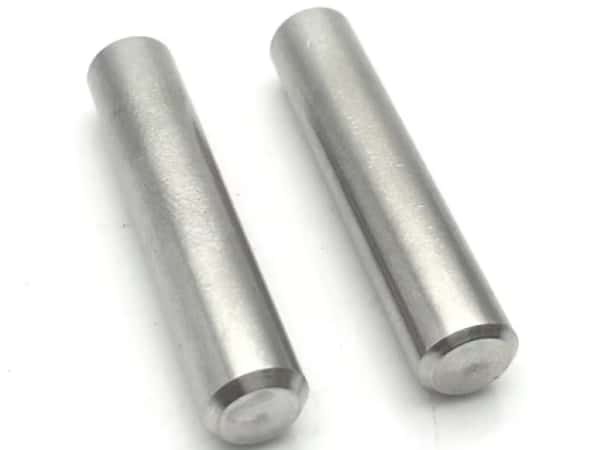
These pins help keep parts in the right place.
Description: Solid cylindrical pins used to achieve precise alignment between components.
Design attributes: Stringent tolerances, chamfered ends, plain cylindrical bodies.
Materials: Stainless steel, alloy steel, brass, hardened steel.
Applications: Machinery alignment, robotics, automotive components, and tooling fixtures.
Pros: High accuracy, high shear resistance.
Installation process: Fixed by pressing into a hole reamed to a tight fit.
Cotter Pins (Split Pins)
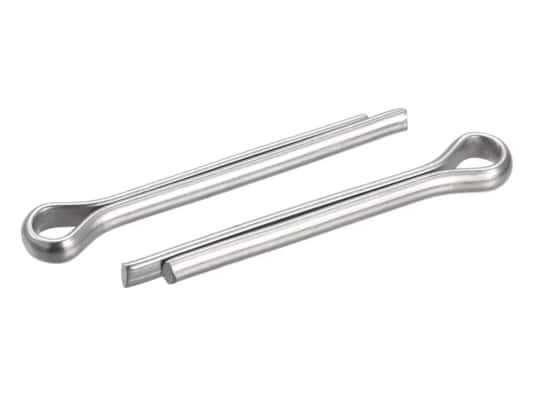
Description: A single pin with two split legs that bend to secure it in place.
Design variations:
- Standard split cotter pins: Most common type.
- Hammerlock cotter pins: Larger and stronger for heavy loads.
- T-head cotter pins: Designed to be inserted and retained.
Installation: Pass through a hole and bend the split ends outward to secure.
Applications: Clevis pins, castle nuts, agricultural machinery, and automotive uses.
Materials: Steel, stainless steel, brass, zinc-plated steel.
Sizes & specifications: ASME/ANSI sizes in various diameters and lengths.
Spring Pins (Roll Pins)
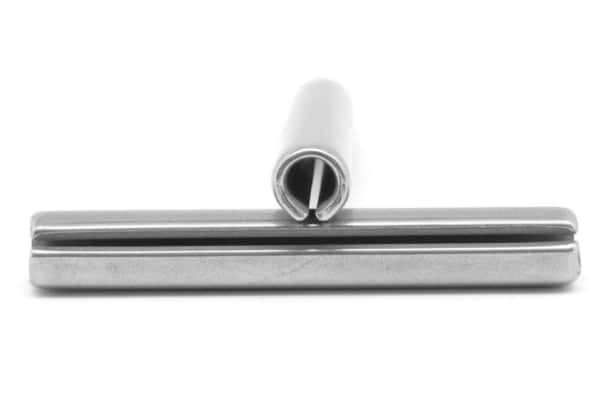
Description: Hollow pins that compress during installation and expand to hold the components in place.
Types:
- Slotted Spring Pins: Have a longitudinal slot for compressibility.
- Coiled Spring Pins: Coiled for higher shock absorption and flexibility.
Important characteristics: High vibration resistance and dynamic strength.
Applications: Gear assemblies, hinges, small machinery, fastening rotating components.
Benefits: Self-retaining, high fatigue strength, simple to install.
Clevis Pins
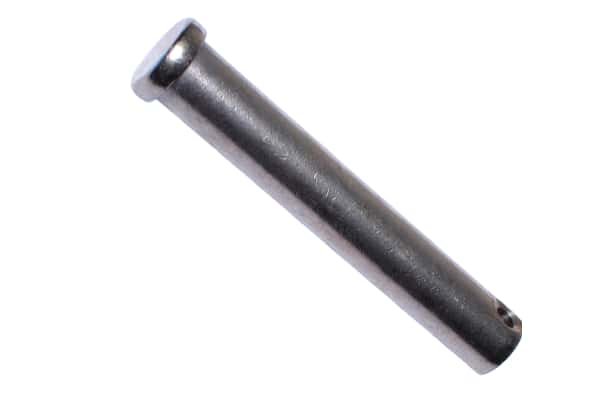
Description: Cylindrical pins with a head on one end and a cross-hole on the other, used with cotter pins or clips to secure pivot connections.
Design characteristics: Smooth shank, chamfered head, hole for locking.
Applications: Joints that require pivoting or quick removal; towing, lifting, agricultural machines, and linkages.
Load capacity: Varies based on diameter, material, and grade.
Types: Grooved clevis pins, bend head pins, zinc-plated, or stainless.
Taper Pins
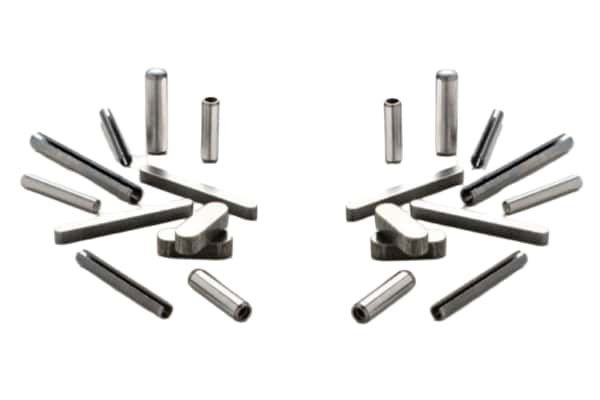
Description: Solid pins with a slight taper to ensure mechanical engagement.
Taper: Industry standard of 1:48 or 1:50.
Types:
- Normal taper pins: Smooth body for general alignment.
- Externally threaded taper pins: Externally threaded at the thin end for tightening.
- Internally threaded taper pins: Internal threads for easy removal.
Applications: Machinery, vehicle fittings, locks.
Materials: Steel, stainless steel, hardened alloy steels.
Benefits: Good shear strength, self-grip fit due to taper design, and high precision.
Grooved Pins (Drive Pins)
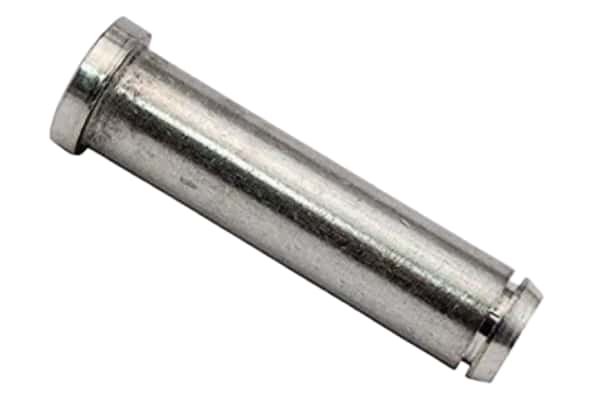
Description: Solid pins with grooves running along the body.
Groove patterns: Full-length groove, half-length groove, or multiple groove patterns.
Principle of grooves: Grooves displace the host material, increasing retention.
Applications: Small mechanisms, linkages, automotive components, appliance assemblies.
Materials: Steel, stainless steel, plated steel.
Merits: Strong retention, can be assembled without special tools.
Lynch Pins

Description: Solid pin body with a hinged corrosion-resistant spring ring.
Installation procedure: Insert the pin into the hole and secure it by snapping the ring over the shaft.
Applications: Towing, farm machinery, trailers, equipment transportation.
Pros: Quick installation, stable locking, reusable.
Wire Lock Pins (Hitch Pin Clips)
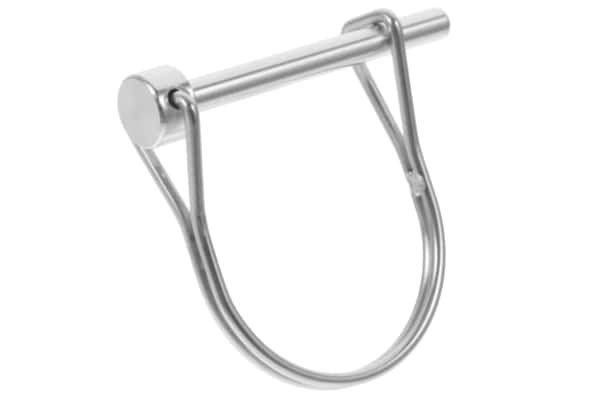
Wire lock pins are made from simple wire, offering a lightweight yet secure retention.
Description: Bent-wire clips are used in attaching hitch pins and shafts.
Design: Wire made of spring steel in the form of an R, hairpin, or loop.
Materials: Carbon steel, stainless steel, zinc-coated steel.
Applications: Trailers, lawn equipment, machinery shafts.
Detent Pins
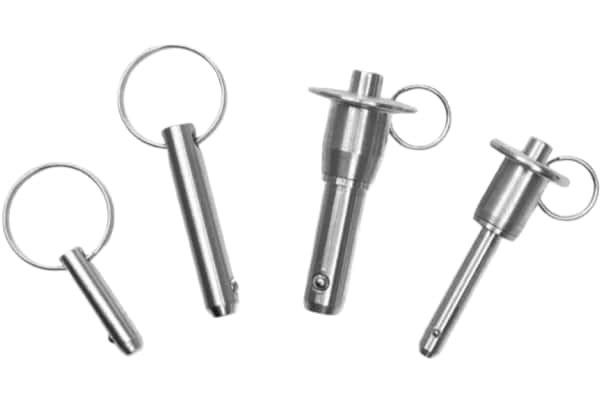
Quick-release pins use detent mechanisms.
Description: These pins have spring-loaded balls or locking mechanisms that allow them to be released immediately.
Types:
- Normal detent pins: Spring-loaded balls that hold the pin in place until released.
- Positive lock pins: The button secures the balls for added security.
- L-handle quick-release pins: Provide leverage for removal.
- T-handle quick-release pins: Convenient to use.
- Ring handle pins: Provide easy pull-ring functionality.
Mechanism: Pressing the button retracts the detent balls, allowing easy removal.
Applications: Marine and aerospace hardware, fixtures, sports equipment.
Benefits: Quick, not-tooled, safe, and very strong.
Hitch Pins
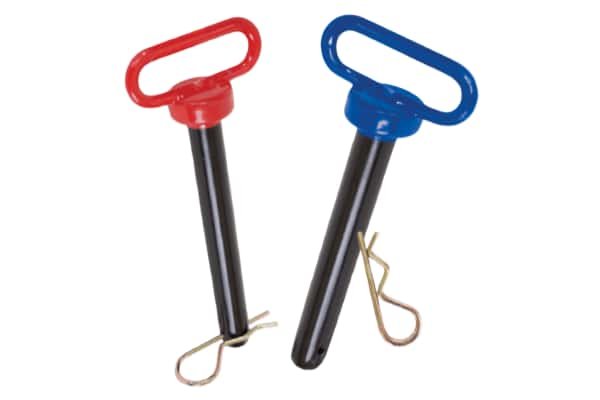
Hitch pins provide a removable fastening with great strength for towing and equipment.
Description: A straight pin that has a clip/lock hole and a head.
Standard sizes:
- 1/2″ diameter: Light-duty towing.
- 5/8″ diameter: Class III and Class V standard.
Types:
- Basic pin + clip: Standard hitch pins.
- Locking hitch pins: Theft-prevention locking, keyed or combo.
- Anti-rattle hitch pins: Less noise, less movement.
- Swivel hitch pins: Adjustable for easier use.
Length: Should match the combined thickness of the receiver and accessory.
Applications: Trailer hitches, farm implements.
Safety: Lubrication, frequent inspection, corrosion protection.
Bent Pins

Other types of pins include bent pins, which are used to secure components and are easily inserted or leveraged.
Description: Pins with a curved or angled shank.
Design benefits: Enhanced grip, faster insertion, increased clearance around components.
Materials: Stainless steel, carbon steel, plated steel.
Uses: Equipment fasteners, machining hardware, and temporary fastening.
Function: Houses parts that can be removed manually easily.
Spiral Pins (Coiled Pins)
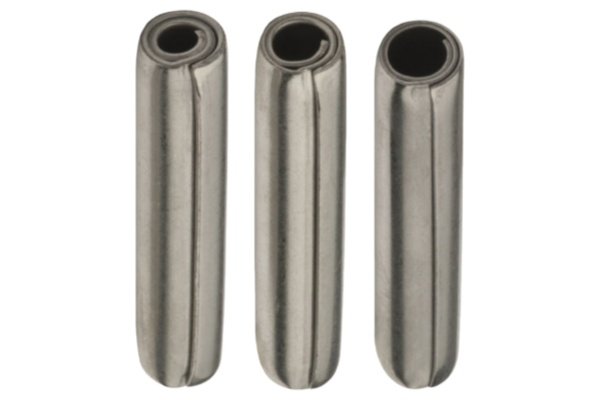
Description: Multi-layered coil that compresses consistently during installation.
Design advantages: uniform radial pressure and high fatigue resistance.
Shock absorption: Good where the impact is dynamic or high.
Applications: Motors, gears, hinges, and assemblies requiring vibration damping.
Safety Pins
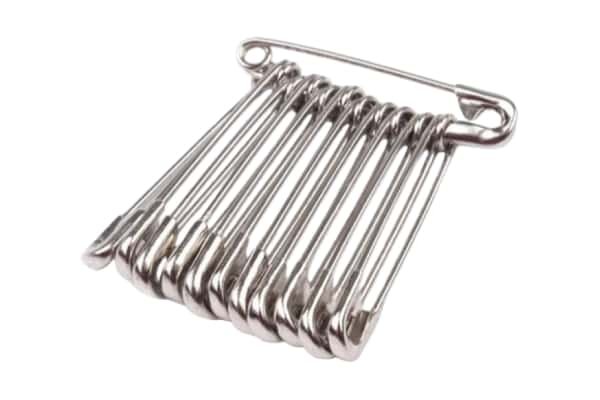
Safety pins are lightweight metal pins with easy locking for clothing and other light equipment.
Instructions: A clipped wire pin with a pointed end covered by a clasp.
Types:
- Common safety pins: Daily use.
- Rounded safety pins: Suitable for quilts and heavy fabric.
- Coilless safety pins (U-shaped/French): Useful in crafts and jewelry.
- Stronger gauge heavy-duty safety pins: Finer industrial grade.
- Bulb/gourd safety pins: Tag and accessory shape are rounded.
- Kilt pins/blanket pins: Large, ornamental, strong.
Sizes: Tiny (#00) to giant (#4).
Materials: Steel, nickel-plated steel, brass, stainless steel.
Applications: Clothing, crafts, textiles, attaching gear.
Threaded Pins
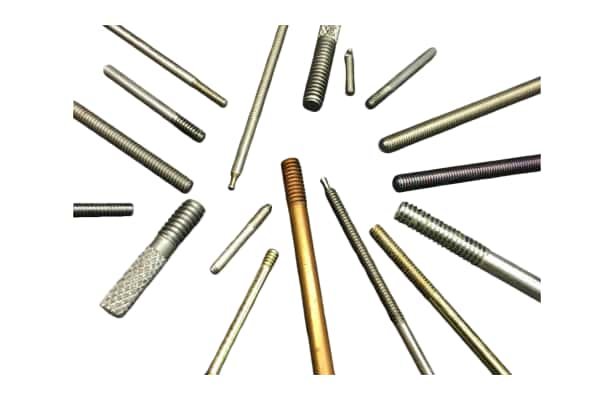
Description: Pins that are externally or internally threaded to allow mechanical locking.
Types:
- External threads: Pins are screwed into components to increase stability.
- Internally threaded pins (pull dowels): Have a bolt that can be removed or anchored.
- Threaded taper pins: Threaded at one end and taper fit at the other.
Applications: Equipment positioning, pull-out mechanisms, and auto parts.
Pros: Strong axial retention, simple removal, and position correction.
Pin Fastener Materials
Pin fasteners are produced from various materials.
Common Materials
Widespread pin materials vary in strength, corrosion resistance, and machinability.
Steel Pins
- Stainless steel (300 series 17-4): A great marine, medical, and outdoor corrosion-resistant option.
- Surface finishes: Zinc plating, black oxide, phosphate finishes, and galvanization to provide extra protection.
- Carbon steel: Tough and cost-effective; it is commonly used in general applications.
- Hardened steel: Heat-treated to give high wear resistance and high load.
Non-Ferrous Materials
- Titanium: Strong-to-weight ratio, and outstanding corrosion strength in harsh environments.
- Brass: Non-magnetic, corrosion-resistant, and suitable for decorative or low-load applications.
- Aluminum: Light, simple to machine, and suitable for aerospace and light assembly.
Specialty Materials
- Alloy steel: Strength, toughness, and fatigue resistance are improved to increase high-stress usage.
- Nylon: Lightweight, non-conductive, and can be used in electronics or loadless applications.
Material Selection Factors
The selection of the appropriate material will result in performance, benefits, and security of the end assembly.
- Environmental factors: Water, chemicals, salt, and temperatures at which it is used influence the suitability of the material.
- Load conditions and stresses: Hardened or alloy steels are required when loads are higher.
- Corrosion resistance requirements: Stainless steel, brass, and titanium are the best choices for applications involving moisture or chemicals.
- Weight factor: Aerospace and mobile equipment will tend to favor aluminum or titanium.
- Cost vs. performance balance: The material choice must be functional and cost-effective based on the application’s functional and budgetary considerations.
Primary Manufacturing Methods
Pin fasteners are produced through careful processes, which involve shaping, hardening, and finishing of components. These techniques guarantee dependability, predictability, and efficiency in different applications.
- Cutting: This is the process of cutting the raw material to the desired length for further shaping. Guarantees standardization of initial size.
- Wire forming: Molds wire fasteners such as cotter pins and clips. Gives flexibility and fast production.
- Turning: Cuts correct diameters and finishes on cylinder pins. This process is used for applications such as dowel pins and straight pins.
- Grinding: Provides good tolerances and excellent surface finishes. Improves the fit, alignment, and smooth operation.
- Drilling: Provides cross-holes or internal features required in assembly. Supports functionality like locking or threading.
- Heat treatment: This process makes it harder, tougher, and more fatigue-resistant. This treatment ensures long-term durability.
- Forging: The pins are formed using high-strength steel under controlled deformation. Enhances grain structure and mechanical characteristics.
How to Choose the Right Pin Fastener
The fastener of the pin used is one of the factors that determine the reliability, safety, and long-term performance of any mechanical or structural system.
Key Selection Criteria
The initial step in selecting a pin is a review of the mechanical use, the strength to be achieved, and the use to which the assembly will be utilized. An appropriate match will decrease the wear, enhance safety, and enhance overall efficiency.
Application Requirements
Various uses require various degrees of accuracy, movement, or retention. The importance of the pin, alignment, locking, rotation, or quick release will be helpful in narrowing the choices.
Material and Environmental Factors
The material choice is directly influenced by exposure to moisture, chemicals, salt, or extreme temperatures. The appropriate material helps to avoid corrosion and increase the service life in hostile conditions.
Load and Stress Analysis
All pins have varying shear, tension, and vibrations. Assessment of load paths and stress levels will ensure the pin can support both dynamic and static forces.
Dimensional Considerations
Pin diameter, length, tolerance class, and hole fit have to be compatible with the assembly. Adequate sizing ensures stability and eliminates loosening, and ensures accuracy of alignment.
Installation Method
There are those pins that need to be press-fitted, and some need clips, tools, or locking devices. Choosing the pin that matches your installation process saves time from errors and assembly.
Pin Type Selection Guide
| Pin Type | Typical Engineering Requirements / Use |
| Dowel Pins | High accuracy, machinery precision, and tight tolerance assemblies. |
| Spring Pins | Resistance to vibration, flexibility, and self-retention. |
| Cotter Pins | Secure nuts, clevis pins, and parts with a basic locking mechanism. |
| Quick-Release Pins | Quick installation and quick removal. |
| Taper Pins | Self-locating alignment with high shear strength. |
| Hitch Pins | Towing agricultural equipment; systems requiring high-strength retention that can be removed. |
Conclusion
Selecting the appropriate pin fastener enhances safety, reliability, and overall system performance. Wear, misalignment, and unexpected failures are minimized by using well-engineered pins. Find high-quality options and professional assistance at HRCCNC.