Skip to content

Copper (Cu) is everywhere; it’s woven into electrical wires, embedded in coins, and many other applications. Has it ever hit your mind – what happens if you bring a magnet close to that coin or wire?
That’s where the obvious question arises – is copper magnetic or not? The answer may seem simple, but copper’s relationship with magnetism is quite intriguing from an industrial perspective.
The article answers whether copper is magnetic or not, to what extent, and why that happens. Even how it interacts with magnetic fields, common misconceptions, and applications have been discussed.
Copper: Is It a Magnetic Element?
Copper (Cu) isn’t a magnetic metal in any form. Instead, it has been categorized as a diamagnetic material. Therefore, copper products weakly repel magnetic fields; no attraction whatsoever.
Pure copper features a completely filled electron shell. The electrons are paired, resulting in zero magnetic moment. That’s why Cu remains diamagnetic, unlike iron (Fe), cobalt (Co), or nickel (Ni).
Some industries require custom copper parts through CNC machining or precision machining. Its non-magnetism grants safe integration to sensitive applications like aerospace or medical devices.
No wonder copper gets chosen for many custom metal component manufacturing. There, precision-machined parts must perform consistently in high-stress, magnetically sensitive environments.
Pure Copper vs Copper Alloys: Can Copper’s Magnetism Vary?
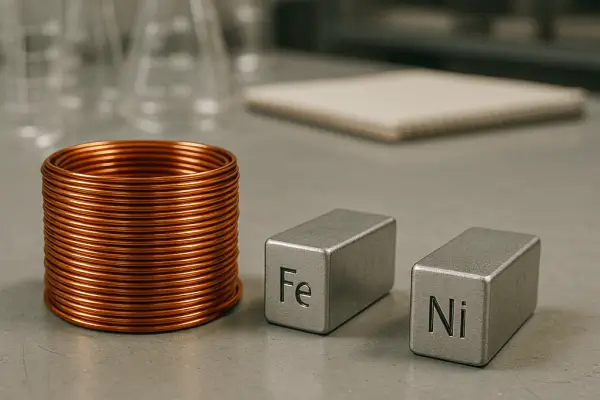
When we talk about copper, industry standards usually take it as pure copper. And pure copper is diamagnetic (not magnetic).
However, copper parts are often alloyed with metals like nickel, zinc, or aluminum. They can alter the magnetic behavior significantly.
Manufacturers specializing in CNC machining of copper alloys must know how alloy composition can change magnetic behavior.
Copper Alloys: How Does the Magnetism Change?
The presence of 0.8% – 0.9% nickel in Copper-Nickel alloys neutralizes copper’s diamagnetism. With 56% nickel, the alloy becomes ferromagnetic at room temperature.
Brass (Copper + Zinc) remains non-magnetic, as zinc also lacks free electrons. Its non-magnetism suits precision instruments and fittings against magnetic interference.
Trace impurities in bronze (Copper + Tin) can introduce weak paramagnetism. Still, bronze’s stability and non-magnetic nature remain valuable in modern engineering.
Copper-Aluminum alloys are also non-magnetic by nature. However, paramagnetic aluminum can slightly influence behavior in aerospace and automotive industries.
Those are frequently processed through precision machining for custom fittings, connectors, and parts for controlled magnetic neutrality.
How Does Copper Behave Under/Close to a Magnet?
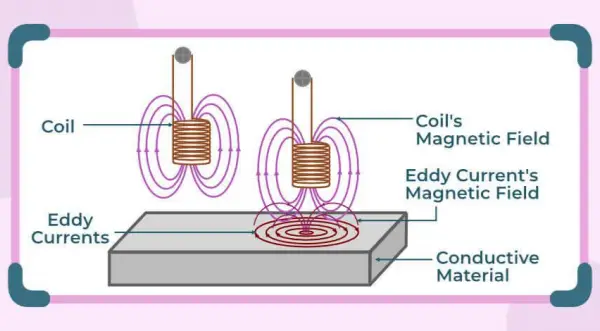
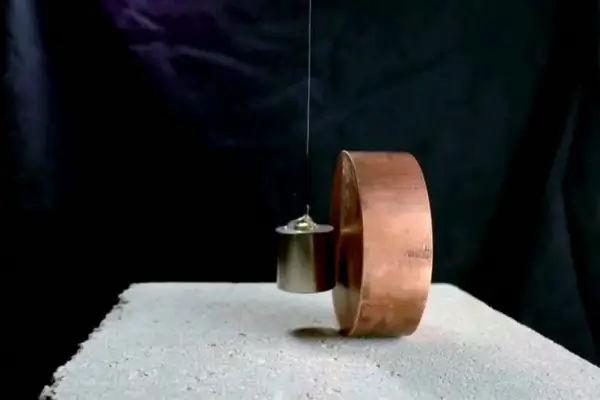
Cu (pure or alloyed) exhibits no magnetism, unless Ni is present in sufficient amounts. When placed in a magnetic field, copper shows fascinating actions such as eddy current generation and magnetic braking.
When a magnet moves near copper, it induces circulating currents (eddy currents). Those currents create opposing magnetic fields, slowing down the motion of the magnet.
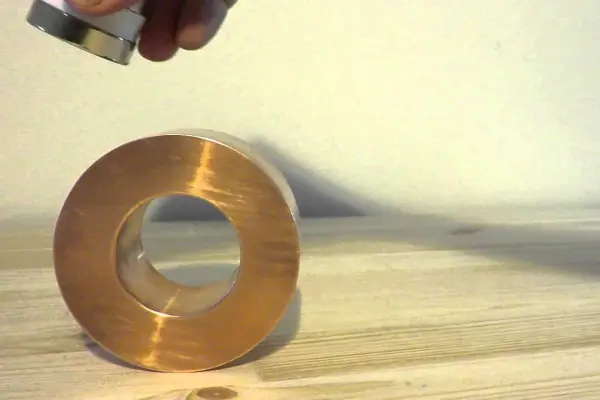
A classic demonstration requires you to drop a magnet through a copper tube. Instead of falling freely, the magnet descends slowly (Magnetic Braking) because eddy currents resist its motion.
So, copper is capable of generating opposing fields under a magnetic field. It benefits sensitive electronics by shielding them from external magnetic interference.
Such behavior makes copper widely preferable for custom-machined components. From braking systems to shielding housings and precision-engineered parts, Cu holds the upper hand.
Importance of Non-Magnetic Copper: Real-World Uses
Copper wiring ensures clear imaging in MRI machines by avoiding magnetic interference. Copper alloys in MRI-compatible instruments balance strength with non-magnetic safety.
Meanwhile, copper cables prevent distortion in high-frequency data transmission without interference. Cu shields sensitive electronics from external magnetic fields in aerospace and defense systems.
Copper coils generate controlled eddy currents for levitation and braking. Its diamagnetism reduces drag for efficiency. Copper plates in magnetic braking slow down rides safely without much friction.
Also, the conductivity with diamagnetism simplifies energy transfer in industrial heating. Cu windings interact with magnetic fields to produce electricity while resisting unwanted magnetic distortion.
Copper’s non-magnetic nature even allows separation from ferromagnetic metals in recycling plants. Large copper recycling facilities exploit its non-magnetic property to separate steel and iron.
Magnetic Properties Compared: Copper vs Others
Copper is diamagnetic, whereas metals like iron, nickel, and cobalt are strongly ferromagnetic. Meanwhile, aluminum and zinc are paramagnetic. Take a look at the summary comparison below.
| Metal | Magnetic Behavior | Magnetic Susceptibility |
| Copper (Cu) | Diamagnetic (repels weakly) | −1 × 10⁻⁵ |
| Iron (Fe) | Ferromagnetic (strongly attracts) | +200,000 |
| Nickel (Ni) | Ferromagnetic | +600 |
| Cobalt (Co) | Ferromagnetic | +250 |
| Aluminum (Al) | Paramagnetic (weakly attracts) | +2.2 × 10⁻⁵ |
| Zinc (Zn) | Diamagnetic | −1 × 10⁻⁵ |
| Titanium (Ti) | Paramagnetic | +1.25 x 10⁻⁴ |
Misconceptions About Copper Magnetism
Copper is Magnetic Like Iron
Reality: Copper exhibits no net magnetic moment under standard conditions. Its magnetic susceptibility is about −1 × 10⁻⁵; the small negative value confirms diamagnetism.
Copper Can Be Magnetized
Reality: Copper can’t retain magnetism. It doesn’t rearrange electrons to create magnetization like ferromagnetic metals.
Copper Sticks to Magnets
Reality: Copper doesn’t stick to magnets. What people often observe is magnetic braking caused by eddy currents. Dropping a magnet through a copper tube slows its fall dramatically. It happens because of the induced currents opposing the magnet’s motion, not copper being magnetic.
Copper Alloys Are Always Non-Magnetic
Reality: While brass (copper + zinc) and bronze (copper + tin) are non-magnetic, copper–nickel alloys can be magnetic. US nickels (75% copper, 25% nickel) show slight magnetic responsiveness.
Copper’s Non-Magnetism Makes It Less Useful
Reality: Copper’s diamagnetism is a strength. Copper wiring in MRI machines avoids magnetic distortion. Non-magnetic copper cables prevent interference in high-frequency data transmission.
Conclusion
Copper doesn’t dazzle with magnets like iron or nickel. Its almost steady diamagnetic nature in any condition comes from the atomic structure. Since the non-magnetic feature is persistent, copper seems suitable for many crucial applications. Nearly non-existent magnetism, combined with top conductivity, turns copper into a quiet and steady resilience.
Custom Machining Available for Metal Parts at HRCCNC
HRCCNC pioneers in balanced material properties and processing technologies. We provide copper and copper alloy parts within a broad range that comply with ASTM standards. Our 18 years of precision machining experience can get you the best advantages of high-performing copper products.
Do you need to figure out the right copper component for your project? Or do you need customized alloy parts? Contact us to get valuable insights from our material and processing experts for support.