
Sourcing components that fit well into high-volume coffee machine assembly requires precise dimensional accuracy and sealing surfaces. Steady pressure in the coffee grounds basket and no leakage result in high performance of the machine during coffee extraction. To improve coffee machine function with smoother operation, custom espresso machine parts with tight tolerance control are necessary.
Sometimes a part used in an espresso machine can be corroded due to the wrong material being used. This problem can be solved by using custom coffee equipment parts manufactured with custom materials depending on their usage in the espresso machine. Whether you are looking for portafilters, valve bodies, or steam levers, custom parts with a precise fit and surface finish may help you produce a great espresso machine.
When Custom CNC Machining Adds Value to Espresso Machine Design
If you want your espresso machine to function smoothly, even after frequent use for a long period, your machine needs parts with dimensional precision that fit perfectly with each other. You can get these parts custom CNC-machined based on exact specifications for your coffee machine design.
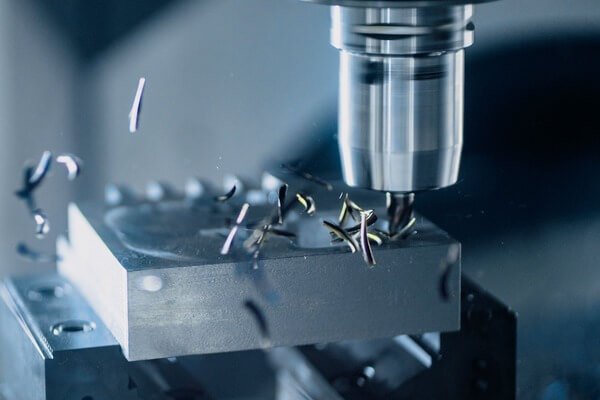
Here are some of the situations when custom CNC machining coffee equipment parts is beneficial:
- Improved Sealing and Assembly Fit:
Coffee machines assembled with parts with poor fitting often provide uneven dripping espresso shots. This may be unsatisfactory to your customers. Accurate dimensions and mating features, combined with suitable seals and correct assembly, can help reduce water leakage.
Dimensional accuracy of the parts based on the coffee machine design ensures parts fit together cleanly without forcing or gaps. The custom parts with flat or curved edge surfaces seal securely to block water and steam from leaking out under high pressure. Custom parts assembled precisely can withstand hot water and pressure surges through them, resulting in low pressure loss.
- Resistant to High Temperatures:
Espresso machines use high temperatures and water all day long. Coffee equipment parts such as the boiler, group head, portafilter, steam wand, etc are involved with high temperatures in the coffee-making process. Custom CNC machining of these parts using appropriate material alloys helps reduce warping and deterioration over time.
- Repeatability Across Production Batches
For OEM buyers, consistency across high-volume production batches is important. Whether installing portafilter lugs or valve bodies, parts from any batch must fit to prevent assembly friction and performance drift. To reduce variance, custom CNC machining allows us to use custom fixtures during CNC machining that lock every workpiece in the repeatable positioning across cycles. It results in stable workholding and repeatability across production batches.
Some Custom Espresso Machine Parts CNC Machined by HRCCNC
1. Portafilters
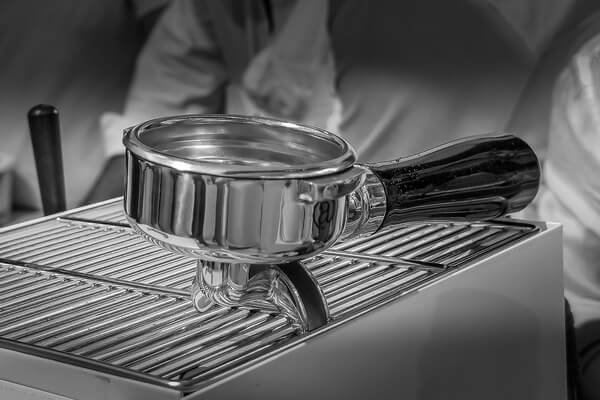
These espresso machine parts lock into the group head, holding the coffee ground basket and function as a portable filter. They also withstand the pressure of espresso shot extraction. Besides, they must endure high temperatures due to their contact with hot water.
Our engineering team at HRCCNC selects materials for portafilter bodies according to the approved drawings and operating requirements. Manufacturing these components involves CNC milling the bayonet lugs to exact angular and thickness profiles to ensure smooth, secure engagement with the group head. Precise bayonet lug geometry reduces wear on the machine’s group head.
Besides, precision CNC machining of threaded connections on the portafilter body for its handle assembly is also complex. During quality inspection, we check internal thread conformity using suitable thread go/no-go gauges and specified surface flatness using CMM inspection where appropriate.
2. Handles
Portafilter handles provide an ergonomic grip for espresso machine operators to lock and remove the portafilter bodies from the machine. So, while CNC machining this custom coffee equipment part, we consider materials and surface finishes that may resist sweat or other moisture and cleaning agents. Besides, we consider the thermal transfer from the hot espresso shot while it is locked with the portafilter bodies during the coffee extraction.
So, HRCCNC offers custom CNC-machined portafilter handles in aluminum or stainless steel to customer specifications. Material selection and handle design should account for heat transfer and comfortable handling under the intended operating conditions. Connection thread depth, outer diameter, and length are some of its critical dimensions. During quality control, we check thread conformity using suitable thread go/no-go gauges.
Besides, as portafilter handles of coffee machines are operator-contact components, we also do surface finishing quality control inspection. This is to maintain a consistent texture on the surface of the handle. Achieving a comfortable contour may be challenging sometimes. To achieve ergonomic contours with complex geometry, we use multi-axis contouring toolpaths while CNC machining.
3. Steam Wand Tips
These espresso machine parts are used to froth milk intended to be used in coffee. They direct the hot steam into milk to introduce bubbles in it and create the frothy texture. We CNC machine steam wand tips with key considerations like exposure to high heat and milk residue. Our team uses food-grade stainless steel and surface finishes like polishing to prevent residue buildup.
CNC drilling and surface finishing the micro holes of the steam wand tips precisely is a machining complexity. Micro-hole diameter and internal bore smoothness directly govern steam vortex dynamics and milk texturing consistency. Our final quality control inspection includes checking for burr-free internal exits, visual inspection for surface damage, and performing surface-roughness measurements where the feature permits it.
4. Tamper
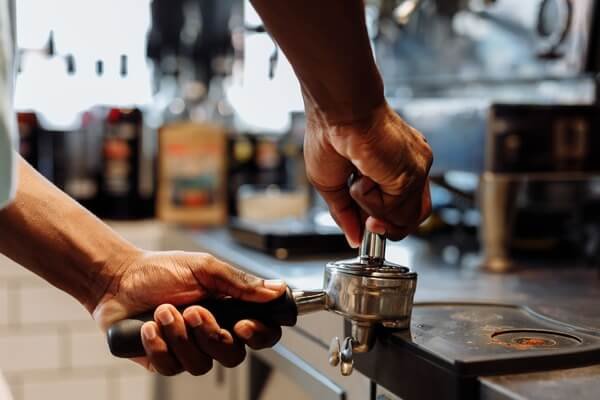
Tampers are coffee machine accessories that are used by the operators to compress coffee grounds flat and evenly. Even compression depends on applied force, levelness, and base geometry of the tamper. This helps with proper extraction of an espresso shot. CNC machining this food-contact accessory requires materials and surface finishes that resist corrosion. Besides, their weight must be comfortable to handle during frequent use.
So we CNC machine this accessory from stainless steel or aluminum with custom dimensions, such as the base diameter. Its outer diameter must match closely with the inner wall of the coffee grounds basket without binding. This is a machining complication our engineering team faces when machining these accessories to maintain dimensional accuracy. To ensure the tamper fits well on the basket, we inspect base diameter using calipers and proper edge finish and burr control using optical comparators.
5. Steam Levers
Steam levers are usually made with aluminum or stainless steel. They are a functional component of an espresso machine that allows the operator to control the opening or closing of the steam flow valve. While CNC machining this part, we face challenges in machining precise pivot holes and mounting slots.
However, our engineering team carefully machines critical dimensions like the pivot hole diameter for smooth mechanical articulation. Besides, these parts are built knowing that they will undergo frequent mechanical rotating force or torque. Our quality inspection includes specified pivot dimensions and mating features.
Besides these parts, HRCCNC also CNC machines other custom coffee machine parts and accessories like coffee distributor, dosing cup, dosing funnel, WDT tool, tamper stand, etc.
Surface Finishes and Aesthetics for Custom Coffee Equipment Parts
Custom CNC machining of coffee equipment parts allows them to have tight dimensional tolerances and fit with other parts better. However, appropriate post-processing is also required for protective, aesthetic, and some functional reasons. Depending on the application on the espresso machine, different surface finishing processes are applied to different custom parts. Here are some custom surface treatments available at HRCCNC for custom coffee machine accessories and parts:
Anodizing
This electrochemical post-processing is applied specifically to aluminum coffee machine parts such as aluminum housing. Our team at HRCCNC uses Type III hard anodizing when the aluminum component needs high durability and extra protection in heavy-duty use. The anodized aluminum oxide layer significantly increases surface hardness and wear resistance. While hard anodizing creates a barrier that effectively reduces corrosion and environmental oxidation, it does not make aluminum parts completely scratch-proof.
Bead Blasting
The process includes blasting fine glass beads or abrasives at high pressure into the surface of your custom coffee machine parts and accessories. This decorative exterior finish results in a uniform texture of the surface. Bead blasting is appropriate for giving your custom coffee machine accessories a modern, non-reflective finish that can conceal fingerprints easily.
Polishing
This post-processing method allows the surface of your custom espresso machine parts to be uniform and highly reflective. It is usually applied to the stainless steel, brass, or copper elements in order to give them aesthetic appeal.
However, besides providing a great appearance, it is widely used for food-contact parts as it reduces surface roughness. This reduces coffee or milk residue buildup on the parts and it also improves cleanability or helps to simplify the cleaning process for your customers due to the smooth surface.
Coatings
For better scratch protection or decorative purposes, we use various types of surface treatment methods, such as plating or PVD (Physical Vapor Deposition). The latter is an industrial process where we deposit thin layers of metallic material on the surface of the workpiece to produce different color finishes, such as gold, black, and rose-copper. Coatings may be applied to coffee equipment accessories CNC machined from materials like stainless steel, brass, and copper.
When it comes to color, coverage and surface condition, we thoroughly inspect each batch of the custom espresso machine parts by keeping the approved samples as standards. Throughout different parts, we maintain strict color tolerance to reduce color variation in both same- and separate-batch production.
Quality Control for Custom Espresso Machine Parts
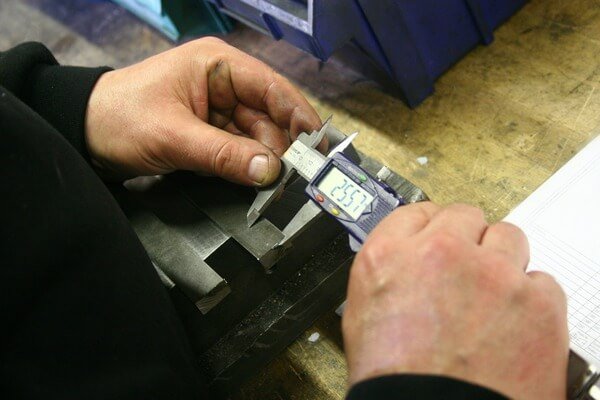
Our team at HRCCNC maintains the CNC machining process tight and accurate by holding custom parts in custom fixtures. This increases the accuracy of each cut based on the dimensional specifications of the custom espresso machine parts. Where required, we conduct first article inspection before batch production to verify conformance to the approved drawing. After the sample is approved, during the batch production process, we maintain process stability. This is intended to make sure that all custom coffee equipment parts produced will be of the same high standard. Our inspection capabilities include CMMs, optical comparators, calipers, micrometers, thread go/no-go gauges, etc.
Surface finishing is meticulously inspected to reduce defects and color or texture variation and give the custom coffee machine accessories a professional look. Each batch produced is traceable and dimensional reports and quality documentation are available upon request. They cover drawing reviews, first-article checks when required, in-process inspection, and final inspection. This ensures that your custom espresso machine components comply with dimensional tolerances and are ready to be assembled into the espresso machine for commercial use.
FAQs About Custom Espresso Machine Parts
1. What custom espresso machine parts can HRCCNC manufacture?
HRCCNC can CNC machine portafilter bodies, handles, steam wand tips, steam levers, and tampers according to customer drawings. Materials, dimensions, connection features, and surface finishes are reviewed to suit the component’s intended application.
2. What materials are suitable for espresso machine components?
Stainless steel is commonly considered for corrosion-resistant components, while aluminum may suit handles and housings. Material selection should account for operating temperature, moisture, cleaning chemicals, and food-contact requirements. The surface treatment also needs to suit the intended conditions.
3. How does CNC machining improve sealing and assembly fit?
CNC machining helps control mating dimensions, sealing surfaces, and locating features. This can reduce variation during assembly. Leak resistance also depends on suitable seals, material selection, correct installation, and the machine’s operating conditions.
4. Which surface finishes are available for custom coffee equipment parts?
Options include anodizing for aluminum, bead blasting, polishing, and suitable plating or coating processes. The finish should be selected according to the material, appearance requirements, functional dimensions, and whether the surface contacts food or beverages.
5. How are custom espresso machine parts inspected?
Inspection follows the approved drawing. Depending on the feature, checks may use CMMs, calipers, micrometers, thread go/no-go gauges, optical inspection, or surface-roughness measurement where accessible. Dimensional reports and other agreed quality documents are available upon request.
6. What information should I provide for a quotation?
Send 2D drawings and available 3D CAD files, together with the material, quantity, critical tolerances, and required finish. Include relevant operating conditions and any inspection or documentation requirements so the machining approach can be reviewed accurately.
Partnering with a Custom Coffee Machine Accessories Manufacturing Partner
If you need your custom espresso machine parts to be CNC machined and post-processed with accuracy and tight tolerances, you need to rely on an experienced manufacturer. At HRCCNC, our team of experts oversees every CNC machining step, from your drawing evaluation to final quality control inspection. After prototype approval and any required first-article inspection, we proceed with batch production. Contact us with your 2D drawings or 3D CAD files to get free and confidential technical advice on custom coffee equipment parts. We can provide you with comprehensive DFM support focusing on factors like machinability, tolerance feasibility, and cost-saving opportunities. In addition, we offer suggestions on suitable materials and surface finishing options based on the application of the custom part on an espresso machine.