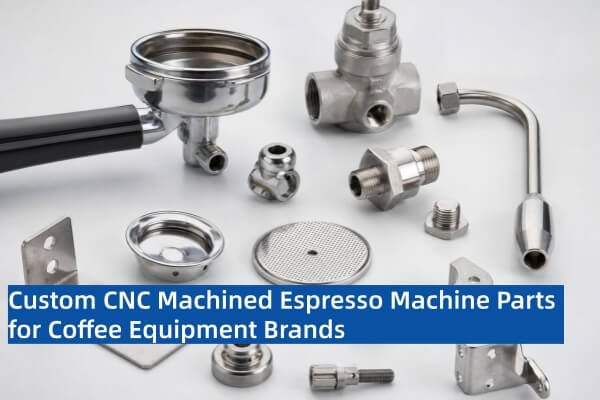

Sourcing ready-made conventional components for coffee equipment assembly may come with some limitations. They may fail to meet the exact dimensional specifications, pressure and thermal tolerances, secure sealing, and decorative geometry of your coffee machine designs. For example, boilers, portafilters, group heads, etc with dimensional variation beyond the tolerance from the design cannot create secure sealing. So, they may not create a high-performing operational system under pressure, as air or water leakage can occur. Coffee equipment accessories with standard material grades may not withstand high heat, consistent moisture, or chemical cleaning agents.
When these parts cannot deliver the necessary precision and requirements, custom CNC machining of the components may be your way to produce high-quality coffee equipment. This article will explore the complete life cycle of custom coffee machine accessories and parts from initial prototype to full-scale OEM production.
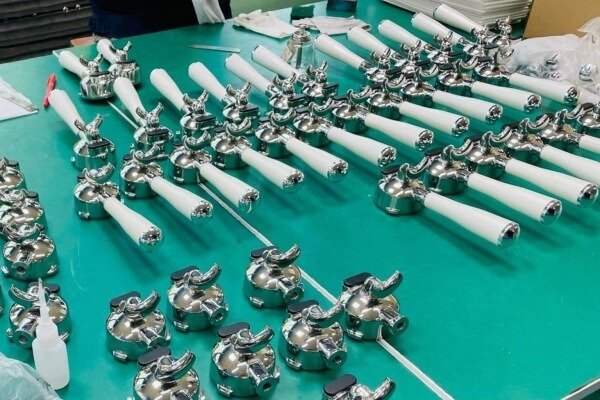
From Rapid Prototyping to Full-Scale OEM Production of Custom Coffee Machine Accessories
1. DFM (Design for Manufacturability) Feedback in Early Development
Firstly, our engineering team at HRCCNC does a comprehensive analysis of the dimensions, material, structural geometry, surface roughness, and finishing requirements specified in the drawings or CAD files. Then the team provides DFM feedback or a design for manufacturability review based on the analysis. It may contain design and CNC machining compatibility factors, such as a specific geometry on the part that may be complex or highly expensive to manufacture. Besides, it may contain practical suggestions to optimize production efficiency and cost-saving opportunities. This initial step ensures your components are easier, faster, and cheaper to CNC machine without changing how they function on the coffee equipment.
2. Material Selection for Custom Coffee Machine Parts
Coffee equipment like espresso machines has components like boilers, group heads, portafilters, steam wand tips, etc in direct contact with water, steam, and milk. To increase corrosion resistance in these parts, appropriate material grades are selected. For example, we offer 304 stainless steel, with suitability assessed against the component’s intended application and operating conditions. In coffee grinder machines, for components like housings, we offer 6061 or 7075 grade aluminum. For components like burrs, we offer hardened stainless steel or tool steel for high-performance coffee-bean grinding. So, at this stage, we select appropriate alloys with specific mechanical benefits, depending on the part or accessory application.
3. Prototyping
In this stage, we produce a rapid one-off sample to validate the design and check mechanical fit and functionality before full-scale OEM production. We utilize the computer-aided manufacturing (CAM) system to generate machining toolpaths from the provided CAD files. This software is used to generate the machine-specific NC code to CNC machine the custom coffee equipment accessory prototype. After the sample production, we apply the specified surface finishing to it for comprehensive testing in the next stage.
4. Sample Testing
This step allows engineering teams to physically test the prototype compatibility against the component design. The custom sample part is tested in real-world operating conditions to evaluate the mechanical function, structural integrity, component geometry, and assembly fit. Sample testing uncovers dimensions out of tolerance, misalignment, and the possibility of pressure leakage. In case of any specification variation, this stage provides us with the opportunity to adjust programming and machining parameters to refine the toolpath.
The sample evaluation also provides you with the flexibility to revise your coffee equipment part design. Once you test the physical prototype or pilot production, you can adjust the specifications like dimensions, contour geometry, and surface texture in your CAD design. The revised drawings need review for getting an approval, while further sampling or validation depends on the change and the agreed requirements. We commit to large-scale OEM production once you approve the prototype. This stage reduces scrap cost and overall production risk. With sample or prototype approval, we can proceed to batch production where the component meets both geometric requirements and functional performance.
5. CNC Machining Processes for Custom Coffee Machine Accessories
Different coffee equipment accessories have distinct geometries with various levels of complexity. We target CNC machining them with dimensional accuracy and fewer setups. So, our production process involves various CNC machining methods catering to different geometries.
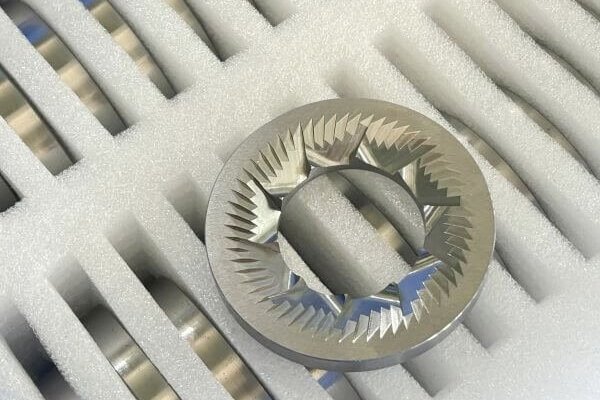
● CNC Milling for Complex Geometries
In this method, the stainless steel, aluminum, or any custom material workpiece is set on a table, while the cutting tool creates complex geometries. For multi-axis milling, the workpiece, table, and the cutter can rotate or tilt for better machining access to create precise geometry. We apply CNC milling for manufacturing complex espresso machine parts like portafilter bodies, group heads, etc., with high dimensional precision.
● CNC Turning for Cylindrical Parts
CNC turning is specifically applied to manufacture high-precision cylindrical parts like drive shafts on coffee grinder machines. We also apply this machining method for boiler fittings, valve bodies, connectors, and steam wand tips of espresso machines. In CNC turning, the workpiece rotates while the cutting tool also moves along the programmed axes to manufacture the symmetrical coffee equipment parts.
● 5-Axis CNC Machining
We use 5-axis CNC machining for parts with intricate designs or smooth contours, which require the cutting tool to access the workpiece from multiple sides and complex angles. This method allows us to produce custom coffee equipment parts like grinder burrs, portafilter handles, steam levers, etc. The CAM programming creates a 5-axis toolpath for the workpiece and the cutter, giving the cutter access to multiple faces of the workpiece with fewer setups. This method reduces setup change error and results in coffee grinder burrs with high precision and handles and levers with a smooth tactile feel.
6. Scaling Up with Stable Batch Production
Though the parts in batch production and the approved prototype are the same in geometry and performance with similar machining methods, batch production has some additional steps. So, we initiate a small quantity of pilot production to validate machining processes, methods, and systems under quality control. If the pilot runs produce consistent quality components based on the drawing specifications, we issue a production release. This indicates the transition approval from pilot production to full-scale production. Scaling up to high-volume OEM production requires structured machining control, process stability, and systematic inspection to produce parts with the same performance, structural integrity, and fit.
● Custom Fixtures:
We specifically design and produce custom workholding or fixtures for dedicated coffee machine components. These custom fixtures are used for every batch production of parts with a certain geometry. For example, custom clamps hold the group heads in an exact orientation, which reduces manual repositioning during CNC machining. It increases production repeatability across different production batches and results in large-volume OEM production with dimensional accuracy.
● First Article Inspection (FAI)
The initial part should be checked against the drawing and agreed inspection requirements using suitable equipment before the production run continues. Surface roughness should be verified where specified. Any leakage testing requires a separate method and acceptance criteria. The scope and documentation of any formal First Article Inspection should be agreed for the project.
● Process Stability
FAI may confirm the accuracy of machining equipment setup. However, it cannot ensure consistent dimensional accuracy throughout parts in long production runs. To produce custom coffee equipment accessories and components with consistent specifications and quality, the production requires stability. A cutting tool can experience machining wear caused during a long production run.
Moreover, workpiece material residue can also build up on the cutter. These can cause dimensional variation over different parts in the same batch. So, our team actively maintains CNC machining stability through process monitoring and tool wear tracking. To reduce dimensional variation beyond tolerances due to cutting tool wear or thermal drift, our engineering team controls machine parameters, coolant temperature, and cutting speeds.
● Surface Finishing
After the batch production of custom coffee machine accessories and functional components, we apply appropriate surface finishing. To increase corrosion and wear resistance, we apply surface finishes like anodizing on aluminum coffee machine parts. Besides, to reduce scratches on the parts, we may apply coating finishes like plating and PVD (Physical Vapor Deposition).
For aesthetic decorative purposes, surface treatments like bead blasting and brushed finish are applied. Liquid-contact coffee equipment parts like steam wand tips and portafilter bodies require more than an exterior decorative finish. For these parts, we apply polishing to stainless steel or aluminum to improve their cleanability due to the smooth surface.
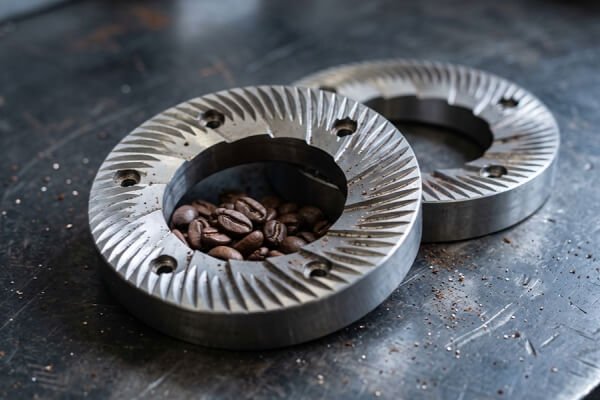
7. Quality Inspection on the Custom Coffee Equipment Components
Though we maintain process stability throughout CNC machining during the batch production process, some parts may still have dimensional and surface roughness variations. This is why our quality control team checks the parts before product delivery. Inspection methods should be selected according to the drawing requirements, feature accessibility, and required accuracy. Dimensional, surface roughness, and thread conformity checks should be included where specified.
We meticulously inspect the custom coffee machine accessories to reduce dimensional defects and color or texture variation. Inspection documentation and traceability requirements should be agreed for each project, including the scope of any first-article, in-process, and final inspection reports.
Typical Inspection Considerations for Coffee Equipment Components
| Coffee Equipment | Coffee Equipment Component | Critical Requirements |
| Espresso Machines | Portafilter bodies | Lug thickness, outer diameter, basket seating depth, and internal connection thread |
| Steam wand tips | Micro-hole diameter, hole angle orientation, and internal bore smoothness | |
| Tampers | Base diameter, edge precision, and flatness profile | |
| Handles | Connection thread depth, outer diameter, and length | |
| Steam Levers | Tactile surface and ergonomics geometry | |
| Coffee Grinder Machine | Grinder Burrs | Mounting dimensions, alignment requirements, tooth geometry, and cutting-edge condition, as specified on the drawing |
| Housing | Accurate interior alignment for the motor and burr assembly, precise mounting hole tolerances | |
| Drive Shaft | Shaft diameter, straightness, and runout requirements, as specified on the drawing |
FAQs
1. Which coffee equipment components can be CNC machined?
Common examples include portafilter bodies, steam wand tips, handles, grinder housings, burrs, and drive shafts. The machining process depends on the component’s material, geometry, tolerances, and intended function.
2. Which materials are suitable for coffee equipment parts?
Suitable materials depend on operating temperature, contact media, cleaning conditions, and mechanical requirements. Options may include 304 stainless steel, aluminum alloys for selected housings and handles, and hardened steels for burrs. Material and surface finish suitability should be assessed together.
3. What information should I provide when requesting a machining quote?
Provide a 3D CAD model, a dimensioned 2D drawing, required quantity, material specifications, surface finish requirements, and intended application. Identify critical tolerances and any inspection reports or functional tests required for the project.
4. Does every drawing revision require a new prototype?
Not every revision requires another prototype. Revised drawings should be reviewed to assess their effect on fit, function, and manufacturing. Further sampling or testing depends on the significance of the change and the agreed validation requirements.
5. What is the difference between a prototype and a pilot production run?
A prototype helps evaluate the component’s design, fit, and function. A pilot run uses a small batch to assess the proposed production process and its consistency before higher-volume manufacturing. The need for a pilot run depends on the project.
6. How is the quality of CNC-machined coffee equipment parts verified?
Inspection should follow the approved drawing and agreed acceptance criteria, covering relevant dimensions, threads, surface roughness, and appearance. Leakage or other functional testing requires separate procedures. Inspection documentation and traceability requirements should be agreed before production.
Partnering with a Reliable Custom Coffee Machine Parts Manufacturer for OEM Delivery
Coffee machines assembled with standard parts may fail to meet the exact geometry, texture, or color of your product design. Sourcing custom coffee machine parts from an OEM product supplier may help you produce coffee equipment that reflects your original design.
HRCCNC offers comprehensive CNC machining for custom coffee machine accessories and parts with suitable surface finishing options. Scaling up from rapid prototyping to full-scale OEM production, our engineering team maintains process stability and change control. Meanwhile, our quality control team checks dimensional requirements against your drawings, with the inspection and reporting scope agreed for each project. Contact us with your 2D drawings or 3D CAD files to get DFM feedback or free technical advice regarding appropriate material grade selection. You can also send us your dimensional tolerances and intended application of the parts, so that we can recommend suitable surface finishing options.