Custom Anodizing Services | Precision Finishing for Aluminum Parts
At HRCCNC, we provide custom anodizing services that enhance aluminum’s durability, corrosion resistance, and appearance. With our ISO 9001:2015 certification, we ensure high-quality finishes with precise tolerance control, perfect for both prototypes and large-scale production. Our anodizing services offer a variety of color options and non-conductive properties for electronics. Using our fast online quoting system, you can submit CAD files, receive expert feedback, and have reliable components shipped worldwide, ensuring strict surface finish requirements and on-time delivery.
- Increases wear resistance and prolongs component lifespan.
- Offers good color stability, although prolonged UV exposure may affect certain dyed finishes
- Provides non-conductive properties useful for certain electronic applications.
- Optimized for fast prototype delivery with transparent pricing.
- Scalable manufacturing for both low- and high-volume orders.
- Worldwide shipping with inspection reports for safe, on-time delivery.
Our Certifications
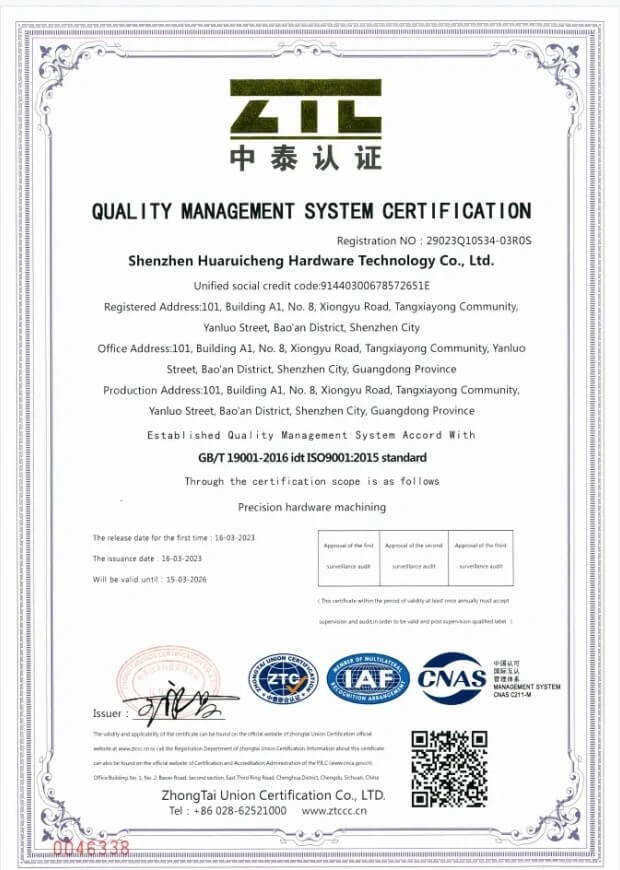
ISO 9001:2015
This certification demonstrates that our company follows internationally recognized quality management standards. It ensures consistent product quality, process optimization, and a strong focus on customer satisfaction.
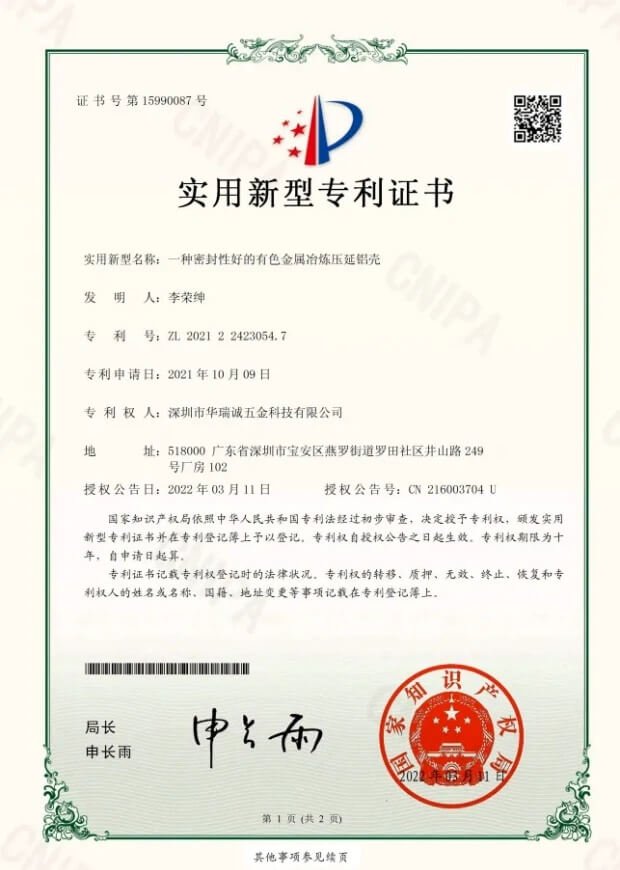
Patent Certificates
Our patents represent innovation and originality in manufacturing processes and product development. They highlight our ability to deliver unique solutions and maintain a competitive edge in the industry.
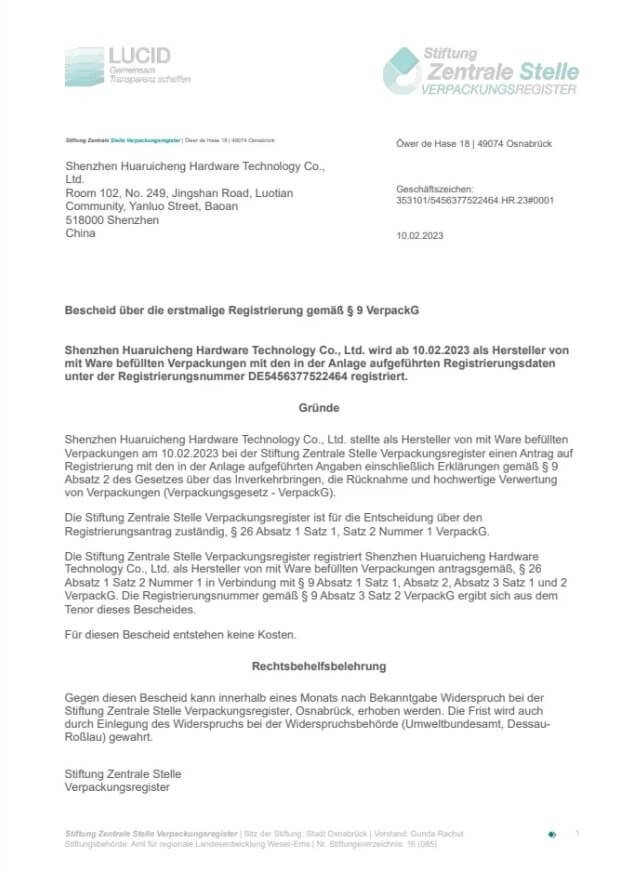
EPR-Certificate
As a compliant producer of goods-containing packaging, we can ensure our product packaging fully meets the regulatory requirements for the German market, this is our EPR-Certificate. Please contact us right now.
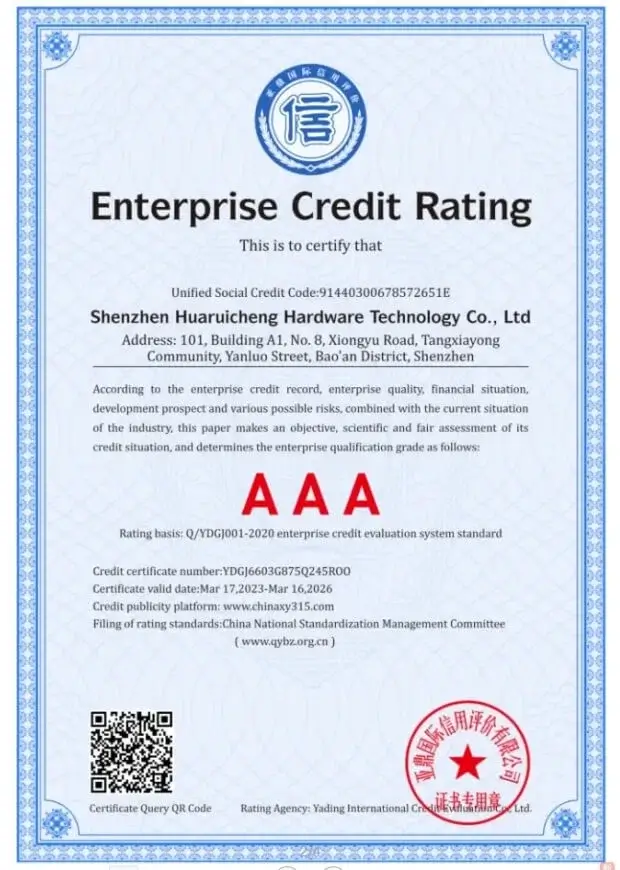
Enterprise Credit Rating Certificate
This certificate reflects our financial stability, business credibility, and trustworthy reputation in the industry. It reassures clients and partners that we are a reliable and long-term business partner.

Software Copyright Certificates
These certificates confirm ownership and protection of our self-developed software systems. They validate our technical expertise and guarantee the originality, security, and reliability of the digital tools we use in manufacturing.
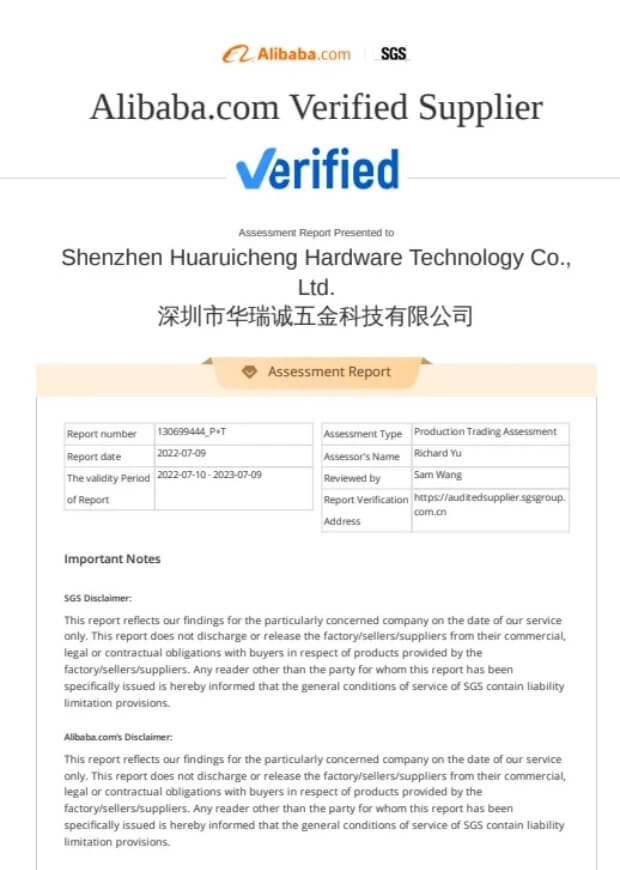
SGS and HRCCNC company certificate
This certificate verifies our company as an Alibaba.com SGS Verified Supplier, ensuring compliance and reliability for our cooperation, SGS and HRCCNC company certificate, please contact us right now.
Introduction to Anodizing
What is Anodizing?
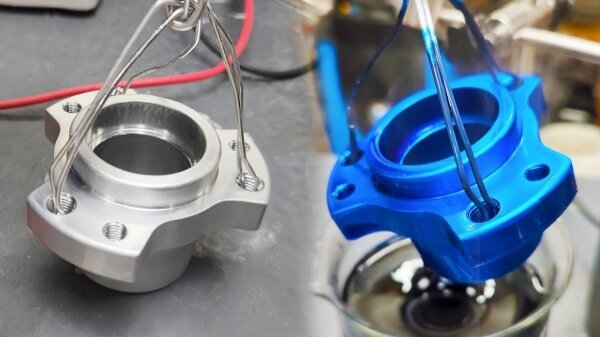
Anodizing is an electrochemical process that transforms the surface of aluminum into a durable, corrosion-resistant anodic oxide finish. The process involves immersing aluminum in an electrolyte bath and applying an electrical current, which causes the metal to form a thick oxide layer. Unlike paint or plating, this oxide layer is not applied externally but is fully integrated with the aluminum, making it an inherent part of the material.
The resulting anodic oxide layer is composed entirely of aluminum oxide, bonded permanently to the substrate so it cannot chip, peel, or flake off. While aluminum is the most commonly anodized material, metals such as titanium and magnesium can also be anodized. However, their processes and resulting properties differ significantly from aluminum anodizing.

Why Is Anodizing Important for Aluminum?
Anodizing is crucial for aluminum because it significantly enhances its natural corrosion resistance. Aluminum naturally forms a thin oxide layer when exposed to air, but anodizing thickens this layer, providing superior protection against rust and environmental damage. This makes anodized aluminum ideal for harsh conditions that require long-lasting performance, such as aerospace and automotive applications.
In addition to corrosion resistance, anodizing improves the durability and aesthetic appeal of aluminum. The anodic oxide layer is highly resistant to wear, ensuring the surface remains intact even under heavy use. It also offers a range of color options, making it a popular choice for both functional and decorative purposes in various industries.
Different Anodizing Techniques We Offer
We provide various anodizing techniques at HRCCNC to suit different needs, including Sulfuric Acid Anodizing (Type II), Chromic Acid Anodizing (Type I), and Hardcoat Anodizing (Type III). Each technique offers unique advantages such as enhanced durability, corrosion resistance, and aesthetic finishes, making them perfect for a wide range of industries and applications.
| Technique | Electrolyte | Coating Thickness | Key Properties | Primary Applications |
|---|---|---|---|---|
| Chromic Acid (Type I) | Chromic Acid | 0.5 – 5 μm (0.00002 – 0.0002 inches) | Good corrosion resistance, minimal dimensional change | Aerospace components, adhesive bonding primer |
| Sulfuric Acid (Type II) | Sulfuric Acid | 5 – 25 μm | Excellent dye absorption, good wear resistance | Architectural, consumer products, decorative items |
| Hardcoat (Type III) | Sulfuric Acid (low temp) | 25 – 75 μm | Extreme hardness, excellent wear resistance | Military equipment, industrial parts, mechanical components |
Chromic Acid Anodizing (Type I)
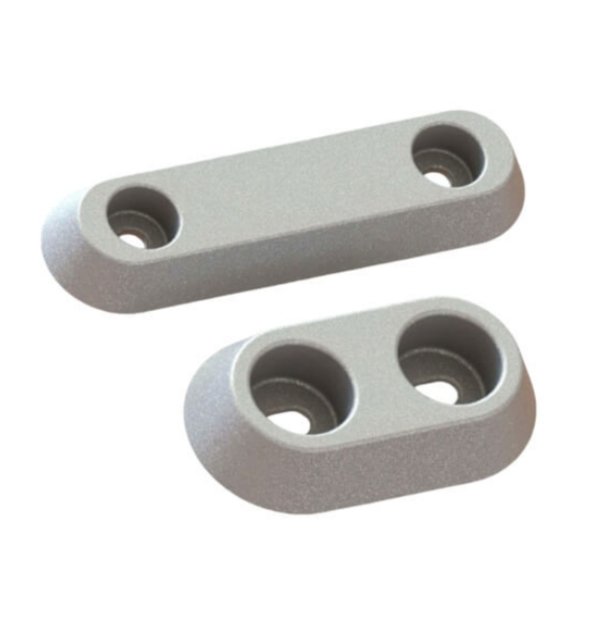
Chromic Acid Anodizing (Type I) uses chromic acid to create a thin, opaque coating on aluminum, providing excellent corrosion resistance with minimal dimensional change to the parts. This technique is commonly used in aerospace applications where fatigue resistance is critical, as well as in military specifications and adhesive-bonding primers.
- Electrolyte
Chromic acid solution, typically 3–5 wt% (30–50 g/L)
- Key Properties
Provides limited electrical insulation due to its relatively thin coating thickness
- Primary Application
Aerospace components, adhesive bonding primer, military specifications
- Coating Thickness
0.5 – 5 μm (0.00002 – 0.0002 inches), typically not exceeding 10 μm
Sulfuric Acid Anodizing (Type II)
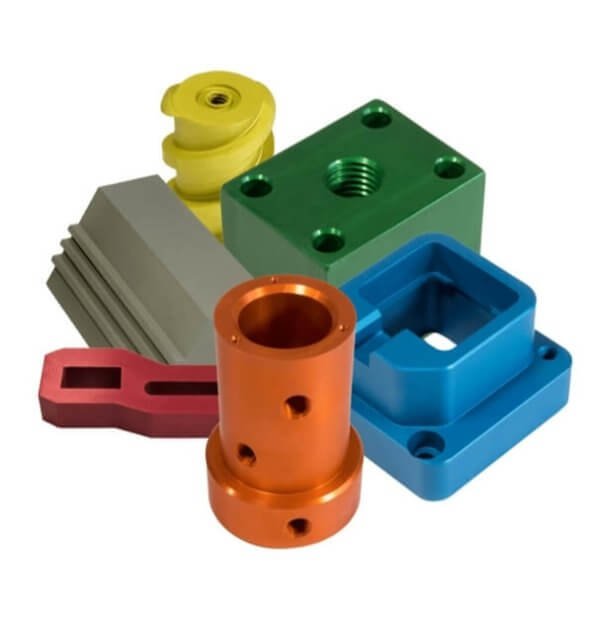
Sulfuric Acid Anodizing (Type II) is an anodizing method that involves immersing aluminum in a sulfuric acid electrolyte bath, where an electric current forms a thick oxide layer. This technique offers excellent corrosion resistance and good wear resistance, making it ideal for a wide range of applications, including consumer products, architectural finishes, and decorative items.
- Coating Thickness
5 – 25 μm (recommended range for dyed and decorative applications)
- Key Properties
Excellent dye absorption, good wear and corrosion resistance, electrical insulation
- Electrolyte
Sulfuric acid solution (10-20% concentration)
- Primary Application
Architectural, consumer, decorative & automotive parts
Hardcoat Anodizing (Type III)
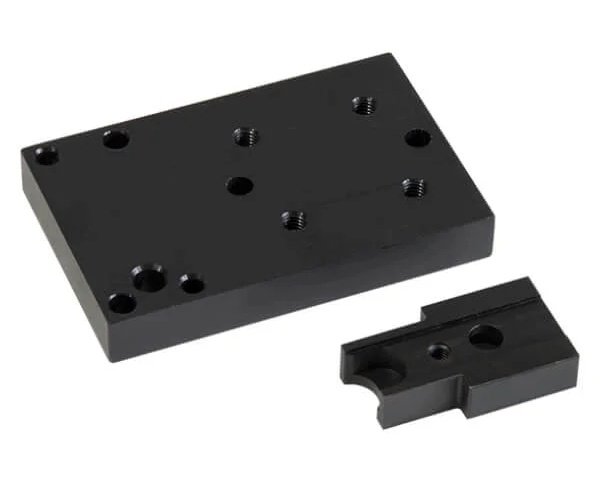
Hardcoat Anodizing (Type III) is a specialized anodizing process that creates a thick, dense oxide layer on aluminum. This method is known for providing extreme surface hardness and excellent wear resistance, making it ideal for high-performance applications that require durability, such as military equipment, industrial machinery, and mechanical components.
- Electrolyte
Typically performed at low temperatures of -5°C to +5°C (or 0–8°C depending on process control)
- Primary Application
Military equipment, industrial machinery parts, hydraulic components, pistons
- Coating Thickness
25 – 75 μm (typical range), with thickness up to 100 μm achievable in special applications
- Key Properties
Extreme surface hardness, excellent wear resistance, thermal insulation
What are the Benefits of Aluminum Anodizing?
Aluminum anodizing offers significant benefits, including improved corrosion resistance, increased durability, and aesthetic customization. The process creates a protective oxide layer that enhances the metal’s wear and heat resistance and provides excellent electrical insulation properties depending on coating thickness and sealing, making it ideal for industries such as aerospace, automotive, and electronics.
Enhanced Durability & Longevity
Aluminum anodizing increases durability and longevity by forming a strong, corrosion-resistant oxide layer that prevents chipping, peeling, and scratching, ensuring the aluminum remains intact and performs well over time, even in harsh conditions.
Corrosion Resistance
By creating a protective oxide layer, anodizing significantly improves aluminum’s corrosion resistance, acting as a shield against moisture, chemicals, and environmental elements for long-lasting protection in harsh conditions.
Aesthetic Customization
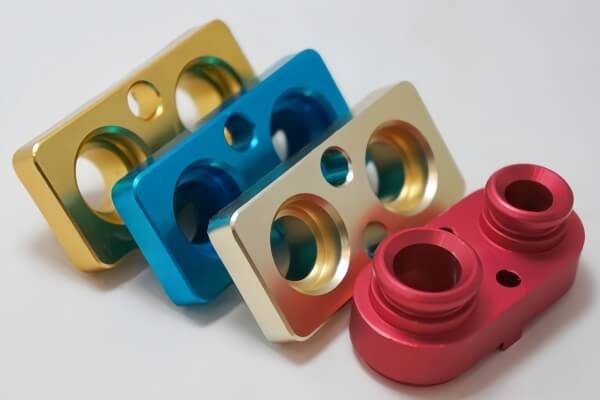
Anodizing allows aluminum to be dyed in vibrant, long-lasting colors, with the anodic oxide layer ensuring the finish remains durable and resistant to fading or peeling, making it perfect for applications requiring both aesthetic appeal and durability.
Electrical Insulation
The anodic oxide layer provides excellent electrical insulation for aluminum, making anodized parts ideal for electronic components and other applications where non-conductive properties are essential, ensuring safety and reliable performance.
Heat Resistance
By forming a protective oxide layer, anodizing enhances aluminum’s heat resistance, allowing it to withstand higher temperatures while maintaining its integrity, making it ideal for automotive and aerospace applications where thermal stability is critical.
Improved Adhesion
Anodizing enhances aluminum’s adhesion by creating a porous surface, allowing paints, coatings, and adhesives to bond more effectively, ensuring stronger finishes for industries like automotive, aerospace, and construction.
How Our Factory Performs Anodizing?
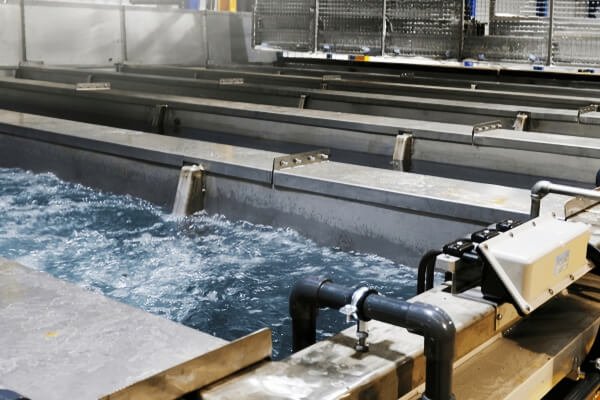
Our anodizing process at HRCCNC involves thorough pre-treatment, followed by immersion in an electrolyte bath to form the anodic oxide layer. After anodizing, we offer coloring and sealing to enhance durability and appearance. Each part is rigorously inspected to ensure the highest quality standards are met.
Pre-Treatment: Cleaning and Surface Preparation
To achieve a high-quality anodized finish, our process begins with thorough pre-treatment of the aluminum surface. We start with degreasing to remove oils and contaminants, followed by alkaline cleaning to eliminate dirt and residue. Next, desmutting removes alloying elements, ensuring the surface is perfectly clean and ready for anodizing. If required, etching is performed to create a matte finish, improving both appearance and adhesion for a durable and reliable anodized layer.
Anodizing Process: Electrolyte Bath and Current Application
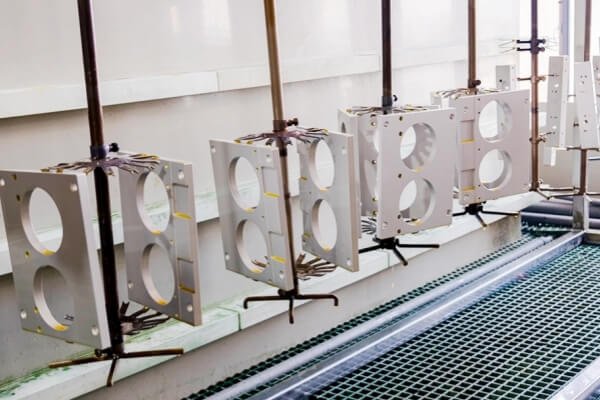
The anodizing process at our factory begins by immersing aluminum parts in an acid electrolyte bath and applying a direct electric current. The aluminum acts as the anode (positive electrode), while the cathodes (negative electrodes) are typically made of lead or aluminum. This current causes the aluminum to form a durable, protective oxide layer that is fully integrated into the metal, significantly improving corrosion resistance and durability.
Coloring and Sealing of Anodized Layers
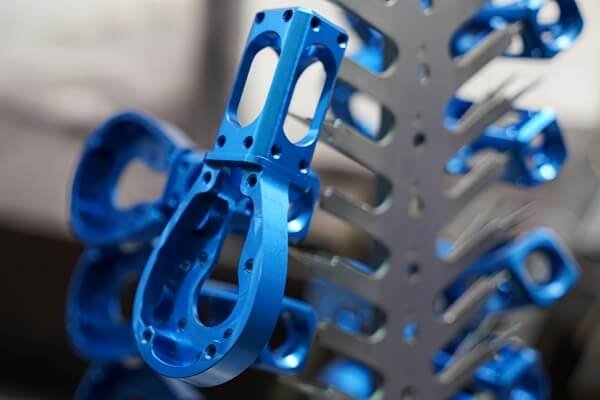
Once anodizing is complete, we color the porous surface using organic dyes, inorganic pigments, or electrolytic methods to achieve the desired finish. After coloring, the anodized parts are sealed to close the pores in the oxide layer, enhancing both durability and color retention. Sealing is usually done with hot water, steam, or nickel acetate solutions to enhance the protective qualities of the anodized surface.

Quality Control and Final Inspection
We implement rigorous quality control throughout the anodizing process to ensure consistent, high-quality results. Final inspection includes coating thickness testing using eddy current or destructive methods. We also perform checks for color consistency, corrosion resistance via salt spray testing, and adhesion, ensuring the anodized parts meet the required standards for both performance and appearance.
Key Factors That Affect the Anodizing Outcome
The outcome of the anodizing process is influenced by factors such as the aluminum alloy composition, electrolyte temperature, acid concentration, and voltage. Additionally, current density, processing time, and the quality of pre-treatment all play a critical role in determining the final results, ensuring the anodized layer meets both performance and aesthetic standards.
Several critical factors influence the quality and characteristics of the anodized finish:
Aluminum Alloy Composition
Different aluminum alloys can result in variations in the thickness, color, and durability of the anodized layer, as the alloy’s composition affects its reaction during the anodizing process.
Temperature of the electrolyte solutione
Higher electrolyte temperatures can accelerate the anodizing process and affect the thickness and uniformity of the anodic oxide layer.
Concentration and type of acid used
The level of acid concentration in the electrolyte bath influences the uniformity and thickness of the anodized finish, affecting the overall quality of the layer.
Voltage and current density appliedy
Adjusting the voltage and current density during anodizing affects the process speed and the characteristics of the oxide layer, including its thickness and surface appearance.
Processing time in the anodizing bath
The duration of the anodizing process directly determines the final thickness of the oxide layer and its protective qualities, with longer times generally resulting in thicker coatings.essing times generally yield thicker, more protective layers.
Quality of pre-treatment and cleaning
Effective pre-treatment ensures a clean and smooth surface, which is essential for achieving a high-quality, consistent anodized finish.
Applications of Anodized Aluminum
Anodized aluminum is highly valued in industries like aerospace, automotive, consumer electronics, and architecture for its durability, corrosion resistance, and aesthetic versatility. It is used in a variety of applications, including structural components, decorative finishes, and high-performance parts, ensuring both long-lasting functionality and visual appeal.
Aerospace Industry
Architecture and Construction
Automotive Sector
Consumer Electronics
Energy Sector
Telecommunications
Industrial Equipment
Major Factors That May Increase the Cost of Anodization
The cost of anodizing can increase based on factors such as part size, complexity, and the type of anodizing process. Other considerations, like color requirements, quality standards, and volume of parts, can also affect the price. Additionally, environmental compliance and specialized inspections may lead to higher costs, depending on the specific project requirements.
Several factors can impact the cost of anodizing, including:
Part size and complexity of material
Larger and more complex parts require more time and resources to anodize, which can increase the overall cost of the process.
Hydrogen Embrittlement
The choice of anodizing process, such as Type I, Type II, or Type III, can impact the cost, with more specialized processes often requiring higher fees.
Color requirements and dye specifications
Custom color requirements and specific dye specifications can increase the cost, as they may require additional materials and more time for application.
Quality standards and inspection requirements
Strict quality standards and detailed inspection procedures for parts, such as thickness measurements and corrosion tests, can add to the cost of anodizing.
Volume of parts and production efficiency
Lower volume orders tend to be more expensive due to less efficient production processes, whereas larger orders benefit from economies of scale.
Environmental compliance and waste treatment
Adhering to environmental regulations and handling waste disposal responsibly can increase the cost of anodizing due to the additional steps involved.
What are the Challenges and Limitations of Anodizing
While anodizing offers many benefits, there are some challenges and limitations to consider that can affect the final outcome. The process can cause dimensional changes in parts, making it important to account for this during design to avoid size discrepancies. Additionally, anodizing is mainly suitable for aluminum and a few other non-ferrous metals, limiting its use with certain materials.
Other challenges include color inconsistency, as slight variations can occur between batches, and brittleness of the anodized layer, making parts more prone to damage if mishandled. Anodized surfaces cannot be effectively repaired locally. In most cases, the entire coating must be stripped and the part re-anodized to restore a uniform appearance and performance.
- Material Limitations
- Dimensional and Surface Changes
- Color Inconsistency
- High Cost and Complexity
- Brittleness and Damage
- Repair Difficulties
How Long Does Anodizing Typically Take?
Type II anodizing typically requires 20–60 minutes, while Type III (hardcoat) may require 60–180 minutes for the anodizing stage alone, excluding pre-treatment and post-treatment processes. Type I anodizing may take less time, while Type III (hard anodizing) requires a longer process due to the thicker and more durable oxide layer being formed. For precise timelines and a detailed estimate based on your specific needs, request a quote today!
Why Choose HRCCNC for Anodizing?
Choose HRCCNC for custom anodizing services, where precision and quality are at the core of everything we do. Our ISO 9001:2015 certification guarantees that we meet the highest industry standards, ensuring tight tolerances and accurate color matching. We specialize in handling complex, custom parts with no minimum order quantity (MOQ), providing flexibility for both small and large-scale orders. With our in-house anodizing capabilities, we ensure fast turnaround times without compromising quality. Additionally, our commitment to transparent communication, engineering support, and competitive pricing makes us a reliable partner for all your anodizing needs, from prototyping to high-volume production.
Ultra-High Precision with Tight Tolerances
All Three Anodizing Types Under One Roof
Experienced with Complex, Custom Parts
One-Stop Integrated Manufacturing Services
Fast Turnaround Without Cutting Corners
Transparent Communication and Engineering Support
Fast Quotes
Reliable Customer Support
Competitive Pricing
What Our Anodizing Service Clients Say About Us?
Anodizing vs Other Finishing Methods
Anodizing differs from other finishing methods by creating a corrosion-resistant oxide layer that is integrated with the aluminum, providing exceptional durability. Unlike processes like electroplating, powder coating, or sandblasting, anodizing offers both aesthetic customization and superior wear resistance, making it ideal for applications that require long-lasting performance and visual appeal.
Comparison Table:
| Feature | Anodizing | Other Finishing Methods |
| Durability | High, with a durable oxide layer integrated into the metal | Varies, typically surface-level protection |
| Corrosion Resistance | Excellent, creates a corrosion-resistant barrier | Depends on the method (e.g., electroplating offers some resistance, powder coating less) |
| Wear Resistance | High, ideal for harsh environments | Varies; powder coating offers some wear resistance, but not as strong as anodizing |
| Color Customization | Available with various colors, long-lasting | Available (e.g., powder coating, electroplating) but may fade or peel over time |
| Aesthetic Finish | Matte or glossy, with vibrant color options | Wide variety (e.g., brushed, shiny, matte, textured) |
| Material Added to Surface | None, creates an oxide layer integrated with the metal | Adds material (e.g., electroplating) or surface coating (e.g., powder coating) |
| Environmental Impact | Environmentally friendly process | Varies (some methods like electroplating may involve harmful chemicals) |
| Applications | Aerospace, automotive, consumer electronics, architectural | Consumer products, decorative finishes, structural parts |
Looking for High-Quality Precision Anodizing?
Related Resources and Guides
Founded in 2008, HRCCNC is a trusted CNC machining and metal manufacturing company with 17 years of experience delivering precision-engineered custom parts to global customers. Our team of skilled engineers and technicians provides one-stop integrated services, including CNC machining, die casting, and sheet metal fabrication, supporting projects from product design to finished product delivery across North America, Europe, and Asia.
From a small CNC workshop to a global manufacturing partner, HRCCNC has expanded through continuous capability upgrades and international quality certification, including ISO 9001:2015. Our factory is certified to ISO 9001:2015 and has been audited by SGS, ensuring strict quality control, traceability, and compliance with international manufacturing standards.
Company Introduction Video
FAQs About Surface Finishing for CNC Parts
What Does Alu Anodized Mean?
“Alu anodized” refers to aluminum that has undergone the anodizing process, where the aluminum surface is transformed into a durable, corrosion-resistant oxide layer. This layer is chemically bonded to the aluminum, providing enhanced durability, corrosion resistance, and aesthetic finish. The anodizing process not only protects the aluminum but also allows for coloring and custom finishes, making it ideal for both functional and decorative applications.
Why is Black Anodized Aluminum Commonly Used?
Black anodized aluminum is commonly used because it combines excellent corrosion resistance with a sleek, modern appearance. It is widely used in electronics, automotive parts, and architectural applications due to its durability and aesthetic appeal. The black finish not only enhances the visual look but also improves the material’s ability to withstand harsh environments, making it ideal for both functional and decorative purposes.
Is Anodizing Better than Painting?
Yes, anodizing is often considered better than painting for aluminum, as it creates a durable, corrosion-resistant oxide layer that is integral to the material. Unlike paint, which can chip or peel over time, anodizing provides a permanent finish that doesn’t require regular maintenance. It also offers better wear resistance and longer-lasting protection, making it ideal for harsh environments.
Can Anodizing be Applied to Materials Other Than Aluminum?
Yes, anodizing can be applied to non-ferrous metals such as titanium and magnesium, though it is most commonly used for aluminum. These metals also benefit from the anodizing process, which enhances their corrosion resistance, wear resistance, and aesthetic customization. However, anodizing is not suitable for ferrous metals like steel or iron, as they do not form the same protective oxide layer.
Can Anodized Surfaces be Repaired?
Yes, anodized surfaces can be repaired, but the process can be challenging. While it is possible to re-anodize the part to restore the protective oxide layer, this requires removing the original anodized coating, which can be both time-consuming and costly. In most cases, it is more practical to prevent damage, as repairing anodized surfaces is not as straightforward as repainting or resurfacing.
What is the Difference Between Anodizing and Painting or Plating?
Anodizing refers to an electrochemical process that creates a durable oxide layer integrated with the aluminum, whereas painting involves applying a surface coating that can chip or peel over time. Plating, on the other hand, adds a metal layer to the surface, whereas anodizing strengthens the aluminum itself, offering better corrosion resistance and wear resistance without changing the part’s dimensions.
Is Anodizing Environmentally Friendly?
Anodizing, especially sulfuric acid anodizing, is generally considered more environmentally sustainable than many alternative finishing methods when proper waste treatment and environmental controls are implemented. However, traditional chromic acid processes require careful handling due to the use of hexavalent chromium.