
Part quality and profit margin pull against each other on most milling jobs, and climb milling vs conventional milling is often the choice that settles it. This isn’t just a technical detail, as it directly impacts your tool life, surface roughness, and final cost per part. Plenty of engineers know both terms from a textbook. Far fewer have watched one save a job and the other ruin it.
This guide covers how both methods work and where each performs best, but the real subject is decision-making: how milling direction shapes the CNC milling process, and how an experienced supplier makes the call. If one shop’s parts keep coming back cleaner than another’s, the answer often starts here.
What Is Climb Milling (Down Milling)?
In climb milling, the cutter’s rotation and the workpiece feed travel the same way at the point of cut. Each tooth enters the material at full chip thickness and exits near zero. The cutter “climbs” onto the stock, and cutting forces press the work down toward the table. In up milling vs down milling terms, this is the down-milling half of the pair.
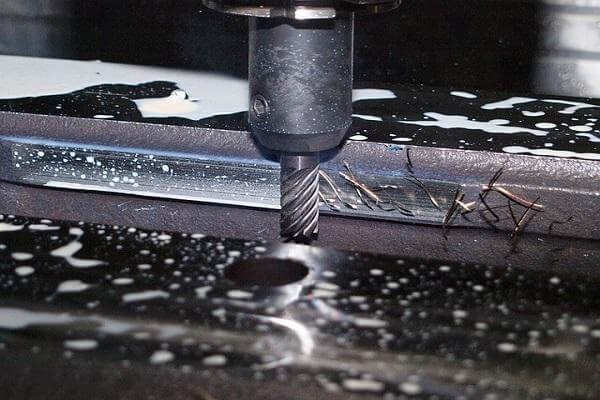
That thick-to-thin chip matters. The tooth bites immediately instead of rubbing, so most of the heat leaves with the chip rather than soaking into the part. The chips drop behind the cutter instead of getting dragged back through the cut, so the finished surface never sees them again. Give this method a rigid machine, and it pays you back with a cleaner finish and an end mill that lasts noticeably longer.
There is a catch, though. Those same forces try to drag the table into the cutter, and with backlash in the drive screws, that drag can yank the work forward without warning. The result is a broken end mill at best, a scrapped part at worst. Climb milling belongs on machines with ball screws or backlash compensation, which describes virtually every modern CNC mill.
What Is Conventional Milling (Up Milling)?
Conventional milling, the up-milling side of up milling vs down milling, feeds the work against cutter rotation. Each tooth enters at zero chip thickness and exits thick, sliding briefly before it shears. Forces act upward, tending to lift the part out of its fixture.
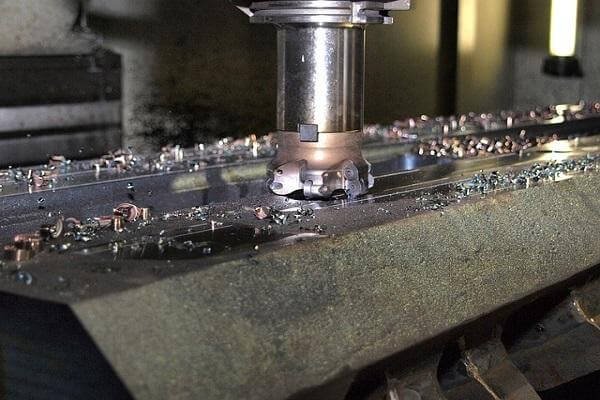
That initial rubbing is the method’s defining weakness and, occasionally, its virtue. Rubbing generates friction and heat, dulls edges faster, and work-hardens susceptible materials. But because cutting forces oppose the feed, backlash stays loaded in one direction, and the table cannot lurch. On manual mills and shaky setups, it is the safe default, which is why generations of machinists learned it first.
Chips get thrown ahead of the cutter, where they can be re-cut and mar the finish. The thin entry also tends to leave a burr on the exit edge. That sounds minor until someone has to hand-deburr five hundred parts.
Key Differences Between Climb and Conventional Milling
Cutter Rotation and Feed Direction
In climb milling, rotation and feed point in the same way where the tooth meets material; in conventional milling, they oppose each other. Same tool, same spindle direction. What changes is which way you feed past the feature. The climb milling vs conventional distinction is pure geometry, not tooling; if you’re also weighing cutter types, that’s a separate question we cover in our face milling vs end milling guide.
Chip Formation and Cutting Forces
A climb-milled chip starts thick and thins to zero; a conventional chip does the reverse. Thick-first means immediate shearing and cooler cutting; thin-first means rubbing before every bite. Industry leader Sandvik Coromant actually labels this concept the “golden rule of milling.” The goal is straightforward: always aim to form a thick chip when the tool enters the cut, and a thin chip as it exits. One method also presses the part into the fixture, while the other tries to lift it out.
Machine Backlash and Rigidity
Backlash, the free play between a screw and its nut, decides more of this debate than anything else. Conventional milling keeps that play loaded in one direction, so the table stays put. Climb milling can drag the table through the play and let the cutter grab the work. Ball screws on modern machines have mostly retired the concern, so climb milling dominates production work today.
Workholding and Cutting Stability
Downward climb forces help seat a part against parallels or a fixture floor. The lifting force of a conventional cut demands more clamping pressure and punishes marginal fixturing with chatter. Neither method rescues a bad setup; one just forgives it more often.
How Milling Strategy Affects CNC Machining Results
Surface Finish
Climb milling generally leaves the better finish: chips clear behind the cutter, heat exits with the chip, nothing rubs at entry. Conventional milling drags chips through the cut and can smear the surface. That difference in finish often decides whether a part ships straight out of the machine or needs an additional secondary polishing phase before it’s ready to ship.
Dimensional Accuracy and Tolerances
Tool deflection behaves differently, too. The rising force of a conventional cut deflects the tool less predictably, while climb milling loads it consistently, so dimensions hold tighter. Accuracy misses don’t just mean scrap. They mean re-runs and slipped delivery dates.
Tool Life and Tool Wear
Rubbing kills carbide. The zero-thickness entry in a conventional cut creates friction at the edge on every tooth engagement, accelerating flank wear. Climb milling’s clean bite can extend tool life substantially. Machining data frequently highlights tool life gains ranging from 30% to 50%. Naturally, your exact yield will vary depending on your raw material choice, tool coatings, and programmed feeds and speeds. Fewer tool changes mean steadier dimensions across a batch and lower tooling cost in your part price.
Production Speed and Efficiency
Cooler, cleaner cutting supports higher feeds and speeds at the same tool life. Faster removal shortens cycle time, and shorter cycles shorten lead time, which affects how quickly parts reach your dock. Shops running the CNC milling process on modern equipment climb mill most operations for this reason.
CNC Machining Cost and Material Waste
All of it lands in the per-part price. Better finish trims secondary operations, tighter control cuts scrap, longer tool life spreads tooling cost across more parts. Choosing badly does the opposite: chatter wastes material, burrs add labor, worn tools drift mid-batch. The right strategy, applied consistently, can reduce secondary operations, tool changes, and scrap risk across a production run.
Climb Milling vs. Conventional Milling: Comparison Table
| Factor | Climb Milling (Down Milling) | Conventional Milling (Up Milling) |
| Feed vs. cutter rotation | Same direction | Opposite direction |
| Chip formation | Thick to thin | Thin to thick |
| Heat flow | Mostly into the chip | More into workpiece and tool |
| Surface finish | Superior; chips fall behind cutter | Fair; chips re-cut ahead of cutter |
| Tool life | Longer | Shorter, due to entry rubbing |
| Cutting forces | Press part into fixture | Lift part away from fixture |
| Backlash sensitivity | High; needs ball screws or compensation | Low; safe on worn machines |
| Burr formation | Minimal | Common on the exit edge |
| Typical use | Modern CNC, finishing, most production | Manual machines, scaled stock, backlash-prone setups |
Advantages and Disadvantages of Climb Milling
Advantages of Climb Milling
• Better surface finish, since chips fall behind the cutter and never get re-cut across the machined surface
• Longer tool life, because the tooth shears immediately instead of rubbing at entry
• Less heat in the workpiece, as most of it leaves with the chip
• Downward cutting forces that press the part into the fixture and assist workholding
• Minimal burr formation, which cuts deburring time on production runs
Disadvantages of Climb Milling
• Risky on machines with backlash, where the cutter can grab the table and pull the work in
• Struggles with hard scale on castings and hot-rolled bar, because the tooth enters through the abrasive crust at full chip thickness
• Can pull thin, flexible parts into the cutter when fixturing is marginal
Advantages and Disadvantages of Conventional Milling
Advantages of Conventional Milling
• Tolerates backlash safely, since cutting forces keep the leadscrew play loaded in one direction
• Handles scaled or abrasive skins well, entering beneath the hard crust and cutting up through it
• Behaves predictably on older, lighter, or manual machines
• The conservative call whenever the setup itself is the weak link
Disadvantages of Conventional Milling
• Rougher surface finish, as chips get thrown ahead of the cutter and re-cut
• Faster edge wear from the rubbing entry on every tooth engagement
• Lifting forces that fight your clamps and invite chatter on marginal fixturing
• Burrs on the exit edge that add deburring labor
• Work-hardens austenitic stainless, so every later pass cuts harder material
Climb Milling vs. Conventional Milling in CNC Machining Applications
Aluminum CNC Machining
Climb milling is the standard operating procedure when processing 6061 or 7075 aluminum grades. Because aluminum is naturally gummy and tends to weld to tooling edges, your entire cycle efficiency relies heavily on clear chip evacuation. By deploying a climb strategy, the cutter cleanly throws chips away from the tool path. Get it wrong, and chips weld to the edge, smearing the surface with defects that look like tooling marks but are re-cut aluminum. In our shop, we default to climb milling for aluminum finishing passes and rarely find a reason to deviate.
Stainless Steel Machining
Grades 304 and 316 work-harden aggressively, and a rubbing entry is exactly the wrong input. Each tooth burnishes a hardened layer; the next has to cut through; wear compounds until the tool fights a skin harder than the parent material. Climb milling’s immediate bite gets under that zone. Misjudge a stainless job and the bill reads tool failure, chatter marks, parts scrapped for finish.
Precision CNC Machining
Tight-tolerance work favors climb milling for its consistent deflection and finish, usually run as a light finishing pass with minimal stock. Precision CNC machining still borrows from both methods, though; a conventional spring pass can clean up deflection on a deep wall. Errors here surface on the CMM report, and rework on a finished part is often impossible.
Prototype and Low-Volume Machining
Prototypes are where a strategy mistake costs the most per piece, because there is no batch to absorb the scrap. Climb milling remains the default and its downward force help when improvised fixturing holds stock lightly. The exception is thin, unsupported material the cutter can drag in; a cautious conventional pass, or better fixturing, is the fix.
Roughing and Finishing Operations
Most real jobs mix both: conventional or trochoidal paths through the scaled skin of a casting, climb for everything after, and always climb for the finishing pass. Harvey Tool’s engineers give the same advice for castings, forgings, and case-hardened parts, where the cut needs to start beneath the hard skin. Roughing decides how fast you remove metal; finishing decides what the customer sees. Treating them as one decision produces great finish with blown cycle times, or the reverse.
How Professional CNC Manufacturers Choose a Milling Strategy
No experienced shop picks a direction by habit. The evaluation starts with the machine: rigidity, drive condition, and whether backlash compensation can be trusted at the quoted tolerances. Next comes the material, from alloy and stock condition to its appetite for work hardening. Then the drawing itself, with its finish callouts, tolerance bands, thin walls, and features that limit fixturing.
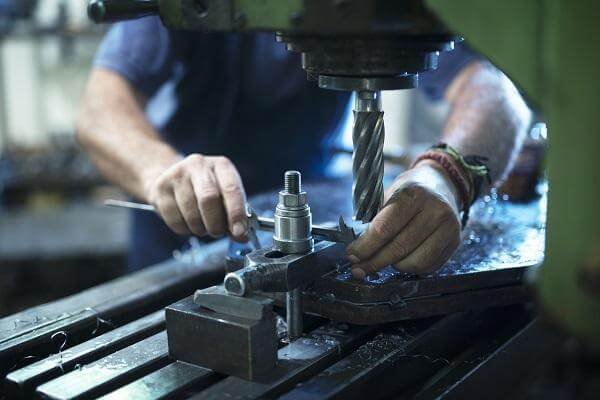
From there, the strategy is built feature by feature in CAM, not applied as a blanket rule. Modern CNC machining techniques mix directions deliberately: rough one way, finish another, add a spring pass where walls deflect, and tune engagement so the CNC milling process stays stable from first part to last. Tooling follows the plan, with coatings suited to the material and stickout kept short where deflection threatens a tolerance.
The practical takeaway for a buyer: this judgment is exactly what you’re paying for. You don’t need to specify the milling direction on a drawing; a reliable CNC manufacturing vendor reviews your blueprints and validates the strategy before the production run begins. At HRCCNC, that means weighing material, machine rigidity, tolerance requirements, surface finish needs, and production volume before committing to a cutting direction for your part.
Which Milling Method Is Right for Your CNC Machining Project?
If you handle machining in-house using modern CNC centers, make climb milling your default setting. You should only drop back to conventional paths when dealing with heavy surface scale, older machines prone to backlash, or thin, flexible walls that the tool might pull in. If you outsource your production, the climb vs conventional milling choice rests with your manufacturing vendor but understanding these mechanics lets you vet them more effectively. Partnering with a supplier who can explain exactly why your stainless steel housing needs a climb-milled finishing pass tells you they are accounting for your part’s finish and tolerance requirements before the program ever runs.
Frequently Asked Questions
1. How does milling strategy affect CNC machining cost?
Milling strategy affects cost mainly through tool wear, cycle time, and how much post-processing a part needs. Climb milling tends to lower per-part cost by extending tool life and cutting down on manual deburring or polishing, while the wrong direction adds rework and wasted material. Shops price this in during CAM programming, before the quote ever reaches you.
2. Which milling method is recommended for precision CNC parts?
In most modern CNC setups, climb milling is the preferred choice for high-tolerance components, since its consistent cutting forces produce more predictable tool deflection and a finer finish. A light climb-milled finishing pass typically follows roughing to lock in tight print tolerances, with a conventional spring pass added only if a deep wall shows taper. This depends on machine rigidity and backlash control being sufficient; without them, the accuracy advantage narrows.
3. How does climb milling affect CNC part surface quality?
Climb milling generally produces a smoother, more consistent surface, since chips clear the cut instead of getting re-cut and most heat leaves with the chip rather than the part. For many finishing operations, that difference alone is enough to skip a separate surface-finishing step. The trade-off is that climb milling still needs adequate machine rigidity to deliver this consistently.
4. How do CNC manufacturers choose the appropriate milling method?
Machine rigidity, material, tolerances, and fixturing all factor into the decision, and it’s made per operation in CAM rather than once per part, so roughing and finishing often run in different directions. With an established CNC machining service, this evaluation happens automatically during quoting, without the customer needing to specify a cutting direction.
5. Can both milling methods be used on the same CNC part?
Yes, and on most production parts they are. Conventional or trochoidal roughing typically clears hard surface scale first, then climb milling finishes the part where surface quality and tolerance matter most. Running both protects the tool during heavy stock removal without giving up the finish the drawing calls for.
6. Is climb milling always better than conventional milling?
No. In the climb milling vs conventional milling debate, climb wins most of the time on modern CNC machines, but not always. Conventional milling is better on equipment with backlash when cutting through abrasive cast scale, and sometimes, on thin parts, the cutter could pull in. The machine and material context decide it, not a universal rule.
7. Why is conventional milling still standard on manual machines?
Manual mills use leadscrews with inherent backlash, and conventional milling keeps that backlash safely loaded in one direction. Climbing on a manual machine can let the cutter grab the table and pull the work through the free play, breaking tools, or ejecting the part. Some machines even shipped with a backlash eliminator built specifically to make climb milling safe. That margin is why apprentices learn conventional milling first.
Conclusion
The climb milling vs conventional milling question rarely has one answer for a whole part. It has an answer for every operation on it. Climb milling earns the modern default through finish, tool life, and speed; conventional milling keeps its place wherever backlash, scale, or fragile setups make the safe cut the smart one. The shops producing clean, repeatable parts treat that choice as engineering, not habit.If you’d rather hand that judgment to people who make it every day, HRCCNC’s engineers select and prove out the right strategy for every feature of your part. Send us your drawing, and we’ll return a quote built on what your parts actually need.