Skip to content

CNC machining transforms modern manufacturing by delivering unmatched precision, speed, consistency, repeatability, material versatility, and long-term cost-effectiveness through computer-controlled automation. Its adDefenseditional benefits include high production speed, the ability to handle complex geometries, rapid prototyping, reduced labor costs, elimination of human error, and efficient use of materials. Together, these advantages improve accuracy, speed, and overall production efficiency while maintaining consistent, high-quality output.
Driven by advanced automation, CNC machining uses CAD/CAM processes to follow precise digital designs, ensuring tight tolerances and repeatable results. Across industries such as aerospace, automotive, medical, and electronics, this leads to fewer defects, faster production, and better resource use, helping manufacturers reduce costs, improve product quality, and scale efficiently.
Here are the 10 benefits of CNC Machining:
- Unmatched Precision: Produces parts with tight tolerances, ensuring accurate dimensions and high-quality components.
- Consistent Repeatability: Creates identical parts across batches, reducing defects and ensuring reliable assembly.
- High Production Speed: Uses automated processes to increase output and shorten time-to-market.
- Complex Geometry Capability: Enables the production of intricate, multi-axis designs that cannot be achieved with manual machining.
- Material Versatility: Processes metals, plastics, and composites for diverse manufacturing applications.
- Rapid Prototyping: Enables quick design iterations, accelerating development and product validation.
- Reduced Labor Costs: Minimizes workforce requirements by enabling a single operator to manage multiple machines.
- Elimination of Human Error: Uses computer-controlled processes to reduce mistakes and improve consistency.
- Material Efficiency: Optimizes material use by reducing waste and lowering production costs.
- Long-Term Cost-Effectiveness: Improves ROI through consistent quality, high output, and reduced rework.
Unmatched Precision and Accuracy (Tolerances Within ±0.005mm)
CNC machining delivers unmatched precision and accuracy, producing parts within ±0.005mm tolerance (depending on material thickness and process) for exact fit, fewer assembly errors, and lower rework costs. Unlike manual machining, which depends on operator skill and can vary significantly, CNC machines follow G-code programmed digital models to control every step of the machining process. Cutting tools move along fixed paths, ensuring each part matches the required dimensions consistently without deviation.
As a result of this controlled process, manufacturers achieve consistent output across batches, reducing defects and minimizing material waste. In precision-critical applications, where performance depends on exact dimensions, such accuracy becomes essential, whether in aerospace components that must withstand extreme stress or medical implants requiring patient-specific fit. Accurate parts fit correctly, proper fit reduces defects, and fewer defects lower production costs while maintaining reliable, high-quality output.
Consistency and Repeatability
By eliminating batch-to-batch variation and reducing defect rates and production costs, CNC machining ensures consistent and repeatable output across high-volume production runs. It produces identical parts from the same digital model using computer-controlled systems that follow fixed programs and repeat the same tool paths in every cycle, maintaining consistent cutting depths, spindle RPM, and axis movement, unlike manual processes, where operator skill and fatigue can shift dimensions by several thousandths of an inch.
Such consistency makes production more stable and predictable, allowing assembly lines to run smoothly without adjustments or delays. In electronics, consistent connectors keep circuits aligned, while in industrial equipment, uniform parts reduce vibration and wear. This creates a clear value chain where identical parts support smooth assembly, smooth assembly reduces rejection rates, and fewer rejections lower production costs while maintaining quality control.
High Production Speed and 24/7 Operational Capability
Round-the-clock operation and high production speed position CNC machining as one of the most efficient manufacturing solutions, maximizing output, reducing production time, and lowering per-unit cost. In high-volume, time-sensitive production environments, automated systems run on preset programs without interruption, eliminating delays caused by manual handling, setup changes, and operator dependency. Continuous machining cycles maintain a steady pace, allowing more parts to be produced in less time while maintaining consistent quality.
As machine uptime increases, overall utilization improves, leading to higher production capacity and faster order completion without additional labor. In real-world applications, automotive production lines run overnight to meet volume targets, while industrial facilities rely on uninterrupted output to avoid delivery delays. Continuous operation increases output, higher output reduces unit cost, and lower cost improves overall production efficiency.
Complex Geometry Capability
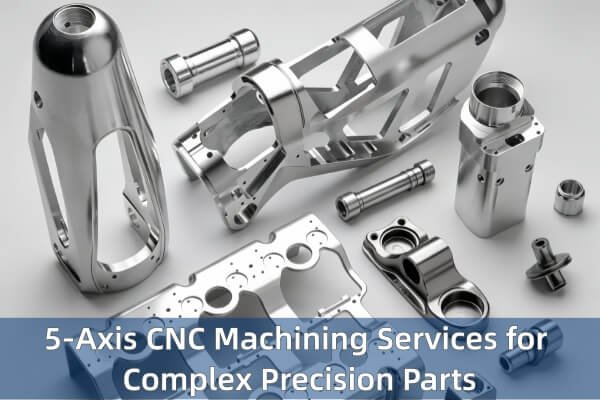
The ability to create complex geometries in CNC machining allows manufacturers to produce intricate, multi-dimensional parts that would be impossible or cost-prohibitive with traditional methods, delivering higher precision, improved functionality, and greater design freedom. In high-precision environments, computer-controlled machines follow exact digital models to cut, drill, and mill complex shapes, including curved surfaces, internal cavities, and multi-axis contours across multiple planes in a single setup, ensuring each part meets strict specifications without compromising structural integrity.
As design complexity increases, this capability becomes critical where geometry directly affects performance. In aerospace, turbine blades require precise curves to optimize airflow, while medical implants must match patient-specific anatomy for proper fit. Precise geometry improves functionality, enhanced functionality boosts performance, and better performance reduces errors and material waste while maintaining consistent quality.
Versatility Across a Wide Range of Materials
From hardened tool steel and titanium to PEEK and carbon-fiber composites, CNC machining handles a broad range of materials with equal precision, giving manufacturers the flexibility to consolidate processes, reduce tooling costs, and maintain consistent quality across every component. In multi-material manufacturing environments, computer-controlled systems adjust toolpaths, spindle speeds, and feed rates based on material properties such as hardness, machinability, and thermal behavior, ensuring consistent results across all components.
As material requirements vary across industries, this adaptability becomes critical for maintaining performance and production efficiency. Aerospace components use materials like titanium and aluminum for strength and precision, while automotive and industrial applications rely on steel and durable alloys, and medical devices require biocompatible plastics and composites. Material-specific adjustments maintain accuracy, consistent accuracy ensures quality, and reliable quality improves overall production efficiency without compromising performance.
Rapid Prototyping and Design Flexibility via CAD/CAM
From initial concept to functional prototype in hours rather than weeks, CNC machining accelerates product development by converting CAD files into precise toolpaths within minutes, reducing development costs, eliminating the inconsistencies of manual prototyping, and compressing time-to-market. CAD/CAM-guided workflows convert design files into precise toolpaths, ensuring each prototype matches intended dimensions and performance requirements while eliminating inconsistencies common in manual prototyping.
As product development cycles become more time-sensitive, this capability allows teams to test, refine, and update designs with minimal delay. In automotive manufacturing, components can be validated before full-scale production, while medical devices are tested for fit and functionality early in development. This creates a development cycle where rapid iteration improves design accuracy, improved designs reduce rework, and reduced rework shortens time-to-market while maintaining consistent quality.
Reduced Labor Costs
Where traditional machining requires dedicated operators for each machine and process, CNC automation consolidates control into program-driven systems, enabling a single operator to oversee multiple axes, tools, and machines while reducing labor costs, minimizing errors, and maintaining consistent output. Multi-axis machining and automated tool control reduce the need for a large workforce while minimizing mistakes and material waste that would otherwise require additional labor to correct, making operations more efficient and cost-effective.
These labor savings translate directly into leaner operations, where reduced headcount lowers overhead costs, operators shift focus to quality control and higher-value tasks, and machines sustain uninterrupted production without performance degradation. In automotive manufacturing, one machinist can operate several CNC machines simultaneously, while in medical and electronics production, intricate parts are fabricated with precision and reliability.
Elimination of Human Error
By automating machining processes, CNC systems eliminate human error at every stage of production, from initial cutting to final finishing, ensuring precise, consistent parts that reduce scrap rates, minimize costly rework, and lower overall production costs. Computer-controlled machines execute pre-programmed toolpaths, spindle speeds, and feed rates with repeatable accuracy across every cycle, removing variability caused by fatigue or manual judgment. Fewer errors lead to less rework, reduced material waste, and faster production cycles, improving overall efficiency.
As a result, this precision becomes critical across industries where dimensional accuracy directly determines performance and safety. In aerospace, turbine components must meet exact tolerances for structural integrity, while medical implants require precise geometry for proper fit and function. Automated control and quality monitoring ensure every part meets design standards with consistent reliability.
Material Efficiency and Minimized Waste
By following precise computer instructions, CNC machines remove only the necessary material from a workpiece, minimizing scrap, reducing raw material consumption, and ensuring parts meet exact design specifications without unnecessary cuts. In material-sensitive environments, optimized toolpaths, spindle speeds, and feed rates calculate the most efficient cutting sequence based on material properties such as hardness and machinability, reducing waste compared to conventional machining methods.
As a result, this precision directly improves cost and resource management across high-value production environments. In aerospace, minimizing the removal of titanium and carbon fiber yields significant per-component cost savings, while in medical manufacturing, conserving biocompatible materials reduces per-unit costs without compromising quality standards. Precise material removal reduces scrap rates, cuts raw material costs, and improves overall production performance while maintaining consistent quality.
Long-Term Cost-Effectiveness
CNC machining delivers long-term cost-effectiveness by turning precision, automation, and consistency into measurable financial advantages that compound across every production run. Precision-driven machining processes follow exact digital instructions to produce parts as designed, eliminating variability common in manual operations and reducing the need for rework or corrections.
As these efficiencies scale across high-volume production, lower error rates, reduced material waste, and faster cycle times converge to deliver compounding cost savings that improve with every run. Optimized material use cuts raw material costs, consistent output shortens lead times, and reduced errors lower operational expenses. In aerospace and medical manufacturing, where precision and compliance are non-negotiable, these savings strengthen long-term production efficiency and return on investment.
Which Industries Benefit Most from CNC Machining?
Industries that benefit most from CNC machining include aerospace and defense, automotive, medical and dental, electronics, energy, industrial manufacturing, and robotics, as they require high precision, repeatability, and reliable performance at scale. These industries depend on components with tight tolerances, complex geometries, and consistent quality, all of which CNC machining can deliver efficiently through controlled, automated processes.
7 common Industries that benefit most from CNC Machining
Aerospace and Defense: Manufacture high-precision components that meet strict safety and tolerance standards.
Automotive: Produce engine, transmission, and chassis parts with consistent performance at scale.
Medical and Dental: Create precise, biocompatible implants, surgical tools, and prosthetics.
Electronics: Build compact, high-precision components for reliable assembly and performance.
Energy: Manufacture durable, high-precision parts for operation in extreme conditions.
Industrial Manufacturing: Produce accurate, repeatable machinery and tooling components.
Robotics: Develop precise, high-performance components for advanced automation systems.
Aerospace and Defense
High-precision manufacturing in aerospace and defense relies on CNC machining to produce critical components such as turbine blades, engine housings, airframe structures, and landing gear parts. The process maintains tight tolerances, repeatability, and precise shaping of materials such as titanium alloys (Ti-6Al-4V) and aerospace-grade aluminum (6061, 7075), ensuring each part meets exact specifications. By enabling complex geometries, reducing material waste, and maintaining consistent quality, CNC machining supports the production of lightweight, safe, and reliable components for aircraft and space systems.
Automotive
Within vehicle manufacturing, CNC machining supports the production of engine blocks, transmission parts, suspension components, and aftermarket products with high precision and repeatability. Program-driven operations maintain consistent dimensions, limit production inconsistencies, and enable rapid prototyping from digital models, ensuring proper fit and performance. As production expands across conventional and electric vehicles, this level of accuracy enables efficient mass production while reducing material waste and rework, resulting in improved reliability, enhanced performance, and lower overall production costs.
Medical and Dental
Precision-focused healthcare manufacturing uses CNC machining to produce surgical instruments, implants, prosthetics, and dental devices with precise dimensions, smooth finishes, and biocompatible materials, directly impacting patient safety and treatment outcomes. Controlled machining processes maintain tolerances critical for proper implant fit and instrument performance, support regulatory compliance with FDA and ISO standards, and limit material waste while meeting strict safety requirements. This level of precision ensures dependable, complex components, where accurate production improves fit and function, ultimately supporting better patient outcomes and more efficient, compliant manufacturing.
Electronics
Modern electronics manufacturing relies on CNC machining to produce precision components, such as circuit boards, connectors, housings, and enclosures, with tight tolerances and consistent quality. In high-density production environments, automated machining processes maintain precise dimensions and consistent output, reducing defects while enabling compact, intricate designs. Because component precision directly influences performance, this accuracy enables proper assembly, effective heat management, and reliable operation, improving overall system performance and production efficiency across consumer and industrial electronics.
Energy
High-performance energy applications rely on CNC machining to produce turbine components, pump parts, and high-pressure fittings where precise tolerances directly determine operational efficiency, safety, and service life. Digitally controlled machining ensures accurate dimensions across high-strength materials such as stainless steel and Inconel, reduces errors, and optimizes material use, all of which are critical in oil, gas, and renewable energy environments where components operate under extreme conditions. This precision improves reliability, minimizes unplanned downtime, ensures safe operation, and enhances overall production efficiency while maintaining consistent quality
Industrial Manufacturing
Large-scale industrial operations depend on CNC machining to produce machinery components, tooling, and assembly parts with consistent accuracy and reliable quality. Automated machining workflows reduce human error, accelerate production speed, and limit material waste through precise process control. This enhances throughput and supports predictable production schedules, where stable output reduces delays, improved efficiency increases capacity, and higher capacity enables dependable, large-scale manufacturing operations.
Robotics
From precision-ground actuators to complex multi-axis joints, CNC machining delivers the dimensional accuracy and geometric complexity that modern robotic systems demand for consistent, high-performance motion control. Tight tolerances and repeatable accuracy ensure that each component performs reliably, which is essential for maintaining system stability in automated operations. With robotic automation in CNC shops producing up to 47% more parts per hour than manual operations, this combination of precision and scalability enhances system reliability and supports the efficient, large-scale deployment of advanced robotic systems.
How Does CNC Machining Compare to Traditional Machining?
CNC machining delivers high precision, consistent repeatability, faster production, and minimal human error, whereas traditional machining relies heavily on operator skill, often resulting in variable tolerances, slower production speeds, and higher material waste. This makes CNC ideal for high-volume, precision-critical applications where quality and efficiency are essential.
| Feature | CNC Machining | Conventional Machining |
| Precision | Tight tolerances (±0.005 mm) for high-accuracy parts | Operator-dependent with lower accuracy |
| Repeatability | Produces identical parts across batches | Varies based on operator skill |
| Production Speed | High-speed, automated, supports 24/7 production | Slower due to manual setup and operation |
| Complexity | Handles complex, multi-axis geometries | Limited to simple shapes, requires multiple setups |
| Labor Requirement | Low; one operator manages multiple machines | High; requires skilled machinists per task |
| Material Waste | Optimized cutting reduces scrap | Higher waste from manual errors |
| Setup Time | Higher initial setup, faster repeat runs | Faster for single parts, slower for batches |
| Cost Efficiency | Cost-effective at scale with higher output | Lower upfront cost, higher long-term expenses |
How Much Does CNC Machining Cost?
CNC machining costs typically range from $30 to $200+ per hour, with 3-axis machines costing $50–$100/hr, 4-axis machines costing $75–$125/hr, and 5-axis machines costing $100–$200+ per hour, depending on precision and complexity. These cost differences depend on different factors such as machine capability, part complexity, material selection, and production volume, which directly affect machining time and efficiency. In CNC machining, multi-axis systems cost more for complex parts, tight tolerances increase time, and materials like titanium raise costs while aluminum lowers them.
How to Choose the Right CNC Machining Partner?
Selecting the right CNC machining partner requires evaluating capabilities, industry experience, material expertise, and quality standards to ensure precise, reliable, and cost-effective production. A capable CNC machining partner combines modern equipment and multi-axis machining with the technical expertise needed to handle complex designs efficiently. Experienced engineers guiding material selection, tolerances, and design for manufacturability reduce errors, improve part performance, and make production more efficient and predictable.
5 Key Considerations for Choosing a CNC Machining Partner:
- Capabilities and Equipment: Use modern CNC and multi-axis machines to produce complex parts with high precision.
- Material Expertise: Apply material knowledge to ensure accuracy, performance, and reduced machining errors.
- Industry Experience: Follow industry standards to improve compliance, quality, and production reliability.
- Quality Assurance (QA): Use strict inspection processes to maintain consistent quality and minimize defects.
- Communication and Management: Ensure clear coordination to support timely delivery and efficient project execution.
Capabilities and Equipment
The right CNC machining partner starts with the right equipment, which directly determines the precision, scale, and complexity of the parts they can reliably produce. Advanced 3-axis, 4-axis, and 5-axis machines, lathes, and automated pallet changers enable efficient machining of complex geometries and multi-material components, while high-speed spindles and automatic tool changers reduce cycle times and material waste. This combination ensures accurate results across prototyping and high-volume production, helping manufacturers maintain efficiency and consistently meet tight tolerance requirements.
Material Expertise
Choosing a CNC machining partner with strong material expertise directly determines how well components perform, how long they last, and how efficiently they can be produced. A strong understanding of metals, plastics, and composites enables machinists to adjust tooling, cutting speeds, and feeds based on hardness, thermal behavior, and chemical resistance. This precision reduces tool wear, limits scrap, and ensures each component meets functional requirements while supporting more efficient production outcomes.
Industry Experience
A CNC machining partner’s sector-specific experience is a strong indicator of their ability to meet required standards, tolerances, and regulatory expectations. Partners with proven experience in aerospace, medical, automotive, and electronics bring deep knowledge of certification requirements, documentation processes, and precision demands, translating into faster design validation, fewer production errors, reduced compliance risk, and more reliable delivery of components that meet exact performance specifications.
Quality Assurance (QA) Standards
A reliable CNC machining partner maintains robust quality assurance processes that go beyond basic inspection, ensuring every part meets precise specifications before it reaches the assembly line. Advanced methods, including CMMs, in-process monitoring, and laser scanning, verify dimensional accuracy at every production stage, detect deviations early, prevent costly defects, reduce rework, and ensure components integrate seamlessly into final assemblies without delays.
Communication and Project Management
Strong communication and structured project management ensure CNC machining projects stay accurate, on schedule, and aligned with client expectations from initial design through final delivery. Clear coordination between engineers, machinists, and clients, supported by CAD collaboration platforms, real-time progress tracking, and dedicated project oversight, prevents misunderstandings, enables faster issue resolution, reduces production delays, and ensures high-precision components are delivered on time and within specifications.