 Skip to content

Custom Online 5 Axis CNC Machining Services
Access high-precision 5-axis CNC machining services online for complex metal and plastic parts built for prototyping and production. Upload your CAD files, receive fast engineering-reviewed quotes, and manufacture CNC-machined components with controlled machining operations, certified quality management, and reliable global delivery.
- Tolerances up to ±0.009 mm using advanced simultaneous 5-axis machining centers.
- ISO 9001:2015 certified quality management system for repeatable accuracy and documented inspection.
- Rapid prototyping and production-volume 5-axis CNC machining with reduced lead time.
- 80+ materials, including aluminum 6061/7075, stainless steel, titanium, ABS, PEEK, and POM.
- Produce complex parts with improved tool access, consistent surface finish, and minimized multi-setup repositioning.
Our Certifications
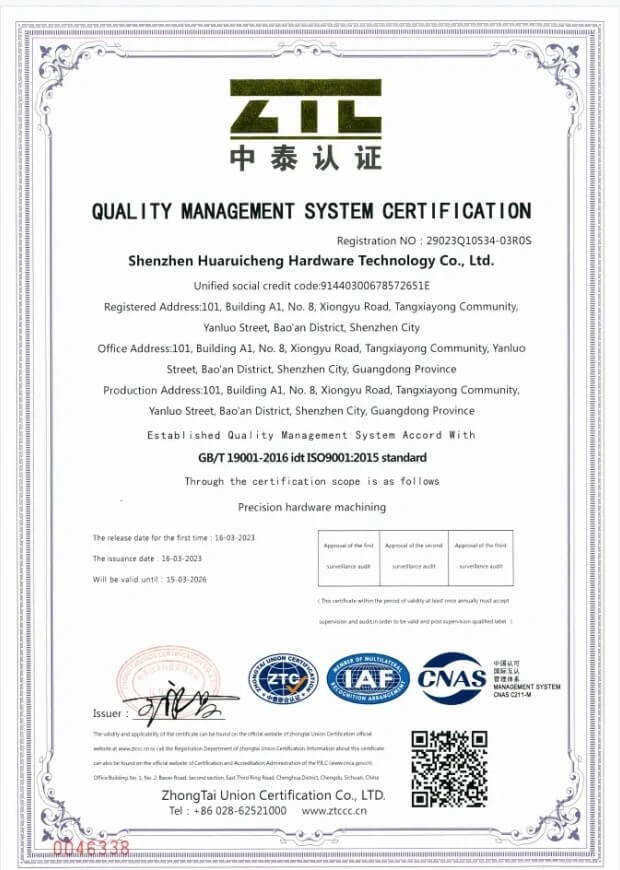
ISO 9001:2015
This certification demonstrates that our company follows internationally recognized quality management standards. It ensures consistent product quality, process optimization, and a strong focus on customer satisfaction.
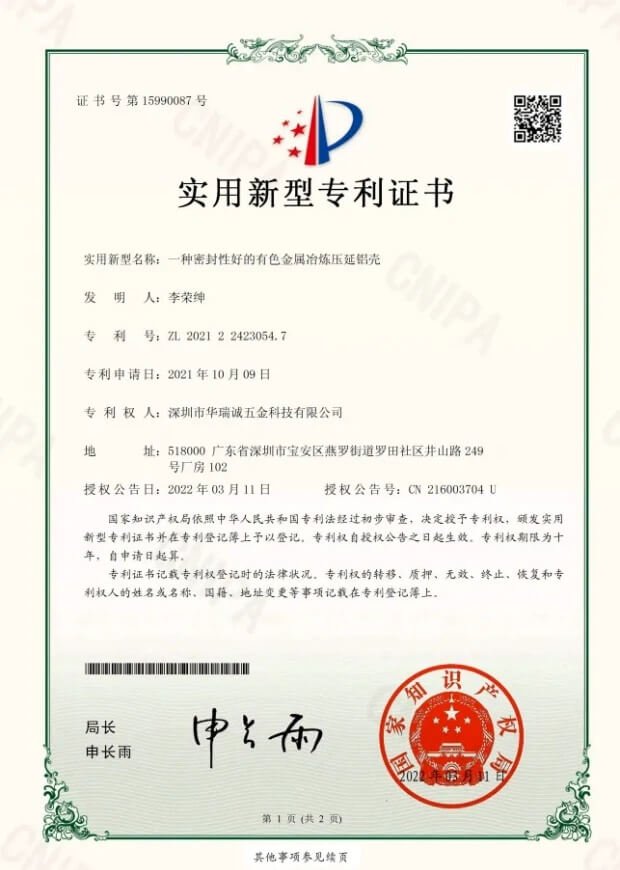
Patent Certificates
Our patents represent innovation and originality in manufacturing processes and product development. They highlight our ability to deliver unique solutions and maintain a competitive edge in the industry.
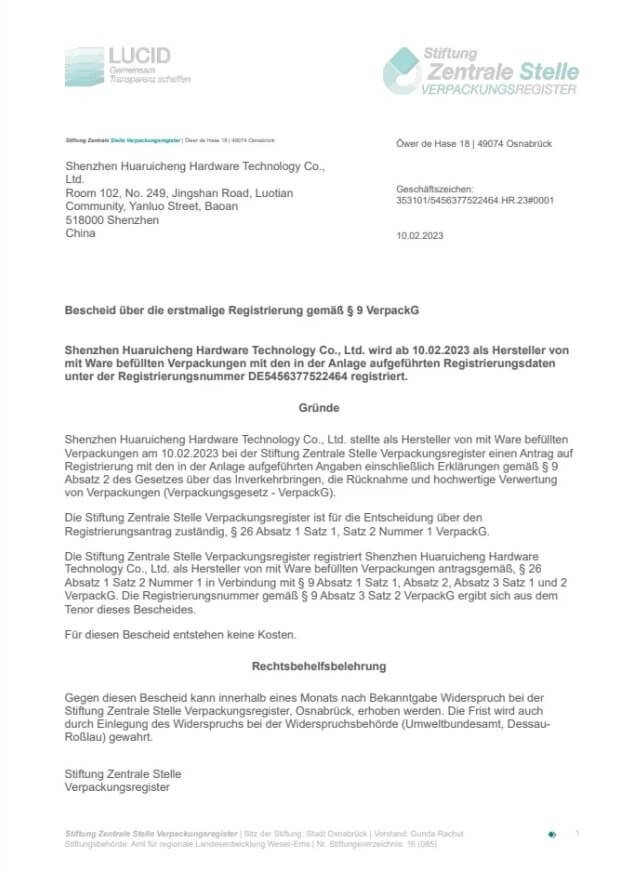
EPR-Certificate
As a compliant producer of goods-containing packaging, we can ensure our product packaging fully meets the regulatory requirements for the German market, this is our EPR-Certificate. Please contact us right now.

Enterprise Credit Rating Certificate
This certificate reflects our financial stability, business credibility, and trustworthy reputation in the industry. It reassures clients and partners that we are a reliable and long-term business partner.

Software Copyright Certificates
These certificates confirm ownership and protection of our self-developed software systems. They validate our technical expertise and guarantee the originality, security, and reliability of the digital tools we use in manufacturing.

SGS and HRCCNC company certificate
This certificate verifies our company as an Alibaba.com SGS Verified Supplier, ensuring compliance and reliability for our cooperation, SGS and HRCCNC company certificate,please contact us right now.
What is 5 Axis CNC?
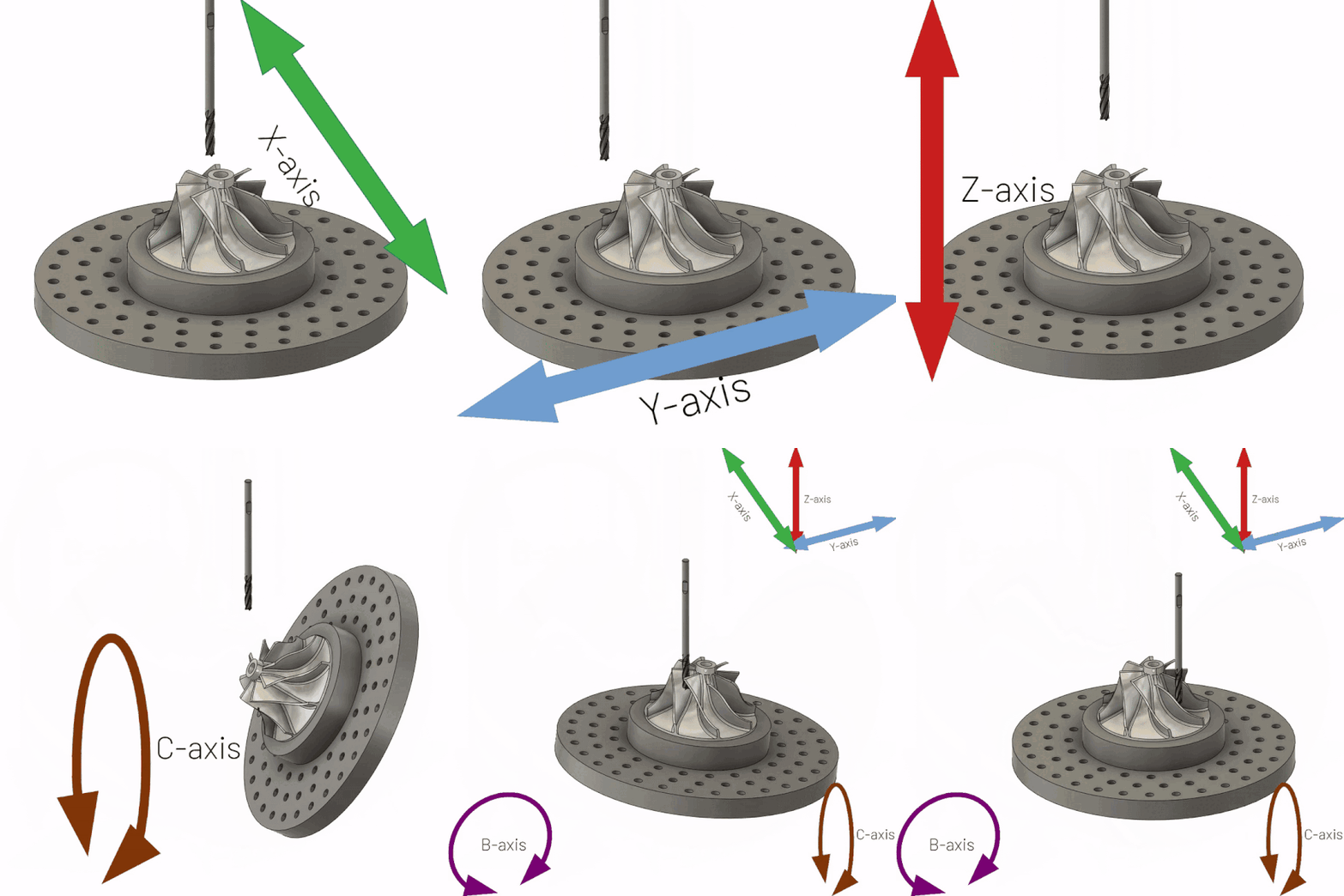
5-axis CNC machining is an advanced manufacturing process in which a 5-axis CNC machine moves a cutting tool or workpiece along five coordinated axes: three linear axes (X, Y, Z) and two rotational axes (A, B, or C). This configuration enables simultaneous 5-axis machining, allowing the machining center to cut complex geometries from multiple angles within a single machining operation while maintaining tight tolerances.
Unlike 3-axis machining, which requires multiple setups for angled features, 5-axis machining uses a rotary table or trunnion-based axis machine to maintain continuous tool access. This structure supports complex machining of curved surfaces, undercuts, and deep cavities while maintaining tight tolerances and consistent surface finish. Industries such as aerospace, medical, and automotive rely on this process to manufacture complex parts that require stable machining operations and dimensional accuracy.
Benefits:
- Increased efficiency shortens production lead times.
- Produces intricate shapes and undercuts in a single setup.
- Delivers smoother finishes with less need for post-processing.
Why Choose 5-Axis Machining Over 3-Axis?
Choose 5-axis over 3-axis machining when your part includes complex geometries, compound angles, or deep cavities that require multi-directional tool access. While 3-axis machining is effective for simple contours and flat surfaces, it often requires multiple setups that increase cycle time and introduce alignment variation. 5-axis CNC machining completes these operations in a single setup, improving dimensional accuracy and maintaining a consistent surface finish across complex parts.
For advanced engineering applications, HRCCNC’s 5-axis machining centers provide the precision control and process stability required to meet tight tolerances and demanding design specifications.
| Aspect | 3-axis Machining | 5-axis Machining |
|---|---|---|
| Complexity | Simple parts with basic geometries | Complex, organic shapes and contours |
| Setups | Multiple required for complex parts | Single setup for most parts |
| Precision | Good for simple parts | Excellent for complex geometries |
| Time Efficiency | Longer for complex parts | Faster for complex parts |
| Cost Efficiency | Lower for simple parts | More cost-effective for complex parts |
| Surface Finish | May require additional finishing | Superior finish with fewer operations |
| Tool Access | Limited angles of approach | Virtually unlimited angles of approach |
| Labor Requirements | More manual intervention needed | Minimal manual intervention |
| Ideal Application | Flat surfaces, simple contours | Complex surfaces, organic shapes |
What Are the Advantages of 5-Axis Machining?
5-axis CNC machining enables complex geometries, single-setup efficiency, and superior surface finish by allowing simultaneous multi-angle cutting within one machining center. This process supports high-speed machining, tight tolerances, and a wide range of materials while performing advanced machining operations that reduce cycle time and improve accuracy for complex parts.
Complex Geometries
Advanced multi-axis CNC systems shape complex parts by coordinating five simultaneous axes of motion between the tool and the workpiece. Continuous multi-angle access removes the need for repeated repositioning required in 3-axis setups and maintains stable tool engagement in a single fixture. This approach delivers precise curved surfaces, undercuts, and intricate cavities used in aerospace components, medical devices, and high-precision industrial parts.
Single-Setup Efficiency
By integrating rotary table or trunnion movement into a single setup, manufacturers can machine multiple faces without removing or re-clamping the part. Compared with 3-axis machining that requires repeated setups for complex features, this approach reduces repositioning errors and shortens cycle time. It delivers higher throughput, tighter dimensional control, and lower manufacturing costs for precision components.
Superior Surface Finish
5-axis CNC machining improves surface finish by maintaining continuous tool contact and optimal cutting angles throughout the machining process. Unlike 3-axis machining, which may leave visible tool marks due to repeated repositioning, simultaneous 5-axis machining reduces vibration and uneven tool engagement. The result is a smoother, more uniform surface finish that minimizes the need for secondary polishing or finishing operations for functional and aesthetic parts.
Wide Material Range
Manufacturers machine a wide range of materials by adjusting cutting parameters, spindle speed, and tool paths within a precision machining center. Simultaneous multi-axis control keeps the tool stable across metals and engineered plastics, even at complex angles. This approach ensures reliable production of CNC-machined components in aluminum, stainless steel, titanium, and high-performance plastics such as PEEK and POM for aerospace, medical, and automotive applications.
Processes
Modern multi-axis machining centers handle multi-face milling, angled drilling, contouring, and complex pocketing in a single continuous operation. Unlike 3-axis processes that separate these tasks into multiple setups, simultaneous five-axis control maintains stable tool orientation throughout. This reduces cycle time, improves geometric accuracy, and supports consistent dimensional control for complex parts.
High-Speed Machining
Simultaneous five-axis control supports high-speed machining by maintaining optimal tool orientation and steady cutting engagement throughout the process. Unlike 3-axis machining, where repositioning and longer tool paths reduce speed and stability, this approach minimizes idle movement and improves spindle efficiency. It delivers shorter cycle times, higher productivity, and stable dimensional accuracy for complex parts with tight deadlines.
Tight Tolerances
Continuous tool control and precise axis synchronization allow manufacturers to hold tight tolerances throughout the machining cycle. Unlike 3-axis processes that introduce alignment variation across multiple setups, simultaneous five-axis machining completes complex work in a single controlled cycle. It ensures consistent dimensional accuracy and supports precision parts with tolerances as tight as up to ±0.005 mm, depending on material and design.
What Materials Work Best for 5-Axis CNC Parts?
Aluminum, stainless steel, carbon and alloy steel, titanium, brass, magnesium alloys, and engineering plastics such as ABS, POM (Acetal/Delrin), nylon, PC, PEEK, and PMMA are well-suited for 5-axis CNC machining. Their machinability, strength, and dimensional stability allow the machining center to produce complex features with tight tolerances and consistent surface finish for aerospace, medical, automotive, and electronics applications.
Metal Materials
Our 5-axis CNC machining services support a wide range of metals engineered for strength, corrosion resistance, and thermal stability in both prototyping and production. These materials enable precise, complex operations with tight tolerances and consistent surface finish for demanding industrial applications.
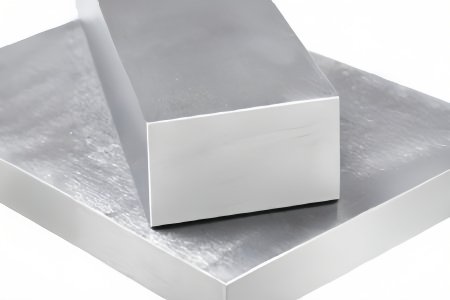
Aluminum
Aluminum offers lightweight performance, excellent machinability, and strong corrosion resistance, making it suitable for aerospace, automotive, and electronics components. High-strength-to-weight alloys such as 6061 and 7075 allow 5-axis CNC machining centers to produce complex parts with tight tolerances and stable surface finishes.

Stainless Steel
Engineers select stainless steel for its strength, corrosion resistance, and long service life in demanding environments. Medical devices, food processing equipment, and marine components depend on precise machining and reliable material performance.
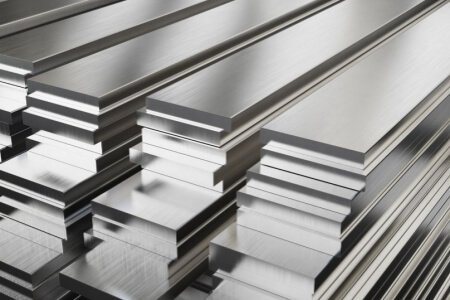
Carbon/Alloy Steel
Manufacturers rely on carbon and alloy steel for strong mechanical properties, cost efficiency, and structural versatility. With proper coolant control during extended machining, these materials maintain heat stability and dimensional accuracy in complex operations.
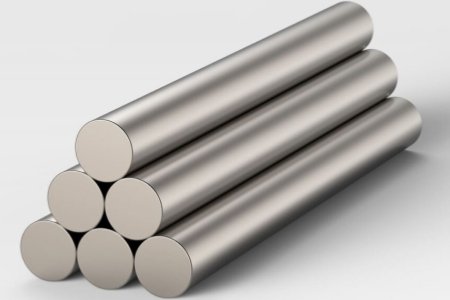
Titanium
Titanium delivers an exceptional strength-to-weight ratio and biocompatibility for high-performance applications. Aerospace components, medical implants, and precision industrial parts require controlled cutting forces and tight tolerances when machining this high-strength metal.

Brass
Known for its excellent machinability, corrosion resistance, and electrical conductivity, brass is well-suited for precision components. Decorative hardware, fittings, and electrical connectors depend on their clean surface finishes and accurate machining.
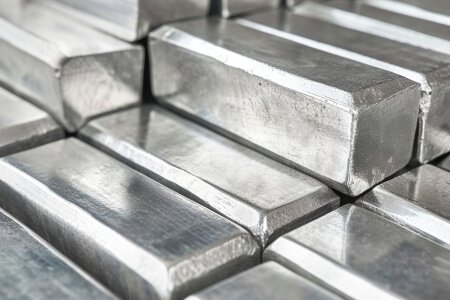
Magnesium
Engineered for ultra-light weight, strength, and efficient heat dissipation, magnesium alloys support automotive and aerospace applications. During 5-axis CNC machining, operators carefully control chip handling due to its flammability to ensure safe, stable production.
Plastics Materials
Our 5-axis CNC machining services support a broad range of engineering plastics selected for strength, wear resistance, chemical stability, and dimensional accuracy. These materials allow complex machining operations with a stable surface finish across prototype and production applications.
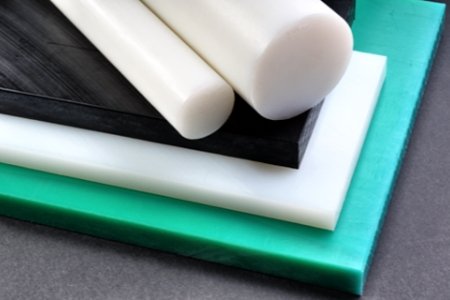
ABS
ABS is affordable and easy to machine, making it suitable for prototypes and consumer product housings. In 5-axis CNC machining, ABS allows stable cutting performance and consistent dimensional accuracy for lightweight components.
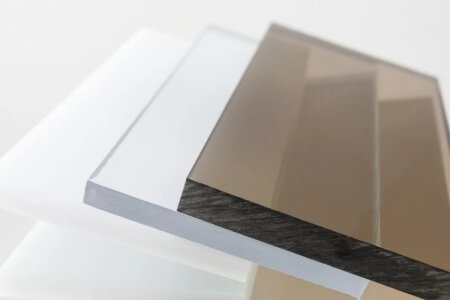
PC (Polycarbonate)
Offering high impact resistance and optical clarity, polycarbonate suits demanding technical applications. Manufacturers use it for optical components and electronic enclosures that require strength and precise machining.
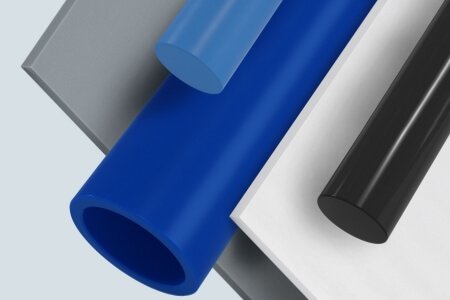
POM
POM, also known as Acetal or Delrin, provides excellent wear resistance and dimensional stability. It is ideal for gears, bearings, and precision components that require low friction and tight tolerances.
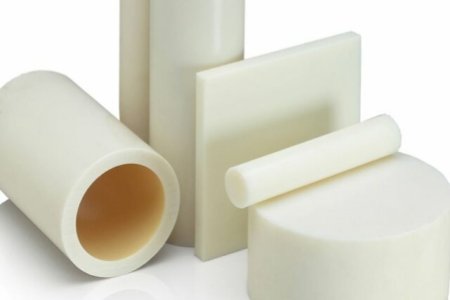
Nylon
Engineered for flexibility and wear resistance, nylon delivers high tensile strength and strong resistance to oils and fuels. Manufacturers use it for bushings, washers, and automotive connectors that require durability, impact resistance, and stable machining performance.

PEEK
A high-performance thermoplastic with exceptional heat resistance (up to 260°C), chemical resistance, and biocompatibility. Used for aerospace components, medical implants (e.g., spinal fusion devices), and industrial parts in extreme environments.

PMMA (Acrylic)
A lightweight, transparent thermoplastic known for its excellent clarity, rigidity, and weather resistance. It is commonly used for light covers, display components, lenses, and applications that require a glass-like appearance with improved impact resistance.
What Surface Finishes Are Available for 5-Axis Parts?
5-axis CNC machining supports finishes such as as-machined with deburring, bead blasting, anodizing (Type II and III), electroplating, electropolishing, brushing, powder coating, and laser engraving. These processes improve corrosion resistance, wear performance, cleanliness, and appearance, meeting functional requirements for aerospace, medical, automotive, and electronic components.
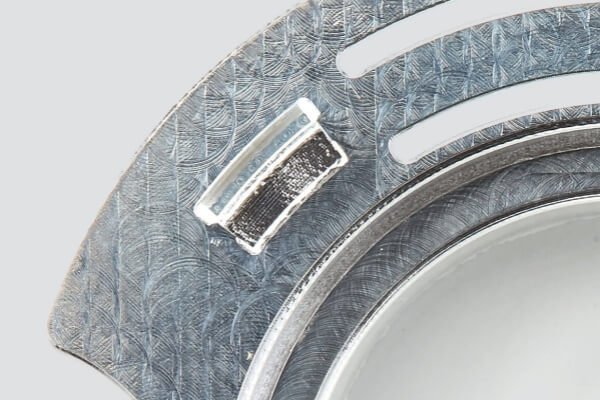
As Machined + Deburring
Often referred to as “mill finish,” this is the natural surface condition immediately after 5-axis CNC machining without coating or polishing. It retains light tool marks with a typical 1.6–3.2 μm, depending on tooling and material. This finish preserves dimensional accuracy and provides a reliable baseline for functional prototypes and precision components.
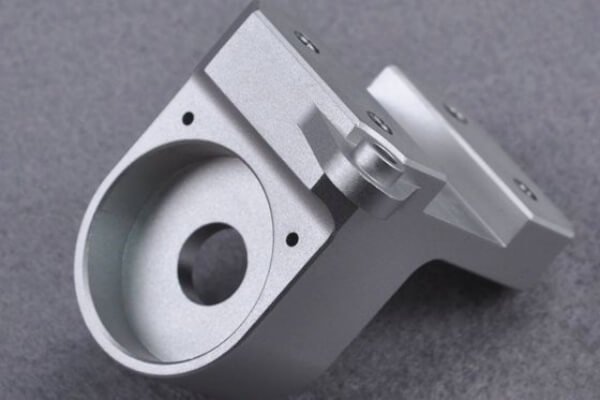
Bead Blasting
Bead blasting uses fine glass beads under high pressure to create a smooth, uniform matte or satin texture on the part surface. This process hides visible machining marks, improves coating adhesion, and gives aluminum or stainless steel components a refined, non-reflective appearance. It is commonly selected when a consistent aesthetic finish is required.
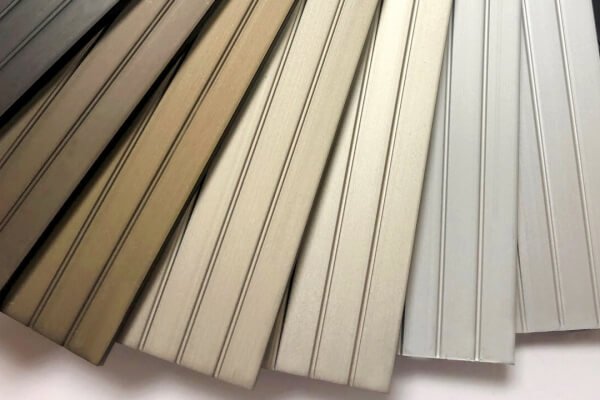
Anodizing
Anodizing is an electrochemical process that forms a protective oxide layer on metal surfaces, most commonly aluminum. It improves corrosion resistance, increases wear resistance, and allows color options such as black, silver, or red, with specifications including Type II (decorative) and Type III (hardcoat). This finish is widely used for consumer electronics housings, automotive trim, and aerospace components.
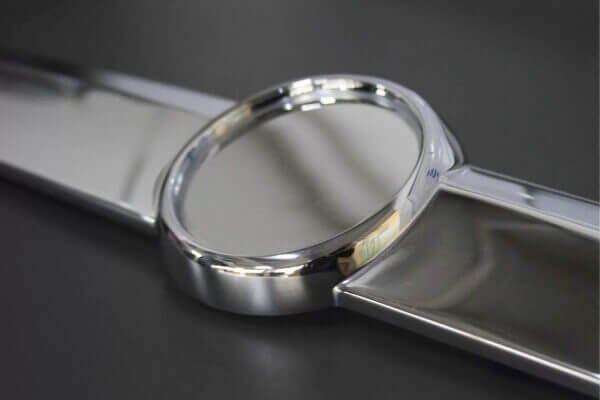
Electroplating
Through controlled electrochemical deposition, electroplating bonds a thin layer of metal, such as chrome, nickel, or gold, to the part surface using an electric current. The process improves conductivity, corrosion resistance, or decorative appeal based on the selected metal. Manufacturers apply it to electrical connectors, decorative hardware, and medical device components.
Electropolishing
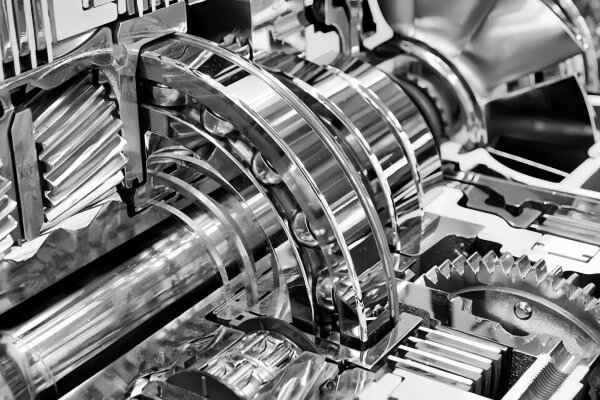
Electropolishing is an electrochemical finishing process that removes a thin layer of metal to produce a smooth, bright, and ultra-clean surface. It works uniformly across complex geometries, including threaded holes and intricate cavities that are difficult to reach with mechanical tools. The process also passivates the surface, improving cleanliness and corrosion resistance for medical and precision applications.

Brushed Finish
Uses high-pressure air to propel fine abrasive media across the surface, forming a uniform linear texture in a consistent direction. This controlled process creates a satin finish that reduces glare, masks minor machining marks, and provides a refined industrial appearance. It works well for aluminum, steel, and titanium parts that require both visual consistency and light surface refinement.
Powder Coating
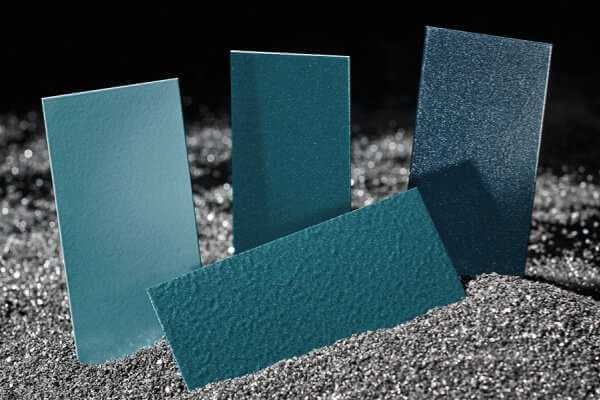
Powder coating applies a dry polyester or epoxy powder to the surface and cures it under heat to form a durable coating layer approximately 50–150 μm thick. This finish offers strong corrosion and impact resistance, along with a wide range of color options. It is commonly used for steel, aluminum, and magnesium parts such as automotive frames and outdoor equipment.
Laser Engraving
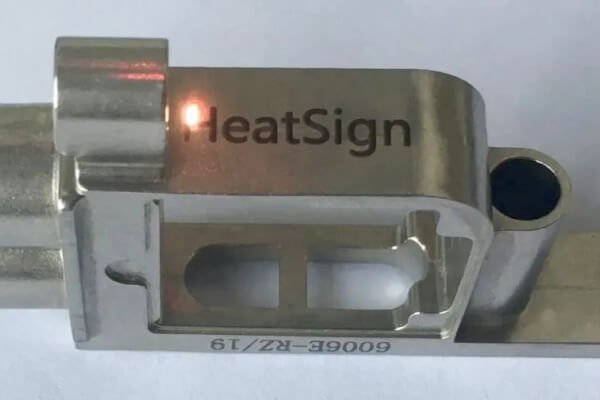
Focused laser energy precisely etches logos, serial numbers, or text directly onto the part surface. The process produces permanent, high-accuracy markings without affecting dimensional integrity or material structure. Manufacturers use it for branding, traceability, and identification on metal and plastic components.
What Industries Use 5-Axis CNC Machining?
The aerospace, automotive, medical, and consumer electronics industries rely on 5-axis CNC machining to produce complex parts with tight tolerances, multi-surface geometries, and consistent surface finishes. These sectors require precise machining operations, stable material performance, and reliable dimensional accuracy for both prototype development and production components.
Automotive Parts Manufacturing
Consumer Electronics Products
Aerospace Components
Medical Device Production
5 Axis CNC Machining Design Guidelines
For optimal results in 5-axis machining, follow these design guidelines to ensure manufacturability, reduce machining time, and maintain dimensional accuracy by controlling wall thickness, allowing proper tool access, optimizing corner radii, and balancing feature proportions.
Maintain Uniform Wall Thickness
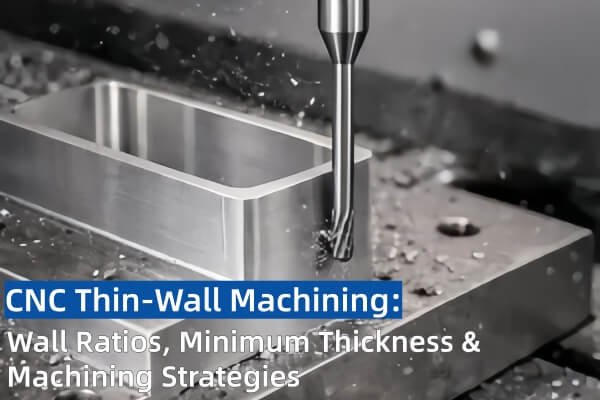
Maintain consistent wall thickness to prevent material distortion and ensure dimensional stability during machining. Recommended minimum wall thickness is 0.5 mm for metals and 1.0 mm for plastics to maintain structural integrity. This matters for 5-axis machining because uneven walls can cause vibration or deflection during multi-angle cutting, affecting tolerance accuracy and surface finish.
Ensure Tool Access
Ensure adequate tool access when designing deep cavities and internal geometries to maintain stable cutting conditions. Account for the tool length-to-diameter ratio in pockets and channels to limit deflection and vibration. In 5-axis machining, proper access supports simultaneous multi-angle cutting, preserves precision, and reduces overall machining time.
Use Fillets Instead of Sharp Corners
Ensure that small features are not excessively deep relative to their width to allow stable machining. A common guideline is that feature depth should not exceed 4 times its width for milling operations. In 5-axis CNC machining, balanced feature proportions support stable cutting engagement and help maintain tight tolerances across complex geometries.
Consider Feature Size
Ensure that small features are not too deep relative to their width to enable proper machining. The general rule is that feature depth should not exceed 4 times its width for milling operations.
Why Choose HRCCNC for 5 Axis CNC Machining Services?
Choose HRCCNC for 5 Axis CNC Machining Services to produce intricate geometries, deep cavities, and multi-surface components with simultaneous 5 Axis capability, tight tolerances up to ±0.009 mm, and controlled single-setup machining. Founded in 2008, we operate under an ISO 9001:2015-certified quality management system with strict QC procedures, including FAI, in-process inspection, and 100% final inspection, to maintain dimensional accuracy and a stable surface finish. We provide free DFM engineering feedback, fast quotes within 24 hours depending on complexity, in-house anodizing with no MOQ, consistent color control, and one-stop integrated manufacturing to reduce lead time for complex, custom 5-axis CNC-machined components.
Ultra-High Precision with Tight Tolerances (±0.009 mm)
18 Years of Proven CNC Expertise
Fully Custom CNC Turning Tailored to Your Needs
One-Stop Integrated Manufacturing Services
Free DFM Feedback and Engineering Support
In-House Anodizing and Advanced Surface Finishes
Fast Quotes and Rapid Turnaround
Competitive Pricing for Complex Custom Parts
Advanced 5-Axis Machining for Intricate Geometries
Global Export Reliability and Fast Shipping
What Our 5 Axis CNC Machining Clients Say About Us?
How to Get Started for 5-Axis CNC Service?
Starting your 5-axis CNC machining project with HRCCNC is structured for speed, precision, and engineering clarity. Follow these steps to move from CAD design to finished complex parts with controlled machining operations and documented quality inspection.

Upload Design
Share your 3D CAD files (STEP, IGES, SLDPRT) and 2D drawings with tolerance and material specifications.

Receive Quote
Receive a detailed quotation with pricing and lead time, typically within 2-24 hours.

DFM Analysis
Our engineers review your design and provide optimization suggestions for stable 5-axis machining.

Order Approval
Review and approve the finalized quote and production plan before manufacturing begins.

Production
We machine, finish, and inspect your parts using controlled 5-axis machining centers and ISO-certified quality procedures.
Resource & Guides
Founded in 2008, HRCCNC is a trusted CNC machining and metal manufacturing company with 18 years of experience delivering precision-engineered custom parts to global customers. Our team of skilled engineers and technicians provides one-stop integrated services, including CNC machining, die casting, and sheet metal fabrication, supporting projects from product design to finished product delivery across North America, Europe, and Asia.
From a small CNC workshop to a global manufacturing partner, HRCCNC has expanded through continuous capability upgrades and international quality certification, including ISO 9001:2015. Our factory is certified to ISO 9001:2015 and has been audited by SGS, ensuring strict quality control, traceability, and compliance with international manufacturing standards.
Company Introduction Video
FAQs About CNC Turning
What tolerances can you achieve with 5-axis machining?
Our 5-axis CNC machining services achieve tolerances up to ±0.005 mm for most precision components, depending on material, geometry, and inspection requirements. Simultaneous 5-axis machining reduces repositioning variation, allowing consistent dimensional accuracy across complex parts.
What is the typical lead time for 5-axis parts?
Lead time for 5-axis CNC-machined parts ranges from 3–15 business days for most projects, depending on part complexity, quantity, and material. Our short-lead options take 2–3 days and prototype delivery complete within 3–7 days for qualified projects. Controlled single-setup machining and optimized production planning help maintain dimensional accuracy while reducing overall turnaround time.
Can you machine undercuts and deep cavities?
Yes, HRC CNC’s 5-axis CNC machining can produce undercuts, deep cavities, and multi-angle features that are difficult or impossible with standard 3-axis machining. The simultaneous 5-axis capability allows continuous tool access from multiple orientations, reducing the need for secondary setups and maintaining tight tolerances across complex geometries.
Do you offer in-house surface finishing?
Yes, we provide in-house surface finishing services, including anodizing, bead blasting, powder coating, electropolishing, electroplating, brushed finish, and laser engraving. Integrated finishing within our 5-axis CNC machining workflow reduces lead time, maintains dimensional control, and ensures consistent surface quality across complex parts.
Is there a minimum order quantity?
No, there is no minimum order quantity for our 5-axis CNC machining services. We support single-piece prototypes and production volumes, allowing engineers to validate complex parts before scaling to larger manufacturing batches.
Do you provide material certifications or FAI reports?
Yes, HRC CNC provides material certifications upon request and offers First Article Inspection (FAI) reports to verify dimensional accuracy and compliance with specifications. Our ISO 9001:2015 quality management system ensures traceability, controlled inspection procedures, and documented verification for precision 5-axis CNC-machined components.
How secure is my CAD file upload?
Your CAD files are handled through controlled internal processes with restricted access to authorized engineering personnel only. We maintain strict data confidentiality procedures within our ISO 9001:2015 quality management system to protect design integrity and intellectual property throughout the 5-axis CNC machining process.
Ready to Get a CNC Machining Online Quote?
Upload your CAD file to HRCCNC for a fast, transparent quote on custom CNC machining tailored to your material, tolerance, and lead time needs. Our engineers review your design, provide free DFM feedback, and deliver precision parts for both prototyping and high-volume production.
Start your online CNC machining service quote now and move your custom parts into production with confidence.