Skip to content
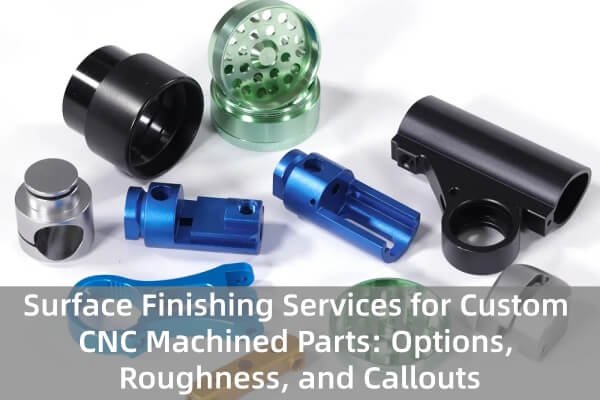
In the precision manufacturing industry, surface finishing services refer to secondary processes applied to raw CNC-machined parts, such as electroplating, anodizing, sandblasting, and polishing. These treatments modify the part surface to achieve certain aesthetics, texture, protection, durability, and functionality.
Choosing the right surface finishing services requires a clear understanding of the available options, precise measurement of the average roughness (Ra), and the inclusion of surface finish callouts. It directly influences how a precision component survives its operational conditions for a long time.
With a suitable surface finish, HRCCNC enhances your components’ core material performance and aesthetics. Some benefits include controlled surface texture, corrosion protection, wear resistance, reduced friction, durability, and surface hardness.
What Surface Finishing Options Do We Offer for CNC Machined Parts?
At HRCCNC, we offer a wide range of custom surface finishing options for different sets of specified requirements. Our manufacturing process follows ISO 9001:2015 quality standards and maintains strict tolerances for both CNC-machined prototypes and large production runs.
1. Anodizing
It’s an electrochemical process that creates a thick oxide layer over the substrate. For parts that require corrosion resistance and decorative color options, anodizing is often a suitable choice. This finish is widely used on Aluminium CNC-machined parts where the outer surface is converted into a durable oxide layer.
Decorative colors can be added later through dyeing. Anodizing provides high strength to the precision components with some additional advantages like electrical insulation and excellent custom dye absorption.
Common applications and industries: Aerospace components, adhesive bonding primer, military equipment, architectural, consumer products, mechanical components, etc.
2. Sandblasting
Sandblasting or bead blasting uses a fine media to propel at high pressure to remove tool marks and blemishes from the surface. It cleans the surface by removing oxidation, scale, and stubborn contaminants and results in a uniform matte finish.
This surface finish method can be applied to multiple materials such as carbon steel, cast iron, aluminum, stainless steel, copper, etc. We also recommend it for your CNC machined parts as a pre-coating cleaning process before painting. Its primary benefits include effective removal of corrosion and contamination, cost efficiency, strong coating adhesion, material versatility, etc.
Common applications and industries: Renewable energy components, aerospace components, architectural frameworks, industrial machinery, electronic products.
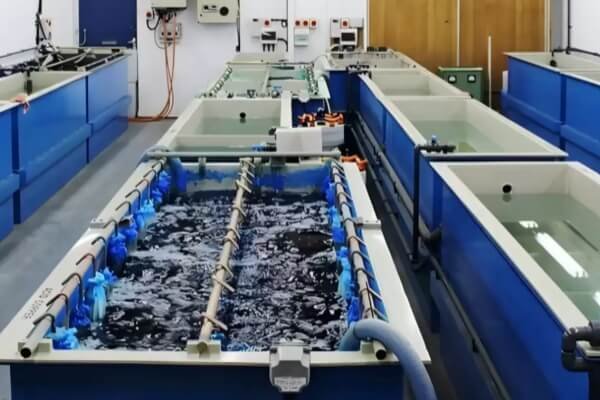
3. Electroplating
It is a widely used surface treatment where an external electric current is used to deposit a thin layer of metal on the substrate. We suggest electroplating for its wide range of advantages according to different plating materials. For example, improved corrosion resistance, wear resistance, surface hardness, electrical conductivity, or decorative appearance of the custom CNC component.
It results in a glossy metallic finish on the electroplated component. Suitable application cases of electroplating are CNC machined precision parts with simple geometry. For complex geometries like tight screw holes, deep pockets, internal threads, and recesses, electroplating shows limitations in providing uniform coverage.
If your precision CNC components have complex geometry, the HRCCNC team specifies electroless nickel plating as a more effective alternative.
Common applications and industries: Power generation equipment, automotive components like fasteners, trim, brackets, aerospace components like connectors, sensor housings, medical and dental device parts, etc.
4. Brushed Finish
When your CNC machined parts are intended to be used in consumer devices with requirements of a modern look, a brushed finish provides a balance of surface uniformity and aesthetic appeal. We offer this surface treatment option for most metals requiring aesthetic appeal.
It results in a directional satin finish and consistent grain pattern on the surface of the component. You can consider this process for its primary benefits, like concealing minor scratches, smudges, and fingerprints.
Common applications and industries: Medical devices, automotive trim components, aerospace components, consumer products, telecommunication device components, etc.
5. Powder Coating
Powder coating makes custom CNC machined parts wear-resistant by creating a uniformly thick and durable coating over their metallic surface. This hard coating protects the components from mechanical wear like chipping and scratching. However, it shows limitations in preventing fading over time with UV exposure and in an outdoor environment.
Thus, if you require a surface finish that prevents fading, contact the HRCCNC team to get a suitable recommendation according to your needs. Powder coating produces a colored or glossy finish on precision components and provides good resistance to weathering.
Common applications and industries: Robotic arms, automation components, power generation devices, automotive engine parts, aerospace landing gear, surgical instruments, etc.
6. Laser Engraving (Additional Post-Processing Option)
Laser engraving is an ideal choice if you want your CNC machined parts to have permanent identification, traceability, or branding. In this process, our engineering team uses high-energy laser beams to mark anything permanently on the surface, such as logos, serial numbers, barcodes, etc.
The primary advantage of laser engraving is that it is resistant to fading even in harsh environments. We can apply this process to the CNC machined parts of your specific material requirements, as it effectively works on metals, plastic, glass, wood, and other materials.
Common applications and industries: Branding, logos, product marking of any industry, industrial and manufacturing use, decorative items, etc.
7. Polishing
HRCCNC provides polishing to reduce surface friction on precision CNC components and enhance decorative aesthetics on consumer products. Our team offers this process if you require a smooth, mirror-like reflective finish on your CNC machined parts.
However, polishing is limited in its ability to provide high durability to components. Thus, if you prioritize durability over reflective aesthetic, we can offer you a more suitable surface finish based on your requirements.
Common applications and industries: Medical devices, decorative products, consumer goods, etc
8. Passivation
We offer Passivation, a chemical bath for stainless steel CNC machined components to enhance their natural corrosion resistance. When your stainless steel CNC components require the removal of impurities and other surface contaminants without altering stainless steel’s natural appearance, we select this surface finishing process.
As its application is limited to stainless steel, HRCCNC will suggest other finishes that provide corrosion resistance if your design specifies any other material.
Common applications and industries: Medical and surgical devices, marine components, aerospace structural parts, chemical processing devices, etc.
9. Painting
This process involves applying a cost-efficient protective layer on the custom CNC components. It provides limited environmental protection, while its primary benefit is improved appearance. For painting as a surface treatment process, we offer a wide range of custom color options for your decorative needs and variations.
However, we recommend more effective surface finishing options like anodizing and electroplating if your CNC machined parts require strong corrosion resistance.
Common applications and industries: Automotive body panels, medical equipment housings, commercial and consumer products, industrial equipment components.
10. Heat Treatment (Additional Post-Processing Option)
Heat treatment is a thermal process that is used to enhance certain material properties like strength and hardness. We achieve these properties for your CNC components with controlled heating and cooling cycles. This involves processes like quenching, tempering, or aging, which make the CNC machined parts wear-resistant, durable, and withstand extreme temperature variations.
Common applications and industries: Industrial tooling and mold making, construction equipment, engine parts, heavy-duty fasteners in the automotive industry, etc.
What is the Surface Roughness Average for Different Finishes?
Surface roughness average (Ra) is one of the key factors of surface finishing standards and measurements. It measures the average deviation between the peaks and valleys of the surface on a microscopic scale.
Precise measurement of Ra defines the suitable surface finishing process for the raw CNC machined components. It helps to choose the right surface finishing that provides the required functionality such as texture, durability, corrosion or wear resistance, electrical conductivity, color, etc.
Here are the typical reference ranges of Ra for different surface finishing options HRCCNC provides:
- As-machined – 3.2 – 6.3 µm
- Anodizing – 0.8 – 3.2 µm
- Sandblasting/Bead blasting – 1.6 – 3.2 µm
- Electroplating – 0.4 – 1.6 µm
- Brushed finish – 0.8 – 1.6 µm
- Powder coating – 2.0 – 5.0 µm
- Laser engraving – depends on the base material and marking depth
- Polishing – 0.2 – 0.8 µm
- Passivation – 0.8 – 3.2 µm
The Ra values above are typical reference ranges only. Precise Ra measurement depends on multiple factors, including base machining quality, material, surface preparation, process parameters, etc.
Surface Finish Callouts List
Surface finish callout is a graphical symbol on engineering drawings that represents the required texture (roughness, waviness, and lay) at the microscopic level on CNC machined parts. Having a callout ensures alignment on precise surface finishing requirements between you and the HRCCNC team.
Here are some basic machining and finishing callout symbols for your convenience:
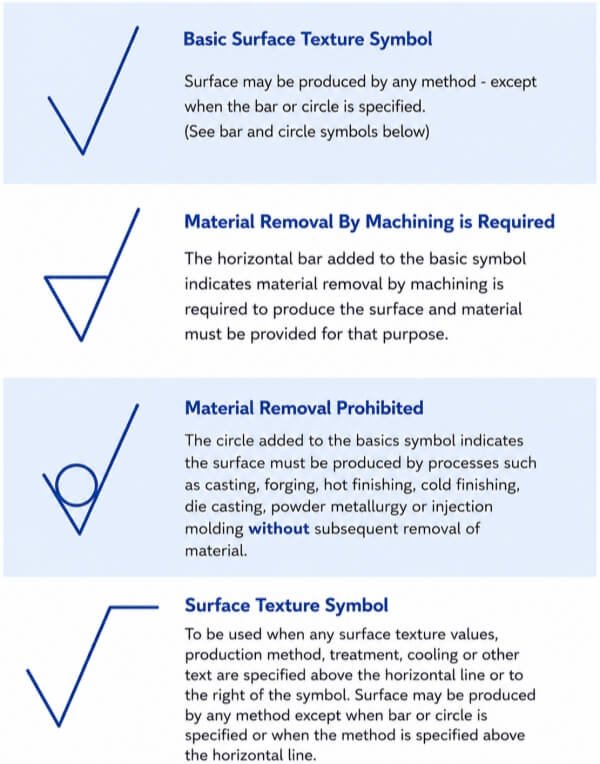
Numbers or signs are included in different parts of the basic symbols to represent different surface-finish parameters. Here’s a symbolic representation of a surface finish callout:
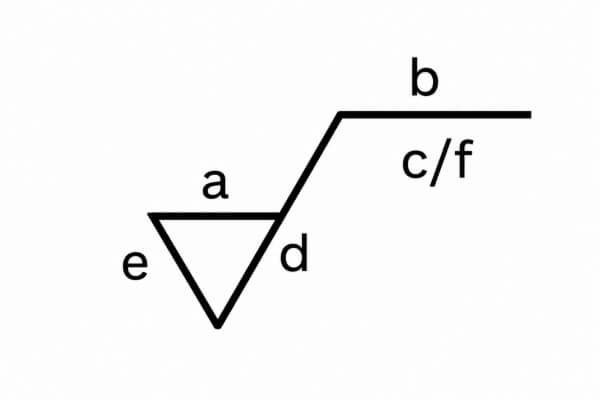
Here,
- a = average roughness value (Ra)
- b = production method
- c = roughness sampling length (mm/inch)
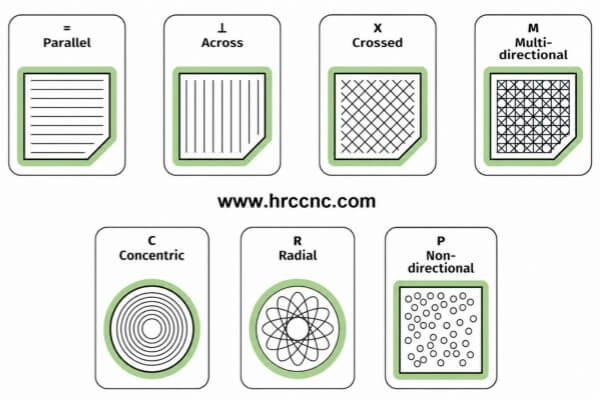
- d = surface lay direction
- e = minimum material removal requirement (mm)
- f = alternate surface finish parameter
Here are the possible lay directions to mention in the spot of ‘d’ of the basic surface finish callout symbol.
FAQs
1. What is surface finishing for CNC machined parts?
Surface finishing refers to secondary processes applied after CNC machining to improve a part’s appearance, texture, corrosion resistance, wear resistance, hardness, or overall performance. Common surface finishing options include anodizing, bead blasting, electroplating, polishing, passivation, painting, and powder coating.
2. How do I choose the right surface finish for my CNC machined parts?
The right surface finish depends on the part material, application, operating environment, appearance requirements, tolerance needs, and budget. For example, anodizing is commonly used for aluminum parts that need corrosion resistance and color options, while passivation is suitable for stainless steel parts that require improved corrosion resistance.
3. Does surface finishing affect part tolerances?
Yes. Some surface finishing processes add or remove material from the part surface, which may affect final dimensions and tolerances. Processes such as powder coating, electroplating, and anodizing can add a coating layer, while polishing or blasting may slightly alter the surface texture. It is important to confirm tolerance requirements before finishing.
4. What does Ra mean in surface roughness?
Ra, or average surface roughness, measures the average height variation of a surface’s microscopic peaks and valleys. A lower Ra value usually means a smoother surface. Ra requirements are often specified on engineering drawings to control surface texture and part performance.
5. What information should I provide when requesting surface finishing services?
You should provide your CAD files or technical drawings, material type, required surface finish, color or appearance requirements, surface roughness requirements, tolerance limits, application environment, and any special surface finish callouts. This helps the manufacturer recommend the most suitable finishing process.
6. Can one CNC machined part have multiple surface finishes?
Yes. A single CNC machined part can have different surface finishes on different areas. For example, one surface may require polishing for smooth contact, while another area may need anodizing for corrosion resistance or laser engraving for part identification. These requirements should be clearly marked on the technical drawing.
Partner with HRCCNC to Get Help with Choosing the Right Surface Finishing Service for CNC Parts
To ensure high performance and quality of CNC machined parts, choosing the suitable surface finishing is essential. And to help you choose, one of the key factors is precise surface finishing measurements like roughness average (Ra).
Finally, to ensure a clear understanding of your surface finishing requirements with our engineering team, you need to provide surface finish callouts with exact parameters mentioned. The ideal surface finishing solution relies on several factors like the intended functionality, material, operating environment, and project budget for the parts.
You can contact us with your CAD files to consult our experts for DFM support, material selection advice, and surface treatment recommendations. At HRCCNC, we offer rapid prototyping based on your drawings and other specific requirements. Once the prototype passes your functional testing, we are capable of small and large production runs.
Our engineering team provides you with recommendations for material selection, CNC methods, and suitable surface finishing. We can help confirm the best surface finish option based on material, tolerance, appearance requirements, end-use conditions, roughness average, functional requirements like wear and corrosion resistance, durability, etc.