Skip to content

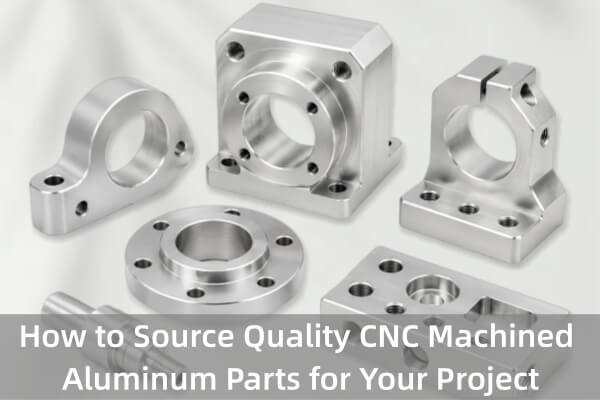
If you are looking to source high-quality CNC machined aluminum parts, first you need to understand what qualities the parts must possess. Two key properties of a good aluminum CNC part are its tight dimensional accuracy and consistent mechanical performance. In industries such as aerospace, medical, automotive, and electronics, sourcing reliable components through precise manufacturing and suitable surface finishing is one of the key factors behind project success.
However, when engineers and procurement teams work with inexperienced manufacturers, they experience a clear difference between the initial design and final product. This gap between design expectations and production results can create several technical challenges. Some common technical challenges are dimensional inaccuracy, surface roughness variation, lead time delays, and poorly applied surface finishes.
Poor-quality aluminum CNC machining parts with slight dimensional inaccuracies can hamper the assembly schedule. Even if a hole is only 0.2 mm off, a bolt or mating component may no longer fit properly. When a slot is machined unevenly by inexperienced manufacturers, two pieces will not align. This will not only disrupt the assembly timeline, but it will increase the scrap rate as well. In many cases, these parts may need to be reworked or discarded as scrap.
Part design specifications, the right aluminum alloy selection, and assessing machining and post-processing capabilities of certified suppliers are some key factors to consider before sourcing. In this article, we will cover all major points to consider and how they impact the production of high-quality aluminum CNC machined parts.
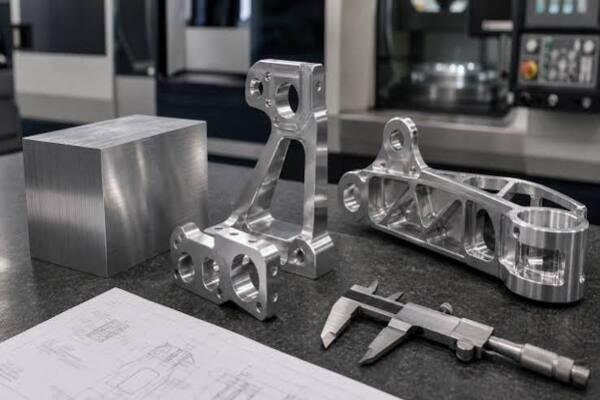
Guide to Sourcing Quality CNC-Machined Aluminum Parts
1. Define Your Part Requirements Before Requesting a Quote
The first step to sourcing high-quality CNC aluminum parts is to be prepared with all your part specifications prior to contacting a CNC machining supplier. This preparation includes having 3D CAD files, 2D drawings (with tolerances), material requirements, quantity, surface finish, application, inspection needs, and expected lead times.
Clearly define these part requirements, along with any additional notes, in your drawings. This helps avoid technical misunderstandings during production and reduces the risk of scrap or rework.
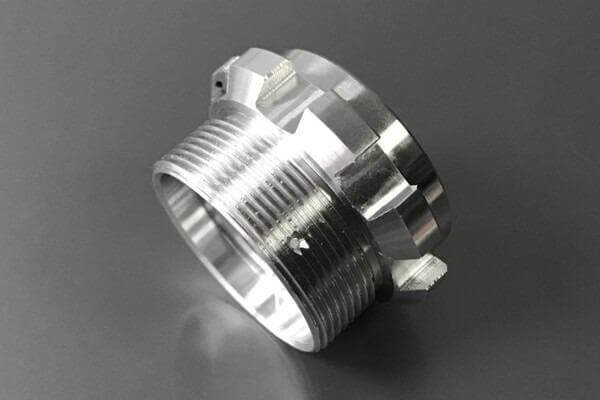
2. Selecting the Right Aluminum Alloy
In aluminum CNC machining, manufacturers use different aluminum alloys because of the variations in their mechanical properties such as strength, thermal conductivity, wear and corrosion resistance, and weldability. So, choosing the right aluminum alloy is important for producing reliable custom aluminum CNC parts based on your specific requirements. To help you with the proper material selection, the table below summarizes common aluminum alloys used in CNC machining.
| Aluminum Alloy | Primary Alloying Element | Key Properties | Common Applications | Common Industries |
| 6061 aluminum | Mg (0.8-1.2%) | Balanced mechanical strength, high corrosion resistance, excellent machinability | Brackets, frames, housings, motor mounts, and general structural components. | General manufacturing, consumer electronics, automotive |
| 7075 aluminum | Zn (5.6-6.1%) | High tensile strength, strong fatigue resistance | Aircraft fittings, high-strength fixtures, aerospace brackets, defense components, and structural mechanical parts. | Aerospace, defense, automotive, high-performance sporting goods |
| 5052 aluminum | Mg (2.2-2.8%) | Strong corrosion resistance, excellent formability | Fuel tanks, marine hardware, hydraulic tubing, and outdoor aluminum components exposed to saltwater. | Marine, shipbuilding, chemical processing devices |
| 6082 aluminum | Si (0.7-1.3%) | Good structural performance, strong strength-to-weight ratio, good weldability | Structural transport parts, machinery components, and structural supports. | Automotive, construction, heavy equipment |
3. DFM Feedback for CNC Aluminum Parts Design
Design for manufacturability (DFM) feedback is an important step in the CNC machining workflow. When evaluating a manufacturer, check whether they actively review CAD models and 2D drawings before production begins. This helps identify design issues early and avoid unnecessary tool wear, machining steps, and production costs.
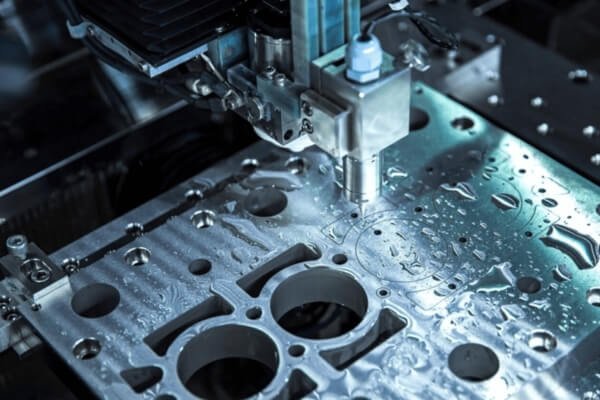
4. Manufacturing Capabilities of the Manufacturer
During the evaluation of CNC machining suppliers for manufacturing aluminum parts, review their multi-axis machining capacity. Different machining methods have different cutting procedures, which determine the complexity of the geometries they can cut in a single setup. Machining methods also affect how precisely a part can be cut, shaped, and finished.
A part may be completed in a single setup in one machining method, whereas it may need two or more setups with another machining method. But the accuracy of components with complex geometry can be compromised during the setup change in the lower-axis machining process. It directly affects the quality of the aluminum CNC machined parts.
Moreover, the production cost is directly affected by this, which affects the overall unit cost of the aluminum part. So, select the production equipment or machining process based on your part geometry after assessing the machining capabilities offered by the manufacturer.
● 3-Axis CNC Machining
3-axis CNC machining is usually used to manufacture components with flat surfaces, slots, and drilled holes. This method is reliable and straightforward, using cutting tools to remove material from a flat workpiece. In this machining process, the aluminum workpiece remains fixed to the machine table.
To create the final part geometry, the cutting tool moves in three linear directions (X, Y, and Z). Ideally, 3-axis CNC machining is suitable for simple geometries such as brackets, plates, fixtures, and mechanical housings. However, for complex geometries such as CNC-machined aluminum components for aerospace and similar industries, you should consider the machining methods mentioned next.
● 4-Axis CNC Machining
This machining operation involves adding a rotational axis (A-axis) along with the three traditional linear axes (X, Y, and Z). The process allows the aluminum workpiece to rotate automatically during machining. 4-axis machining ensures accessibility to several sides of the part in a single setup. It is used to produce intricate and uniform geometries, such as camshafts, helical features, and multi-sided aluminum components.
● 5-Axis CNC Machining
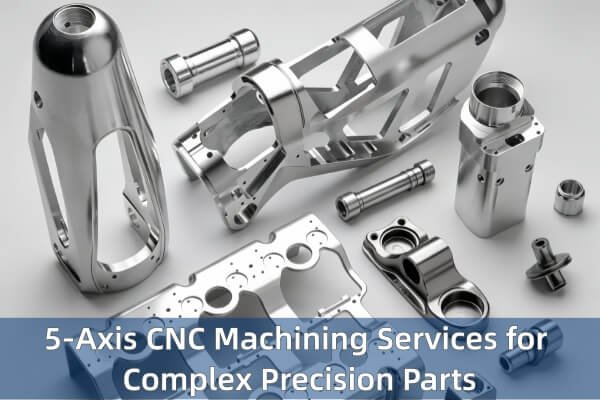
5-axis CNC machining is often preferred for complex curved surfaces. This process enables the cutting tool to approach the aluminum workpiece from several directions at once. As its name implies, this machining process uses five axes of movement, making it possible to cut complex geometric shapes.
The machine can move the cutting tool and workpiece simultaneously along three linear axes and two rotational axes. It is best for manufacturing impellers, blades, marine propellers, heavy-duty generator rotors, and steam turbine rotors with efficiency and precision. With three linear axes (X, Y, and Z) and two rotational axes (A and B, or A and C), 5-axis machining is suitable for demanding parts with complex surfaces and tight accuracy requirements.
5. Tight Tolerance Manufacturing Capability
When assessing a manufacturer, choose one with the capability to hold realistic tight tolerances based on part geometry, feature size, material, machining process, and inspection requirements. Some manufacturers can hold tolerances as tight as ±0.025 mm (±0.001 inches) with precision CNC machining of aluminum parts.
For high-precision CNC machining for small aluminum parts, choose a manufacturer with calibrated inspection systems to ensure consistent accuracy.
6. Supports Prototyping and Large Production Runs
As part of quality sourcing of CNC aluminum parts, assess if a supplier provides rapid prototyping or small production batches for testing the quality and functionality of the parts. This allows room for early design improvements before moving into full production. Moreover, the manufacturer should be capable of seamlessly handling large production batches of high-quality aluminum components with consistent quality.
7. Offers Suitable Surface Finishing for Aluminum CNC Parts
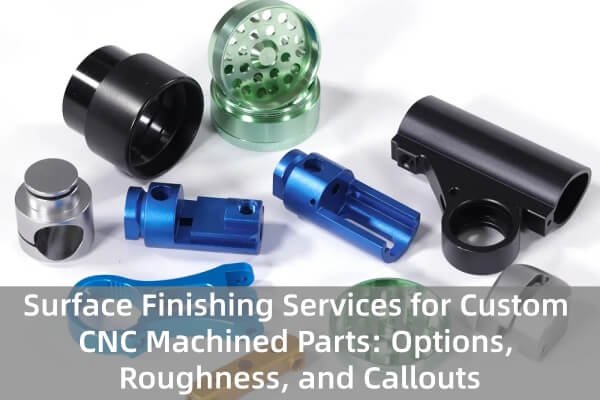
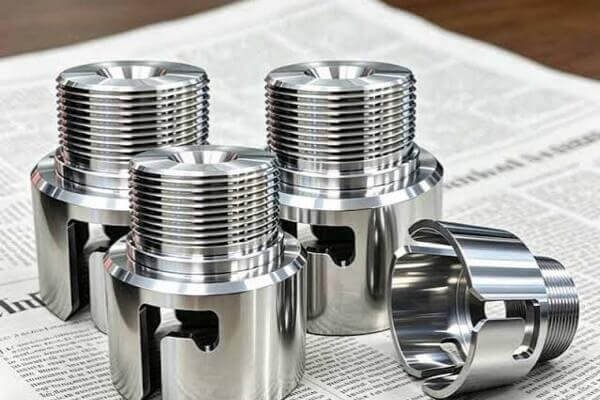
Surface finishing for CNC-machined aluminum components is important not only for appearance but also for its mechanical characteristics and durability. So, partner with a manufacturer that evaluates the substrate material and application requirements and recommends suitable surface treatment options like anodizing, bead blasting, powder coating, etc.
In addition to recommending the right finish, the supplier should be able to apply a uniform surface finish accurately across the aluminum CNC-machined components.
8. Quality Control, Certification and Compliance
For quality control, only source CNC-machined aluminum parts from manufacturers that have ISO 9001 certification. Compliance with international standards helps ensure consistent quality and reliable production processes. Moreover, assess the prototype carefully to check machining accuracy, surface finish quality, and overall part performance before making a large sourcing commitment.
Finding the Right Manufacturing Partner for Your Custom Aluminum CNC Parts
Selecting the right aluminum alloy, machining method, tolerance range, and surface finish can be challenging, especially when your part has strict dimensional, appearance, or performance requirements. A capable manufacturing partner can help you review drawings, identify potential design issues, and choose a practical production approach before machining begins. This can reduce unnecessary rework, improve part consistency, and help keep your project timeline under control.
HRCCNC supports engineers and procurement teams with DFM feedback, CNC machining suggestions, surface finish recommendations, prototype support, and scalable production for custom aluminum CNC parts. Whether you are preparing a prototype or planning a larger production run, our team can help evaluate your CAD files or 2D drawings and recommend suitable next steps. Upload your files to get free technical advice, machining suggestions, surface finish recommendations, and quotation support.
FAQs
1. What are CNC machined aluminum parts?
CNC machined aluminum parts are aluminum components produced with computer-controlled machining equipment. They are commonly used in industries that require accurate dimensions, lightweight performance, good strength, and consistent mechanical properties.
2. What information should I prepare before requesting a CNC machining quote?
Before requesting a quote, prepare your 3D CAD files, 2D drawings with tolerances, material requirements, order quantity, surface finish needs, application details, inspection requirements, and expected lead time. Clear specifications help reduce misunderstandings during production.
3. Which aluminum alloy is best for CNC machining?
The best aluminum alloy depends on the part’s application. 6061 is commonly used for general structural parts, 7075 is suitable for high-strength components, 5052 is often chosen for corrosion-resistant applications, and 6082 works well for structural and transport-related parts.
4. Why is DFM feedback important for CNC aluminum parts?
DFM feedback helps identify possible design issues before production starts. It can help reduce unnecessary machining steps, tool wear, production costs, scrap, and rework while improving the manufacturability of the final part.
5. Why are tolerances important for CNC machined aluminum parts?
Tolerances are important because even small dimensional errors can affect assembly, fit, and final product performance. Clear tolerance requirements help manufacturers control accuracy and reduce the risk of rework or scrap.
6. How do I choose a reliable supplier for custom aluminum CNC parts?
Choose a supplier with proven CNC machining capabilities, multi-axis machining options, DFM support, calibrated inspection systems, suitable surface finishing processes, quality control standards, and the ability to support both prototypes and production runs.