Skip to content
Laser engraving is an advanced non-contact precision manufacturing technology widely used in modern industry. It uses a high-energy laser beam to act on material surfaces, removing or modifying the surface layer via vaporization or surface transformation. Since no physical cutting tools are required, it avoids quality defects caused by tool wear.
It can produce fine text, intricate patterns, and permanent markings, featuring high precision, stable consistency, outstanding efficiency, and broad material compatibility.
Today, laser engraving serves as far more than a supplement to traditional engraving methods. It has become a core manufacturing technology for industrial production, brand identification, and personalized customization. Industries such as aerospace, automotive, electronics, medical devices, consumer products, and creative gifts rely on laser engraving for a variety of applications.
This guide explores the fundamentals of laser engraving, including its working principles, processing workflow, equipment types, compatible materials, advantages and limitations, common applications, equipment selection considerations, and frequently encountered challenges. By the end, you will have a comprehensive understanding of this technology and how to apply it effectively in real-world manufacturing and customization projects.
What Is Laser Engraving?
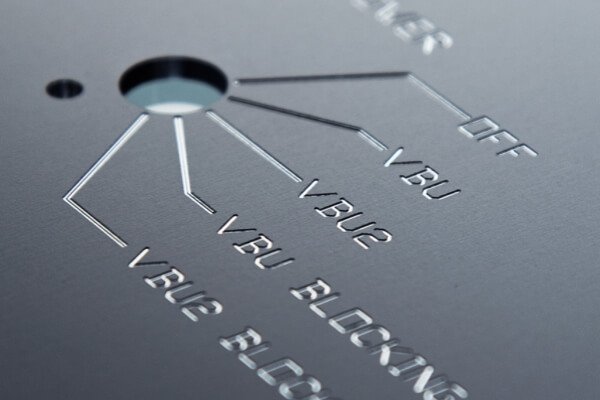
Laser engraving is one of the most widely used processes within the laser marking industry. As a non-contact precision manufacturing method, it uses a focused high-energy laser beam to interact with a workpiece surface. The laser melts, vaporizes, or removes material from the top layer, creating permanent text, graphics, and markings with controlled depth and a distinct three-dimensional appearance.
Digital software controls the entire process, allowing manufacturers to achieve high accuracy and consistent results across production runs. Laser engraving can easily produce complex patterns, barcodes, logos, trademarks, and decorative textures. Compared with traditional engraving methods, it delivers stronger visual contrast, greater wear resistance, and longer service life. Today, manufacturers and consumers alike rely on laser engraving for permanent marking and customized product applications.
The Basic Principle of Laser Engraving
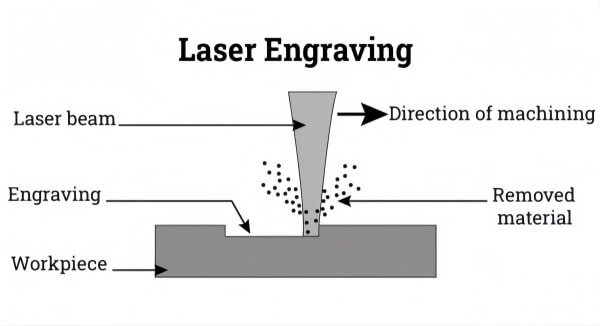
Laser engraving works based on the photothermal effect and material phase transformation. The laser generates an instantaneous high temperature in the local area of the material to complete processing. A laser source generates a highly focused and coherent beam of monochromatic light. An optical system then concentrates the beam into a spot that can reach micron-level dimensions.
As the laser strikes the material surface, the light energy is instantly converted into thermal energy, which melts, vaporizes, or carbonizes the material in a tiny localized area. A CNC control system guides the laser beam along a programmed path, removing material layer by layer until it forms a permanent recessed mark.
The process requires no physical contact and causes no tool wear during operation. Modern laser engraving systems can achieve accuracies as fine as 0.01 mm. Key parameters such as laser wavelength, power output, pulse frequency, and scanning speed directly influence engraving depth, surface quality, and overall marking performance.
The Growth and Industrial Use of Laser Engraving
Laser engraving evolved from traditional hand engraving methods, which often struggled to deliver high precision and efficient production. The theoretical foundation of laser technology originated from the concept of stimulated emission proposed by Albert Einstein. The invention of the first laser in 1960 marked a major breakthrough, while the introduction of the CO₂ laser in 1967 opened the door to industrial applications.
During the 1980s and 1990s, manufacturers commercialized a wide range of new laser technologies. Equipment became more compact, more intelligent, and increasingly affordable. Since the beginning of the 21st century, continuous improvements in beam control systems and engraving software have further expanded the capabilities of laser engraving.
The markings made by this process feature excellent wear resistance, corrosion resistance, and aging resistance, making it ideal for product traceability, brand identification, and anti-counterfeiting applications. Today, industries such as automotive manufacturing, aerospace, electronics, medical devices, and creative product design use laser engraving extensively. Modern systems can also integrate with automated production lines, enabling continuous high-volume processing and driving the transition from specialized industrial use to widespread commercial adoption.
Laser Engraving vs. Laser Marking vs. Laser Etching
Many people use the terms laser engraving, laser marking, and laser etching interchangeably, but these technologies differ significantly in material removal, processing depth, and surface appearance.
Laser engraving removes a relatively large volume of material with high laser energy. Its common depth varies from tens of microns to over 0.5 mm for deep engraving. The finished surface has visible recesses and a pronounced three-dimensional effect. Since the marks penetrate deep into the material, they deliver exceptional wear resistance and long-term durability, making it ideal for permanent identification and deep decorative designs.
Laser etching only ablates a thin layer of material, with a typical depth of several to tens of microns. It may exceed 0.1 mm in industrial deep etching scenarios. This process forms a shallow, matte textured surface and runs faster than deep engraving, though its durability is generally lower than laser engraving.
Laser marking includes two primary methods: color change marking and micro removal marking. Color change marking alters the surface appearance through oxidation or annealing without significantly removing material, resulting in a depth close to zero. Micro removal marking removes only a very thin surface layer. Both methods preserve the underlying structure of the workpiece while producing high-contrast markings at very high processing speeds.
When selecting a process, manufacturers should evaluate durability requirements, visual appearance, production efficiency, and application needs to determine the most suitable solution.
Related Reading: Laser Marking, Engraving, and Etching Compared
If you would like a deeper comparison of these three technologies, including processing parameters, material compatibility, cost considerations, and equipment selection recommendations, consider reading our other comprehensive blog on laser marking, engraving, and etching.
How Does Laser Engraving Work?
Laser engraving relies on digital control to complete the machining process and follows a standardized workflow. The process mainly includes four steps: design preparation, parameter setup, laser engraving, and post-processing with quality inspection. Although details may vary across machines and materials, the core workflow stays the same. Careful control of each step improves product quality, increases efficiency, and helps manage production cost.
Design Preparation and File Setup
Design preparation is the first step in laser engraving. We use vector, raster, and CAD software to create text, logos, patterns, and QR codes. Vector files work well for text and outlines because they keep sharp edges at any scale. Raster images fit photos and gradient designs better.
After finishing the design, we export files in formats supported by the machine. Next, we check size, position, and resolution. We also select the correct engraving mode. A well-prepared file helps avoid blurred results and ensures high machining accuracy.
Material Selection and Parameter Settings
After file preparation, we choose the right machine and set parameters based on the material. Different materials absorb laser energy in different ways, so one fixed setting does not work for all cases. Fiber lasers suit metals, CO₂ lasers work well for wood and glass, and UV lasers often handle heat-sensitive materials.
We adjust power, scanning speed, pulse frequency, focus distance, and engraving passes based on hardness, thickness, and heat transfer. Higher power usually creates deeper engraving, especially on metal, while plastic materials often need lower power.
Scanning speed also affects results. Slower speed creates deeper marks and clearer details, while faster speed fits large-area work. Pulse frequency controls dot density. Higher frequency produces smoother surfaces and suits soft materials, while harder materials often need lower frequency.
Correct focus adjustment is also important. Poor focus can cause blur or edge burn. Before mass production, we always conduct trial engraving tests to optimize process parameters. This step helps reduce defects such as shallow marks, color shift, cracking, or burning, and it also reduces material waste.
The Laser Engraving Process
Once parameters are confirmed, the system starts the automated engraving process. We fix the material firmly on the worktable and turn on the machine along with the air blow and smoke extraction systems. The CNC system reads the design file and guides the laser head along the set path.
The high-energy laser interacts with the surface and causes melting, vaporization, or thermal decomposition. Material gets removed layer by layer to form the final pattern. During processing, the air system clears debris and cools the workpiece, which helps prevent burning. The exhaust system removes smoke and keeps the workspace clean.
Depending on engraving depth, the machine can complete the job in one pass or use multiple layers. Digital control helps maintain stable quality and supports complex effects such as grayscale engraving and 3D texture. It also keeps precision consistent in mass production.
Post-Processing and Quality Inspection
After engraving, we clean the workpiece to remove dust, residue, and oxidation. Some products may go through extra finishing steps such as polishing, coating, or electroplating to improve appearance and durability.
Next comes quality inspection. We check pattern size, engraving depth, edge sharpness, color contrast, and overall uniformity. For industrial markings like barcodes and QR codes, we also run scanning tests to ensure proper readability and traceability.
If we find any deviation, we adjust the parameters and reprocess the part when needed. A strict post-processing and inspection system helps maintain stable quality, reduce defective products, and lower after-sales risk.
Common Types of Laser Engraving Machines
There are many types of laser engraving machines on the market. They are designed to match different materials and application needs. Most machines are classified by laser source type, and each type differs in wavelength, power level, and heat impact. Their precision, material compatibility, and operating cost also vary. When choosing a machine, it is important to consider material type, process requirements, and budget together to find the right solution.
Fiber Laser Engravers
Fiber laser engraving machines are widely used in industrial applications. They operate at a wavelength of 1064 nm in the near-infrared range. These machines deliver strong beam quality and high power density while keeping a small heat-affected zone.
Typical power ranges from 20W to 100W. They mainly process metals such as stainless steel, aluminum alloy, brass, copper, and titanium alloy. They also work with coated metals and some hard engineering plastics.
Fiber lasers offer high engraving speed, clear depth, sharp edges, and strong contrast. They can also create special effects like color marking on stainless steel and black marking on anodized aluminum. The machine structure is compact, with long service life and low energy use. Maintenance cost is also relatively low. It is widely applied for marking industrial parts, hardware, jewelry and electronic components.
CO₂ Laser Engravers
CO₂ laser engraving machines use gas laser technology. They operate at a wavelength of about 10.6 μm in the far-infrared range. These machines produce strong thermal effects and mainly work with non-metal materials. Power usually ranges from 40W to 150W.
They can process wood, acrylic, glass, leather, fabric, rubber, and composite materials. The engraving results are smooth and fine, with clean edges and no burrs. They also support both engraving and cutting in one system.
CO₂ machines support large working areas and offer moderate purchase and operating costs. They are widely used in creative products, advertising signs, furniture decoration, and handmade crafts.
However, CO₂ lasers have poor processing efficiency and severe thermal deformation when used for direct metal engraving, so they are rarely applied to bare metals. They are mainly used for marking coated or anodized metal surfaces. Compared with other types, CO₂ machines have lower energy efficiency and higher power consumption, and maintenance costs are also slightly higher.
UV and MOPA Laser Systems
UV laser systems use a wavelength of 355 nm and adopt cold ablation technology with minimal heat effect. The positioning precision of commercial UV engravers can reach up to 0.01 mm, supporting ultra-fine micro engraving. These machines leave no burn marks or carbonization on material edges. They are widely applied in electronics, medical devices, and semiconductor industries. Their main drawbacks are low output power, shallow engraving depth, and high procurement cost.
MOPA fiber lasers are an upgraded version of pulsed fiber lasers. They use master oscillator power amplifier technology and allow independent control of pulse width and frequency. This gives much more flexible control than standard fiber lasers.
They also operate at 1064 nm. As a type of thermal processing laser, they cannot achieve the fully cold ablation effect of UV lasers, though their heat-affected zone is smaller than that of standard fiber lasers. However, they perform very well in color marking on metal surfaces, coating removal, and fine marking.
Advanced MOPA systems can reach pulse frequencies up to 2000 kHz. They support color engraving on stainless steel, high-contrast black marking on anodized aluminum, and precise marking on coated materials. They are widely used in high-end customization and precision industrial parts.
How to Choose the Right Laser Engraver
Choosing a laser engraving machine requires careful evaluation of material type, precision needs, production efficiency, working scenario, and budget.
For metal processing, fiber or MOPA lasers are the best choice. For non-metal materials like wood, acrylic, and leather, CO₂ lasers are more suitable. For heat-sensitive materials and high-precision electronics or medical parts, UV lasers are preferred.
For precision needs, UV and MOPA systems are better for fine patterns and small text. Fiber and CO₂ machines are suitable for standard engraving tasks.
Production volume also matters. High-power machines are better for mass production, while desktop models work well for small batches.
The work environment also influences machine selection. Industrial production often uses floor-standing machines. Creative DIY work usually uses desktop machines. Large outdoor work may require portable handheld systems.
Cost differences are significant. In terms of price from high to low, the ranking is: UV laser machines, MOPA fiber lasers, industrial fiber lasers, CO₂ lasers and low-cost desktop diode lasers.
Other factors include automation needs, maintenance cost, software compatibility, and future production scaling. A balanced decision helps ensure long-term performance and cost efficiency.
What Materials Can Be Laser Engraved?
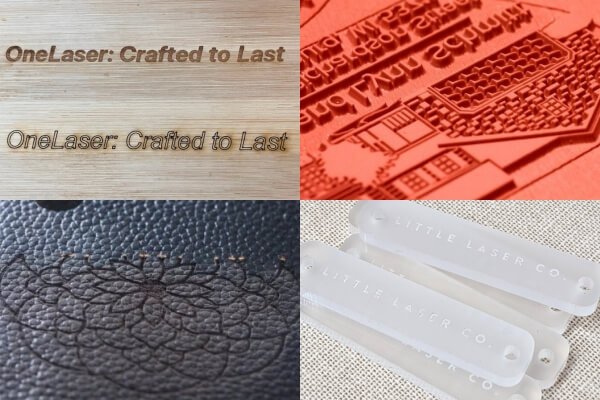
Laser engraving supports a wide range of materials, which is one reason it is widely used in both industrial manufacturing and custom production. Common materials include metals, plastics, wood, glass, leather, rubber, and composite materials.
Different materials absorb laser energy differently and have different heat transfer properties and surface characteristics. This leads to variations in engraving results, processing speed, and parameter settings. Some materials are also unsafe for laser processing and must be avoided. Understanding material properties is essential for selecting equipment and optimizing process parameters.
Metals and Coated Materials
Metal is one of the most important materials in laser engraving. It is mainly processed using fiber and MOPA lasers. Stainless steel, aluminum alloy, brass, copper, titanium alloy, and tool steel can all be engraved with high-quality and durable markings.
Stainless steel offers strong corrosion resistance and clear contrast. It also supports color engraving and is widely used in industrial parts, kitchen tools, and nameplates.
Aluminum and anodized aluminum are lightweight and process quickly. The anodized layer allows high-contrast black marking, which is common in electronics housings and automotive parts.
Copper and brass have high reflectivity and require higher laser power. They produce fine engraving results and maintain a strong golden appearance, making them suitable for jewelry and decorative parts.
Coated metals such as anodized aluminum, painted parts, and plated surfaces can be selectively removed by laser marking. This exposes the base material while creating clear visual contrast. Common applications include serial numbers, QR codes, logos, technical data, and decorative textures.
Because metals differ in reflectivity, thermal conductivity, and surface condition, parameter tuning is necessary to ensure stable quality and consistent results.
Plastics, Acrylic, and Rubber
Plastics, acrylic, and rubber are widely used non-metal materials in laser engraving. They are mainly processed with CO₂ and UV laser systems. These synthetic polymers can reproduce fine details and meet various production needs.
Acrylic is transparent and strong. It produces smooth edges and a fine frosted surface after engraving. It is often used for signs, crafts, and lighting products.
ABS and PC plastics offer good toughness and impact resistance. They produce clear patterns and are less likely to crack, making them suitable for electronic housings and 3D-printed parts.
Rubber and silicone have good elasticity. They create durable and detailed engraving results and are commonly used for stamps, straps, and anti-slip pads.
Engineering plastics also offer heat and chemical resistance. UV lasers are especially suitable for these materials and are widely used in precision parts and medical components.
Because different plastics have different melting points and thermal stability, parameter adjustment is necessary to avoid deformation, discoloration, or melting. When engraving rubber, proper smoke extraction is also required to maintain a safe working environment.
Wood, Leather, and Glass
Wood, leather, and glass are widely used in creative and decorative industries. CO₂ lasers are the most common choice for these materials.
Wood includes hardwood, softwood, and plywood. It has natural grain patterns, and engraving depth can be adjusted freely. The final surface has a warm and natural look, making it ideal for furniture, cutting boards, and crafts.
Genuine leather and synthetic leather are flexible and suitable for detailed engraving. The results are durable and often used in wallets, belts, and fashion accessories.
Glass and crystal are brittle materials. Laser energy creates local thermal stress and micro-melting on the surface, producing a fine frosted effect without fully cutting through the material. These products are often used for cups, trophies, and decorative items.
Natural materials like wood and leather may show slight variations due to grain, density, and moisture content. Glass engraving requires careful control of laser power to avoid cracks or damage.
Materials That Should Not Be Laser Engraved
Some materials are not suitable for laser engraving and must be strictly avoided. Processing them can create safety risks and damage equipment.
PVC and materials containing chlorine, fluorine, or bromine will produce toxic and corrosive gases, including hydrogen chloride, hydrogen fluoride, and hydrogen bromide when heated. These gases harm operators and damage optical components.
Coated carbon fiber and some composite artificial leathers may release toxic fumes and dust. EPS foam and highly flammable materials have very low ignition points and can easily catch fire or explode during processing.
Always conduct trial tests on unknown materials before formal processing. Proper ventilation, filtration, and fire safety systems must always be in place to ensure safe production.
Advantages and Limitations of Laser Engraving
As laser technology continues to advance, laser engraving has become a widely used process in manufacturing, product identification, and custom production. It offers many technical advantages, but it also has certain limitations. Safety and environmental considerations are equally important during operation. Understanding both the strengths and challenges of laser engraving helps businesses make informed decisions, maximize its value, and reduce potential risks.
Key Benefits of Laser Engraving
Laser engraving offers several significant benefits. One of its biggest strengths is its high precision. The laser spot can reach a micron level, and engraving accuracy can be as fine as 0.01 mm. This allows the creation of complex patterns, small text, and detailed features that are difficult to achieve through manual methods. Finished parts typically have sharp edges and burr-free surfaces.
The process uses a non-contact method, which means it does not apply mechanical force to the workpiece. As a result, it helps preserve the original shape of the part and avoids scratches or deformation. This makes laser engraving suitable for delicate and fragile components. Since no cutting tools touch the material, there are also no tool wear issues.
Engraved marks penetrate the material surface and remain highly durable. They resist wear, corrosion, chemicals, and extreme temperatures. Even after years of use, the markings usually remain clear and do not fade or peel.
Material compatibility is another major advantage. A single machine can process metals, non-metals, and many composite materials, providing excellent flexibility. Digital CNC control also improves production efficiency. Operators can switch designs without changing molds, making the process suitable for both high-volume production and customized low-volume orders. The technology also integrates easily with automated production lines.
From an environmental perspective, laser engraving is a clean process. It does not require inks or chemical etching, generates very little waste, and consumes relatively low amounts of energy. Simple residue removal and consistent production quality make it a good fit for modern sustainable manufacturing.
Common Challenges and Limitations
Despite its advantages, laser engraving also presents several challenges.
Industrial-grade fiber and UV laser systems often require a significant upfront investment. More affordable desktop machines reduce the purchase cost, but they usually offer lower precision and limited engraving depth.
Compared with CNC milling, laser engraving generally produces shallower features. Deep engraving often requires multiple passes, which increases processing time and production cost.
Highly reflective metals such as copper and silver can also be difficult to process. These materials often require higher-power machines or specialized equipment. Reflected laser energy may damage optical components or the laser resonator. Manufacturers often reduce this risk by using anti-reflection fixtures or adjusting the processing angle.
Transparent materials can refract laser energy, while dark plastics may develop burn marks around the engraving area. These materials often need special processing techniques to achieve acceptable results.
Parameter setup is another challenge. Different materials, thicknesses, and desired engraving effects require different settings. Incorrect parameters can cause burning, discoloration, rough surfaces, or inconsistent engraving depth. Because of this, operators usually need practical experience and testing to achieve stable results.
Safety and Environmental Considerations
Safe operation is essential when using laser engraving equipment. Most machines include protective covers, safety interlocks, and emergency stop systems. Operators should always wear appropriate laser safety glasses and avoid looking directly at the laser beam or reflected light.
Processing materials such as wood and plastics can generate smoke and potentially harmful gases. Effective ventilation and filtration systems are necessary to maintain a safe working environment and protect operator health.
Certain materials, including wood and fabric, present a fire risk during engraving. Operators should monitor the machine throughout the process and keep fire extinguishing equipment readily available.
Before performing maintenance, technicians should disconnect the power supply. Regular cleaning of lenses and inspection of the optical path help prevent accidents caused by electrical hazards or unintended laser exposure.
Laser engraving produces relatively little waste. Metal residue can often be collected and recycled, while plastic waste should be sorted and disposed of according to local regulations. Proper energy management and exhaust treatment also help ensure compliance with environmental standards and sustainability goals.
Applications of Laser Engraving
Thanks to its precision, durability, and customization capabilities, laser engraving has become an essential manufacturing process across many industries. It supports product identification, traceability systems, branding, decorative applications, and precision manufacturing. Its versatility continues to drive wider adoption in modern production environments.
Industrial Parts and Product Identification
Laser engraving plays a critical role in industrial manufacturing. Companies use it to mark components with serial numbers, QR codes, production dates, and other identification data. These markings support full product traceability throughout the product lifecycle.
Manufacturers also engrave logos and anti-counterfeiting codes on hardware products, electronic devices, and home appliances. These permanent markings help protect brands and reduce the risk of tampering or imitation.
Another common application involves nameplates for industrial equipment and instruments. Laser engraving creates clear and durable markings that display model numbers, specifications, and technical information. These markings remain readable for long periods and resist wear in demanding environments.
Because of these benefits, industries such as aerospace, automotive manufacturing, and medical equipment production widely rely on laser engraving to improve inventory control, quality management, equipment maintenance, and regulatory compliance.
Logos, Decorative Patterns, and Custom Products
Laser engraving is one of the most popular manufacturing methods in branding, decorative products, and creative industries. It allows businesses to create logos, nameplates, promotional products, and decorative designs on materials such as metal, plastic, wood, and glass.
The process produces high-quality visual results that enhance brand recognition and product value. Wooden crafts, acrylic displays, and leather accessories often feature engraved patterns that improve their appearance and uniqueness.
For gifts, jewelry, and everyday consumer products, laser engraving can add names, artwork, dates, or personal messages. This flexibility makes it ideal for personalized products and custom orders.
The technology can accurately reproduce complex designs while maintaining consistent quality. Since it does not require custom molds, it supports efficient on-demand manufacturing. As a result, laser engraving is widely used for promotional gifts, premium packaging, awards, trophies, jewelry, and luxury consumer goods.
Electronics, Medical, and Automotive Applications
Laser engraving has become an essential process in industries that require precision, cleanliness, and reliable marking performance.
In the electronics industry, manufacturers use laser engraving on PCB boards, chips, capacitors, and device housings. The process creates permanent markings, specifications, and QR codes without damaging sensitive components.
Medical manufacturers use laser engraving for surgical instruments, implants, laboratory tubes, and other medical devices. Typical markings include part numbers, specifications, sterilization information, and Unique Device Identification (UDI) codes. These markings resist corrosion and remain readable even after repeated sterilization cycles.
Automotive companies apply laser engraving to interior components, wheels, engine parts, and safety-related products. Common markings include logos, serial numbers, and safety information. The engraved marks resist wear and high temperatures, making them suitable for demanding operating environments.
Because laser engraving creates permanent and highly reliable markings, it helps companies meet strict traceability requirements and industry regulations. It also supports quality control, component tracking, and compliance management throughout the manufacturing process.
How to Achieve Better Laser Engraving Results
Producing laser engravings with high precision, clear details, clean edges, and long-term durability requires attention to multiple factors. Final quality depends not only on machine performance but also on material properties, process settings, equipment maintenance, and overall production control. Focusing on parameter optimization, troubleshooting, and routine maintenance can significantly improve engraving quality and ensure consistent results.
Tips for Optimizing Laser Parameters
Achieving the best engraving results starts with balancing laser power, scanning speed, pulse frequency, focus distance, and engraving strategy. Different materials require different power levels. Metals typically perform well with 50W to 100W systems, wood often requires 30W to 50W, and plastics usually work best with 10W to 30W. Excessive power may cause burning, while insufficient power can lead to weak or unclear markings.
Scanning speed should match the application. Fine details often require slower speeds of 100 to 300 mm/s, while large-area engraving may use speeds between 500 and 1000 mm/s. Layered engraving techniques can also improve depth consistency.
Pulse frequency should be adjusted according to material type. Soft materials generally benefit from higher frequencies between 500 and 2000 kHz, producing smoother surfaces. Harder materials often achieve deeper engraving with lower frequencies between 100 and 500 kHz.
Focus adjustment is equally important. Every time the material changes, operators should recalibrate the focus distance to ensure the smallest possible laser spot and maximum energy concentration. Incorrect focus can easily reduce engraving quality and create blurry results.
A practical approach is to begin with conservative settings and refine them through test grids. This helps balance power and speed while avoiding excessive heat buildup. For demanding applications, multiple engraving passes often create cleaner surfaces and greater depth than a single aggressive pass.
Whenever processing a new material, testing and process validation should always come first. Even small parameter changes can affect contrast, edge quality, and dimensional accuracy. Many manufacturers maintain material parameter databases to standardize quality and reduce machine setup time.
Common Problems and Solutions
Several quality issues may occur during laser engraving, but most can be corrected by identifying the root cause.
Blurry engraving or rough edges often result from incorrect focus, excessive scanning speed, or insufficient laser power. Recalibrating the focus, reducing speed, and increasing power can usually solve the problem.
Burn marks and dark discoloration commonly occur when power is too high, speed is too slow, or smoke extraction is inadequate. Lowering the power, increasing the speed, and improving ventilation can significantly reduce these defects.
Uneven engraving depth is often linked to focus variation, an uneven worktable, or unstable machine settings. Re-leveling the work surface, refocusing the laser, and maintaining stable operating conditions help restore consistency.
Poor contrast on metal surfaces may result from insufficient power, incorrect pulse frequency settings, or excessive surface reflectivity. Increasing power, adjusting pulse frequency, or applying surface treatments such as sandblasting can improve marking visibility. Surface contamination and unsuitable material selection may also reduce engraving quality.
A structured process monitoring system and clear defect analysis procedures help reduce scrap rates and improve overall production stability.
Laser Machine Maintenance Tips
Regular maintenance is essential for maintaining performance and extending equipment life.
Operators should clean protective lenses and focusing lenses daily using approved lens paper and high-purity alcohol. Dust buildup can reduce laser power and negatively affect beam quality.
Monthly inspection and calibration of the optical path help prevent beam misalignment and positioning errors. Keeping the worktable clean and level is equally important, as debris or uneven surfaces can affect engraving accuracy.
Cooling and ventilation systems also require regular attention. Operators should inspect cooling fans and air vents to ensure proper airflow and prevent overheating, which can shorten laser source life.
Moving components such as guide rails and drive belts should receive lubrication according to the manufacturer’s maintenance schedule. Proper lubrication reduces wear and supports smooth machine operation.
Routine inspection of exhaust systems, electrical connections, and cooling equipment further improves reliability. Software and firmware updates should also be installed when available. A preventive maintenance program helps reduce unexpected downtime while maintaining long-term engraving accuracy and machine stability.
Custom Laser Engraving Services
At HRCCNC, we provide custom laser engraving services for industrial parts and consumer products. Our capabilities include engraving logos, serial numbers, QR codes, product identification marks, and decorative patterns on materials such as stainless steel, aluminum, brass, titanium, plastics, acrylic, and wood.
Whether you need a prototype or high-volume production, our team can help you achieve precise, durable, and high-contrast engraving results. Combined with our CNC machining and surface finishing services, we offer a complete manufacturing solution tailored to your project requirements.
How to Choose the Right Laser Engraving Solution
Selecting the right laser engraving solution requires a careful evaluation of production needs, materials, budget, and long-term business goals. The ideal choice balances machine performance, investment cost, and operational requirements. A well-planned decision prevents both underinvestment and unnecessary spending while maximizing production efficiency.
Selecting the Right Machine and Power Level
Material type, precision requirements, production volume, and application environment should guide equipment selection.
Fiber and MOPA lasers are generally the preferred choice for metal processing. Wood, acrylic, leather, and other non-metal materials work best with CO₂ laser systems. UV lasers are often selected for precision applications involving heat-sensitive materials.
When high-detail engraving is required, UV and MOPA systems usually provide the best results. Standard fiber and CO₂ machines are sufficient for most routine engraving applications.
Power selection should align with production volume. Desktop systems ranging from 10W to 30W are suitable for small-scale production, hobby projects, and custom work. Industrial systems between 50W and 100W support medium-volume manufacturing. High-volume production often benefits from machines exceeding 100W.
Machine configuration also depends on the work environment. Floor-standing systems are common in industrial settings, desktop models suit smaller workshops, and handheld systems provide flexibility for large or difficult-to-move workpieces.
Higher-power machines generally offer faster processing speeds and greater engraving depth, but they also require larger investments. Selecting equipment based on actual production requirements usually delivers the best return on investment.
Factors That Affect Laser Engraving Costs
Several factors influence the overall cost of laser engraving.
Equipment investment represents one of the largest expenses. Industrial machines typically cost more than desktop systems. Among major laser types, fiber laser machines usually cost more than CO₂ systems, while diode laser machines often represent the most affordable option. Higher power levels also increase equipment costs.
Material cost varies significantly as well. Metal materials generally cost more than acrylic, while acrylic often costs more than wood. Specialty materials can increase expenses even further.
Design complexity affects processing time. Fine details and deep engraving require longer production cycles, which directly increase manufacturing costs.
Production volume also plays an important role. Large orders reduce the cost per unit, while small-batch production usually results in higher unit costs.
Additional finishing processes such as polishing, coloring, coating, or lamination create extra expenses. Labor costs, machine maintenance, automation levels, material preparation, and quality inspection procedures also contribute to total production costs.
When evaluating costs, businesses should consider both direct manufacturing expenses and long-term operational efficiency to gain a complete understanding of overall profitability.
Outsourcing vs. In-House Laser Engraving
Companies can either outsource laser engraving services or establish their own production capabilities.
Outsourcing engraving services is ideal for enterprises with low order volume, sporadic processing demands, or limited upfront budget. It eliminates equipment investment and reduces maintenance responsibilities while providing operational flexibility.
However, outsourcing also has limitations. Lead times may be harder to control, customization options may be restricted, and protecting proprietary designs or manufacturing data can become more challenging.
In-house production is generally a better choice for companies with stable demand, large production volumes, or extensive customization requirements. It offers greater control over quality, intellectual property, scheduling, and process optimization. Design changes can be implemented quickly, and long-term operating costs may become lower as production volume grows.
On the other hand, establishing an internal production line requires significant upfront investment in equipment, facilities, and skilled personnel. Ongoing maintenance and operational management also become the company’s responsibility.
The final decision should reflect order frequency, technical capabilities, available budget, and long-term business objectives.
Conclusion
Laser engraving is a precise, efficient, and versatile manufacturing technology that has become an important part of modern industry and everyday products. It supports both metal and non-metal materials and serves applications ranging from industrial traceability and product manufacturing to personalized gifts and creative products. Industries such as aerospace, automotive, medical devices, and consumer electronics rely heavily on this technology.
The process offers many advantages, including non-contact operation, high precision, durable markings, and excellent flexibility. At the same time, businesses should consider challenges such as equipment investment and process optimization requirements.
To maximize the benefits of laser engraving, manufacturers should select equipment that matches their production needs, continuously refine process parameters, maintain equipment properly, and choose the most suitable production model. These practices help ensure consistent quality, higher efficiency, and reliable product traceability.
As laser technology and automation continue to advance, equipment is becoming more affordable and increasingly intelligent. These improvements will expand the adoption of laser engraving and open new opportunities across a growing range of manufacturing applications. In the future, laser engraving is expected to play an even more important role in smart manufacturing and advanced production systems.
FAQs About Laser Engraving
1. What is a laser engraving tool?
A laser engraving tool is a machine that uses a focused laser beam to remove or modify material from a surface, creating permanent text, logos, patterns, barcodes, or decorative designs. Unlike traditional engraving tools, it works without physical contact, offering higher precision, cleaner results, and minimal material distortion.
2. How does laser light engraving work?
Laser light engraving works by concentrating high-energy laser light onto a small area of a material’s surface. The intense heat generated by the laser causes the material to melt, vaporize, or undergo a surface transformation. By following a digitally programmed path, the laser creates precise and permanent engraved designs with exceptional accuracy.
3. What are the main types of laser engravers?
The most common types of laser engravers include Fiber Laser Engravers, CO₂ Laser Engravers, UV Laser Engravers, and MOPA Laser Systems. Fiber lasers are ideal for metals, CO₂ lasers are best for wood, acrylic, and leather, UV lasers are suitable for heat-sensitive materials, and MOPA lasers excel at color marking and high-precision engraving applications.
4. What is the difference between a laser engraving tool and a laser marking tool?
A laser engraving tool removes material to create a recessed mark with noticeable depth, while a laser marking tool typically alters the surface color or texture without significant material removal. Laser engraving provides greater durability and a three-dimensional appearance, whereas laser marking is generally faster and better suited for high-speed identification applications.
5. Can a laser engraving tool engrave both metal and non-metal materials?
Yes. Modern laser engraving tools can process a wide variety of materials, including stainless steel, aluminum, brass, titanium, wood, acrylic, leather, glass, rubber, and certain plastics. The type of laser used should match the material to achieve the best engraving quality and efficiency.
6. Which type of laser engraver is best for industrial applications?
Fiber laser engravers are generally considered the best choice for industrial applications involving metal components, serial numbers, QR codes, and permanent product identification. They offer high speed, excellent durability, low maintenance requirements, and long service life, making them a popular solution for manufacturing environments.