

Due to the similarities in color and some properties, copper, brass, and bronze may often be considered to be the same. This may sometimes confuse material selection when choosing a metal for a part requiring specific material functionality. Though the elemental composition of these three metals is somewhat similar, they differ in material properties and functionalities. This is why understanding the differences among these three metals and choosing the right material is crucial in CNC machining parts requiring specific functionality.
This article will give a detailed analysis and comparison of bronze vs. brass vs. copper to make readers well-informed about their properties. Moreover, we’ll mention common applications of these three materials in the CNC machining industry to help you choose a suitable material for your CNC components.
Overview of the Three CNC Machining Metals
Bronze, brass, and copper have different chemical compositions and characteristics, making them distinct from one another. To have high-quality CNC-machined parts, it is crucial to distinguish these metals and choose the appropriate one to manufacture parts for a certain application. This section provides brief general chemical information about these metals to help readers understand the key properties that make them commonly used in CNC machining.
Bronze
Bronze is primarily copper and tin, consisting of nearly 90% copper and 10% tin. However, different bronze alloys consisting of components including aluminum, zinc, silicon, manganese, and phosphorus can further improve its characteristics. Because of its higher copper content compared with other elements, we often prefer this material for its ductility.
Besides, bronze CNC parts have high wear resistance due to a low value of the friction coefficient. Its high melting point between 900°C and 1,000°C (1,650°F to 1,832°F) and relatively high strength cause this material to be used in the CNC machining process of several parts. Bronze alloys such as C93200 contain lead to improve machinability and anti-friction performance, making them suitable for CNC-machined parts such as bushings, bearings, and thrust washers. For parts to be used in industrial and mounting equipment, we may use alloy 954 as well.
Brass
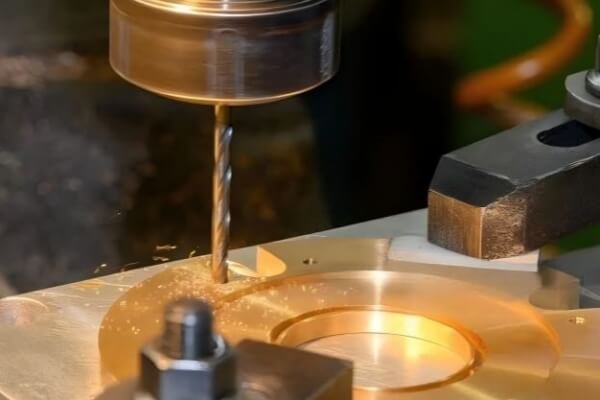
Brass is primarily made up of copper and zinc. In CNC machining, it is commonly used due to the availability of several types of brass alloys with various key properties. We use alloy 260, commonly known as Cartridge brass, for its high ductility and strength, effective for cold forming complex parts like fasteners and couplers. Alloy 272 may be used in CNC machining of several industrial parts requiring a yellow tone caused by a high proportion, approximately 33%, of zinc content.
For piping parts, we often use alloy 330 containing a low proportion of lead. If your brass CNC parts require high precision, alloy 353 is suggested, which is also known as clock brass. For high machinability of CNC parts like fittings, valves, fasteners, etc., alloy 360 is often used. When you need parts machined for marine or other industries requiring high corrosion resistance, we commonly suggest alloy 464, known as naval brass.
Copper
We use copper in CNC machining for several parts in various industries due to its properties like exceptional electrical and thermal conductivity and corrosion resistance. This material is good for many types of electronics due to its high heat dissipation. It efficiently diffuses heat quickly to protect the parts from overheating inside the final device during operation.
Besides pure copper, some copper alloys with a small amount of trace elements are used to machine different parts for specific enhanced functionality. To produce parts requiring excellent electrical conductivity, such as connectors, we often use alloy 101, which is an oxygen-free copper alloy. Alloy 110 (electrolytic copper) is used in CNC machining of wiring and heat exchangers for its good thermal stability.
To CNC machine flat parts and tubing requiring high post-machining properties like weldability, our team often employs alloy 122. Besides, when a part requires high machinability while retaining high electrical and thermal conductivity, such as switches, we prefer copper with 0.7% tellurium, specified as alloy 145.
Key Material Differences & Property Comparisons
1. Chemical Composition
Brass is a copper-based alloy mainly composed of copper and zinc, with zinc typically ranging from 5% to 45%. A higher proportion of zinc affects hardness, strength, ductility, and machinability, with the exact properties depending on the alloy. Besides copper and zinc, brass may contain small amounts of other elements, causing different brass grades or alloys of various functionality.
In contrast, bronze is mainly a copper-tin alloy, with tin content usually ranging from 1% to 15%. Higher tin content increases the hardness and strength of CNC-machined parts. Pure copper is an unalloyed non-ferrous metal, with a copper content of at least 99.9%. A small amount of trace elements, such as silver, oxygen, or tellurium, is added to create specialized copper grades.
2. Machinability and Cutting Characteristics
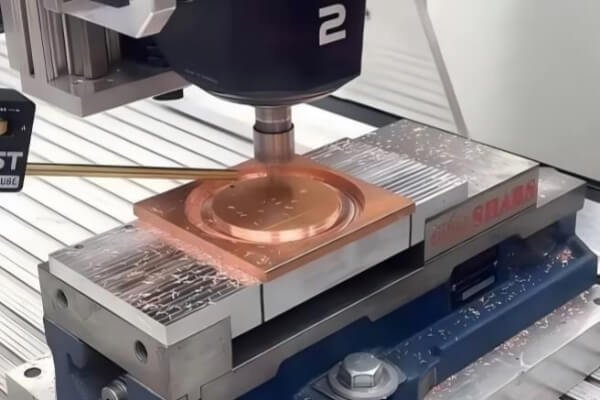
Among bronze, copper, and brass, copper can be bent comparatively more easily than the other two materials due to ductility. It is a property of materials to stretch or bend without breaking. Machinability in high ductile materials is low as they result in gummy or stringy chips rather than clean cuts. In a copper vs. bronze comparison, bronze is known to be less ductile in the manufacturing industry. However, machining CNC bronze parts requires precise control. Whereas copper alloys offer the most ductility, which makes them more difficult to machine for CNC parts. Machining a copper workpiece may result in a built-up edge on the cutting tool.
Many brass alloys, particularly free-machining grades such as C360, offer excellent machinability compared with most copper and bronze grades. However, thin brass sheets bend without cracking, which makes brass an excellent choice for stamping, turning, and parts that require detailed forming. Small amounts of lead further improve machinability and reduce tool wear, increasing efficiency in CNC processes.
3. Electrical and Thermal Conductivity
Copper is the standard metal for measuring other electrical conductors due to its conductivity rating of 100%. So, if your CNC-machined parts require exceptional electrical conductivity, copper may be your preference. Brass, which is primarily copper and zinc, can conduct roughly 28% IACS of the applied electric field. However, the precise conductivity varies with alloys of materials.
Due to steady electrical transfer, you may consider various alloys of brass to CNC machine your parts like terminals, plugs, switches, and connectors. Considering the comparison, bronze vs. brass vs. copper, bronze is the poorest electrical conductor among the three materials, with about 15%-20% conductivity. Therefore, bronze is generally preferred for mechanical applications where strength, wear resistance, and corrosion resistance are more important than electrical conductivity.
Bronze is also the poorest thermal conductor, along with electrical conductivity. Based on various grades of bronze for CNC machining, the exact quantitative value may vary at room temperature. For example, aluminum bronze has a comparatively higher conductivity, typically 83 W/m·K. Phosphor bronze (C52400) or high-tin bronze has a lower thermal conductivity of 50 W/m·K. Silicon bronze has relatively low thermal conductivity compared with many other bronze alloys, typically around 30 to 50 W/m·K.
Brass, in general, is more efficient in heat transfer than bronze. Yellow brass (70% Cu, 30% Zn) has a thermal conductivity of 111 W/m·K, whereas Alloy 260 or Cartridge brass (UNS C26000) has a thermal conductivity of 120 W/m·K. Due to effective heat transfer compared to bronze, brass is often preferred in CNC machining radiators, heat exchangers, and thermal components.
Among the three materials, copper has the highest thermal conductivity compared to brass and bronze. Pure copper has a conductivity of 401 W/m·K at zero degrees Celsius, whereas electrolytic copper or alloy 110 has a value of 390 W/m·K. You can choose the right material for the specific conductivity requirement of your parts by considering the alloy- or grade-specific electrical and thermal conductivity data.
4. Corrosion Resistance and Environmental Durability
Corrosion is one of the key factors we consider when recommending a suitable material for your parts. As it directly affects durability, indicating product reliability, we compare copper vs. brass vs. bronze to suggest the least corrosive material for your parts’ specific application. For example, bronze parts corrode when they are exposed to air, resulting in having a tarnish layer on their surface. However, this layer works as a protective barrier against further corrosion. So it fairly resists corrosion on parts in salt water.
This is why bronze is widely used to CNC machine components intended to be used in marine hardware equipment. However, the corrosion resistance of bronze still depends on the specific alloy composition and service environment, particularly under prolonged exposure to seawater. Considering the characteristics of copper vs. bronze, they have similarities in corrosion resistance. Copper also undergoes tarnishing and builds an oxide layer to prevent further corrosion.
While choosing a material, especially for corrosion resistance and environmental wear, many brass alloys generally offer low protection. It can result in premature component failure in harsh operating conditions and increase your maintenance overhead. However, high manganese content in brass increases the corrosion protection properties compared to lower manganese content. Finally, to compare copper vs. bronze vs. brass for your parts requiring environmental durability, you may choose certain bronze alloys, such as aluminum bronze for its suitability for marine environment.
5. Mechanical Strength, Hardness, and Wear Resistance
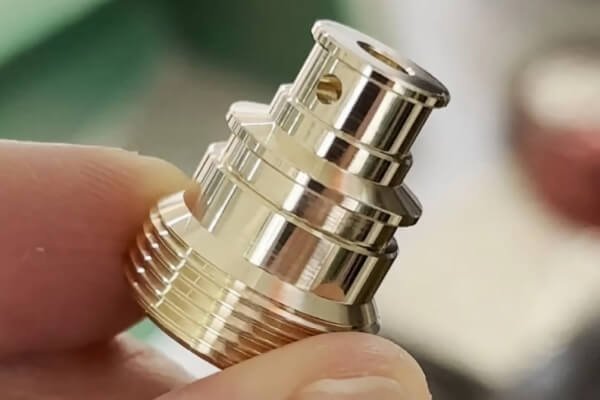
When you want to choose the right material among bronze, brass, and copper, one of your important evaluation factors should be the material’s mechanical strength or hardness. This is indicated by two mechanical properties: tensile strength and yield strength. Among the three metals, bronze is a relatively hard material with higher mechanical strength. Compared to brass and copper, it has high tensile strength, between 350 MPa and 635 MPa. This causes bronze to be highly durable.
Compared to bronze, pure copper has a tensile strength of about 210 MPa, which is the lowest among the three. However, it has the highest ductility, causing copper workpieces to bend or stretch without easily breaking into pieces. Brass offers moderate hardness and ductility, with a tensile strength between 338 MPa and 469 MPa. It makes the material less prone to deformation under stress than copper while remaining easy to machine.
In terms of yield strength, bronze has a higher range of value from 125 to 800 MPa, varying between different bronze alloys. This is why many bronze alloys can handle high stress and friction under heavy loads and offer higher wear resistance than commonly used brass and pure copper grades. Depending on the specific alloy and temper, brass generally offers moderate yield strength compared with pure copper and many higher-strength bronze alloys. Considering copper vs. brass vs. bronze, copper has the lowest yield strength of 33.3 MPa, making it the most permanently deformable material among the three. Therefore, for parts subjected to severe friction and wear, we often choose certain grades of bronze over brass and copper. This will help you choose the right material based on your part application and specific requirements.
6. Cost, Availability, and Material Efficiency
Cost, market availability, and material efficiency all play a significant role when choosing the right material for your parts. Copper is widely available, which often keeps the raw material cost relatively stable. However, due to purity requirements and global demand, it is often expensive relative to brass and bronze. Zinc, being less expensive and one of the primary compositional elements in brass along with copper, makes brass a cost-efficient choice for your CNC-machined parts.
Due to alloying elements like tin and aluminum, bronze tends to be more expensive considering brass vs. bronze comparison. Many brass alloys are usually cheaper than bronze in terms of raw material cost. However, bronze reduces maintenance costs by having long-term durability. Therefore, to evaluate the overall cost of your CNC parts, consider machining cost and service life along with the raw material cost. You can select the material balancing overall performance with long-term cost-efficiency.
Application Differences Between Bronze, Brass, and Copper in CNC Machining
Different grades or alloys of materials are best suited for different CNC machined parts. Here are some common applications specified by different alloys of brass, bronze, and copper to help you choose the right one for your material:
Common Brass Application
- Alloy 260 – Cartridge cases, heat exchangers
- Alloy 272 – Springs, electrical connectors, fasteners
- Alloy 330 – Plumbing fittings, low-pressure systems, valves
- Alloy 353 – Clock parts, precision instruments, gears
- Alloy 360 – Fittings, valves, high-volume turned parts
- Alloy 385 – Architectural trim, decorative hardware
- Alloy 464 – Ship propellers, marine fittings, condenser tubes
Common Bronze Application
- Alloy 510 – Springs, electrical contacts
- Alloy 655 – Welded structures, marine hardware
- Alloy 863 – Heavy-duty bushings, ship propellers, mining equipment, worm gears
- Alloy 907 – Bearings for moderate loads, pump components, valve seats
- Alloy 917 – Turbine washers, high-load bushings, aircraft bearings
- Alloy 932 – Bearings, bushings, thrust washers
- Alloy 954 – High-strength marine components, pumps
- Alloy 955 – Chemical processing equipment parts, marine hardware, heavy-duty gears, aerospace components
Common Copper Application
- Alloy 101 – Superconducting connectors, high-precision electronics, aerospace equipment parts
- Alloy 110 – Bolts, rivets, transformer windings, architectural roofing/drainage systems
- Alloy 122 – Heat exchangers, water pipes, chemical processing equipment
- Alloy 145 – Precision machined parts, circuit breaker components, electrical switch contacts
Bronze vs. Brass vs. Copper: Summary Comparison Table
| Factor | Bronze | Brass | Copper |
| Machinability | Moderate (tends to be abrasive and requires sharp tooling) | Excellent (rated 100% baseline for free-machining brass C360) | Poor to Fair (highly ductile and creates long stringy chips) |
| Conductivity | Low | Moderate | Exceptional |
| Corrosion resistance | Excellent (especially in saltwater and marine environments) | Moderate (susceptible to dezincification in harsh environments) | Good (forms a protective patina against weather and water) |
| Wear resistance | High (low surface friction, highly durable against mechanical friction) | Moderate (good for low-friction, non-structural parts) | Low (soft metal, deforms easily under heavy friction) |
| Cost | Moderate to High | Low to Moderate (most cost-effective) | High |
| Common CNC applications | Marine hardware, bushings, bearings, heavy-duty valve components | Fittings, gears, threaded fasteners, musical instrument valves, decorative hardware | Electrical connectors, busbars, heat sinks, semiconductor packaging |
Bronze vs. Brass vs. Copper: How to Choose the Right Material for CNC Machining
Choosing the right material requires thorough evaluation of several factors like conductivity, wear resistance, corrosion environment, machinability, mechanical requirements, and budget. Apart from that, you have to consider the alloy options or grades of the materials and their specific enhanced functionalities. For example, a material in general can have moderate corrosion resistance, but a specific alloy of that material can provide better corrosion resistance than other mentioned materials.
1. Conductivity
When your equipment parts require strong conductivity, you may prefer copper to CNC machine your parts. Pure copper provides the best electrical and thermal conductivity compared to the other two materials. It is ideal for wiring and heat exchangers.
2. Wear Resistance
For parts subjected to heavy loads, friction, and severe wear, we recommend choosing bronze for these components. For grades like C954 or Aluminum/phosphor bronze, the yield strength reaches 800+ MPa. This is why it is used widely as the material for bearings and gears.
3. Corrosion Environment
One of the most corrosion-triggering environments is around marine equipment, which is exposed to saltwater and air. The most suitable material with the least corrosion influence is bronze compared to brass and copper. Among these alloys, tin bronze and aluminum bronze are suitable choices due to their resistance to saltwater corrosion, making them useful for marine hardware.
4. Hardness
To select the right material based on its hardness, two factors – tensile strength and yield strength are to be considered. Based on these factors, you may prefer bronze over brass and copper for its high structural strength and resistance to permanent deformation by external force.
5. Machinability
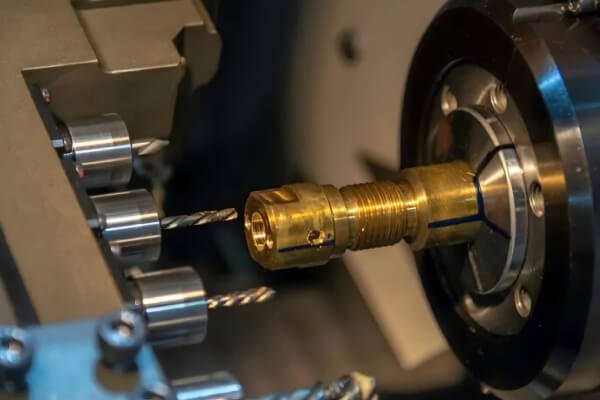
If you need to mass-produce parts like valves and screws, you can select brass for the manufacturing process. It is very easy to machine, especially the leaded brass (grade C360). Avoid copper if your critical requirement is machinability, as it has the highest ductility among the three copper-based metals. It can stretch or deform at the edge instead of being machined cleanly.
6. Weight
When your CNC components are required to be lightweight, brass may be the most efficient choice for you compared to copper and bronze. The density of brass is between 8.4 and 8.7 g/cm³, depending on other compositional elements, which is the lowest among the other two materials.
7. Budget
If you have a higher budget, you can consider copper to CNC machine your parts. However, the most cost-efficient option among the three copper-based materials is brass. Though you should consider other factors separately, such as machining cost and part service life, along with the raw material cost.
FAQs
1. What is the main difference between bronze and brass?
Bronze is primarily a copper-tin alloy, while brass is mainly made from copper and zinc. Bronze generally offers better wear resistance and is commonly used for bearings, bushings, and marine components. Brass typically provides better machinability and is widely used for fittings, valves, fasteners, and precision turned parts.
2. Bronze vs brass: which is better for CNC machining?
Brass is generally easier to machine, especially free-machining grades such as C360. Bronze may require more careful machining but offers excellent wear resistance and mechanical durability. The better choice depends on the part’s performance, environment, and machining requirements.
3. Which is stronger, bronze or brass?
Bronze generally offers higher strength and wear resistance than brass, although the exact mechanical properties depend on the specific alloy and temper. Certain bronze grades are particularly suitable for components exposed to heavy loads, friction, and demanding operating conditions.
4. Is bronze or brass more corrosion-resistant?
Bronze generally provides better corrosion resistance than brass, particularly in marine and saltwater environments. However, corrosion resistance varies significantly between specific alloys, so the operating environment should be considered during material selection.
5. Why is brass easier to machine than copper?
Many brass alloys produce cleaner, more manageable chips during machining, while highly ductile copper can produce long, stringy chips and built-up edges on cutting tools. Free-machining brass grades such as C360 are especially suitable for high-volume CNC machining.
6. When should I choose copper instead of bronze or brass?
Copper is generally the best choice when high electrical or thermal conductivity is the primary requirement. It is commonly used for electrical connectors, busbars, heat sinks, heat exchangers, and other components that require efficient electrical or heat transfer.
Partner With the Right Manufacturer to Have High-Quality Bronze, Brass, and Copper CNC Parts
Choosing the right material is crucial for achieving the required functionality of your equipment parts based on their application. The selection process involves not only evaluating the general materials but also several of their alloys. Therefore, a wrong choice of metals may result in poor performance, low durability, and reduced functionality of the parts. This can cause higher maintenance and repair fees. Besides, it may induce unexpected costs for the buyers in machining new batches of the parts due to their premature failure. This is why partnering with the right manufacturer may often save you from unnecessary costs.
HRCCNC provides a one-stop service for CNC machining bronze, brass, and copper, where the team evaluates all the factors and suggests the right material for your CNC part prior to machining. We also provide dimensional accuracy by manufacturing with the right CNC machining methods and suitable surface finishing for enhanced component properties. Contact us with your drawings, application, budget, quantity, surface finish requirements, expected part properties, etc., to get free technical advice. We may help you with your material selection, with alloy suggestions based on your application.