
Copper CNC machining sits on an odd contradiction. The property that makes copper worth machining in the first place, its unmatched conductivity, is also exactly what makes it a pain to cut. Nobody picks copper because it’s easy to cut. They pick it because nothing else moves current or heat quite like it does, full stop. The machining headaches are just what you sign up for.
So that’s what this guide actually gets into: what makes copper genuinely hard to machine, which grades fix which problems, what tolerance you can realistically expect, and what’s worth thinking through on the design side before a copper part ever sees a lathe or a mill.
What Makes Copper Different to Machine?
Why Copper’s Conductivity Is Also Its Machining Challenge
Here’s the paradox in one sentence: copper conducts heat so well that the heat generated at the cutting edge doesn’t stay put. On most metals, cutting heat concentrates where the tool meets the workpiece, which is annoying but at least predictable. Copper pulls that heat away and spreads it through the part almost as fast as it’s generated. That sounds like it should help. In practice, it just moves the problem, since the tool still has to shed that heat somehow, and rapid, uneven heating is part of what drives the dimensional drift that shows up on tightly toleranced copper parts.
Softness, Gumminess, and Built-Up Edge
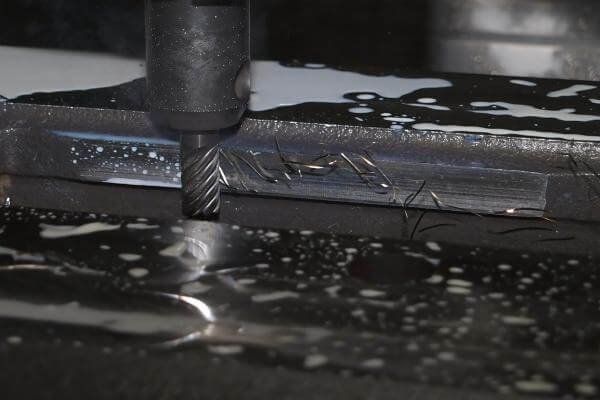
Pure copper is soft, really soft, and that softness causes it to deform rather than shear cleanly under a cutting edge. Machinists call this gumminess, and it’s not a minor annoyance. Material smears instead of breaking into a clean chip, long stringy chips tangle around the tool and the part, and copper has a strong tendency to pressure-weld itself onto the cutting edge. That last one has a name too: built-up edge, or BUE. Once it forms, the cutter’s actual geometry is no longer what the program thinks it is, and the part pays for it in burrs and a rough, inconsistent finish.
Copper Grades for CNC Machining
Not all copper machines the same, and the differences between grades aren’t cosmetic. They’re the whole reason a machinist would ever recommend one grade over another for a given part.
C101 and C110: Pure and Electrolytic Copper
C101 is about as pure as commercial copper gets. Oxygen-free electronic copper, north of 99.99% copper, with impurity limits tight enough that fractions of a percent actually matter. That’s why you see it in RF cavities, waveguides, and vacuum applications, anywhere conductivity down to the last decimal point is the whole point. C110 gives up a sliver of that purity. Electrolytic tough pitch copper sits just below C101 on purity and conductivity, but it costs less, and you can actually get your hands on it without much trouble. In practice, most general electrical work, wiring, and standard connectors don’t need C101’s extra purity, so C110 does the job at a better price. Machinability-wise, the two behave almost identically: both sit around a 20% machinability rating, which in plain terms means both are genuinely difficult and both will test a shop’s tooling and patience on anything beyond a simple shape.
C145 and Free-Machining Copper Alloys
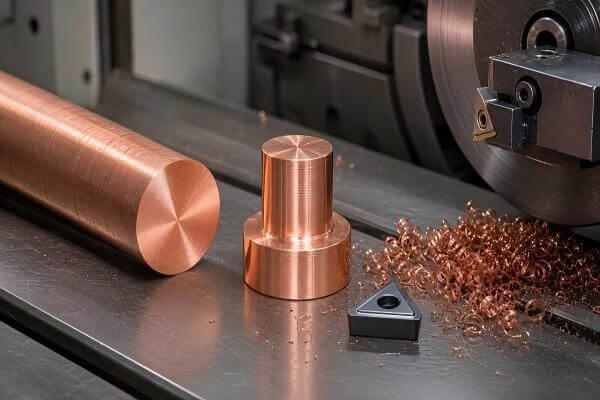
C145 exists because someone got tired of C101 and C110 fighting every tool that touched them. Adding a small amount of tellurium, typically 0.4 to 0.7%, creates copper telluride precipitates in the microstructure that encourage the chip to break cleanly instead of stringing out. The result is a machinability rating around 85%, a genuine leap from pure copper’s 20%, while conductivity only drops to roughly 90% IACS. That’s the trade a lot of buyers don’t realize they’re making until it’s pointed out: giving up about 10% conductivity buys a part that machines faster, holds tolerance more consistently, and doesn’t chew through tooling the way C101 or C110 will. For anything beyond the simplest turned shape, that trade is usually worth making.
Beryllium Copper and Chromium Copper for Strength
Beryllium copper gives up conductivity and gets something pure copper never has: real strength, spring strength. That’s the whole reason it ends up in connectors, relays, and springs. Those parts need to hold their shape through thousands of flex cycles, not just carry current. It machines noticeably better than pure copper too, since the added hardness cuts down on the gummy behavior that makes C101 and C110 so difficult. One thing worth saying plainly here: beryllium oxide dust from machining is a real respiratory hazard. Not a minor caveat, an actual hazard. Any shop cutting beryllium copper needs proper dust collection and ventilation built in from the start, not bolted on after someone asks.
Chromium copper solves a different problem. Add chromium, and you get strength plus something pure copper can’t offer: resistance to softening when things get hot, all while holding conductivity in the 80 to 85% IACS range. That’s exactly why it ends up in welding electrodes and resistance welding tips. Pure copper would just anneal and go soft under that kind of repeated heat cycling. Chromium copper doesn’t.
Choosing a Grade Without Sacrificing Conductivity
The real question isn’t which grade has the best properties on paper. It’s which properties the part actually needs. A busbar that never sees mechanical stress doesn’t need beryllium copper’s strength, and paying for it would be wasted money. A connector that flexes thousands of times needs exactly that strength, and pure copper would fail in service long before it wore out from carrying current. Matching grade to function, rather than defaulting to whichever copper is cheapest or most familiar, is the decision that actually saves money over the life of the part.
The Copper CNC Machining Process
Tooling: Why Sharp, High Rake Angle Carbide Matters
A dull tool is the fastest way to turn copper’s gumminess from manageable into a real problem. Sharp carbide with a high rake angle shears the material cleanly instead of pushing and tearing it, which cuts down on built-up edge and keeps chip formation predictable. Polished, uncoated tooling is often preferred over coated tooling here specifically because coatings can actually encourage copper to stick rather than release.
Feeds, Speeds, and Heat Management
Because copper pulls heat away from the cutting zone so efficiently, temperature control matters more here than it does on materials that let heat build up locally. Feeds and speeds get tuned not just for surface finish but specifically to manage where that heat goes, since a part that’s heated unevenly during the cut won’t measure the same once it’s cooled back to room temperature.
Chip Control and Coolant Strategy
Long, stringy chips are copper’s default behavior in pure grades, and they’re more than a nuisance. They can wrap around tooling, mar a finished surface, or interfere with automated production. Coolant strategy and toolpath choices that actively manage chip breaking matter more on copper than they do on most other metals, and it’s part of why free-machining grades like C145 are worth considering even at some cost to conductivity.
Copper CNC Machining Tolerances
What’s Realistically Achievable
Copper CNC machining commonly holds tolerances around ±0.1 mm on suitable geometry as a general baseline, with tighter tolerances achievable depending on the specific shop, setup, and grade. What differs from other metals is how much more attention it takes to get there consistently, given the gumminess and thermal behavior already covered.
How Thermal Expansion Affects Copper Machining Tolerance
Copper’s coefficient of thermal expansion, around 17 microns per meter per degree Celsius, isn’t actually the highest among common machining metals. Aluminum expands more. What makes copper’s case worth its own conversation is the combination: high thermal conductivity spreads cutting heat through the part fast, and a real, non-trivial expansion rate means that heat translates directly into dimensional growth while the part is still warm. A feature that measures in spec straight off the machine can read differently an hour later once everything’s back at room temperature. On tight-tolerance work, that gap is exactly why some shops build in a cooling period before final inspection rather than measuring a part the moment it comes off the spindle.
Specifying Tolerance on a Copper Drawing
Calling out tight tolerance on every dimension of a copper part usually isn’t necessary and definitely isn’t free. Reserving the tightest tolerances for the features that actually require them, mating surfaces, press fits, sealing diameters, keeps a quote grounded in what the part actually needs rather than pricing the whole thing as if every dimension were critical.
Design Considerations for CNC Machined Copper Parts
Wall Thickness and Feature Design to Reduce Deformation
Thin walls and copper’s softness don’t mix well. A wall that would hold its shape fine in steel can distort under cutting force or even workholding pressure alone in copper, so wall thickness and support structure deserve more attention at the design stage than they would in a stiffer material.
Designing for Deburring and Surface Finish
Copper’s gumminess practically guarantees burrs at sharp edges and transitions, so a design that assumes zero deburring time is a design that’s going to be surprised by the actual production cost. Rounding sharp internal corners where function allows can meaningfully cut down on the secondary work needed after machining.
Where Plating Fits Into the Design
If a part is going to be plated, that decision needs to happen at the design stage, not after the part is already machined. Plating adds thickness, even if it’s a small amount, and features with tight clearances need to account for that buildup before it becomes a fit problem.
Surface Finishing Options for Copper Parts
As-Machined vs Polished Finish
A well-programmed cut on copper can leave a reasonably clean surface right off the machine, but cosmetic or high-conductivity contact applications often call for polishing on top of that, since even minor surface irregularities can affect how well a contact surface actually performs.
Silver and Gold Plating for Conductivity and Oxidation Resistance
Leave copper exposed to air, and it oxidizes. That costs you on appearance first, and eventually on electrical performance at a contact surface too. Silver plating fixes both problems at once, pushing conductivity past bare copper while holding off that oxidation. Gold plating takes a different trade: a little less conductivity in exchange for corrosion resistance that just lasts. That’s the whole reason connector contacts get gold plated when they need to keep working reliably for years, not months.
Copper CNC Machining vs Alternative Processes
CNC Machining vs Stamping or Forming
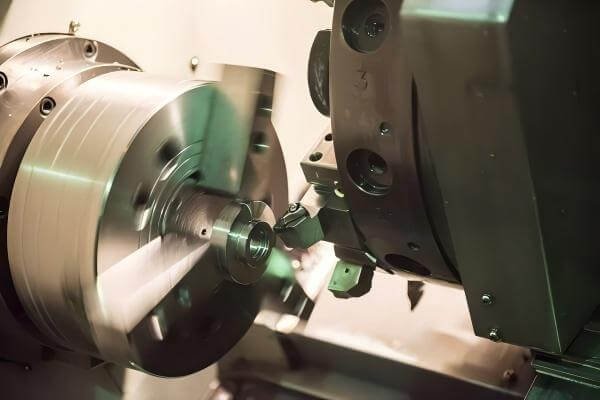
Stamping wins decisively at high volume once a design is locked in, since the tooling cost gets spread across thousands or millions of parts. CNC machining wins everywhere else: prototypes, low to medium volume, and any design still likely to change, since a geometry change is a program edit rather than a new die.
When EDM or Water Jet Cutting Makes More Sense
EDM is useful for features conventional cutting tools cannot easily reach, such as sharp internal corners, narrow slots, or extremely fine details. Water jet cutting is the practical choice for thick copper sheet where heat distortion from other cutting methods would be a real problem. Both are exceptions to reach for, not defaults, since CNC machining covers most copper part geometry faster and at lower cost.
Applications and Industries for CNC Machined Copper Parts
Busbars and Electrical Connectors
Busbars and connectors are copper’s home turf, applications that exist specifically because nothing else moves current as efficiently, and where CNC machined copper parts show up constantly across power distribution and electronics.
Heat Sinks and Thermal Management Components
The same conductivity that makes copper difficult to machine makes it excellent at moving heat away from sensitive components, which is exactly why copper heat sinks remain common in applications where aluminum alone can’t keep up.
RF, Waveguide, and High-Frequency Components
High-frequency and RF applications depend on conductivity in a way few other fields do, since signal loss at these frequencies is directly tied to how well the material conducts, making high-purity grades like C101 the default choice here despite the machining difficulty.
Choosing a Copper CNC Machining Services Partner
Not every shop that machines aluminum and steel well handles copper equally well, and it’s worth treating copper CNC machining services as its own evaluation rather than assuming general CNC experience carries over automatically.
Questions to Ask About Grade and Tolerance Experience
Ask directly whether a shop has real production experience with the specific grade your part needs, not just copper machining in general, since C101 and C145 behave differently enough that generic “we machine copper” experience doesn’t guarantee either one is handled well. Ask how they manage chip control and heat during the cut, and ask what tolerance they actually hold in production rather than what’s theoretically possible.
How Copper Grade, Geometry, and Tolerance Affect Cost
Cost on a copper part depends on grade, geometry, and tolerance together, not any single one of them in isolation. A simple shape in free-machining C145 can cost less than a complex geometry in pure C101, even at a larger size, because grade and geometry both drive cycle time and tool wear independently. The only way to get a real number is a quote against the actual drawing and grade, not a general estimate based on part size alone.
FAQs
1. What is the best copper grade for CNC machining?
The best grade depends on the part’s functional requirements. C101 and C110 offer high conductivity but are more difficult to machine, while C145 provides better machinability while retaining good conductivity. The right choice depends on conductivity, strength, geometry, and cost requirements.
2. Is copper difficult to CNC machine?
Yes. Pure copper can be challenging to machine because it is soft, gummy, and highly conductive. It tends to produce long chips, built-up edge, burrs, and dimensional changes caused by heat. Sharp tooling, proper feeds and speeds, coolant, and chip control help improve machining results.
3. What tolerance can CNC machined copper parts achieve?
A general tolerance of around ±0.1 mm is common for CNC-machined copper parts, depending on the grade and geometry. Tighter tolerances may be achievable for critical features with appropriate tooling, process control, and inspection.
4. What surface finishes can be applied to CNC-machined copper?
Common options include as-machined and polished finishes, as well as silver or gold plating. The appropriate finish depends on appearance, corrosion resistance, electrical contact performance, and other functional requirements.
5. Why is C145 easier to machine than C101 or C110 copper?
C145 contains a small amount of tellurium that improves chip breaking and reduces the gummy cutting behavior associated with pure copper. This generally makes it easier to machine than high-purity grades such as C101 and C110.
6. What information should I provide when requesting a copper CNC machining quote?
Provide a 2D drawing or 3D CAD file along with the required copper grade, tolerances, surface finish, quantity, and any critical functional requirements. These details help the manufacturer evaluate machinability, cost, and lead time accurately.
Get Your CNC Machined Copper Parts Quoted by HRCCNC
Our Approach to Copper CNC Machining
HRCCNC machines copper and copper alloys, including brass grades like C360 and H59. Brass is its own alloy family, copper and zinc rather than the near-pure copper or copper-alloy grades covered in this guide, so if your part specifically calls for a copper grade like C145 rather than brass, send the drawing and we’ll confirm fit directly rather than guessing. DFM review is built into the quoting process, so grade selection and tolerance callouts get checked against what’s actually achievable before production starts. Production runs under ISO 9001:2015, with CMM-based inspection used to verify parts against the drawing.
Request a Quote in 3 Steps
1. Upload your drawing: STEP, IGS, or PDF, with grade, tolerance, and finish requirements called out
2. Get a DFM review: confirming grade and tolerance actually fit your part’s function and budget
3. Receive your quote: with lead time based on your real geometry and quantity
Upload your drawing and request a copper CNC machining quote