Skip to content

6061 vs 7075 is one of the most common decisions engineers and machinists face when choosing aluminum for a new part. It’s the first real fork in the road on an aluminum part drawing, and it trips people up more than it should. 6061 machines like a dream, welds without complaint, anodizes clean. 7075 hits 60-80% more strength, but you pay for it: worse weldability, stubborn forming, a higher material bill and, depending on the part, potentially higher processing costs.
This was never really a strength contest, though. It’s about what the part has to survive, and whether that’s worth what 7075 costs you everywhere else. Here’s where these two actually pull apart, with real numbers, so you’re not staring at a quote wondering why it’s higher than expected.
6061 Aluminum vs 7075 Aluminum at a Glance
Before getting into the details, here’s how 6061 aluminum vs 7075 aluminum breaks down across the factors that actually drive a CNC milling decision.
Quick Comparison Table: 6061 vs 7075 Aluminum
| Factor | 6061 Aluminum | 7075 Aluminum |
| Strength | Moderate | High |
| Hardness | Moderate | High |
| Corrosion resistance | Very good | Good (T6 more SCC-prone; T73 improves it) |
| Machinability | Good | Good to fair, depending on product form and process |
| Weldability | Good | Poor |
| Cost | Lower | Higher |
| Typical applications | Brackets, enclosures, structural frames | Aerospace fittings, high-load components |
What Is 6061 Aluminum?
6061 is an Al-Mg-Si alloy. Magnesium (roughly 0.8 to 1.2%) and silicon (0.4 to 0.8%) team up during heat treatment to form Mg₂Si precipitates, and that’s what gives it strength without turning it brittle. Most shops reach for it by default, and not without reason. It’s stocked everywhere, it doesn’t fight you in the mill, and it anodizes to a clean finish batch after batch, which matters more than people think when you’re running a production job. Ships in T6 temper most of the time (solution heat-treated, artificially aged), and it’s the go-to for enclosures and structural brackets alike.
What Is 7075 Aluminum?
7075 is built for one job: strength-to-weight, full stop. It’s an Al-Zn-Mg-Cu alloy, and zinc (around 5.1 to 6.1%) does most of the heavy lifting, with magnesium and copper chipping in extra strengthening. Get this close to some steels on raw strength, at a third the weight. That’s why it ends up in aircraft fittings, high-load robotics parts, and firearms hardware. The same copper content that gives it that strength is also the reason it’s a pain to weld and doesn’t forgive much when you try to form it. T6 gets peak strength. T73/T7351 gives up some peak strength in exchange for improved resistance to stress-corrosion cracking and is often specified when SCC resistance takes priority over maximum T6 strength.
6061 vs 7075 Aluminum: Mechanical Properties Compared
Tensile & Yield Strength Compared
This is where the difference shows up in actual numbers. 6061-T6 runs about 310 MPa (45 ksi) tensile, 276 MPa (40 ksi) yield. 7075-T6? Around 572 MPa (83 ksi) tensile and 503 MPa (73 ksi) yield, nearly double, both counts. For a genuinely load-bearing part, yield and tensile strength are important inputs, but the material choice should be based on the governing failure mode. Stiffness, buckling, fatigue, fracture behavior, corrosion exposure, joining method, and applicable design allowables may be equally important.
Hardness Compared
6061-T6 sits around 95 HB. 7075-T6 comes in closer to 150 HB. That extra hardness provides better resistance to denting and surface damage. It can also influence cutting forces and tool life, although the actual effect depends on tooling, cutting parameters, lubrication, and the machining operation. Nothing free here.
Fatigue Resistance for Parts Under Repeated Load
6061-T6’s fatigue strength lands around 96 MPa (14 ksi) at 5×10⁸ cycles. 7075-T6 pushes to about 159 MPa (23 ksi). Worth knowing: aluminum doesn’t have a true endurance limit like steel, so fatigue numbers always get tied to a specific cycle count, never treated as a permanent ceiling. For parts subjected to repeated loading, 7075-T6 also offers higher nominal fatigue strength than 6061-T6. However, fatigue performance depends heavily on surface finish, stress concentrations, load ratio, environment, and material orientation, so these typical values should not be used as design allowables.
Density & Other Physical Properties
Weight-wise, they’re close. 6061 sits around 2.70 g/cm³, 7075 at 2.81 g/cm³, so it’s not really a deciding factor on its own. Thermal conductivity tells a more useful story: 6061 conducts heat around 167 W/m·K, 7075 closer to 130 W/m·K. If you’re building a heat sink or an enclosure where getting rid of heat matters as much as holding a load, that gap makes 6061 the more sensible pick.
6061-T6 vs 7075-T6: Understanding Temper Differences
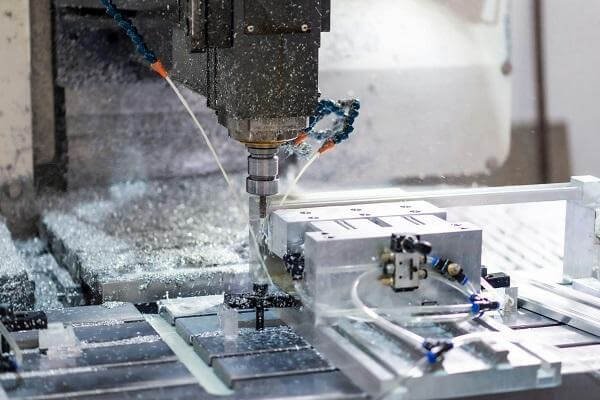
The 6061 T6 vs 7075 comparison doesn’t stop at the base alloy. Temper changes the picture just as much, and it’s often the detail that trips up an otherwise solid material call.
What T6 Temper Means for CNC Machined Parts
T6 is solution heat treatment plus artificial aging, the combination that pushes either alloy up to, or near, peak strength. For 6061, that’s the sweet spot: best balance of strength and machinability you’ll get from the alloy. For 7075, T6 just means maximum strength, nothing more nuanced, and that’s exactly why it isn’t always the right answer.
7075 T6 vs T73/T7351: Strength vs Corrosion Resistance Trade-off
Here’s a detail a lot of buyers miss: 7075-T6’s copper content makes it genuinely vulnerable to stress corrosion cracking, cracking that shows up under sustained tensile stress in a corrosive environment, and it doesn’t always give much warning before it fails. T73 and T7351 tempers over-age the material on purpose, trading some peak strength for a real improvement in SCC resistance. That is why T73 or related overaged tempers are often specified for aerospace components where stress-corrosion resistance is more important than maximum T6 strength. If a 7075 part is going to sit under sustained load somewhere humid or marine, bring this up with whoever’s machining it. Don’t assume it gets caught automatically.
Why Temper Affects Your CNC Milling Quote
Temper isn’t some footnote you can skip on the drawing. It changes hardness, and hardness changes cutting parameters, tool wear, what tolerance is realistically achievable. A shop quoting your part needs the exact temper, not just “7075,” because 7075-T6 and 7075-T73 don’t cut the same, even though they’re technically the same base alloy.
Machinability: 7075 Aluminum vs 6061 in CNC Milling
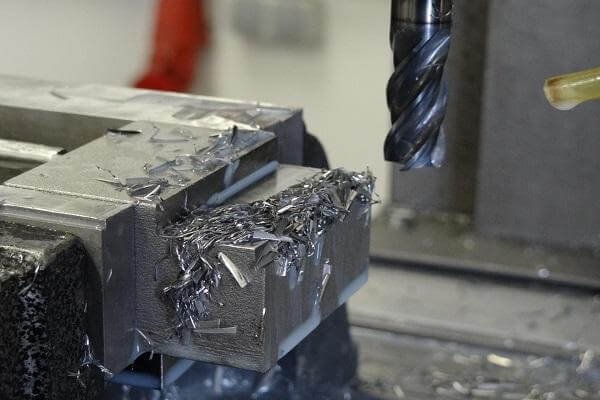
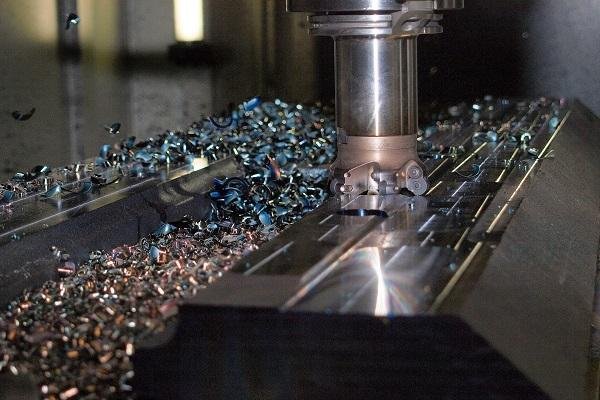
When comparing 7075 and 6061 on the mill, the practical difference depends on temper, stock condition, tooling, feature geometry, and production volume.
Cutting Speed, Tool Wear & Surface Finish
6061-T6 has generally good machinability and can produce a good finish with standard aluminum-cutting tools. However, its relatively ductile chips may require proper tool geometry, lubrication, and chip evacuation. 7075-T6 also machines well in many CNC operations and may produce relatively manageable chips. Its higher strength and hardness can affect cutting forces and tool life, but chatter in thin walls or deep pockets depends mainly on part stiffness, tool overhang, workholding, and cutting parameters rather than alloy ductility alone.
Which Alloy Machines Faster
Neither alloy is universally faster to machine. 6061 and 7075 are both commonly CNC machined, and the achievable material-removal rate depends on the temper, stock condition, tooling, feature geometry, workholding, and cutting strategy. For a simple bracket, either alloy may machine efficiently; the actual cycle-time difference should be determined from the geometry, tooling, cutting parameters, and stock condition.
How Machinability Affects Your CNC Milling Quote
Cycle time shows up as a real line item on every quote. 7075’s higher raw-material price usually increases part cost. Material price is only one piece of the final cost. Depending on the geometry, temper, tolerances, tooling, and production quantity, cycle time, tool consumption, workholding, and inspection requirements may also affect the price. That is why the final cost difference should be evaluated against the actual drawing rather than inferred from the alloy alone.
Thin walls and tight tolerances can increase machining cost for either alloy and should be evaluated against the actual part geometry.
Corrosion Resistance & Anodizing: 6061 vs 7075 Aluminum
Why 6061 Handles Moisture Better
Lower copper content gives 6061 solid general corrosion resistance right out of the gate, no special temper needed. Holds up fine outdoors, even in marine-adjacent settings, straight off the mill.
Stress Corrosion Cracking in 7075 and How T73 Reduces the Risk
Same story as before: 7075-T6’s copper content raises SCC risk under sustained stress in corrosive conditions. T73/T7351 is commonly used when improved resistance to stress-corrosion cracking is required, although it does not eliminate SCC risk and comes with some loss of strength. Spell it out on the drawing. Don’t leave it to chance that your supplier catches it.
Anodizing Outcomes for Each Alloy
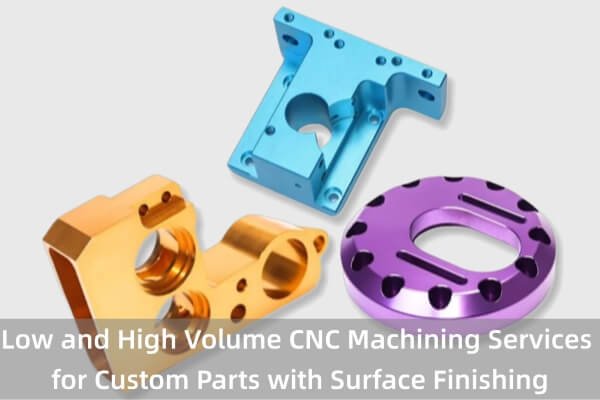
6061 anodizes to a clean, close-to-neutral finish, which is exactly why it’s the default pick for cosmetic anodized parts where color has to stay consistent batch to batch. 7075 is trickier: its alloying elements can push the anodized finish warmer, sometimes with a brownish cast. Worth flagging early if color match is actually a requirement and not just a preference.
Formability & Welding: 6061 vs 7075 Aluminum
Forming & Bending: Why 6061 Is Generally More Formable Than 7075
6061 is generally more formable than 7075, but bendability depends strongly on temper and thickness. 6061-O has excellent formability and 6061-T4 has good formability, while 6061-T6 requires larger bend radii and may crack if formed too tightly. Critical forming is therefore often performed in a softer temper before final aging. 7075 in T6 is a different animal. Thicker sections need a noticeably larger bend radius, and most complex forming happens before heat treatment, sometimes with the material warmed slightly to keep spring-back and cracking under control.
Welding: Why 6061 Welds Well and 7075 Doesn’t
6061 welds cleanly enough with common filler alloys, 4043, 5356, though the heat-affected zone drops back close to annealed strength unless you re-heat-treat afterward. 7075’s a different story. Its zinc and copper content makes it prone to hot cracking, so conventional fusion welding is mostly avoided. When 7075 parts need joining, it’s usually mechanical fasteners or just machining it as one piece instead of building a weldment.
Cost Comparison: 6061 vs 7075 Aluminum
Once you’re this deep into the 6061 vs 7075 decision, cost is usually what tips the scale.
Why 7075 Costs More Than 6061
7075 stock costs noticeably more than 6061 at equivalent size. Part of that’s the alloy content, part of it’s lower production volume, and part of it’s simply that more 7075 output gets absorbed by aerospace and defense demand rather than general commercial supply. Prices shift with commodity markets and supplier, so any specific percentage you find online is worth treating as a historical data point, not something to budget against.
Cost Factors Beyond Raw Material Price
Material price is only one part of the final cost. Depending on the geometry, temper, tolerances, tooling, and production quantity, cycle time, tool consumption, workholding, and inspection requirements may also affect the price. The final cost difference should therefore be evaluated against the actual drawing rather than inferred from the alloy alone.
Getting an Accurate Quote for Either Alloy
The only number really worth planning around is a quote against your actual drawing and quantity. Material markets move, and geometry changes cycle time more than most buyers expect going in.
Where 6061 and 7075 Aluminum Are Used
6061 Aluminum Applications
• Enclosures and housings for electronics and industrial equipment
• Structural brackets and mounting plates
• Automotive and EV prototype components
• Anodized consumer-facing parts and fixtures
• Jigs, fixtures, and general-purpose tooling
7075 Aluminum Applications
• Aerospace structural fittings and brackets (temper selected according to the applicable specification and SCC requirements)
• High-load robotics and motion-system components
• Firearms and defense hardware
• Motorsport and high-performance automotive parts
• Sporting goods where strength-to-weight is the priority
6061 vs 7075 Aluminum: Which Should You Choose for CNC Milling?
When to Choose 6061 Aluminum
• The part is structural but not carrying extreme loads
• Cost and lead time matter as much as raw performance
• The design involves welding, forming, or joining to sheet metal
• A consistent, cosmetic anodized finish is part of the spec
When to Choose 7075 Aluminum
• The application genuinely needs maximum strength-to-weight
• Parts see high cyclic or structural loads (confirm whether T73 is warranted)
• An aerospace, defense, or motorsport spec calls for it directly
• The performance gain justifies the added material and machining cost
Still Not Sure? Send Your Drawing for a Material Recommendation
If in doubt, go with 6061. That’s the safe default unless the load case specifically demands what only 7075 can give. But that’s a call worth making against the actual part, not a blanket rule. A machining partner who’s paying attention will flag a mismatched material choice during DFM review, before it turns into an expensive surprise on the shop floor.
FAQs
1. What is the main difference between 6061 and 7075 aluminum?
6061 aluminum offers a balanced combination of strength, corrosion resistance, weldability, formability, and cost. 7075 aluminum provides substantially higher strength and fatigue resistance but generally costs more and is more difficult to weld and form.
2. Is 6061 or 7075 aluminum stronger?
7075-T6 is significantly stronger. Typical tensile and yield strengths are approximately 572 MPa and 503 MPa, compared with 310 MPa and 276 MPa for 6061-T6. However, material selection should also consider stiffness, fatigue, corrosion, joining, and the governing failure mode.
3. Which alloy is easier to CNC machine: 6061 or 7075?
Both alloys are commonly CNC machined, and neither is universally faster. Actual machinability depends on temper, stock condition, tooling, cutting parameters, part geometry, workholding, and production volume.
4. Why is 7075 aluminum more expensive than 6061?
7075 normally has a higher raw-material price because of its alloy composition, lower production volume, and strong aerospace and defense demand. Final part cost also depends on geometry, tolerances, tooling, inspection requirements, and production quantity.
5. Can 6061 and 7075 aluminum be welded?
6061 is readily welded using common filler alloys, although welding reduces strength in the heat-affected zone. Conventional fusion welding of 7075 is generally avoided because the alloy is susceptible to hot cracking and loss of mechanical properties.
6. What is the difference between 7075-T6 and 7075-T73?
7075-T6 provides maximum or near-maximum strength but is more susceptible to stress-corrosion cracking. T73 and T7351 sacrifice some strength for improved SCC resistance and may be specified for components exposed to sustained stress in corrosive environments.
Get Your 6061 or 7075 Aluminum Parts CNC Milled by HRCCNC
Why Work With HRCCNC for Aluminum CNC Milling
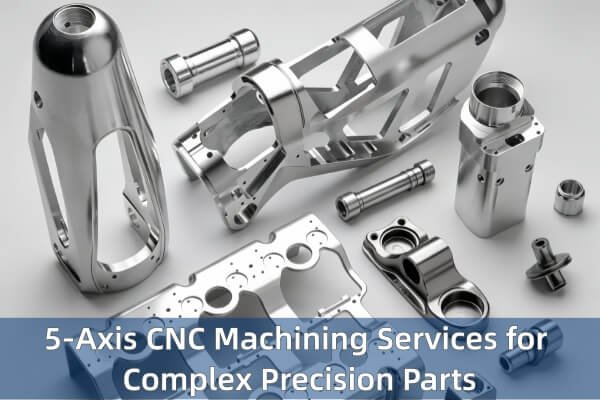
HRCCNC regularly machines 6061 and 7075 using 3-, 4-, and 5-axis CNC milling equipment. In-house anodizing is available for parts that require controlled cosmetic finishes, and the quoting process includes a manufacturability review covering material availability, temper, geometry, tolerances, finishing, and inspection requirements. Production is managed under an ISO 9001:2015-certified quality management system.
Request a Quote in 3 Steps
1. Upload your files: Send a STEP or IGES model together with a 2D PDF drawing when tolerances, threads, finishes, or inspection requirements are critical.
2. Receive a manufacturability review: We review the requested material, temper, geometry, tolerances, quantity, finishing, and inspection requirements before quoting.
3. Receive your quote: The quotation includes pricing, estimated lead time, finishing options, and any relevant DFM comments.